Top

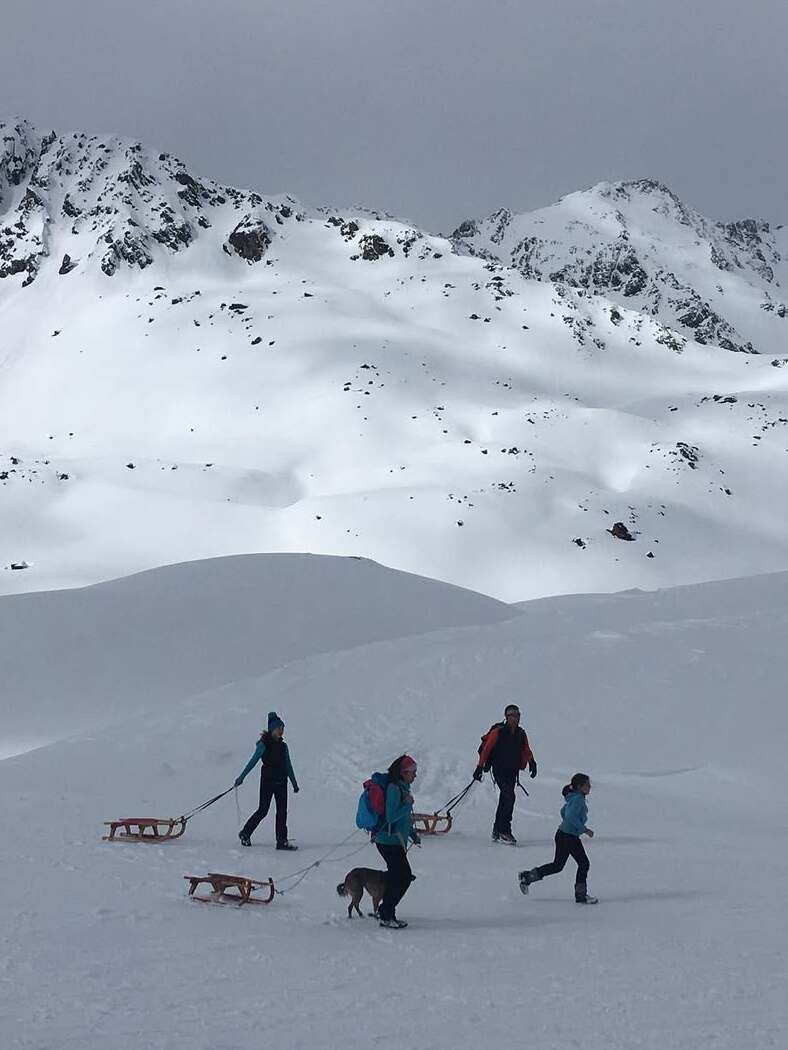
The cold wind brushes your face as the cable car gently ascends through the crystalline air of Val Senales. Below you, the snowy forest looks like a painting in white and green, and ahead, the peaks of the Ötztal Alps glisten in the sun. You arrive at the Lazaun Refuge at an altitude of 2,430 meters, grab your sled, position yourself on the track, and for a moment, everything is silent. Then, the push. Suddenly, you are in motion: gentle curves, snow crunching under the runners, trees sliding quickly past, and inside you, a mix of adrenaline and pure joy.

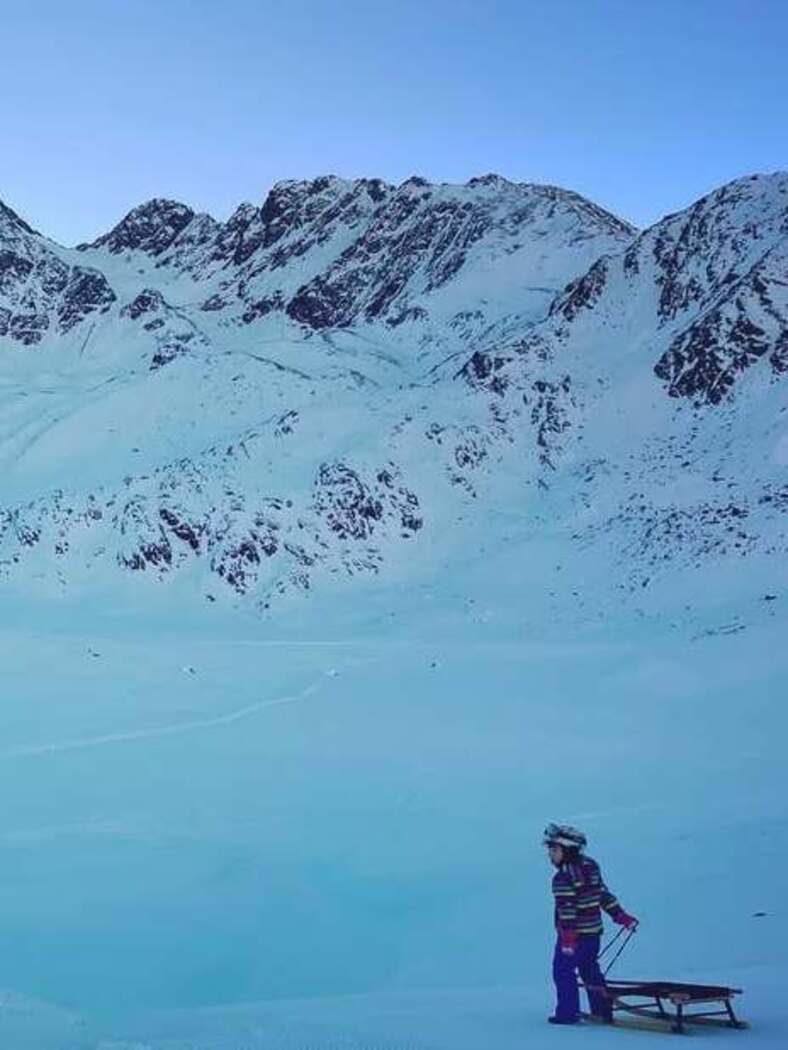
The Lazaun sledding track in Maso Corto (Kurzras) is one of those experiences that makes you feel alive. You don’t need to be an athlete or an extreme thrill-seeker: here, the magic lies in the simplicity. Three and a half kilometers of descent through a fairytale landscape, suitable for everyone – families with children, couples looking for fun, and friends who want to laugh together. The track starts above the tree line, where the panorama embraces you from every side, and descends gently through ancient larches down to the valley station. It is an experience that combines the thrill of speed with the authentic beauty of the winter mountains. And when you return to the motorhome, with your cheeks flushed from the cold and a smile plastered on your face, you know this is one of those moments you will carry with you forever.

From Motorhome to Track: The Route

If you are parked at Caravan Park Schnals, the valley station of the Lazaun Cable Car is just a 5-minute walk away. Leave the rest area, follow the signs for the ski lifts, and in a few minutes, you will find yourself in front of a modern and functional facility. The cable car, built in 2017, is a masterpiece of engineering: 27 comfortable cabins that transport up to 1,980 people per hour, with large windows that allow you to admire the landscape during the ascent.

The ascent takes only 4 minutes, but they are 4 minutes worth their weight in gold. As you rise, leaving Maso Corto and the valley floor behind, the world opens up beneath you: you see the wooden huts dotting the valley, the track of the sledding run snaking through the trees, and in the distance, the glacier glistening in the sun. You will cover 430 meters of elevation gain in moments, and as the cabin slows down approaching the mountain station, you can already feel the adrenaline starting to rise.

You arrive at 2,430 meters above sea level, directly next to the Lazaun Refuge. The air here is thin and crisp, the silence deep, interrupted only by the rustle of the wind and the cheerful voices of other sledders preparing for the descent. If you haven’t brought your own sled, you can rent one directly in Maso Corto before going up, or book it in advance at the ski rental shops in the village.

Alternative for the more athletic: If you want to experience the ascent in a slower and more contemplative way, you can hike up from the valley station following path no. 11A. The climb takes about 1 hour and 30 minutes, crossing through the snowy forest and rising with gentle switchbacks to the Lazaun Refuge plateau. It is a demanding but accessible route, perfect for those who want to work up a sweat before launching into the descent. And once you reach the top, the refuge awaits you for some well-deserved refreshments.

The Lazaun Track: Description of the Experience

The Start: Preparations and First Thrills

Before you launch yourself down, take a moment to breathe. The terrace of the Lazaun Refuge offers a spectacular view of the surrounding peaks: before you rise the Ötztal Alps, with summits exceeding 3,000 meters, and in the distance, you can glimpse the profile of the Val Senales glacier. If you have time, sit in the sun for a moment – the terrace is famous for being one of the sunniest spots in the area – and let the landscape sink in.

When you are ready, grab your sled and head toward the starting point of the track. Here you will find clear signage and the first few meters of flat track that allow you to get a feel for the sled. Position yourself properly: sit upright, feet on the front runners, hands on the side handles. Check that the brake (usually a lever under the seat) works well. And then, push off.

The first few meters are gentle: the track begins with a slight slope that allows you to pick up speed gradually. The secret to sledding is finding the right balance between letting go and maintaining control. In the turns, shift your body weight toward the inside, as you would on a bicycle, and use the brake only when necessary. The Lazaun track is designed to be accessible to everyone: the curves are never too sharp, the steep sections are short and manageable, and the width of the track always gives you room to maneuver.

The Descent: 3.3 Kilometers of Pure Magic

The descent is divided into three sections, each with its own character and atmosphere.

The first section starts from the Lazaun plateau, above the tree line. Here, the landscape is open and grand: snowy meadows dotted with dark rocks stretch out on either side of the track, and all around, the mountains surround you like a natural amphitheater. The snow here is often soft and deep, and the sun reflects off the ice crystals, creating an explosion of light. This is the part where you feel the wind the most, where speed seems to double, and where laughter comes naturally.

The second section is the heart of the run: you enter the snow-covered larch forest and the world changes completely. The tall, slender trees envelop you, their snow-laden branches creating a natural tunnel, and the light filters through the foliage, casting dancing shadows on the track. Here, the atmosphere is more intimate, almost magical. You can smell the scent of wood and resin, hear the rustle of branches moved by the wind, and feel as if you are inside a fairy tale. The turns become more frequent, but remain smooth and predictable. Every now and then, through the trees, you catch glimpses of the valley floor drawing closer.

The third section is the finale: the track emerges from the forest and descends with the final switchbacks toward the cable car valley station. Here, the slope gentles, your speed naturally slows, and you have plenty of time to enjoy the last few meters before the arrival. When you stop, with your legs a bit shaky and a huge grin on your face, you look back at the track you’ve just traveled and already think: “I want to do it again.”

The complete descent takes about 10-15 minutes, depending on the speed you maintain and the stops you make to admire the landscape. But every minute is dense with emotion, changing scenery, and overlapping sensations. It’s not a speed race: it’s an experience to be savored, lived with all your senses open.

The Lazaun Refuge: A Stop Before or After

The Lazaun Refuge (2,427 m) is much more than just a starting station for the sledding track. It is a place to stop, relax, refuel, and enjoy the mountains at your own pace. The refuge is open throughout the winter season (from December to April) and in summer for hikers; it is managed with warmth and passion by a local family who knows every corner of these mountains.

The sun terrace is the true jewel of the refuge: wide, sunny, with deckchairs and wooden benches arranged to catch every ray of sun. Here you can stop before your descent to recharge your energy, or afterward to celebrate the feat with a warm toast. The panorama is simply spectacular: before you stands the Palla Bianca (Weißkugel) (3,739 m), the third-highest peak in Trentino-South Tyrol, and all around, the summits of the Ötztal Alps draw a horizon that takes your breath away.

Inside, the refuge is cozy and authentic: dark wood walls, a tiled stove that warms the room, and solid wood tables where you can sit with other hikers and sledders. The atmosphere is that of genuine mountain huts, far from mass tourism, where time seems to flow more slowly.

The menu follows South Tyrolean tradition: steaming canederli (dumplings) in all variations (speck, cheese, spinach), grilled pork ribs (famous throughout the valley for their flavor), crispy gröstl, warm apple strudel with whipped cream, and the famous Kaiserschmarrn, the shredded sweet pancake typical of Austria, served hot with cranberry jam. The portions are generous, the flavors intense, and every dish tells the story of this borderland between Italy and Austria.

Practical tip: If you go down several times with your sled (with a day pass, you can do as many runs as you like), alternate your descents with stops at the refuge. An ice-cold draft beer or a hot chocolate between runs makes the experience even more complete.

Practical Tips for Your Visit

  • Opening Period: The Lazaun sledding track is open during the winter season, generally from early December to late April, depending on snow conditions. The Lazaun cable car operates from Tuesday to Sunday (closed on Mondays), with hours that vary by period: in high season (Christmas-New Year, February) from 9:00 AM to 5:00 PM, in low season from 9:30 AM to 4:30 PM. Always check updated times on the official website www.valsenales.com before setting out.
  • Approximate 2025 Prices (subject to change):
    • Single uphill ride: approx. €12-15
    • Round trip: approx. €20-25
    • Day pass (unlimited rides): approx. €30-35
    • Sled rental: €10-12 for the full day
    • Combined day pass + rental: approx. €40-45
    • Helmet (recommended): rental €5-6
  • What to bring with you:
    • Warm and waterproof clothing (ski jacket, snow pants)
    • Waterproof gloves (essential: hands frequently touch the snow)
    • Sunglasses or ski goggles (snow glare is extremely strong)
    • Helmet (strongly recommended, mandatory for minors in some areas)
    • Snow boots or after-ski boots with non-slip soles (NO rigid ski boots)
    • Sunscreen (even in winter, the sun is very strong at high altitudes)
  • Best time to go:
    • Weekdays (Tuesday-Thursday): less crowded, no queues at the cable car
    • Early morning (9:30-11:00 AM): fresh and well-groomed snow, milder temperatures in the sun
    • Mid-day (12:00-2:00 PM): the refuge is open for lunch, more convivial atmosphere
    • Avoid high-season weekends (February, Carnival) if possible: the track can become very crowded
  • Safety and Rules:
    • Always maintain a controlled speed, especially in turns
    • Respect distances from other sledders (minimum 10-15 meters)
    • Use the brake to slow down before turns, not during them
    • Watch out for icy sections: brake gradually to avoid skidding
    • Follow all signage and instructions from staff
    • If you fall or stop, move immediately to the edge of the track
    • The track is reserved ONLY for sledders: walking on it is prohibited
  • For families with children:
    • Recommended minimum age: 6-7 years (depending on height and sled-handling ability)
    • Young children: can go down on two-seater sleds accompanied by an adult
    • Specific sleds for children are available, which are shorter and easier to maneuver
    • The track is classified as “easy/medium,” suitable even for beginners
    • The Lazaun refuge has a children’s play area and a small petting zoo with animals
  • Accessibility: The track is not suitable for people with reduced mobility or physical difficulties. The cable car is wheelchair accessible, but sledding requires coordination and physical control.
  • Sled Rental: Available at sports shops in Maso Corto (Sportservice Erwin Stricker, SkiFactory). It is possible to book online to guarantee availability, especially on high-season weekends. Private sleds are allowed on the track.
  • How to reach it: From Caravan Park Schnals to the Lazaun cable car valley station: a 5-minute walk (400 meters). Follow the signs for “Cabinovia Lazaun” or “Lazaunbahn.”

Looking for similar experiences?

Check out these other mountain destinations

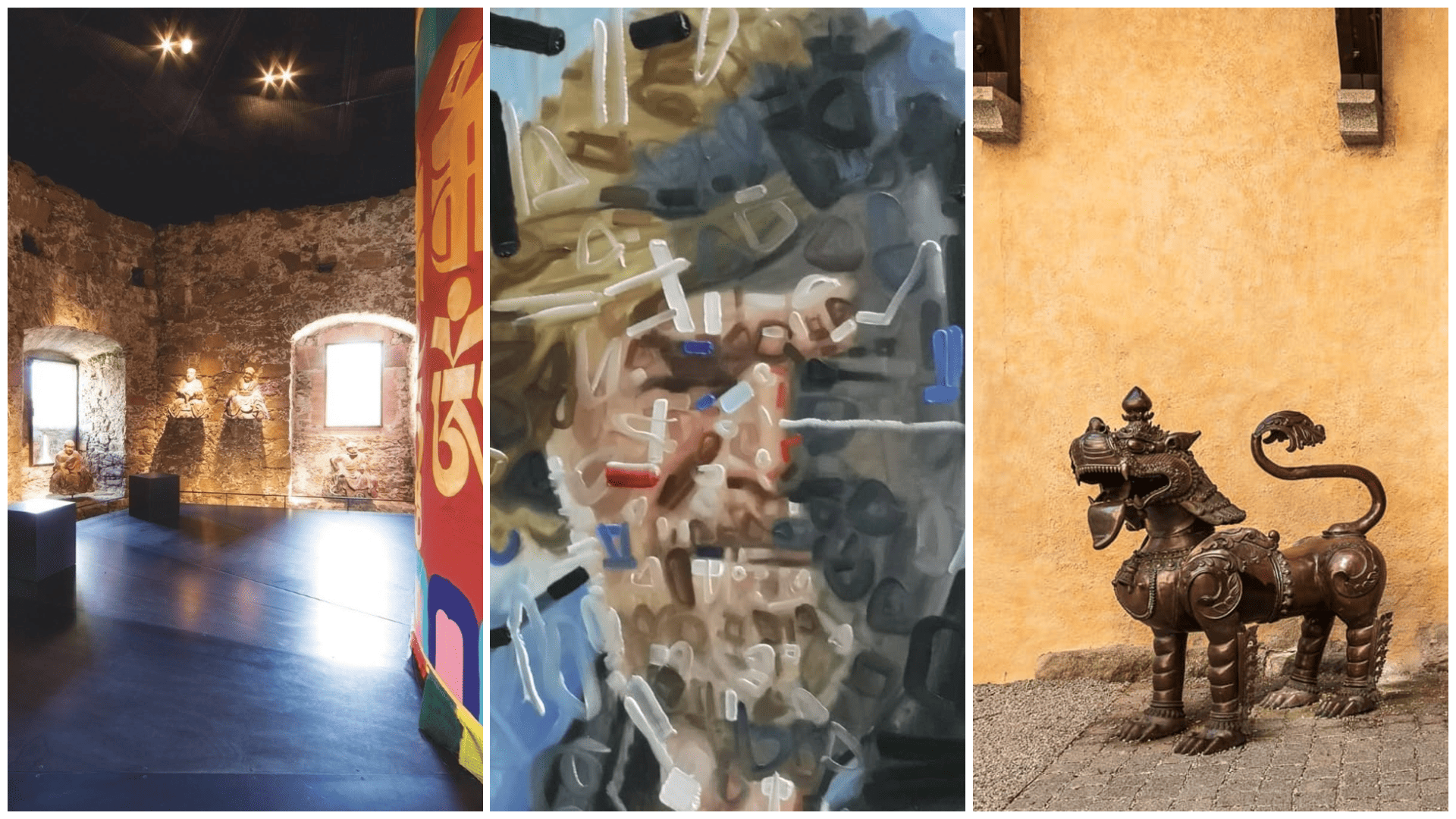
Visit Brunico An Afternoon at the MMM Ripa in Brunico Museum visits The snow falls lightly on Brunico’s rooftops while the frosty air carries the scent of burning wood from the stoves in the historic center. You have just stepped out of your camper, parked in the equipped area of Brunico Nord, and the day opens with a promise: to climb the castle hill to meet the peoples who have inhabited the world’s mountains for millennia. Brunico Castle, with its towers emerging from the snow-covered meadows, holds something rare: not just medieval walls and episcopal frescoes, but the voices, faces, and traditions of the Sherpa, the Mongols, the Tuareg, the Andean peoples, and all those cultures that have made the mountains their home, culture, and source of resilience. The MMM Ripa – the fifth museum in the circuit founded by Reinhold Messner – awaits you for a journey that crosses not space, but time and humanity. From Camper to Castle: A Walk in the Heart of Brunico The route from the Brunico Nord camper area to the castle is short but charming: about 15-20 minutes on foot through the historic center. Leave the parking area and head towards the center, following signs for Via Centrale (Stadtgasse). In winter, the shop windows are illuminated and the atmosphere is that of an alpine village calmly embracing the cold season. Pass through the Ragen Gate and immerse yourself in Via Centrale, with its houses boasting colorful facades, wrought iron signs creaking in the wind, and artisan workshops selling loden, speck, and painted ceramics. Continue to the end of the pedestrian street and exit through the Ursuline Gate. From here, the castle is already visible on the hill in front of you. The path climbing towards the castle starts right at the foot of the hill: a scenic route, slightly uphill, crossing meadows and trees. In winter, however, caution is required: the path can be snowy or icy. We advise you to wear shoes with non-slip soles or, even better, to bring light crampons to attach under your boots. The ascent takes 10-15 minutes and, if the snow cover is firm, it becomes a small adventure that rewards you with an increasingly expansive view of the city and the valley. As you climb, Brunico is revealed at your feet: the snow-covered rooftops, the parish church bell tower, and the Aurina Valley mountains in the background. The air is cold and clean, the silence broken only by your breath and the crunch of snow underfoot. When you reach the castle, your heart beats a little faster – not just from the effort, but from the anticipation of what awaits you. Destination Additional Image Visit Brunico Explore Wooden sculpture Messner Mountain Museum (MMM) Firmian The Castle and the Museum: Where the Ancient Meets the Cultures of the World Brunico Castle was built in the 13th century by Bishop Bruno von Kirchberg, who wanted to protect his possessions in the Puster Valley and, in doing so, laid the foundations of the city itself. For centuries, the castle was the summer residence of the Prince-Bishops of Brixen: each bishop left their mark here, expanding walls, adding rooms, and frescoing halls. The coats of arms of Bishops Albert von Enna, Ulrich Putsch, and Andrea d’Austria still decorate the walls, silent witnesses to a power that tasted of incense and politics. In 2011, the castle was reborn in a new guise: no longer the home of the powerful, but the house of mountain peoples. Reinhold Messner, the South Tyrolean mountaineer who climbed all fourteen 8,000-meter peaks in the world, transformed these walls into one of the six Messner Mountain Museums. The MMM Ripa – “ripa” in Tibetan means “man of the mountain” – is dedicated to cultures that have lived at high altitudes for over 10,000 years, in symbiosis with peaks, glaciers, plateaus, and remote valleys. The castle’s renovation was daring: contemporary materials such as treated grey wood, glass, and steel were placed alongside the ancient stones. The contrast is jarring but effective, as if the past and present were conversing without fear. Cross the wooden bridge that leads to the inner courtyard and you will find yourself in a protected, silent space where time seems to slow down. Cellar: The Peoples of Africa and Oceania The museum itinerary begins in the castle cellar, where the atmosphere is cool and intimate. Here you encounter the mountain peoples of Africa and Oceania: the Damara, the Masai, the Tuareg, the Dani. These are cultures that have adapted life to extreme altitudes, mountainous deserts, and the misty forests of Papua New Guinea. The objects on display tell stories of survival and ingenuity: clothing made of leather and fur, hunting weapons, ritual masks with vivid colors and piercing eyes. Every tent, every utensil carries centuries of knowledge passed down from generation to generation. First Floor: Caucasus and Alps Ascend to the first floor, and the geographical horizon shifts towards the Caucasus and the Alps. Here, the Caucasian peoples and the Walser – German-speaking communities living in the Alpine valleys – show how the European mountain has been shaped by man. You will discover objects of daily life: carved wooden cradles, agricultural tools, heavy wool garments to face winters that last months. One of the most fascinating installations is the reconstruction of traditional dwellings: Mongolian tents, yurts, houses of stone and wood. Children love to enter these structures and experience firsthand how people lived – and in some cases, still live today. Second Floor: Religions and Spirituality On the second floor, the museum addresses the theme of mountain religions. Here, the peaks are not just physical obstacles but sacred places, dwellings of the gods, passages to the afterlife. You will find statues of the Tibetan Buddha, Christian crosses carved in wood, animistic fetishes, and votive offerings left on the summits by pilgrims and mountaineers. It is a room that invites reflection: for these peoples, the mountain has never been just nature to be conquered, but a living entity to be respected, feared, and venerated. Tower: Tourism and the Panoramic View The final stop on the itinerary is the castle tower. A wooden staircase – over 100 steps – takes you to the summit, where a breathtaking panoramic viewpoint opens up. From the tower, you can see the Brunico basin, the three-thousand-meter peaks of the Aurina Valley, Kronplatz dominating the valley, and the mountain farms clinging to the slopes. In winter, the landscape is a white expanse dotted with fir trees and houses with colorful facades. But the tower also houses the final section of the museum: alpine tourism. Here Messner poses an uncomfortable question: what happens when the mountain becomes a commodity? Historical photographs show the first Victorian mountaineers, the pioneers of the Dolomites, and the caravans of guides and porters. And then, the explosion of mass tourism: ski lifts, ski slopes, luxury hotels. The museum does not judge but invites reflection: can the mountain withstand this pressure? Are the peoples who have inhabited it for millennia surviving or being swept away by modernity? Hanuman, the Hindu monkey deity large Tibetan Buddhist prayer mill Practical Tips for Your Visit Opening Hours (Winter Season 2025/2026): From December 7, 2025 to April 25, 2026 Every day from 10:00 AM to 6:00 PM (last admission at 5:00 PM) Closed on Tuesdays + December 24 and 25 Prices (2025/2026): Adults: €14 Students/Seniors 65+/Groups (min. 15 people): €12 Children and youths 6-18 years: €6 Family ticket (2 adults + children under 14): €32 Family ticket (1 adult + children under 14): €18 Free for children under 6 years MMM Tour-Ticket (access to all 6 Messner museums): Adults: €55 | Reduced: €45 | Children 6-18: €25 | Family (2 adults + children): €125 Duration of the visit: Allow 1–1.5 hours for the complete museum, plus time to climb to the panoramic tower. If you are traveling with children, they might want to spend more time in the interactive installations (tents, yurts, dwellings). Accessibility: The museum is accessible to people with mobility difficulties thanks to an internal elevator. It is not permitted to enter with bulky trekking backpacks or walking sticks. What to bring: Heavy jacket: it is cool inside the castle, even with heating Shoes with non-slip soles or light crampons for the snowy path Camera for the view from the tower Contact Information: 📍 Castel Firmiano – 39031 Brunico (BZ) 📞 +39 0474 410220 📧 ripa@messner-mountain-museum.it 🌐 messner-mountain-museum.it Looking for similar experiences? Check out these other mountain destinations Prefer to explore destinations on the map?

Here you'll find all the places we've visited
0

post a comment