Immersion in the Thermal Waters of the Parco dei Mulini: A Dive into the History of Bagno Vignoni
From the Camper Van to the Pools: A Very Short Path
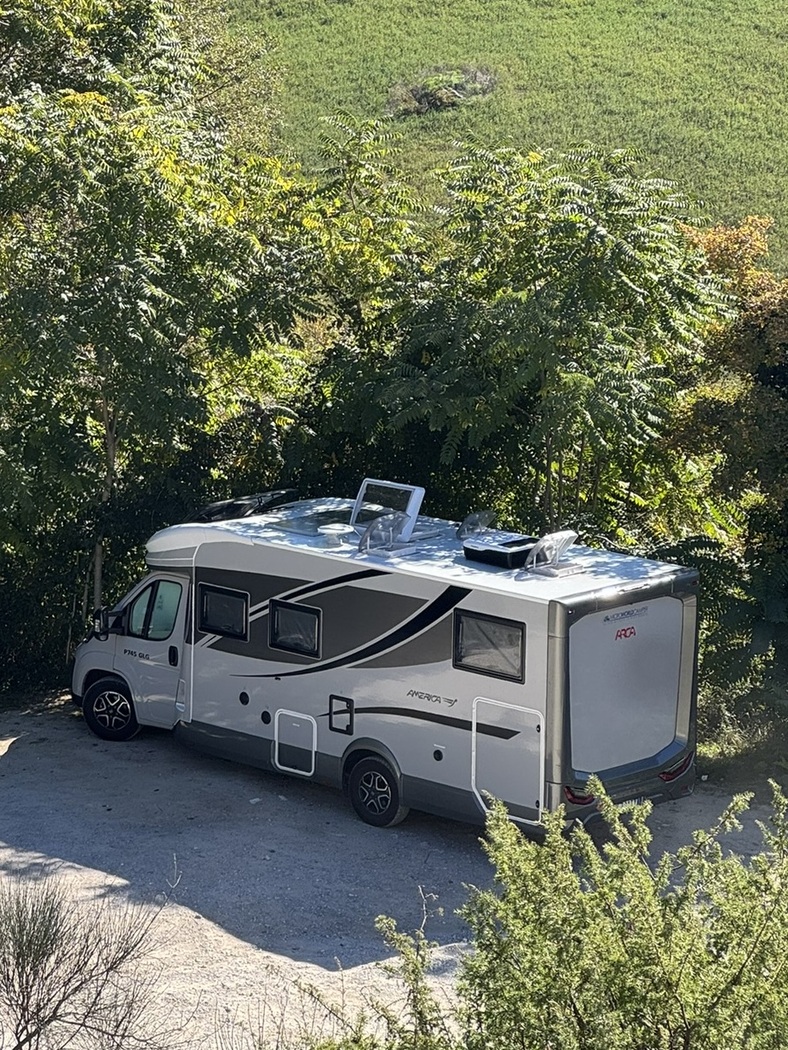
Leave your camper van at the Free roadside clearing on a dirt road (GPS: 43.026554, 11.620383); the elevation change from here to the Parco dei Mulini is minimal – just 10 meters – and the access time is even shorter: the parking area is practically right next to the park itself.
If you prefer to enter from the village, you can move from the main piazza via a slightly longer but equally fascinating route: you will descend steps accessible to anyone, a path that winds through the stone buildings of the village, creating an atmosphere of descending through time.
As you approach the Park, the sounds gradually change. First, you will hear the chatter of the piazza and the murmur of the central thermal pool; as you descend, these sounds dissolve into the increasingly audible crackle of streams of water, the rustling of wild vegetation, and the sigh of the thermal waterfalls. The air becomes warmer, more humid. If you come in spring or early summer, the light filters through the Mediterranean scrub creating plays of shadow and light that ignite the white travertine rock with golden reflections.
The landscape around you reveals fragments of history with every step: stones polished by thermal water for centuries, white limestone concretions slowly deposited by the hot water, old conduits carved into the rock as if they were involuntary works of art.
Camper van parking
Let's check the temperature
The Parco dei Mulini: Where Medieval Ingenuity Meets Thermal Waters
It is no coincidence that four medieval mills arose right here in Bagno Vignoni. The choice to create underground environments is an ingenious solution due to the steep slope of the calcareous cliff: the construction of traditional structures would have required considerable leveling and excavation, proving impractical. Here, instead, everything is created “in negative”: not only the mills, but also the *gorelli* (water conduits) and the channels, the accumulation tanks, and even the access roads are carved into the rock.
The milling technique used is that of the horizontal wheel mill, a relatively simple technology where the drive wheels are connected directly to the millstones via a vertical shaft and powered by a jet of high-pressure water generated by an accumulation tank. The first two mills – the *Mulino di Sopra* (Upper Mill) and the *Mulino Buca* (Hole Mill) – are completely underground, while the *Mulino di Mezzo* (Middle Mill) and the *Mulino da Piedi* (Foot Mill) have structures partly above ground (the grinding rooms) and partly underground (the wheel chambers).
The genius of the system was not only technical but strategic. The construction of an important milling hub in Bagno Vignoni is due to the presence of the thermal spring which guaranteed an abundant and perennial flow of water, the nature of the location with the significant elevation difference between the spring and the Orcia river, and the strategic position due to its proximity to the Via Francigena.
In an era when cereals were the wealth of a community, and most mills in Tuscany had to stop in the summer due to the drought of the waterways, the mills of Bagno Vignoni had a unique peculiarity: they operated even in summer, 365 days a year, thanks to the reliability of the thermal spring. This meant that while the mills in the territory rested in the summer heat, those in Bagno Vignoni continued to grind grain with implacable regularity.
The historical iconography of the place testifies to the importance of these mills: many historical images are taken from the valley and prominently feature the mills, the *gorelli* system, the accumulation tanks, and the tower that stood solitary guarding the entire system. It is believed that the mills were built by feudal lords, perhaps the Tignosi themselves, masters of the Rocca di Tentennano. They remained in operation until the mid-1950s. In 1999, the Municipality of San Quirico d’Orcia acquired the area and promoted an important recovery project partially financed by the European Union through the Raphael program for the recovery of industrial archaeological heritage. Work began in 1999, and the inauguration took place in September 2000.
Today, while the mills no longer function, their remains carved into the rock stand as a tangible testament: a silent language of stone that tells how medieval people knew how to harmonize ingenuity, economic necessity, and respect for natural resources.
Among Streams and Waterfalls: The Sensory Walk
As soon as you enter the Park, you will find yourselves surrounded by wild and characteristic vegetation: the path winds through the essences of the Mediterranean scrub and the typical vegetation of saline soils, with streams of thermal water carved into the rock (*gorelli*) that continuously deposit limestone, collection basins and cisterns for the water, and ancient stone millstones placed at the entrances of the underground mills.
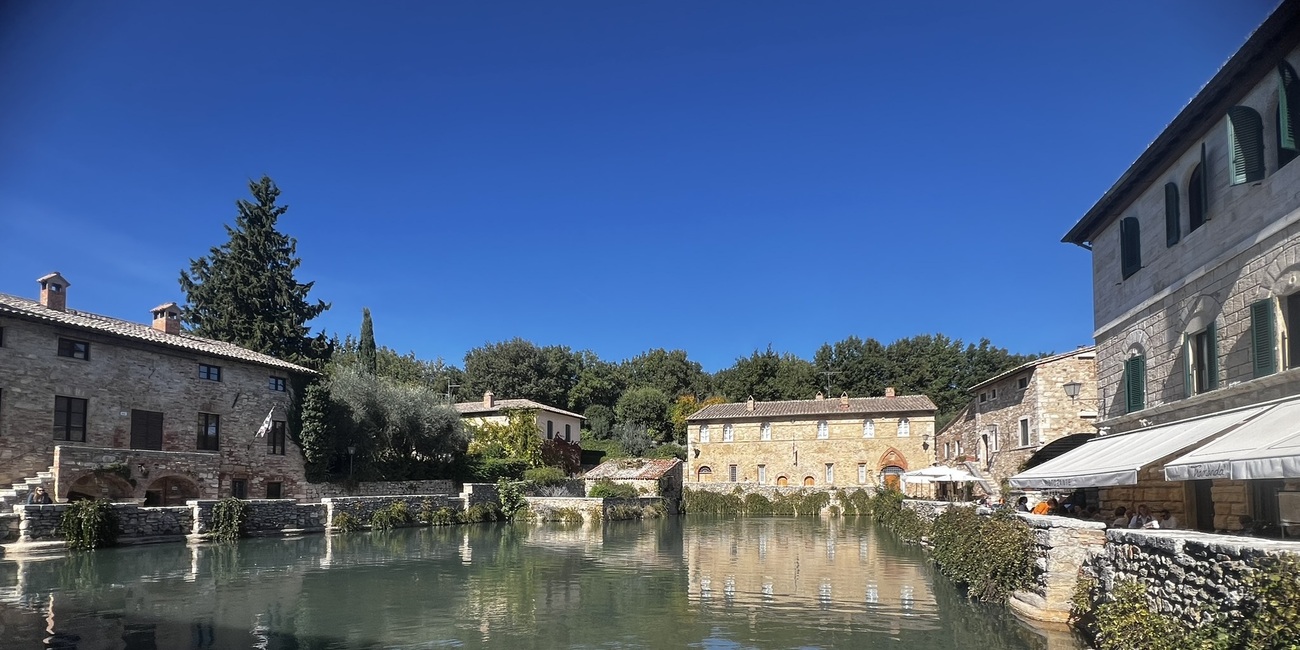
You will see how the water flowing out of the thermal pool heads towards an escarpment where, among streams and calcareous concretions, four sequential medieval mills carved into the rock are discovered.
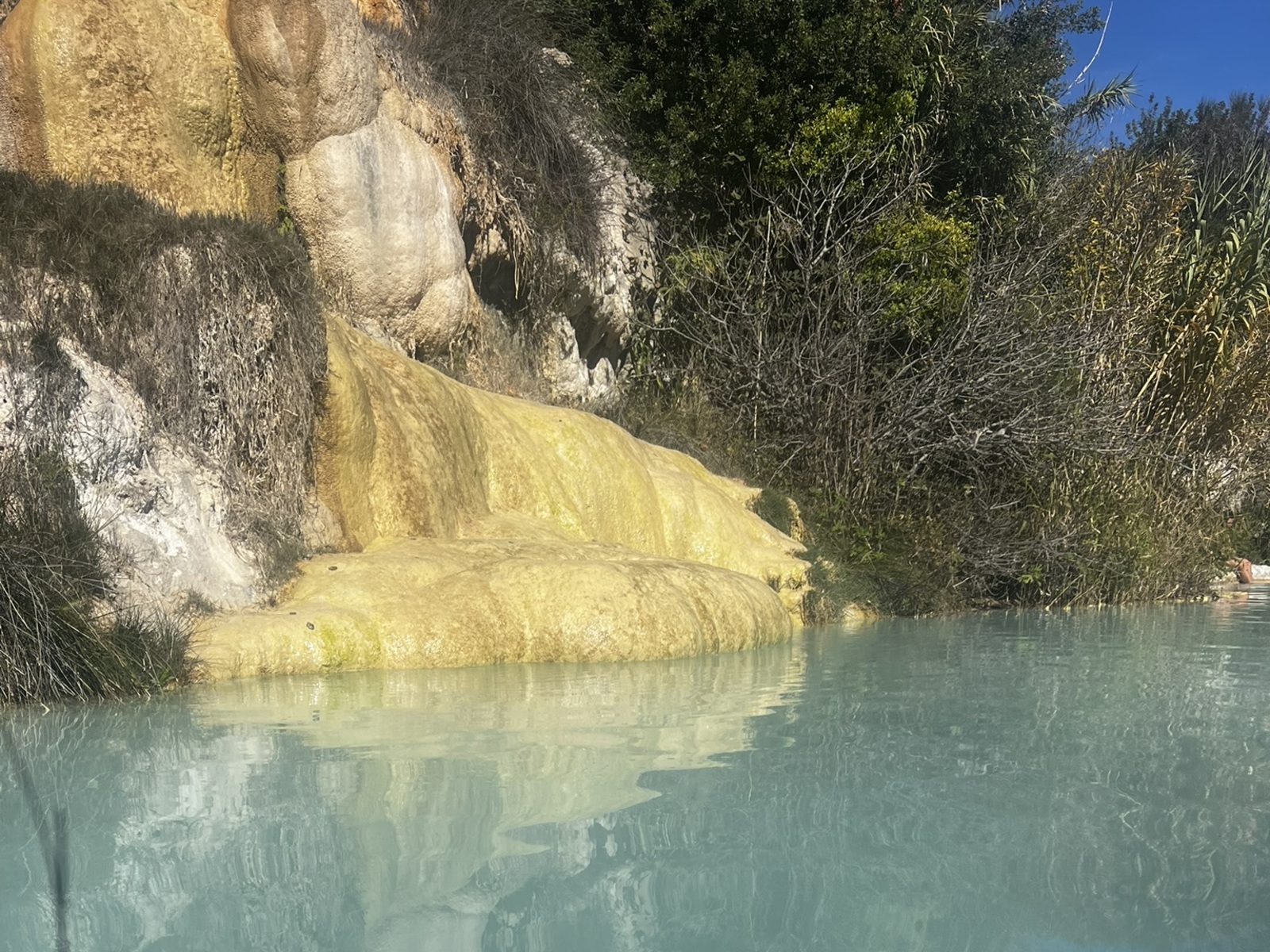
The first impact is sensory: the constant heat of the water gushing from the rock, the rhythmic sound of the streams descending like tiny waterfalls, the surreal colour of the extremely white travertine encrusted with mineral deposits, the scent of the rising thermal humidity. If you visit on a clear spring day, the contrast between the blinding white of the rock and the intense green of the vegetation is almost unsettling, as if you have been catapulted into an alien landscape.
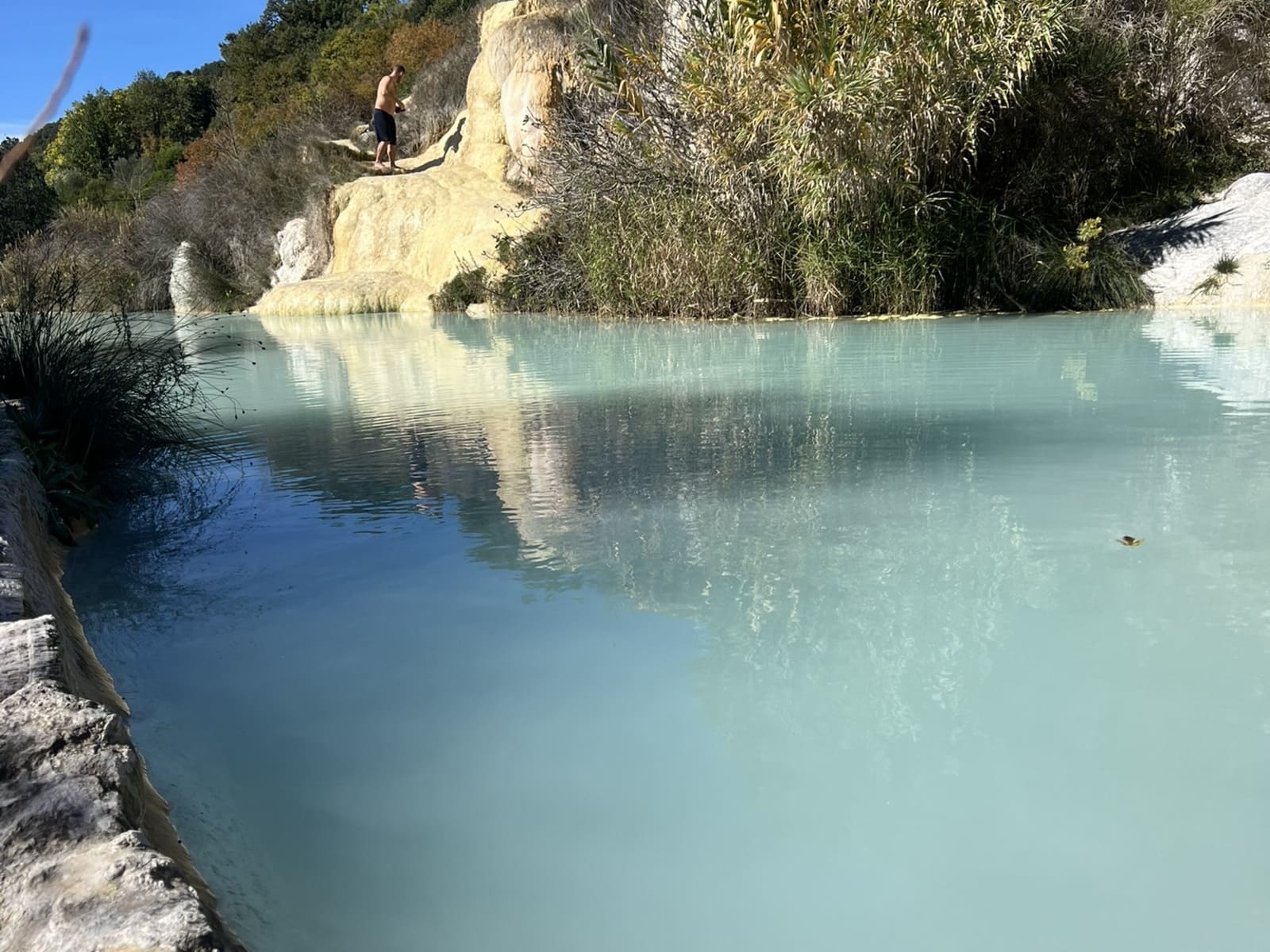
The natural pools
The limestone concretions
The Free Thermal Pools: Immersion and Relaxation
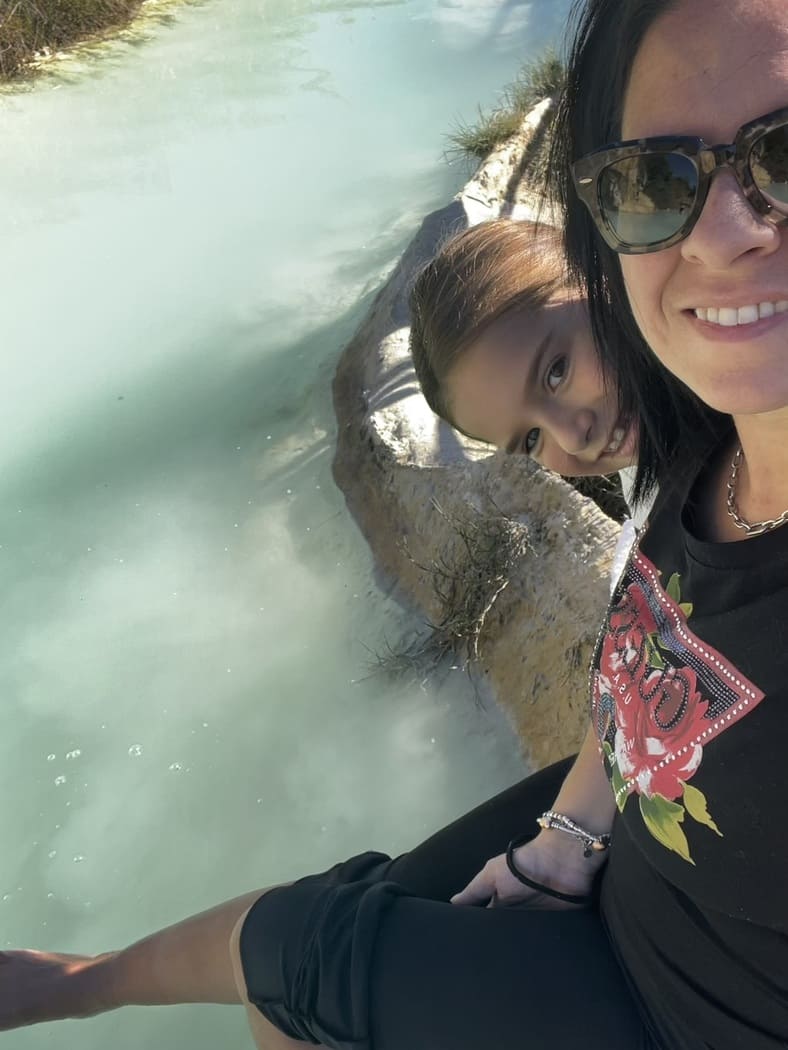
The thermal waters of Bagno Vignoni spring forth at a temperature of about $38^\circ \text{C}$ and are rich in minerals such as calcium carbonate, iron, sodium chloride, calcium sulfate, magnesium, and sodium. Descending into the Park, you will find natural pools of different sizes, formed by the streams that collect in natural basins in the travertine. Depths vary from 50 centimeters to 1 meter – perfect both for those who simply want to dip their feet and for those who desire a complete bath.When you immerse yourself in the water, the first moment is a shock: the temperature is warm but not scalding, pleasant actually, like a hot bath expertly prepared by nature. Immersion in the natural pools of the Parco dei Mulini allows you to benefit from the therapeutic properties of the mineral-rich thermal water in a natural and relaxing environment.
While you are immersed, look around: the white, warm rock walls surround you, the wild vegetation forms a kind of natural amphitheater, and the constant sound of the water becomes a soundtrack that isolates this moment from the rest of the world. In spring and early summer, the water is not too hot – it is the perfect period, neither cold in winter nor a blazing sauna in August. It is easy to understand why the village of Bagno Vignoni has hosted illustrious figures over the centuries such as Saint Catherine of Siena, Lorenzo the Magnificent, and Pope Pius II – the thermal waters have always attracted those seeking healing and contemplation.
Practical Tips for Your Visit
Access and Hours
The Parco dei Mulini is free and accessible 24 hours a day, with no entry fee. There are no closing times, but the place is at its most charming during the day, especially from 10 AM to 4 PM on a sunny day.
Best Time to Visit
Spring (April-May) and early summer (June) are the ideal periods. The water is not too hot like in August, nor cold like in winter. The vegetation is green and lush, creating beautiful chromatic contrasts with the white rock.
Recommended Gear
- Towels and bathrobes: Essential. There are no changing rooms, and when you get out of the warm water and head back to your camper van, you will appreciate having them with you.
- Trekking shoes or shoes suitable for uneven terrain: The ground is rough in places, with smooth and wet rocks. Good foot support is important for safety.
- Flip-flops or water sandals: Useful for entering the water without dirtying your other shoes.
- A small waterproof bag: To protect keys and phone during immersion.
- Sunscreen: Even if covered by vegetation, the reflection from the white rock amplifies sun exposure.
- At least two liters of water: The location is isolated and there are no services. Bring hydration for the journey.
Accessibility and Precautions
The terrain is easily traversable by anyone in good physical condition. However, it is not suitable for strollers or people with reduced mobility. Given the free nature of the site, there are no services such as changing rooms or showers; it is recommended to bring everything you need and to respect the surrounding environment, keeping the area clean.
Extending the Experience: The Free Pools of the Orcia River
If you wish to extend the experience, from the lower part of the Parco dei Mulini you can access the free pools formed by the Orcia River. The thermal waters, after passing through the piazza and the Park, collect and cool slightly before flowing into the Orcia River. In this area, the streams and small pools create an even wilder and quieter environment, where the water is slightly cooler but equally pleasant.
It is a natural extension of the experience, ideal if you still have time and desire to explore. The vegetation is even denser, the atmosphere more remote, and you may find yourselves in areas where the silence is practically absolute – only the sound of flowing water and the birds of the scrubland.