Top

Visit Venezia

The Serenissima Between Canals and Lagoon

Venice is not a city: it is a state of mind. When your camper stops at San Giuliano and you see the Serenissima silhouetted against the lagoon, you understand that ordinary rules no longer apply here. There are no roads, no cars, there is no hurry. 

There is only water, history, and the silence broken by footsteps on medieval calli (alleys). By camper, Venice is a fascinating challenge: parking on the outskirts, hopping on a vaporetto (water bus) or a bicycle, and letting yourself get lost in the labyrinth of a city built on islands. But it is precisely in this “inconvenience” that the charm lies. You cannot escape tourism, but you can slow your pace, enter a forgotten bacaro (traditional Venetian bar), sit on a bridge at sunset, and understand why, for a thousand years, the Serenissima Republic was the mistress of the Mediterranean. Venice tells you two stories: the official one of palaces, frescoes, and diplomacy; and the real one of the Venetians, of the elderly at the windows, of fish at the market, of cuisine that tastes of the sea and oriental spices.

Stopovers and overnight stays

Recommended areas

🅿️ Camper Park San Giuliano Venice
Via Moranzani, 80 – 30172 Venice (Mestre)
Camper Park San Giuliano Venice is the main and most practical solution for visiting Venice by camper. Located in Mestre (mainland), just a 10-minute vaporetto ride from Santa Lucia Station, it offers everything you need for a comfortable stopover.

The parking area is located inside the San Giuliano Urban Park (Parco Urbano di San Giuliano), an extraordinary green space of 122 hectares – one of the largest urban parks in Europe. Before leaving for Venice, you can take a regenerating walk between the greenery and the lagoon. The park is crossed by cycle paths, perfect if you love cycling even in Venice (there is a bike rental service directly at the camper park).

Transport to the center: From the vaporetto stop at the camper park, Line 14 takes you directly to Santa Lucia Station in 10 minutes. Alternatively, you can rent a bicycle and cycle along the park’s paths to the city (about 20-25 minutes).

Contacts: Tel: +39 041 931 555 Website: www.sangiulianovenice.com Email: info@sangiulianovenice.com

GPS: 45.467782, 12.279366

Venice Porta Ovest Camper Stop Area

Via Moranzani, 80 – 30172 Venezia (Mestre)

This has historically been one of the alternative choices for those visiting Venice by camper. It is located closer to the center of Venice than San Giuliano, with direct access to public transport and parking in a more central area.

GPS: 45.466359, 12.175663

Getting Around

Non conviene portare il camper fino a Piazzale Roma. Le strade finali verso il centro sono strette, trafficate e piene di zone pedonali. La soluzione ideale è il Camper Park San Giuliano Venice, situato a soli 10 minuti di vaporetto dal cuore di Venezia.

Il parcheggio offre 100 posti con servizi completi: carico acqua, scarico reflui, docce, videosorveglianza 24/24 e illuminazione notturna. Il costo è di circa 25-30 euro per 24 ore (verificare online per tariffe aggiornate). Si trova dentro il Parco Urbano di San Giuliano (Parco Urbano di San Giuliano), uno straordinario spazio verde di 122 ettari, perfetto per una passeggiata rilassante prima di imbarcarsi.

Dalla reception del camper park, puoi prendere il vaporetto linea 14 (diretto) che ti porta direttamente alla Stazione di Santa Lucia in 10 minuti. In alternativa, se ami la bicicletta, il parco è attraversato da piste ciclabili ben segnalate. Dalla stazione ferroviaria, il resto della città è raggiungibile a piedi o con i vaporetti delle linee 1, 2 e altre rotte lagunari.

Consiglio pratico: Compra il carnet di 10 biglietti per il vaporetto (costo ridotto) oppure la Venice Unica City Pass, che include trasporto pubblico e accesso ai principali musei.

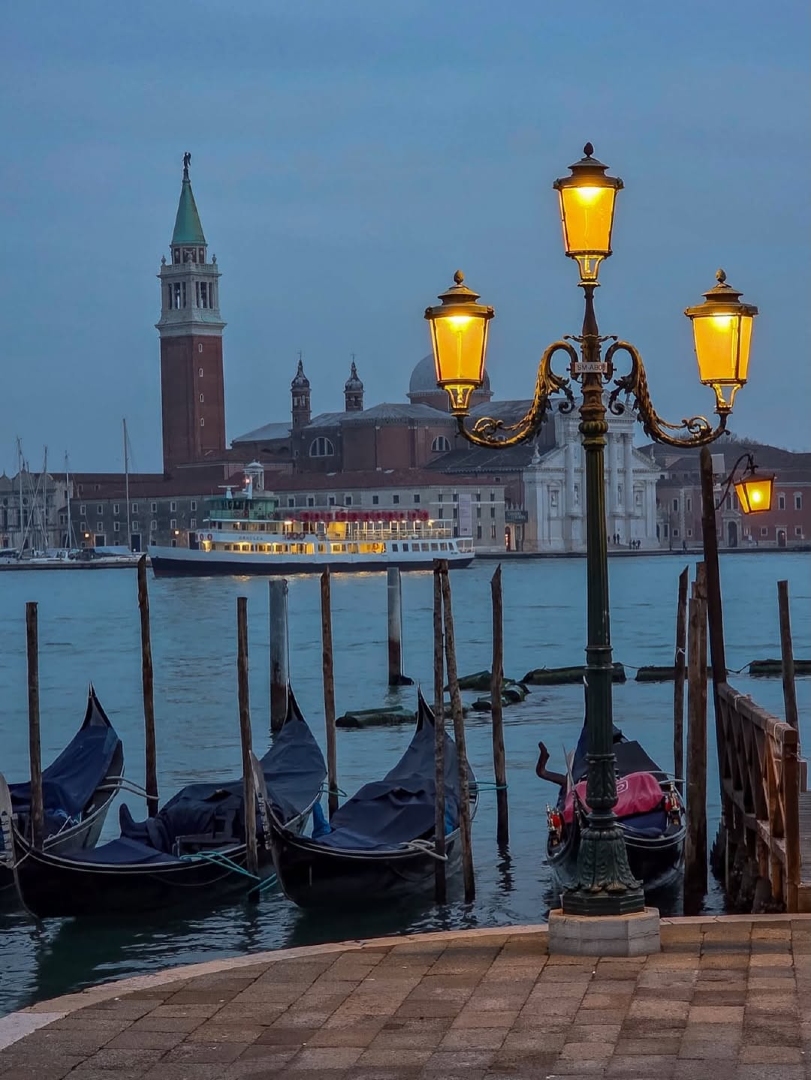
“Basilica of San Giorgio Maggiore”

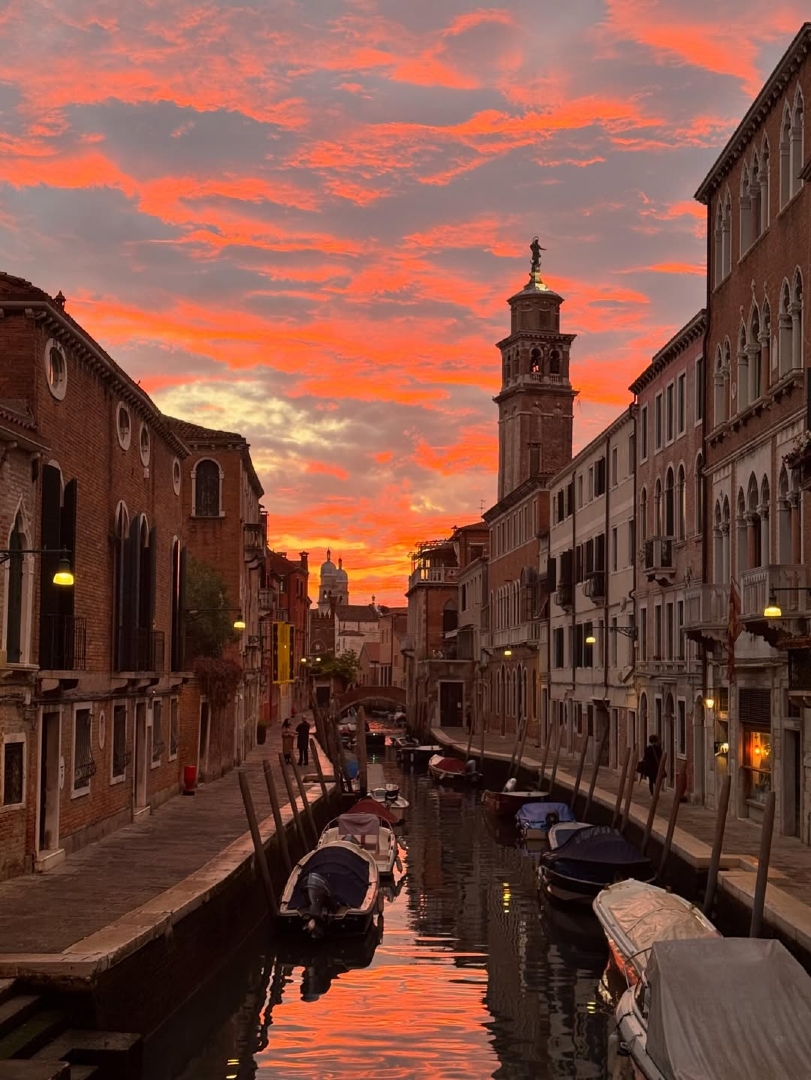
“Venetian sunset”

Points of Interest (PoI)

Ponte di Legno lends itself to many outdoor activities both in the winter and summer seasons:

1
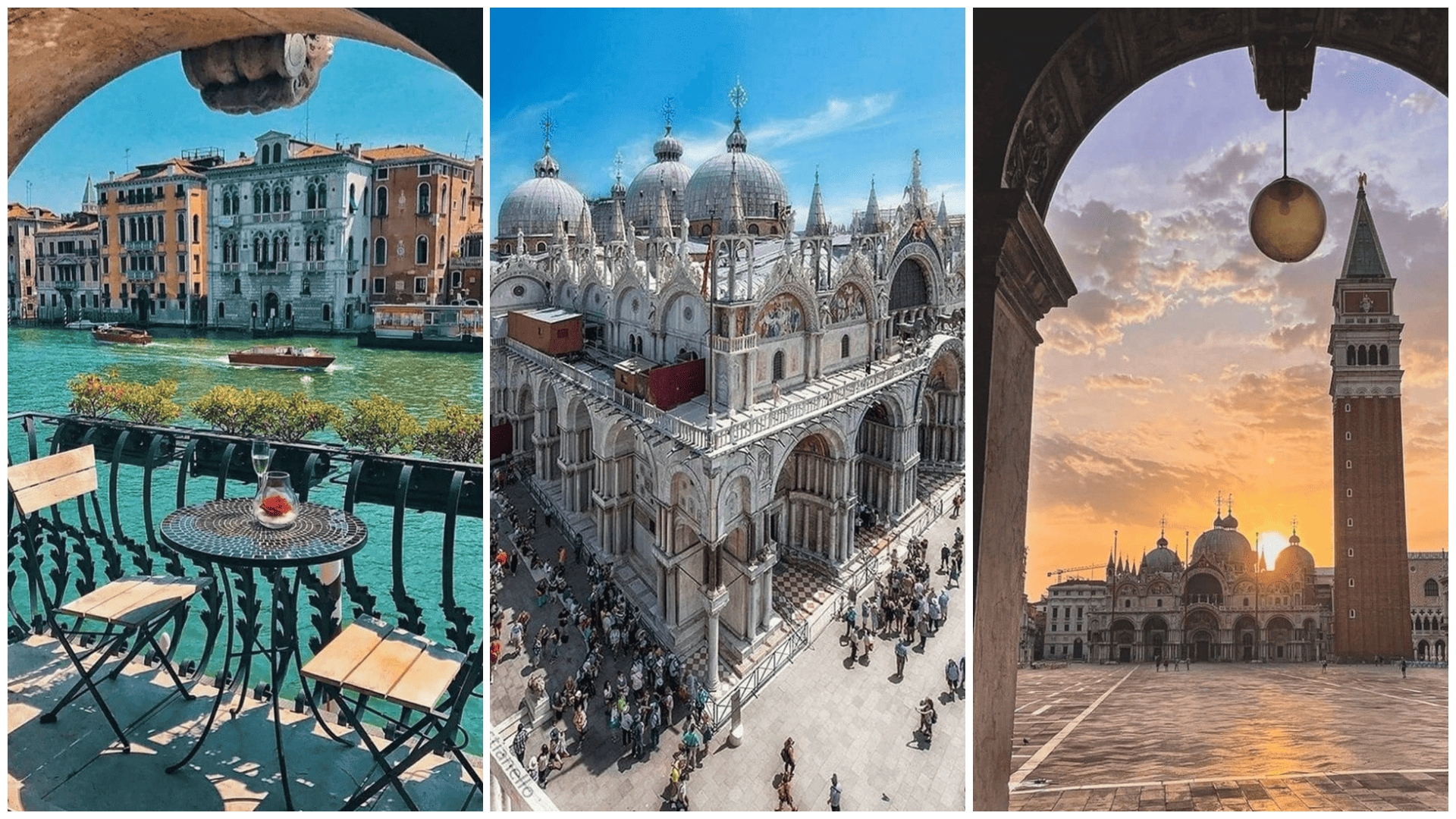
St. Mark's Square and the Symbolic Heart St. Mark's Square (Piazza San Marco) is the beating heart of Venice. When you see it for the first time, you will understand why it has been described as the most beautiful square in the world. The majestic St. Mark's Basilica (Basilica di San Marco) stands out with its golden mosaics – over a thousand square meters of gold leaf tesserae – shining as if the city had been blessed by Eastern magi kings. In fact, it was: these mosaics and the relics of the saint were stolen from Alexandria, Egypt, by two Venetian merchants around 828, and from that moment, the Basilica became the symbol of the Republic's commercial and spiritual power. The Campanile (the 99-meter bell tower) has dominated the square for millennia: it was once used to spot incoming ships. You can ascend to the top by elevator and enjoy a 360-degree view of the lagoon. The Doge's Palace (Palazzo Ducale) overlooks the square with its Gothic colonnades: it was the seat of the Doge, the head of the Republic. Inside, the rooms are decorated with masterpieces by Titian, Tintoretto, and Bellini. Recommended time: 2-3 hours Ideal moment: Early morning (before 9 am) to avoid the crowds of tourists, or at sunset Access: From the vaporetto (water bus) at the San Marco stop
2
The Rialto Bridge and the Grand Canal The Rialto Bridge (Ponte di Rialto) is the oldest of the four bridges crossing the Grand Canal (Canal Grande), and the first time you see it, you will understand why the Venetians consider it the symbol of the city. The elegant structure, built in 1588 with a single arch, allows the passage of Venetian macchinoni (historic barges) underneath. The Grand Canal is the main artery of Venice: a long watery snake that runs through the entire city for almost 4 km. Observing the traffic from the Rialto Bridge is almost meditative—gondolas, vaporetti, and private boats cross paths in a water ballet that seems choreographed. If you step off the bridge and walk along the banks, you will see the city's most important Renaissance palaces overlooking the water: Ca' d'Oro, Palazzo Mocenigo, Palazzo Grassi. Each tells a story of merchants, power, and beauty. Recommended time: 1-2 hours (slow walk) Ideal moment: Early afternoon with golden light Access: Vaporetto Line 1 (the most scenic route on the Grand Canal) Our advice is to take vaporetto Line 1 from Santa Lucia Station and get off directly at the Rialto Bridge. Then walk slowly towards St. Mark's Square, observing every palace, every smaller bridge, and every architectural detail. It is the most beautiful journey you will take in Venice.
3
Accademia Galleries If you are passionate about art, the Accademia Galleries (Gallerie dell'Accademia) house the most important collection of Venetian painting in the world. Here you will see masterpieces by the Venetian masters: Bellini, Veronese, Tintoretto, Titian. It is not the modern art museum of Peggy Guggenheim – this is the museum of the Renaissance heart of Venice. The Accademia is housed in a historic building that was once a convent and an art school. The rooms are intimate, not monumental like other European art galleries. You can stand in front of a "Miracle of Saint Mark" by Tintoretto and almost feel the wind of the painted storm. The stairs are narrow, the floors are wooden, and the atmosphere is that of a house-museum where art is alive and breathable. Recommended time: 2-3 hours Cost: €12-15 (check online for updated rates) Tip: Book your ticket online to skip the queue Access: From Santa Lucia Station → vaporetto Line 1 → Accademia stop This museum is less known than the "usual places" but decidedly more profound. If you have time, dedicate a whole morning to this space.
4
Contarini del Bovolo Staircase The Contarini del Bovolo Staircase (Scala Contarini del Bovolo) is one of Venice's best-kept secrets. It is a late-Gothic palace in the San Marco sestiere (district) with a spiral staircase ("bovolo" in Venetian literally means snail shell) unique in the world. The spiral is built externally, visible from the street, and its geometric elegance is fascinating. This place is extraordinarily less touristy than St. Mark's Square, but the ascent to the top of the staircase gives you an unforgettable view: red rooftops, bell towers, intertwining canals, and the lagoon in the background. It is the place where Venice photographers go to take authentic photos without the crowds of St. Mark's Square. Recommended time: 45 minutes Cost: €5-8 Access: Campo Manin, San Marco sestiere (about 10 minutes walk from the Accademia Galleries) Tip: Visit at sunset for magical light and an almost meditative solitude If you are looking for an intimate moment in Venice, this is the place. Climb the stairs slowly, observing every balcony, every decoration. When you reach the top, stay silent for a while. It is magic.
5
Jewish Ghetto of Cannaregio The Jewish Ghetto of Cannaregio (Ghetto Ebraico di Cannaregio) is the first ghetto in Europe, founded in 1516. It is a place where history is not a museum, but a living community. Around 500 Venetian Jews still live here, guardians of a culture and memory that dates back to five centuries of history. The most fascinating aspect of the ghetto is the vertical urban planning: the houses are built over 7-8 stories, unusually tall for the time, because Jews were forbidden from peripheral areas and external spaces. The result is a unique urban density, narrow and shady calli (alleys), windows looking at each other from a few meters away, an urban intimacy that is more reminiscent of an oriental medina than an Italian city. There are five synagogues hidden in the rooftops (not visible from the outside for historical safety reasons), a museum dedicated to the Jewish community, and several bars and small restaurants where you can try kosher and traditional Venetian cuisine. It is the authentic heart of Venice, where tourism is still contained and history is alive. Recommended time: 1.5-2 hours Cost: Museum ~€10 + guided tour of the synagogues (optional) Access: Vaporetto Line 1 → Santa Lucia Station → walk north towards Cannaregio Important note: Book guided tours of the synagogues in advance, as places are limited Don't miss the opportunity to enter a synagogue (always with a guide). The interior space is intimate and full of details that tell centuries of life and resistance. If you can, eat a pastrami sandwich in the ghetto, or a plate of pasta e fagioli (pasta and beans) in one of the local bacari: it is the best way to understand Venice beyond the tourist surface.

Seasonal Events

Carnival of Venice

Where: Venice

When: February/March

What: The Carnival of Venice (Carnevale di Venezia) is one of the oldest and most fascinating festivals in the world. The streets are filled with masks, refined costumes, and confetti. St. Mark's Square becomes the main stage with water parades along the Grand Canal, allegorical float processions, and street performances in the campi (squares) and calli (alleys). The 300th anniversary of the birth of Giacomo Casanova is celebrated (2025 theme: "Casanova's Time").

Venice International Film Festival

Where: Lido di Venezia

When: August/September

What: The Venice Film Festival (Mostra del Cinema di Venezia) is the oldest film festival in the world (founded in 1932). It takes place at the Lido di Venezia and attracts filmmakers, actors, and critics from all over the world. It is a celebration of cinema as art, featuring screenings of in-competition and out-of-competition films, meetings with directors, and glamorous red carpets.

Architecture Biennale

Where: Venice

When: May/November in odd years

What: It is one of the most important international exhibitions of contemporary architecture and design. The Biennale transforms the Giardini della Biennale (at the eastern end of the historic center) and various city venues into idea laboratories. It hosts pavilions dedicated to different countries, site-specific installations, conferences, and debates on architecture, sustainability, and the urban future.

Historic Regatta

Where: Venice

When: the first Sunday of September

What: The Historic Regatta (Regata Storica) is the oldest and most prestigious sporting event in Venice. It originated in the 13th century as a means to train the Republic's sailors, but in 1489 it took the form it maintains today: a historical reenactment of the triumphant visit of Caterina Cornaro, Queen of Cyprus, to the Doge of Venice. It is a spectacle that combines history, sport, and tradition in one unforgettable event. The day begins with a historical procession at 3:30 PM: dozens of traditional boats (balotine, bissone, gondolas adorned with figures in Renaissance costumes) parade along the Grand Canal, from St. Mark's Basin, passing Rialto and the Railway, up to Ca' Foscari. It is a water march where time seems to stop in 1489. Following this, from 4:00 PM onwards, 8 competitive regattas take place:

  • Youth Regattas (boys on mascarete and pupparini)
  • The Six-oar Caorlina Regatta
  • The International University Rowing Challenge on 8-oar galleons
  • Women's Regatta on two-oar mascarete
  • The Two-oar Gondolino Regatta (at 6:10 PM) – The most anticipated and prestigious race, where the champions of Venetian rowing challenge each other for the title of "King of the Oar"

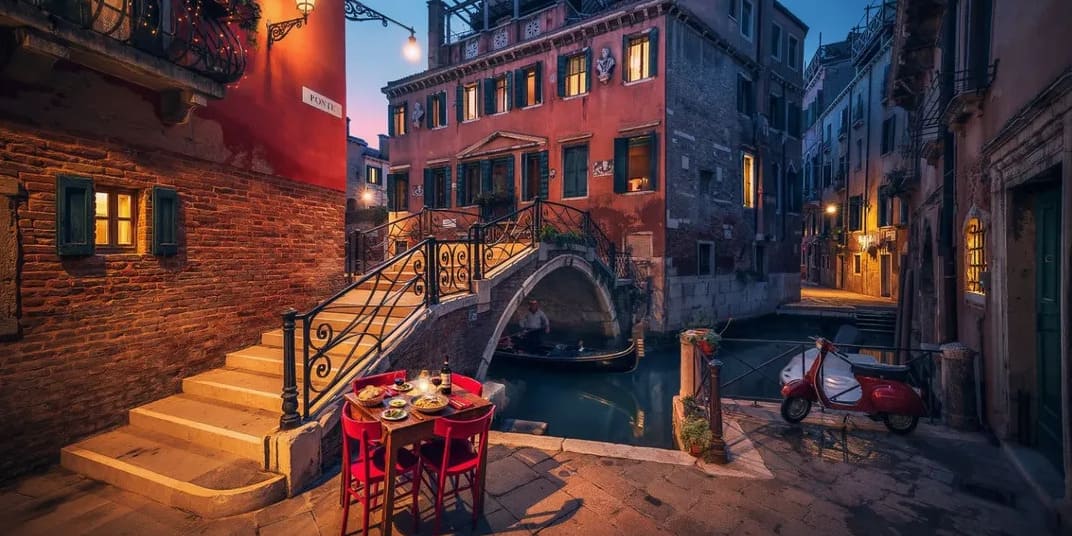
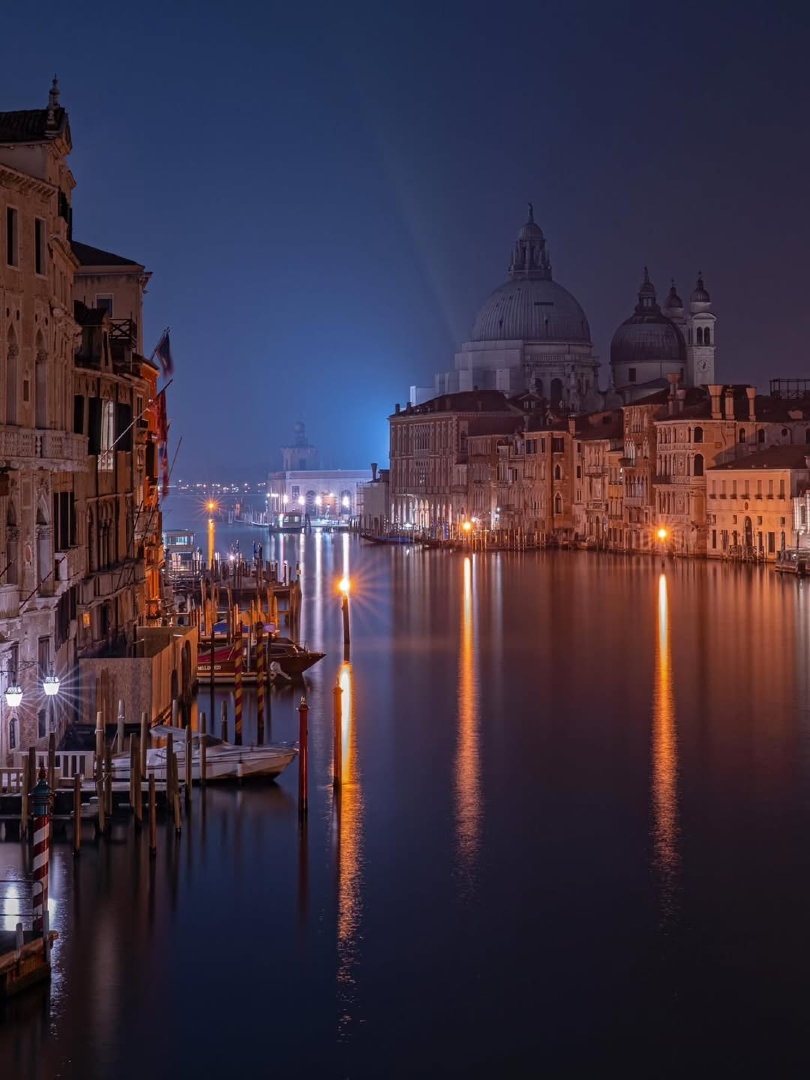
“night view”

“the Grand Canal”

Typical Dishes and Local Products

The Venetian Authenticity: Fegato alla Veneziana (The Recipe)

You cannot say you have truly experienced Venice without tasting fegato alla veneziana (Venetian-style liver). It is not a noble dish in theory – it originates from popular cuisine, from offal and onion – but it is a masterpiece in practice. It is proof that true Venetian cuisine knows how to transform simple ingredients into something extraordinary.

The recipe is simple, but the secret lies in patience: the onions must cook slowly until they become very tender and slightly caramelized, while the liver should only be browned for a few minutes to remain soft. The combination of the slightly bitter taste of the liver and the sweetness of the onions is perfect.

Recipe for Fegato alla Veneziana

Serves 4 – Preparation time: 40 minutes

Ingredients:

  • 500g veal liver (ask the butcher to cut it into slices half a centimeter thick)
  • 800g white Chioggia onions (or regular onions, if unavailable)
  • 3 tablespoons extra virgin olive oil
  • 2 tablespoons butter
  • 1 bay leaf
  • 1 tablespoon white wine vinegar
  • 100 ml dry white wine
  • Fresh chopped parsley
  • Fine salt to taste (q.b.)
  • Black pepper to taste (q.b.)
Method:

1. Prepare the onions (time: 20-25 minutes) Peel the onions and cut them in half. Then slice them very thinly – it is important that they are uniform and thin, so they cook well. In a large pan, heat the butter with the oil and add the bay leaf. When the butter starts to foam, add the onions. Salt them lightly (the salt will help release the vegetable water) and stir.

Cover with a lid and cook over very low heat for about 20 minutes. The onions must not brown: they should wilt slowly, becoming very tender and almost creamy. If they start to dry out too much, add a tablespoon of warm water. Stir occasionally.

After 15 minutes, pour in the wine vinegar and stir. Cook for the last 5 minutes.

2. Prepare the liver (while the onions are cooking) Rinse the liver, and dry it thoroughly with paper towels. Remove any annoying membranes or gristle. Cut the slices into pieces about 3-4 cm wide, so they cook evenly.

3. Brown the liver (time: 5 minutes) When the onions are almost ready, turn up the heat slightly on the pan (the bottom with the onions remains hot). When the temperature rises, add the liver pieces. Let them brown for 2-3 minutes per side – no more, otherwise, it will become dry and tough. The liver should lose its pink color but remain soft inside.

Deglaze with the white wine and stir gently for 1 minute. Taste, and adjust salt and pepper.

4. Serve Transfer the liver with the onions to a serving dish. Garnish with fresh chopped parsley. Serve immediately, while still steaming.

Historical and Cultural Notes:

Fegato alla veneziana has its roots in a very ancient Roman recipe: the ancient Romans served offal accompanied by sweet fruits (like figs) to balance the bitter flavor of the meat. The Venetians, not having abundant figs available, substituted them with white Chioggia onion, a local variety that is sweet and delicate.

The recipe is mentioned in the masterpiece of Italian gastronomy “Apicio Moderno,” written by Francesco Leonardi in 1790, under the name “Fegato di mongana alla veneziana” (where “mongana” means milk-fed veal). This demonstrates how a dish of popular cuisine became so refined that it was recognized by the great masters of cooking.

Venetian tradition dictates that fegato alla veneziana be served accompanied by soft polenta (preferably the white kind), which absorbs the onion sauce. A classic alternative is mashed potatoes.

Wine Pairing:

A full-bodied red from Veneto (Amarone, Valpolicella Ripasso) or a red beer that contrasts the strong flavor of the meat. Avoid white wines: the liver needs something structured.

Useful Tips

Venice deserves at least 2-3 days of stay to be truly appreciated. If you only have one day, focus on St. Mark’s Square, the Rialto Bridge, and a walk in the smaller sestieri (districts). If you have 3 days, add the Accademia, the Jewish Ghetto, and the Contarini del Bovolo Staircase.

Recommended Periods

  • Best: April–May, September–October
  • Carnival: February–March 4, 2025 (magical but crowded and expensive)
  • Summer: June–August (very crowded, hot, less frequent high tide)
  • Winter: November–March (high tide, fewer tourists, lower prices)

Safety Warning: Venice is generally safe, but as in all crowded tourist cities, watch out for pickpockets on crowded vaporetti (water buses) and on the busiest bridges. Keep your valuables close.

Food and Dining: Avoid restaurants around St. Mark’s Square – they are expensive and touristy. Find the bacari (traditional taverns) in the smaller sestieri: Campo Santa Margherita, Cannaregio, San Polo. Here you will find cicchetti (small plates) and local wines at reasonable prices. If you are in a camper, the Rialto Market is perfect for buying fresh fish and vegetables.

👉 Discover other itineraries and GPS coordinates on map.camperepoi.it (coming soon!)

👉 Subscribe to the CamperePoi newsletter to download the complete guide “The Mountain by Camper”

0

post a comment