
Top

Visit Siena

discovering the medieval heart of Tuscany

Siena is one of the most evocative cities in Tuscany, a place where time seems to have stood still. Famous for Piazza del Campo and the Palio, it is a perfect balance of art, tradition, and unique landscapes. Visiting Siena by camper means immersing yourself in the heart of medieval Tuscany, among golden hills and cobbled streets where every corner tells a story.

Stopovers and overnight stays

Free parking (wild camping) is prohibited in the city center: always check local signage to avoid penalties.

Recommended areas

🅿️ Camper Parking Area
Str. di Pescaia, 53, 53100 Siena SI
This is a parking lot shared with tourist buses; it is equipped with a camper service (water loading and unloading), lighting, and sometimes video surveillance. It is often a well-lit, flat parking area, and well served by public transport to reach the heart of the city. GPS: 43.314407, 11.317237

Camping Colleverde Siena

Str. di Scacciapensieri, 47, 53100 Siena (SI)
is one of the most complete facilities for those traveling by camper van (RV) and wishing to visit Siena and Tuscany. It enjoys an excellent panoramic position, from which it is possible to admire the city and the Chianti hills. It is located about 2.5 km from the historic center. It offers pitches dedicated to camper vans and caravans, with full services of a real campsite, including water loading and unloading, electric hook-up, toilets, and hot showers.
There is also a swimming pool (open seasonally), a restaurant, a pizzeria, a bar, and a mini-market.
Wi-Fi.
TEL: 0577.332545
WEB: sienacamping.com
GPS: 43.336845, 1

Getting Around

Siena, with its fascinating entirely pedestrian historic center and UNESCO heritage site, invites a slow and careful visit, which is accomplished strictly on foot. The medieval city, built on several hills, features characteristic ups and downs that make its exploration a unique experience, but require a small initial effort to reach the beating heart of Piazza del Campo. It is essential to wear comfortable shoes to tackle the cobbled streets and slopes. For those arriving by camper, direct access to the historic center is precluded: the ZTL (Limited Traffic Zone) is active 24h and prevents access to these vehicles. The most used rest area for campers (Parcheggio Il Fagiolone) is located outside the walls, in a strategic position. The real turning point for reaching the top of the city is represented by the free escalators, an essential service that overcomes the difference in height between the lower part and the central area. Depending on the parking area, you can use different lift systems:
     
  • The Stazione-Antiporto-Porta Camollia Ascent, for example, connects the area of the train station (near some parking lots) to the Antiporto, close to the ZTL, and from there allows you to proceed towards Porta Camollia and the center’s interior.
  •  
  • Another very useful system is the Costone Ascent, which with its twelve ramps facilitates direct access to crucial points such as the Duomo (Cathedral), the Complesso Museale di Santa Maria della Scala (Museum Complex), and the Basilica of San Domenico.
These modern infrastructures brilliantly solve the problem of Siena’s steep climbs and make the arrival in the center quick and comfortable, in just a few minutes. Once in the center, distances are short and everything is walkable.

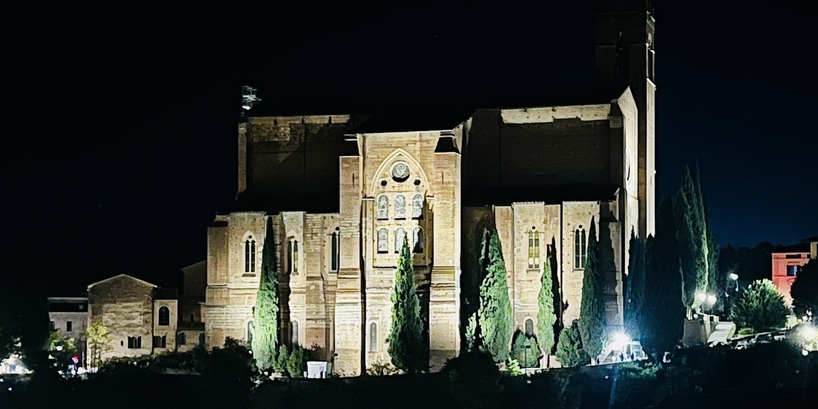
“as soon as you arrive it’s hard not to look for it!”

visiting the open-air museum and … not only

Points of Interest (PoI)

Siena is not just a city, but an open-air work of art that has preserved its medieval splendor and traditions intact — first and foremost, the Palio. The red brick architecture and the skyline of its palaces reflect the ancient power of what was once one of the richest and most powerful maritime and mercantile Republics of Italy. Visiting Siena is a journey through history, from the epicenter of civic and political life to the treasures of sacred art and the moonlike landscape of the surrounding countryside.
1
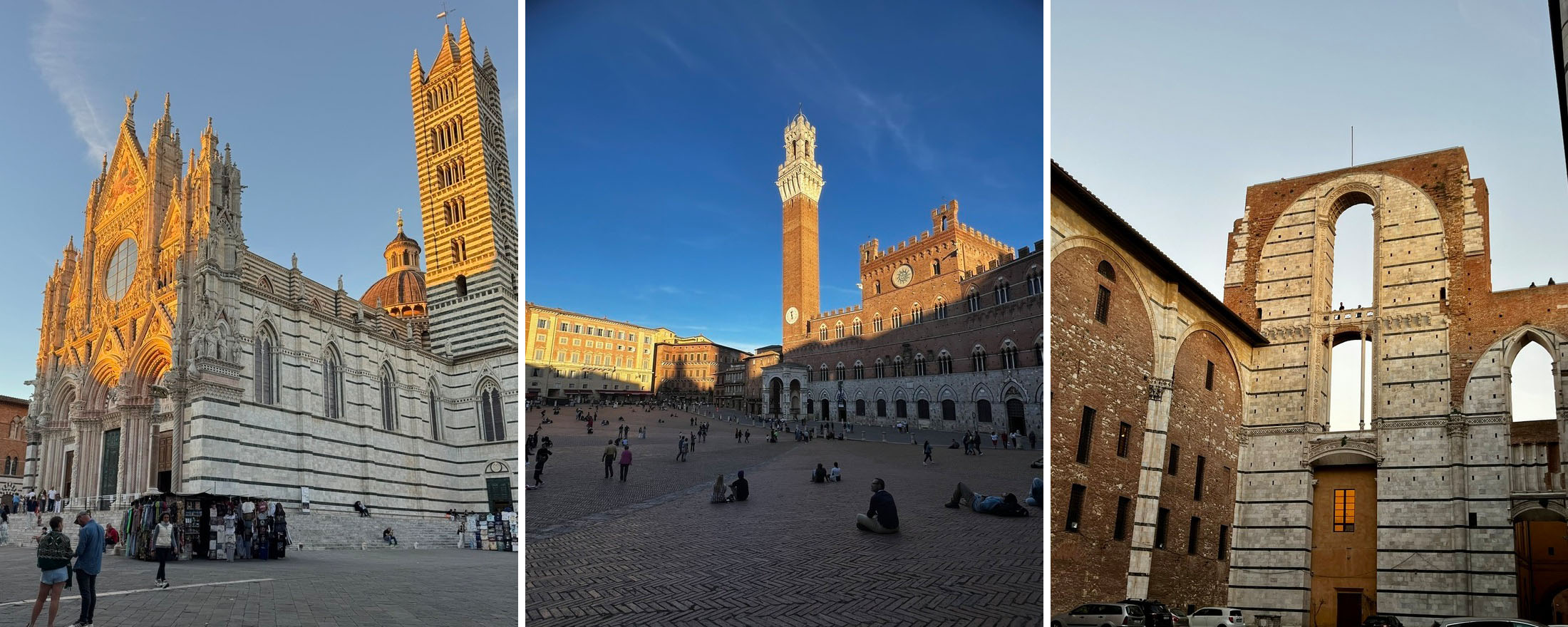
Piazza del Campo The focal point and undisputed symbol of Siena, Piazza del Campo is famous for its unmistakable concave shell shape, divided into nine sections by travertine bands — a tribute to the legendary Government of the Nine that ruled the Republic during its period of greatest splendor. On the lower side of the square stands the imposing Palazzo Pubblico, the ancient seat of Siena’s government and today home to the Civic Museum. Next to it, the slender Torre del Mangia (102 meters tall) is one of the tallest civic towers in Italy and offers, once climbed, a breathtaking view over the square and the entire city. At the center of the square lies the monumental fountain known as “Gaia” (“joyful”), so named for the happiness brought by the arrival of water in the city in 1346. The original sculptures by Jacopo della Quercia are now preserved in the Santa Maria della Scala Museum Complex, replaced in the square by faithful replicas.
2
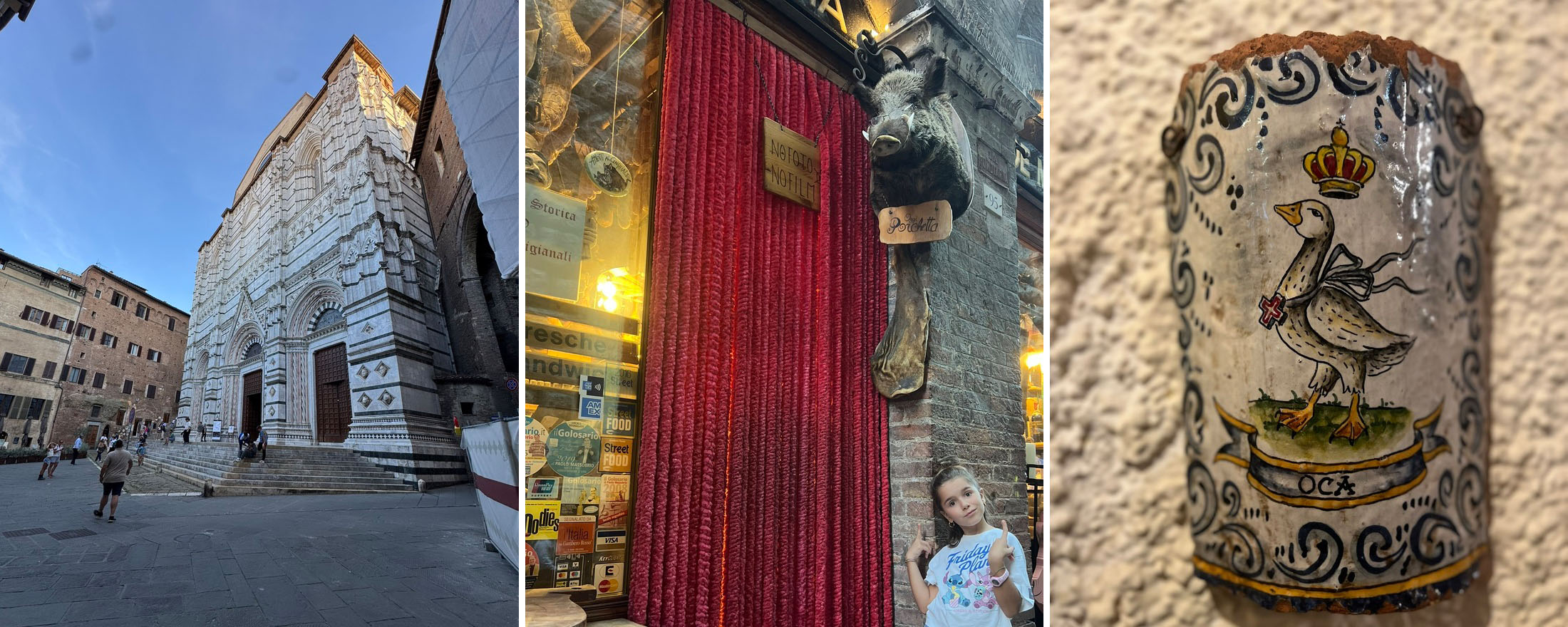
Siena Cathedral Considered one of the greatest masterpieces of Italian Gothic art, the Siena Cathedral impresses with the richness and complexity of its architecture. The façade, made of white marble, Siena red, and green serpentine from Prato, is a triumph of sculptures and decorations. Inside, with its black-and-white striped columns, the atmosphere is majestic and solemn. The true treasure, however, is the inlaid marble floor — unique in the world — featuring 56 detailed panels that depict biblical and mythological scenes. It is fully uncovered and visible only for a short period each year. Inside the Cathedral, the Piccolomini Library, commissioned by Cardinal Francesco Piccolomini (the future Pope Pius III), is a Renaissance jewel, frescoed by Pinturicchio with a pictorial cycle of rare beauty and vibrant colors.
3
Museo dell'Opera del Duomo An integral part of the Cathedral Complex (OPA), the Museo dell’Opera del Duomo houses the artworks that, over the centuries, have been removed from the Cathedral for conservation or decorative reasons. Among its most notable pieces are the original façade sculptures by Giovanni Pisano and, above all, the sublime Maestà by Duccio di Buoninsegna — once the Cathedral’s main altarpiece and considered one of the absolute masterpieces of 14th-century Italian painting. The museum also offers a unique opportunity: access to the top of the Facciatone, the unfinished façade of the so-called New Cathedral, an ambitious expansion project that was never completed. From here, visitors can enjoy a breathtaking 360° panorama over Siena, stretching from the historic center to the Crete Senesi.
4
Fortezza Medicea Also known as the Fort of Santa Barbara, the Fortezza Medicea was built between 1561 and 1563 by order of Cosimo I de’ Medici, Duke of Florence, after the definitive fall of the Republic of Siena. It was not only a defensive stronghold but also a symbol of Florentine power. Today, it has lost its military function and has become an important recreational and cultural center for the city. Inside is the Enoteca Italiana, an institution dedicated to promoting Italian wines. Its bastions are surrounded by a large public park known as “La Lizza,” an ideal place for a relaxing walk and for enjoying a panoramic view of the city.
5
Le Crete Senesi Leaving the city, one enters a landscape of singular beauty known as the Crete Senesi. This vast area southeast of Siena takes its name from the clay (“creta”) in the soil, which gives it a distinctive gray-blue color and a “lunar” appearance. The scenery is defined by bare, gently rolling hills dotted with solitary cypresses, isolated farmhouses, and unique geological formations called *calanchi* and *biancane*. Beyond the sheer charm of the landscape itself, the area is also renowned for its production of white truffles and is home to gems such as the imposing Abbey of Monte Oliveto Maggiore, nestled in a cypress forest and featuring a cloister adorned with frescoes of remarkable artistic value.

Seasonal Events

Il Palio di Siena
Where: Piazza del Campo, Siena
When: July 2 and August 16
What: The most famous horse race in Italy, of medieval origin; the city’s Contrade (districts) compete in a bareback horse race to win the Drappellone or Cencio. It is not a tourist reenactment but the very essence of Sienese life and identity.
Mercato nel Campo
Where: Piazza del Campo, Siena
When: First weekend of December
What: Reenactment of the 14th-century medieval market, featuring stalls with local crafts and traditional products.
Siena Jazz
Where: Siena
When: July and August
What: Hosts the “International Summer Workshop,” one of the most prestigious jazz seminars in the world. The event attracts teachers and students from all over the globe and culminates in a rich program of jazz concerts and student performances.

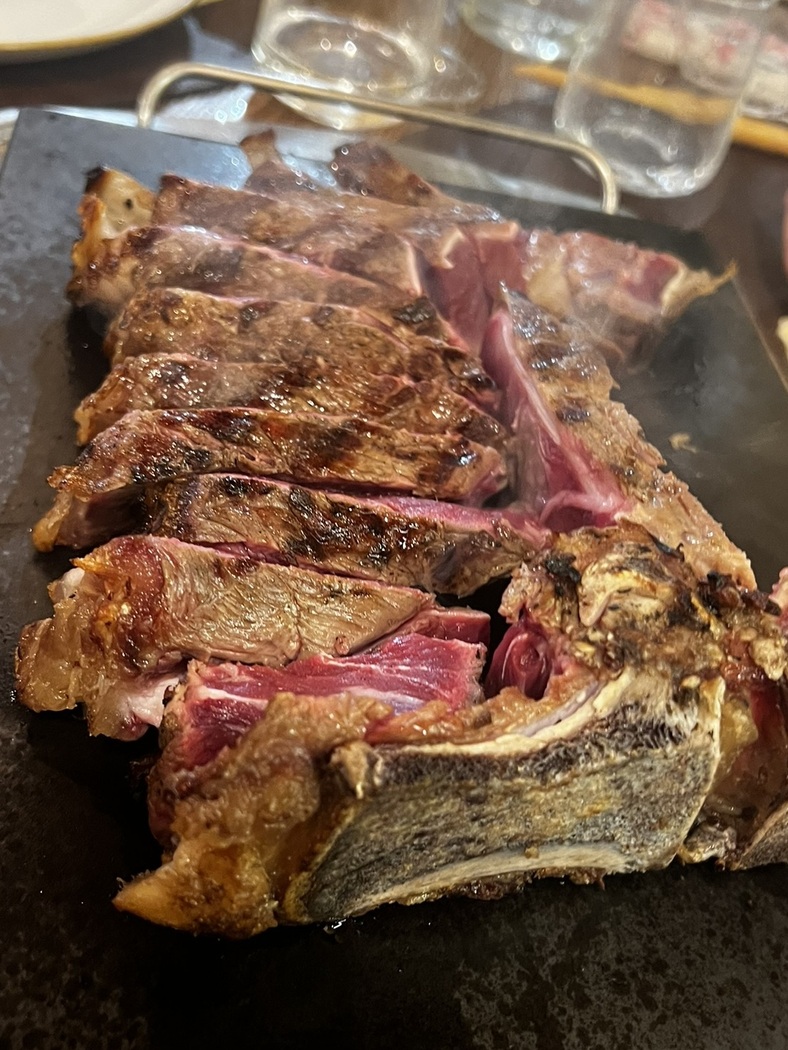
“… and you’re not even going to try some Florentine steak!?”

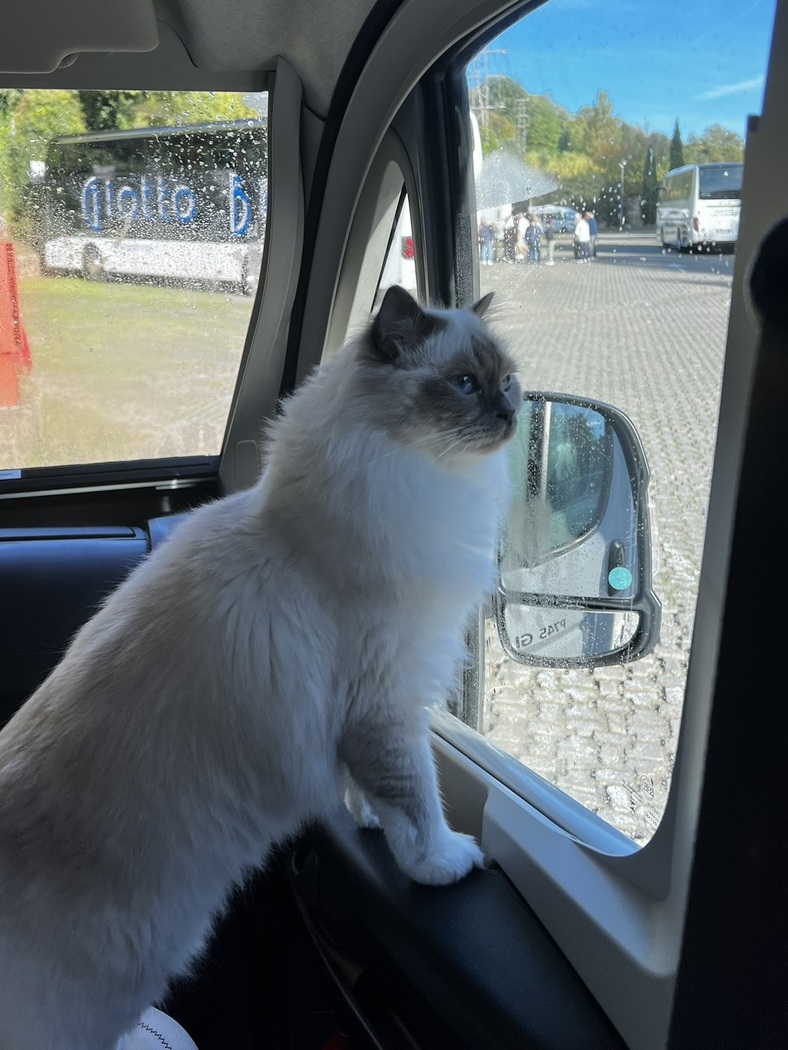
“there’s always something to see in the parking area”

Typical Dishes and Local Products

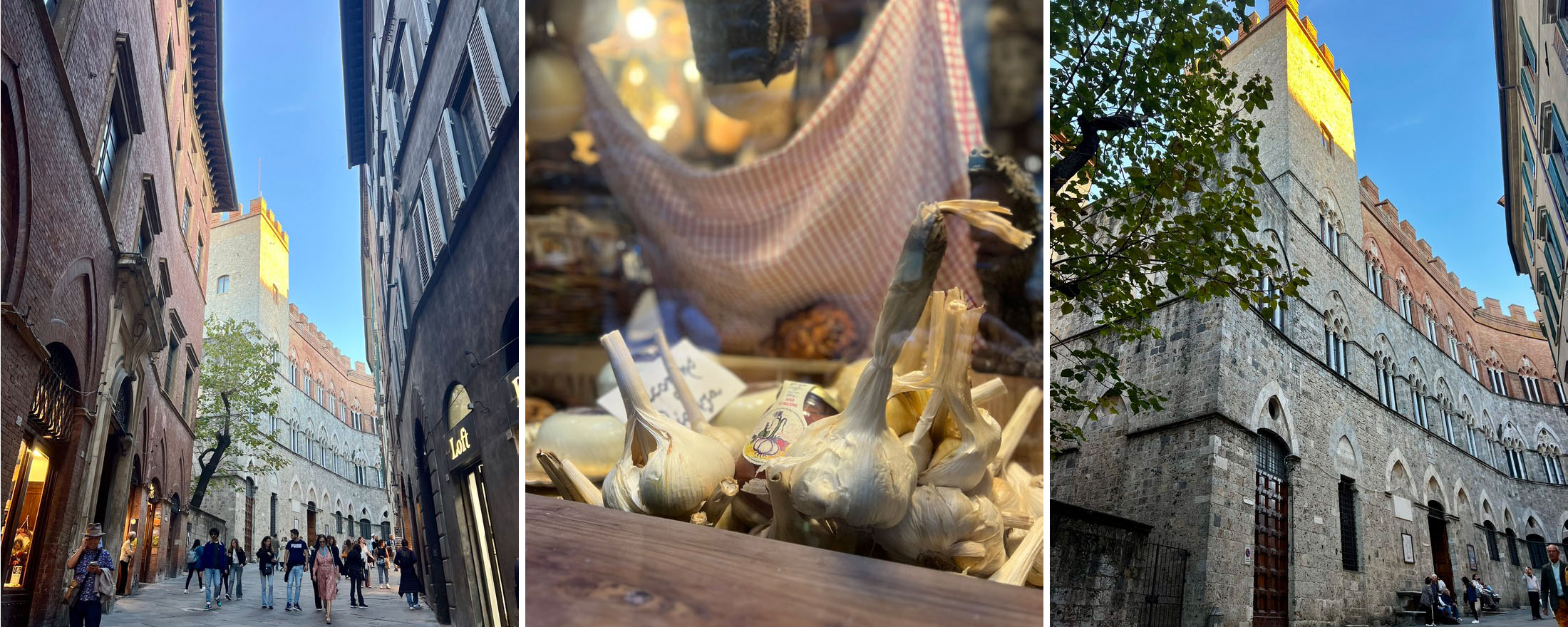
One of the most representative dishes is Pici all’aglione: its uniqueness lies in the use of Aglione della Valdichiana, a giant garlic variety with a much milder and more delicate flavor compared to common garlic, allowing it to be used in generous amounts without being overpowering.
Recipe for Pici all’Aglione — Ingredients for 4 servings:
  • 400 g of pici (typical Tuscan pasta)
  • 200 g of aged pecorino from Pienza
  • 4–6 large cloves of Aglione della Valdichiana
  • 50 ml of white wine
  • chili pepper to taste
  • salt to taste
Preparing the Aglione Sauce: Peel the garlic cloves and finely chop or crush them. In a large pan, pour the extra virgin olive oil and add the garlic. Sauté over very low heat — the goal is to almost melt the garlic into the oil. Add a splash of water or white wine to prevent it from burning, then cover and cook for 10–15 minutes. The garlic should become creamy and easy to mash. Add the tomato puree or peeled tomatoes, season with salt, and if desired, a bit of chili pepper. Let it simmer gently for about 30–40 minutes, until the sauce thickens nicely.
Cooking and Tossing: Cook the pici in plenty of salted water. Being thick and fresh, cooking times vary, usually between 5 and 8 minutes (always taste to check). Drain the pici while still very al dente and transfer them directly into the pan with the sauce. Toss for about a minute, adding a ladle of cooking water to create a creamy texture that coats the pasta perfectly.
Note: The original Tuscan recipe does not include grated cheese, to avoid covering the delicate and distinctive flavor of the aglione.

Useful Tips

Siena is a must-stop for anyone traveling by camper through Tuscany. Its districts, cuisine, and medieval atmosphere offer an unforgettable experience.
Visit the city in the off-season (spring or autumn) to enjoy it peacefully.
👉 Discover more itineraries and GPS coordinates on map.camperepoi.it (coming soon!)
👉 Subscribe to the CamperePoi newsletter to download the complete guide “Val d’Orcia by Camper.”
0

post a comment