
Top

Visit Parma

Between Renaissance Art and Gastronomic Tradition

Parma is a jewel of Emilia-Romagna that wins the hearts of motorhome travellers with its discreet elegance and extraordinary heritage. Italian capital of gastronomic culture, awarded the UNESCO title of Creative City of Gastronomy, Parma is much more than just ham and parmesan: it is a city of art where the masterpieces of Correggio and Parmigianino dialogue with the majestic Farnese palaces, where the music of Giuseppe Verdi still resonates in the historic theatres, and where every square tells centuries of history. The compact, pedestrian-friendly historic centre is easily visited on foot, while the well-connected parking areas allow you to park your motorhome peacefully and immerse yourself in an experience that combines culture, art, music, and culinary tradition of excellence.

Stopovers and overnight stays

Recommended areas

🅿️ Parma Motorhome Parking Area
Largo XXIV Agosto 1942, 21/a – 43126 Parma
The Parma Motorhome Parking Area is the most convenient solution for visiting the city. Located just 3.8 km from the historic centre, it offers 27 pitches for motorhomes and caravans in an equipped, fenced, illuminated, and 24/7 video-surveilled area.

Rates: €4 for 1 hour, €6 for 2 hours, €12 for 12 hours, €20 for 24 hours. Maximum stay: 72 consecutive hours.

Hours: Open 365 days a year, from 7:00 AM to 11:00 PM. Staff present from 8:00 AM to 8:00 PM (excluding Sunday afternoons).

Useful Notes: A Lidl supermarket is located in the immediate vicinity. The bus stop for the historic centre is easily reachable on foot. Excellent logistical base for exploring Parma by public transport.

GPS: 46.793440, 11.924860

🅿️ Agriturismo Argaland
Strada Bergonzi n. 12, LocalitĂ  Baccanelli – 43126 Parma

For those seeking a more bucolic and relaxing experience, Agriturismo Argaland offers 8 pitches for motorhomes and caravans immersed in the Parma countryside, just 10 minutes from the city centre.

The farmhouse is located in an authentic agricultural setting, with a beautiful manor house surrounded by fields. The atmosphere is quiet and familiar, perfect for those who want to detach from the urban routine while remaining close to the city. The bus stop for Parma is right in front of the structure’s entrance.

Useful Notes: A cycling path also starts from here, leading directly to the historic centre through the Taro Park. Excellent base for those who want to combine visiting Parma with excursions into the surrounding hills (Torrechiara Castle, Food Museums, medieval villages).

GPS: 46.795580, 11.930060
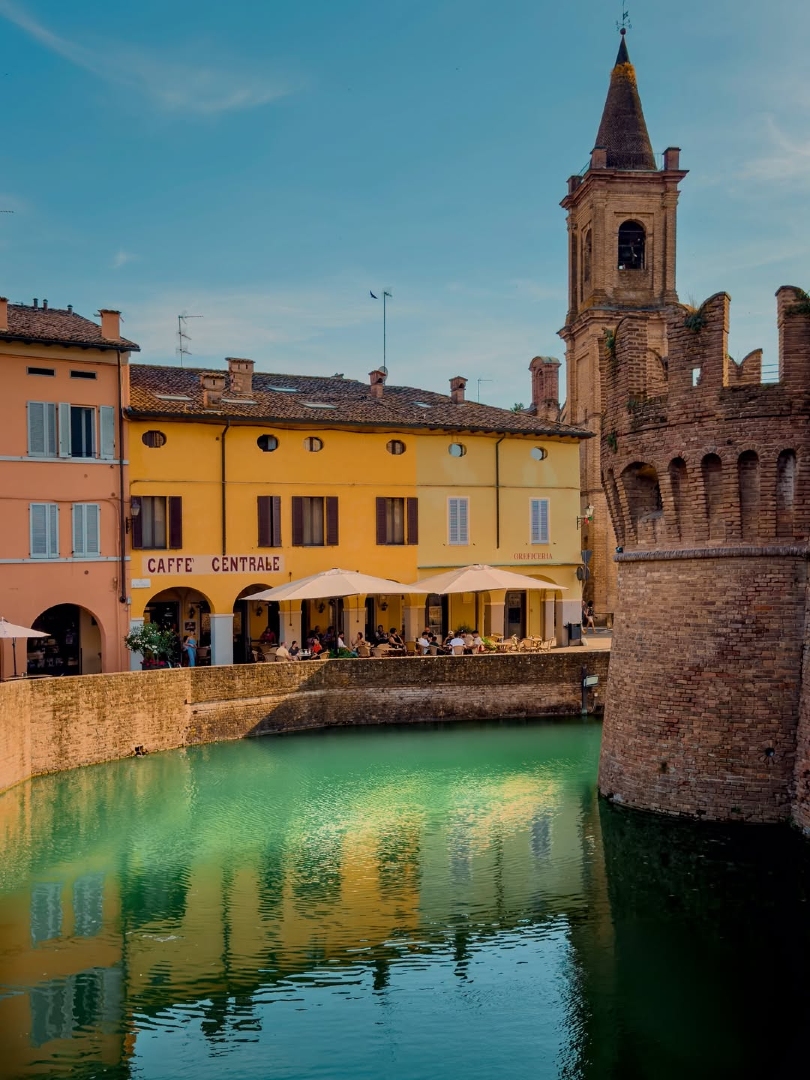
“Sanvitale Fortress in Fontanellato”

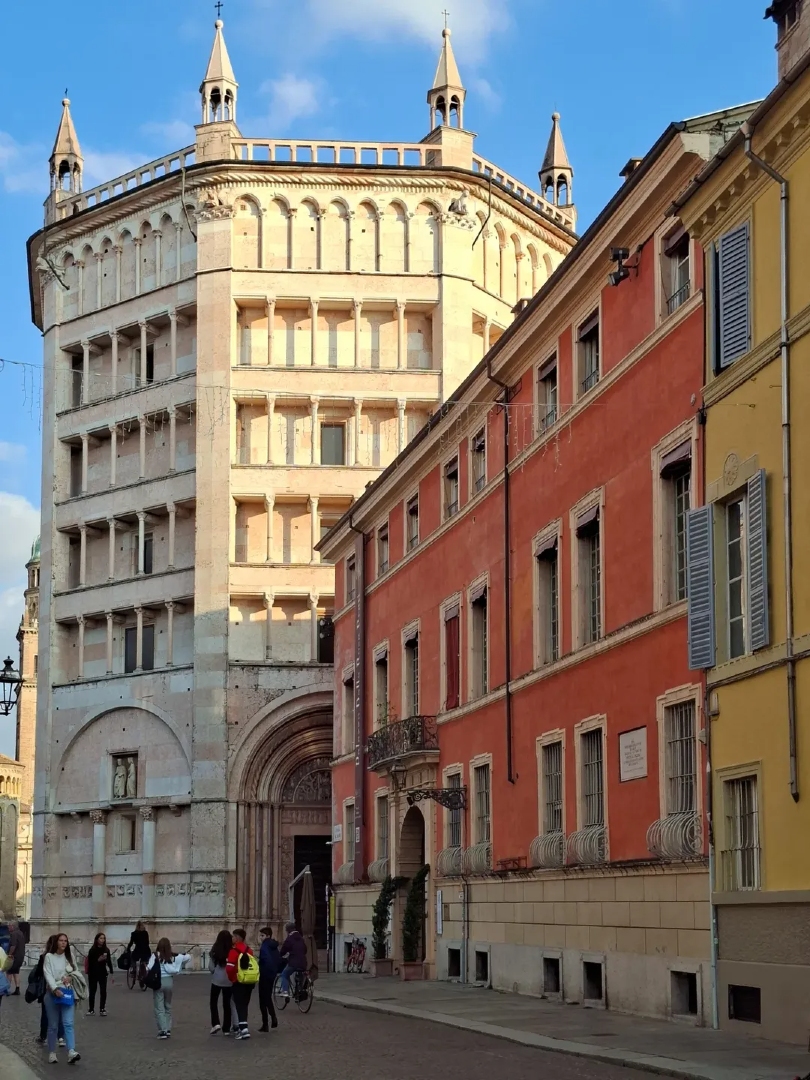
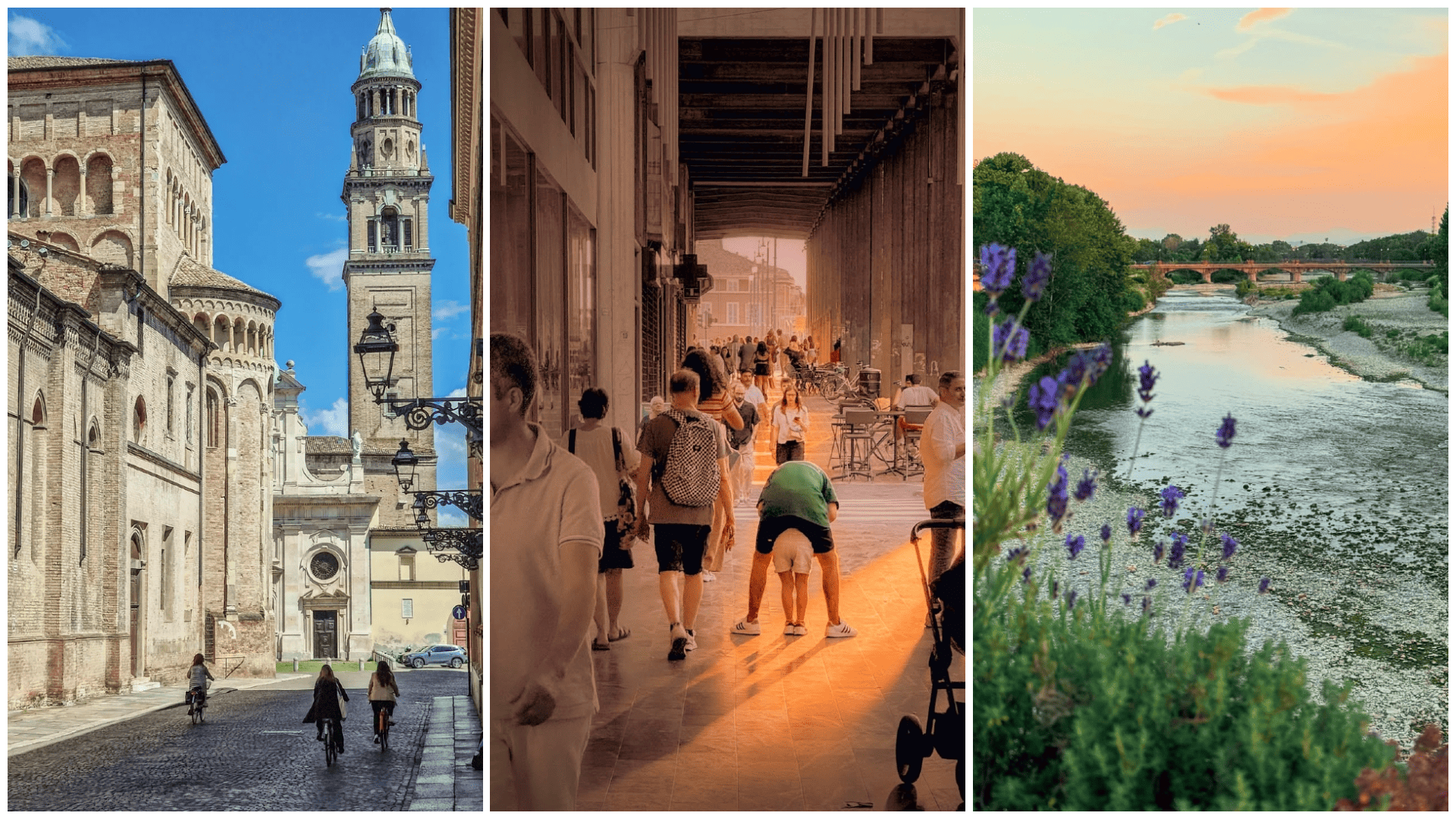
“the Baptistery of Parma and the adjacent Cathedral”

Getting Around

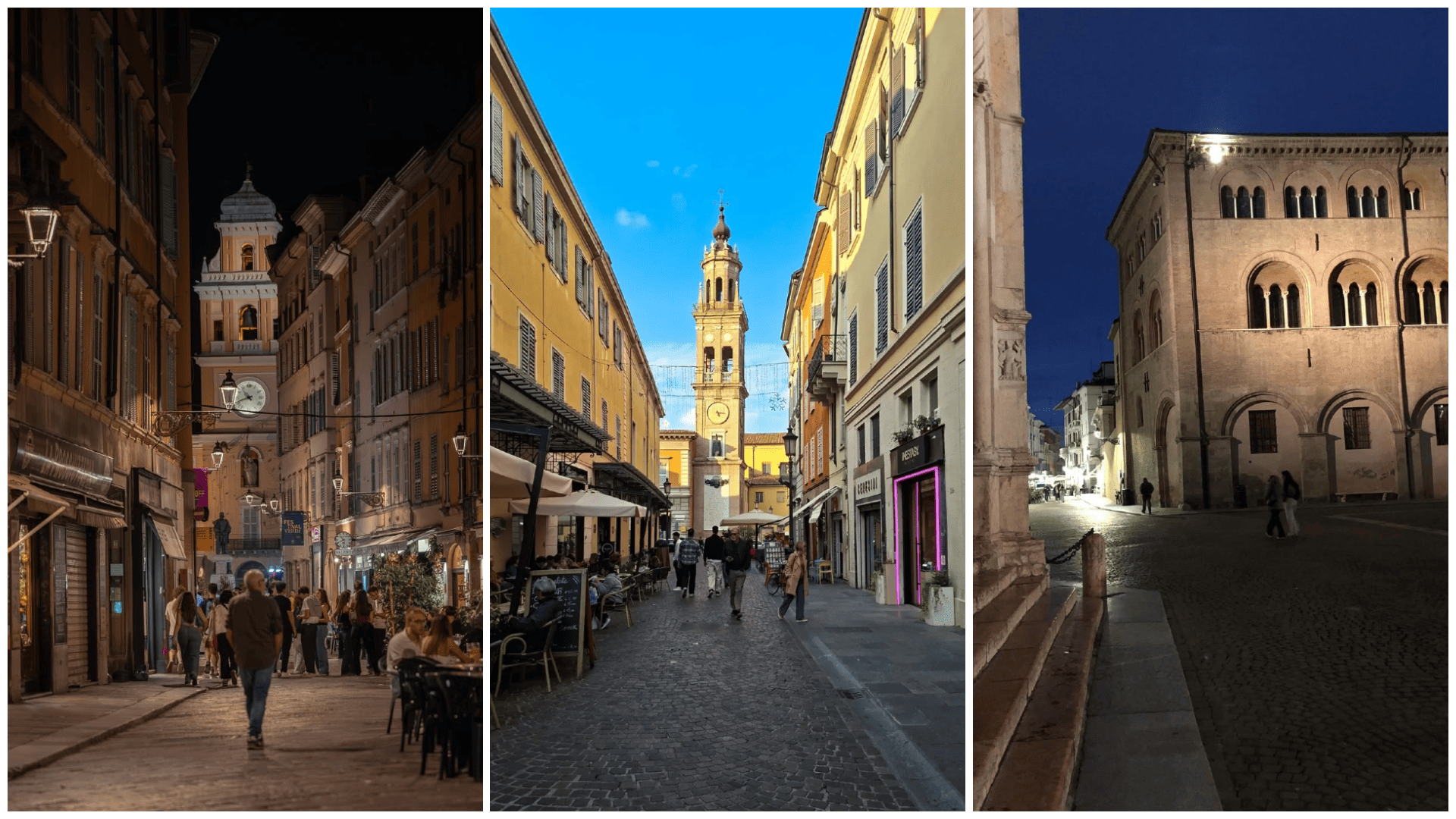
Parma is an extremely convenient city to visit on foot: the historic centre is largely pedestrianized and the main attractions (Piazza Duomo, Palazzo della Pilotta, Teatro Regio, Parco Ducale) are within a short distance of each other, all reachable in a 10-15 minute walk.

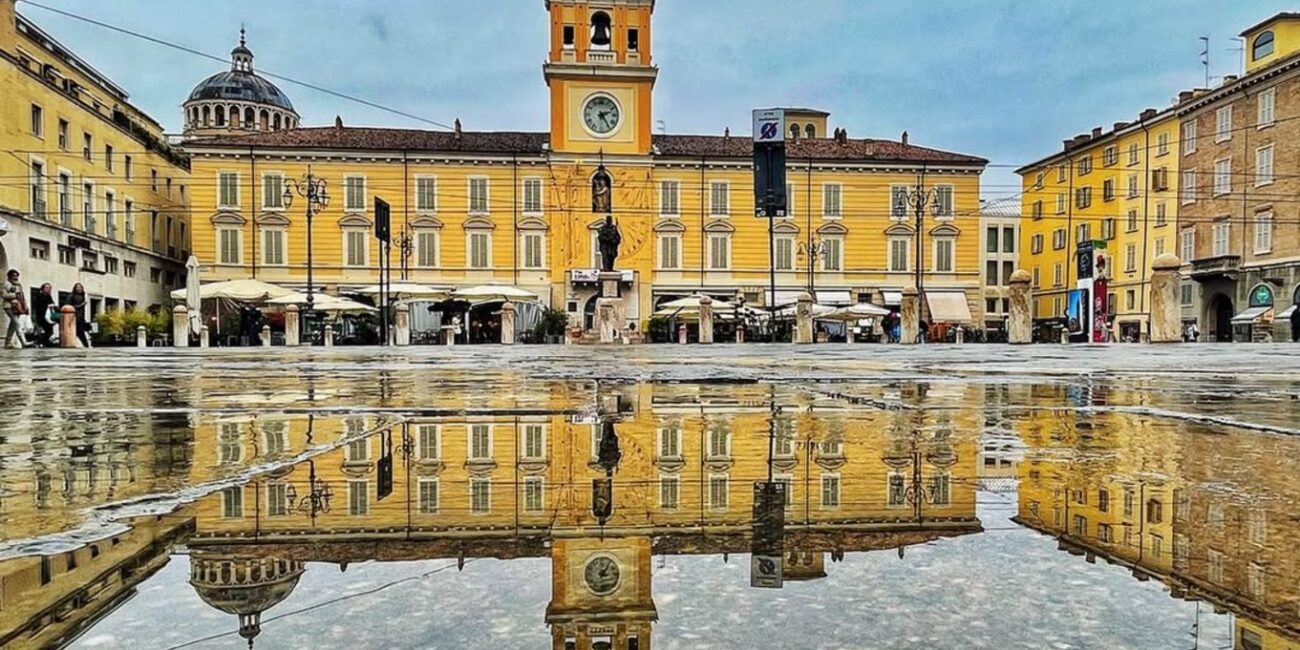
From the Parma Motorhome Parking Area: Several urban lines connect the parking area to the historic centre with frequent services. Lines 6, 7, and 21 take you to Piazza Garibaldi, in the heart of the city, in about 15 minutes. Urban tickets cost around €1.50 and can be purchased at newsstands, tobacconists, or via an app.

From Agriturismo Argaland: Line 6 (direction “Parma Centro”) departs from the bus stop located right in front of the farmhouse and reaches the centre in about 20 minutes. Alternatively, for bicycle enthusiasts, a pleasant cycle path of about 7 km runs through the countryside and the Taro Park until it reaches the Parco Ducale.

By bicycle: Parma is very bike-friendly, with numerous cycle paths and a flat historic centre. Agriturismo Argaland offers bicycle rental, ideal for a sustainable exploration of the city and its surroundings.

City Parking (for those who prefer to travel by car): If you decide to enter the city with a smaller vehicle, there are paid parking lots near the Parco Ducale (Viale Pasini) which are free on Sundays and holidays. Please note: motorhomes cannot circulate in the historic centre, which is mostly ZTL (Limited Traffic Zone).

Practical Advice: Once you arrive in Piazza Garibaldi, the entire centre is easily visited on foot. Consider at least 4-5 hours for a complete visit to the main sites, or an entire day if you wish to visit the Pilotta museums leisurely.

Points of Interest (PoI)

1
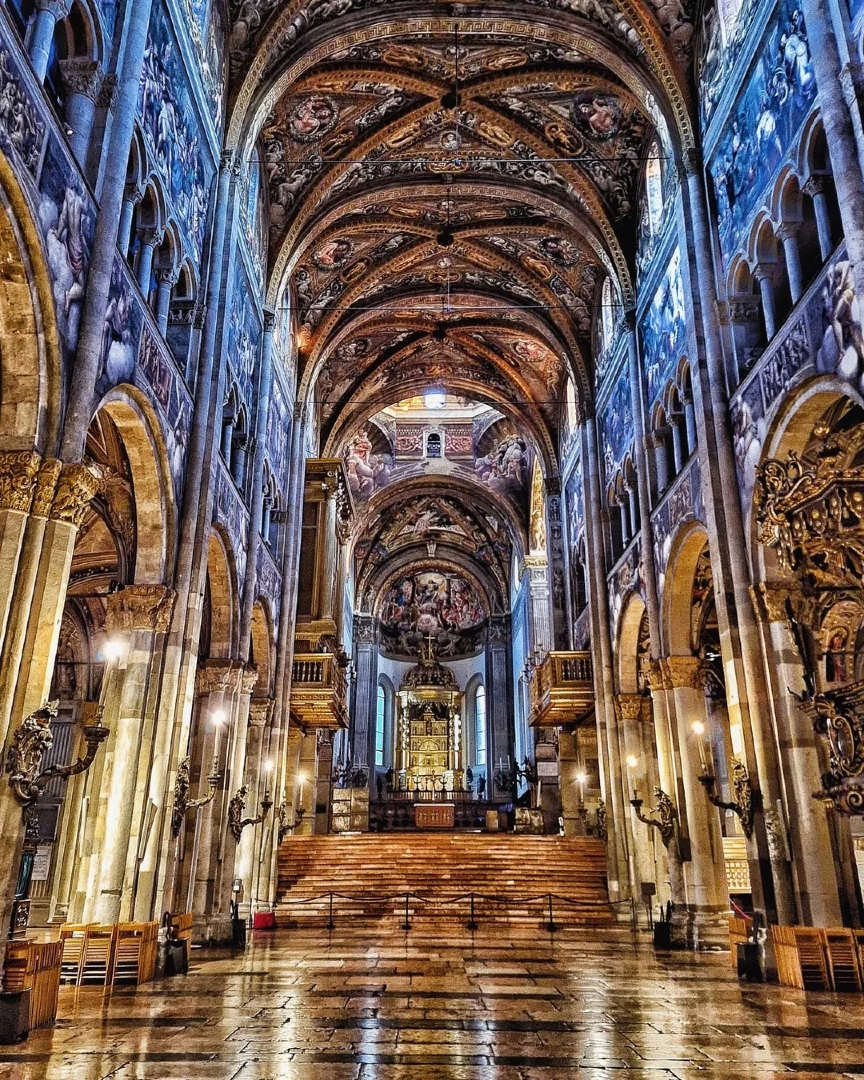
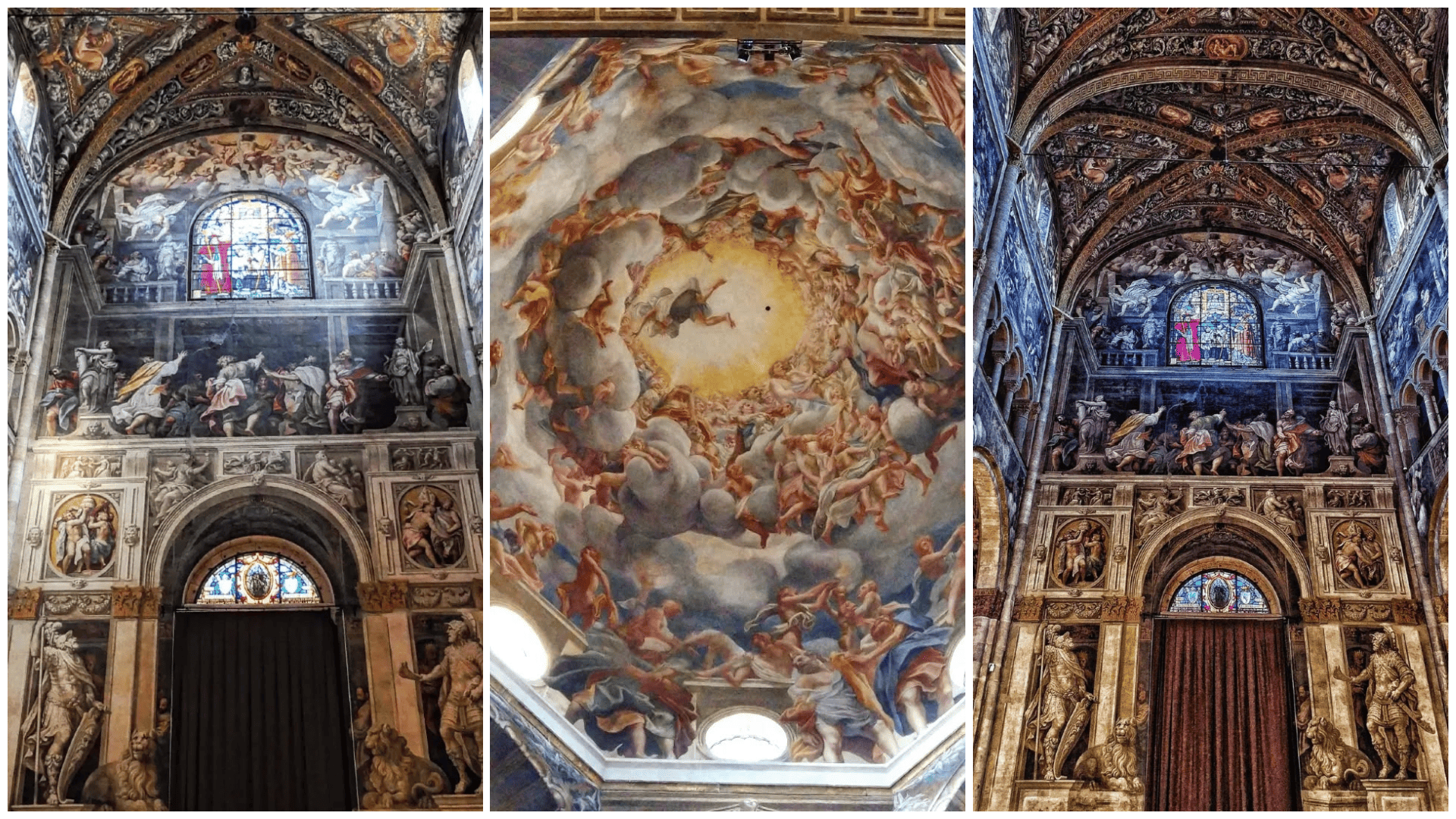
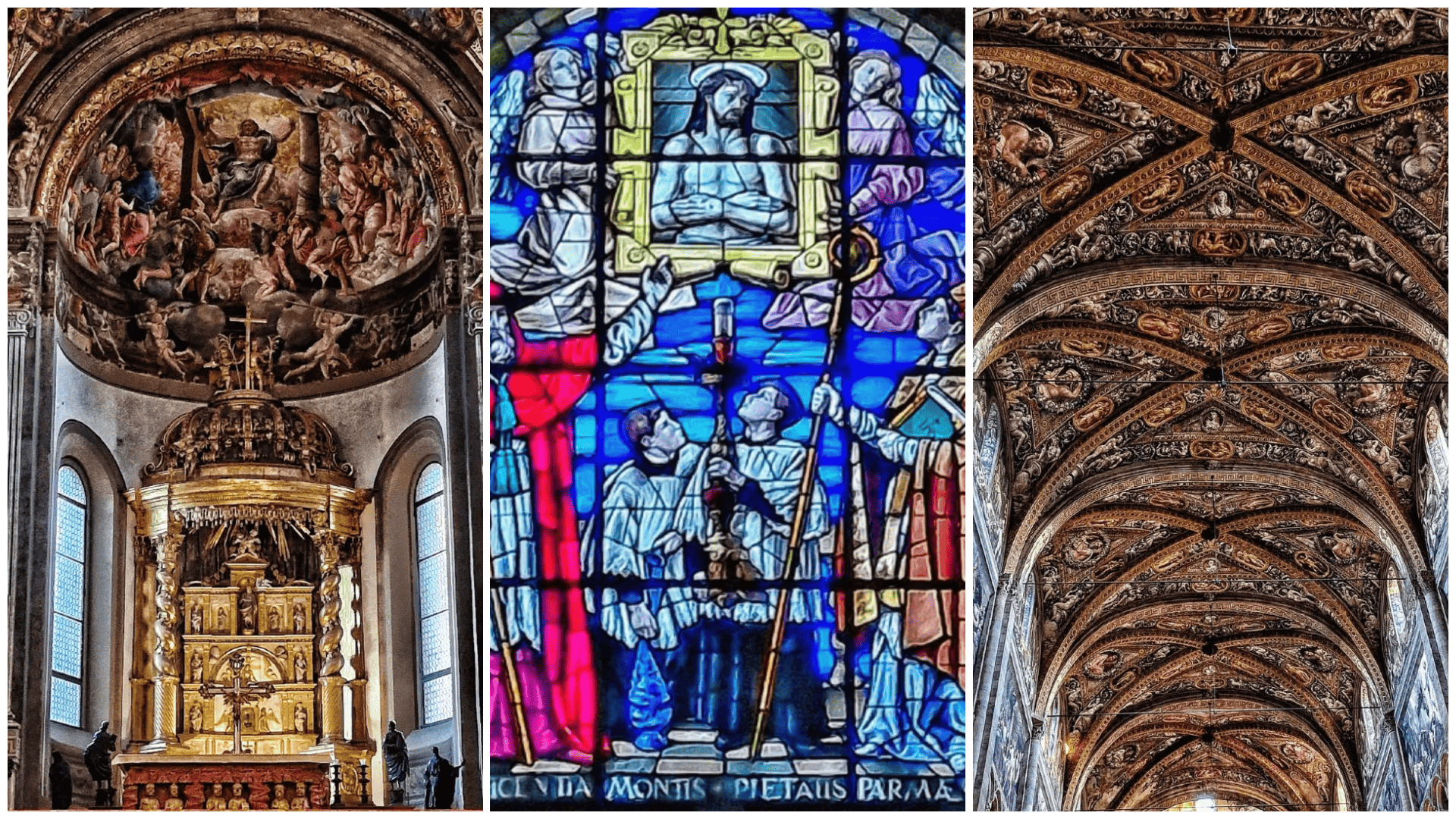
Piazza del Duomo: The Romanesque Heart of Parma Piazza del Duomo is one of the most evocative medieval spaces in Italy, a compendium of Romanesque and Gothic architecture that takes your breath away with its harmony and beauty. Three absolute masterpieces are concentrated here: the Cathedral, the Baptistery, and the Diocesan Museum. The Cathedral of Santa Maria Assunta is a magnificent example of Lombard Romanesque, consecrated in 1106. The exterior, with its gabled facade decorated with superimposed loggias and the powerful Gothic style bell tower (63 meters high), prepares the visitor for the marvel of the interior. But it is by looking up at the dome that one experiences the greatest emotion: the Assumption of the Virgin, an absolute masterpiece by Correggio (1526-1530), a whirlwind of angels, saints, and figures that seem to swirl towards the sky in a triumph of colours and movement. This fresco represents one of the peaks of Italian Renaissance painting and has influenced generations of artists. In the side aisles are other precious works, including the famous Deposition of Christ sculpted by Benedetto Antelami in 1178. The Baptistery of San Giovanni Battista, built between 1196 and 1270 by the architect and sculptor Benedetto Antelami, is considered one of the most important monuments in Europe for the transition from Romanesque to Gothic. Its octagonal plan (the eight symbolizes the resurrection of Christ) and the external covering in pink Verona marble create a unique chromatic effect. Outside, don't miss the zooforo, a gallery of 75 panels depicting real and fantastic animals, lions, griffins, and centaurs. Inside, the 16 arches are completely frescoed with Byzantine-style biblical scenes, while the dome depicts the Heavenly Jerusalem. Particularly evocative is Antelami's sculptural cycle of the Months and Seasons, a masterpiece of medieval art that describes human labour in the various periods of the year. The Diocesan Museum houses works of art from the Cathedral and the Baptistery, as well as precious 5th-century Roman mosaics discovered during excavations.
2
Monumental Complex of the Pilotta: A Farnese Treasure Brunico Castle dominates the city from the top of a green hill. Built in the 13th century by the Bishop of Brixen, it has been recently renovated with an audacious intervention that has flanked the ancient walls with modern materials such as wood, glass, and steel. Today, it houses the Messner Mountain Museum Ripa, one of the six museums in the circuit founded by mountaineer Reinhold Messner. The museum is dedicated to the mountain peoples of the world: Sherpa, Incas, Tibetans, Mongolians, and many other cultures that have lived in symbiosis with the peaks for millennia. The exhibition halls display objects of daily life, working tools, ritual masks, and evidence of the religious and spiritual traditions of these peoples. It is a fascinating and unusual journey that makes you understand how the mountain is not just about skiing and climbing, but also home, culture, and resilience. The castle can be reached from the centre via a panoramic path that starts at the foot of the hill and climbs gently through meadows and trees. The ascent takes 10-15 minutes and offers an increasingly wide view of the city and the valley. The route is very pleasant in summer, but it can be slippery in winter: wear suitable shoes. The Palazzo della Pilotta is an imposing sixteenth-century monumental complex that houses five museums within a single structure. Built between 1583 and 1600 as an annex to the Farnese Ducal Palace, it owes its name to the game of pelota (Basque pelota) that Spanish soldiers practiced in its courtyards. Severely damaged during World War II, it was reconstructed in the post-war period and is now one of the most important cultural centres in Italy. Teatro Farnese The first marvel you will encounter is the Teatro Farnese, a masterpiece of theatrical engineering from 1618 designed by the architect Giovan Battista Aleotti. Built entirely of wood and stucco to imitate precious marbles and metals, it was the first modern permanent theatre in the West, equipped with a revolutionary mobile scenic system. The auditorium could seat 3,000 spectators and could even be flooded for naval battle representations. Despite its magnificence, the Farnese used it only 9 times! Destroyed by bombing in 1944, it has been faithfully reconstructed and today welcomes visitors with its grandeur. Galleria Nazionale (National Gallery) The Galleria Nazionale of Parma is one of Italy's most important picture galleries. It houses masterpieces by Leonardo da Vinci (the Head of a Young Woman known as La Scapiliata), Correggio, Parmigianino, Canaletto, Fra Angelico, El Greco, Tiepolo, and many other Italian and European masters. The section dedicated to 16th-century Emilian painting is particularly rich, with rooms entirely dedicated to the detached frescoes by Correggio and the Mannerist works by Parmigianino. Museo Archeologico Nazionale (National Archaeological Museum) Founded in 1760 by Philip of Bourbon, the museum preserves important finds ranging from Prehistory to the Roman age, with a notable Egyptian collection and Etruscan finds from the Roman city of Veleia. Biblioteca Palatina (Palatine Library) A historic library founded in 1762, featuring the splendid Petitot Gallery decorated in neoclassical style and rich in ancient manuscripts, incunabula, and rare editions. Museo Bodoni (Bodoni Museum) Dedicated to the art of typography and the famous Parma typographer Giambattista Bodoni, inventor of the typeface that bears his name.
3
Teatro Regio: The Temple of Verdian Music The Teatro Regio is one of Italy's most prestigious and exacting opera houses, built between 1821 and 1829 at the behest of Marie Louise of Austria, wife of Napoleon and Duchess of Parma. The theatre was designed by the architect Nicola Bettoli in Neoclassical style, featuring a sober and elegant façade that conceals a sumptuous interior: the horseshoe-shaped hall with four tiers of boxes is dominated by an enormous Parisian chandelier weighing one ton. The Teatro Regio is inextricably linked to Giuseppe Verdi, the composer from Busseto who saw many of his operas debut here. Even today, the Regio audience is known for being one of the most demanding and knowledgeable in the world: a standing ovation at the Teatro Regio is a coveted achievement for every opera singer. Every year, in September-October, the theatre hosts the Verdi Festival, one of the most important opera events in Europe, which attracts enthusiasts from all over the world. The theatre can only be visited during scheduled guided tours or events. To find out visit dates and procedures, please consult the official website teatroregioparma.it. Alternatively, you can admire the exterior façade and the square in front, where a monument to Giuseppe Verdi also stands.
4
Basilica of Santa Maria della Steccata: The Renaissance Jewel The Basilica of Santa Maria della Steccata is one of the masterpieces of the Italian Renaissance, built between 1521 and 1539 based on the design of the architects Bernardino and Giovanni Francesco Zaccagni. The name derives from the “steccato” (a fence or railing) that was erected in the Middle Ages to protect a miraculous image of the Madonna, highly revered by the people of Parma. The church has a Greek cross plan (the nave and transept are the same length), surmounted by a large central dome frescoed by Bernardino Gatti with the Assumption of Mary. The interior is bright and elegant, decorated with 16th-century stuccos and frescoes. But the true treasure of the Steccata are the frescoes by Parmigianino (Francesco Mazzola, 1503-1540), Correggio's favourite pupil, who created one of his most important cycles here. In the arches of the triumphal arch, one can admire the famous figures of the Wise and Foolish Virgins, represented with a grace and refinement that anticipate Mannerism. In the basilica's crypt lie the tombs of the Farnese Dukes, who made the Steccata their official mausoleum.
5
Parco Ducale: The Green Lung of the City The Parco Ducale is the "green living room" of Parma's residents, a 20-hectare oasis in the heart of the city commissioned by Duke Ottavio Farnese in 1560 and designed as an Italian garden. Today, it is a much-loved public park, perfect for a relaxing break after museum visits. The park is traversed by long, tree-lined avenues, dotted with monumental fountains, statues, and water features. In the centre stands the Palazzo del Giardino (also called Palazzetto Eucherio Sanvitale), an elegant Renaissance building that hosts temporary exhibitions. Hidden among the trees is the romantic Tempietto d'Arcadia (Temple of Arcadia), a small neoclassical pavilion. At the end of the park, the Liberty-style Municipal Greenhouses house exotic botanical species. The Parco Ducale is the ideal place for a picnic in the shade of secular plane trees, for children to run safely, or simply to relax on a bench reading a book. On sunny days, you will see university students on the lawns, joggers along the avenues, and families strolling and enjoying the peaceful atmosphere. Hours: Always open from dawn till dusk

Seasonal Events

Verdi Festival

When: September - October
Where: Parma and Busseto
What: The Verdi Festival is one of Europe's most important opera events, a fixture that annually celebrates the genius of Giuseppe Verdi in the lands where he was born. The event takes place between Parma and Busseto (the composer's birthplace) with a program rich in operas, concerts, and collateral events.

Parma Ham Festival
When: September Where: Parma What: The Parma Ham Festival is the great celebration dedicated to the "King of Hams," which takes place every year in Langhirano (15 km from Parma), the heart of Prosciutto di Parma DOP production. The Ham Festival is the perfect opportunity to immerse yourself in the culinary culture of Parma, taste excellent products, and discover the villages in the province.
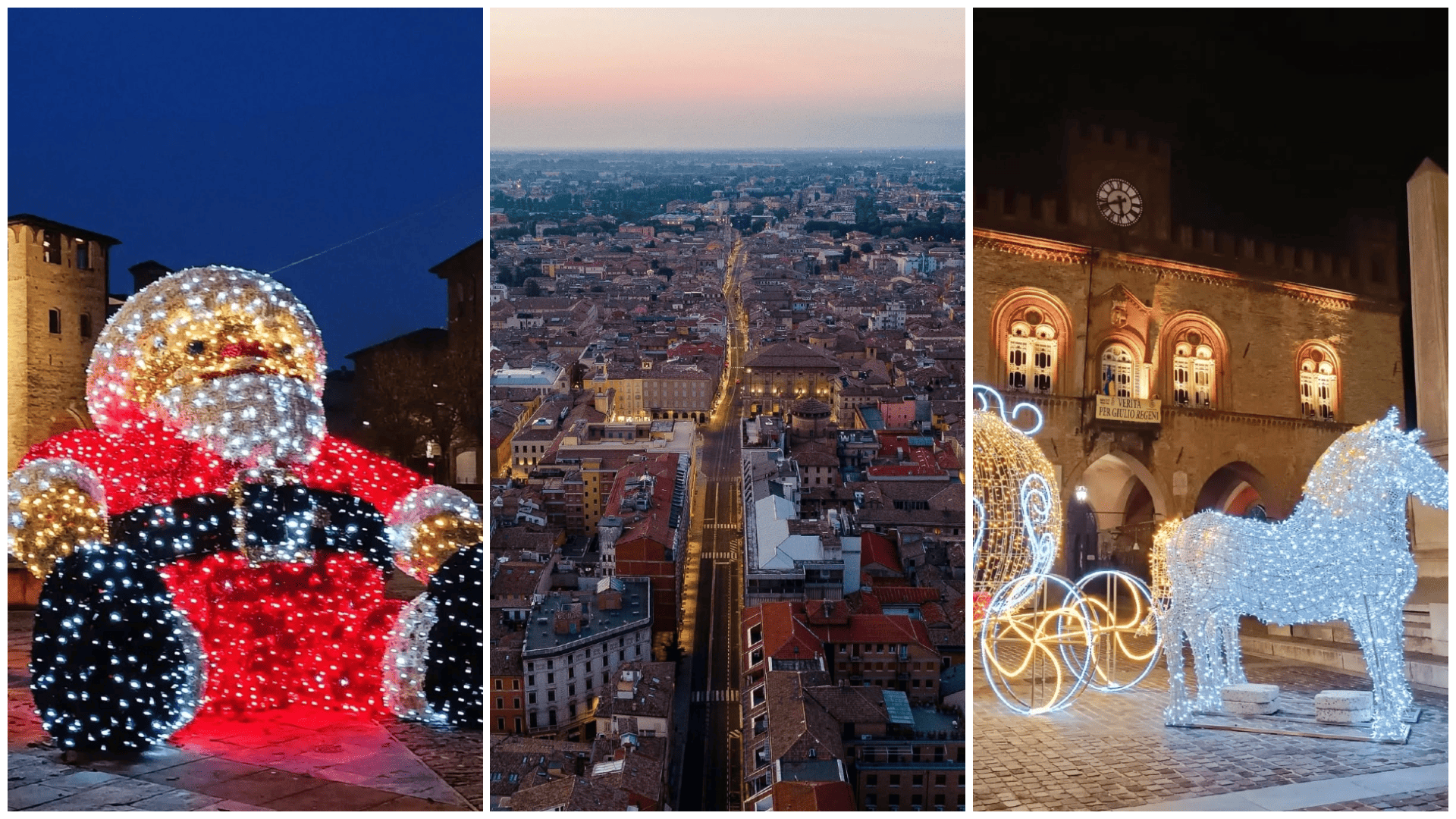
Christmas in Parma

When: December
Where: Parma
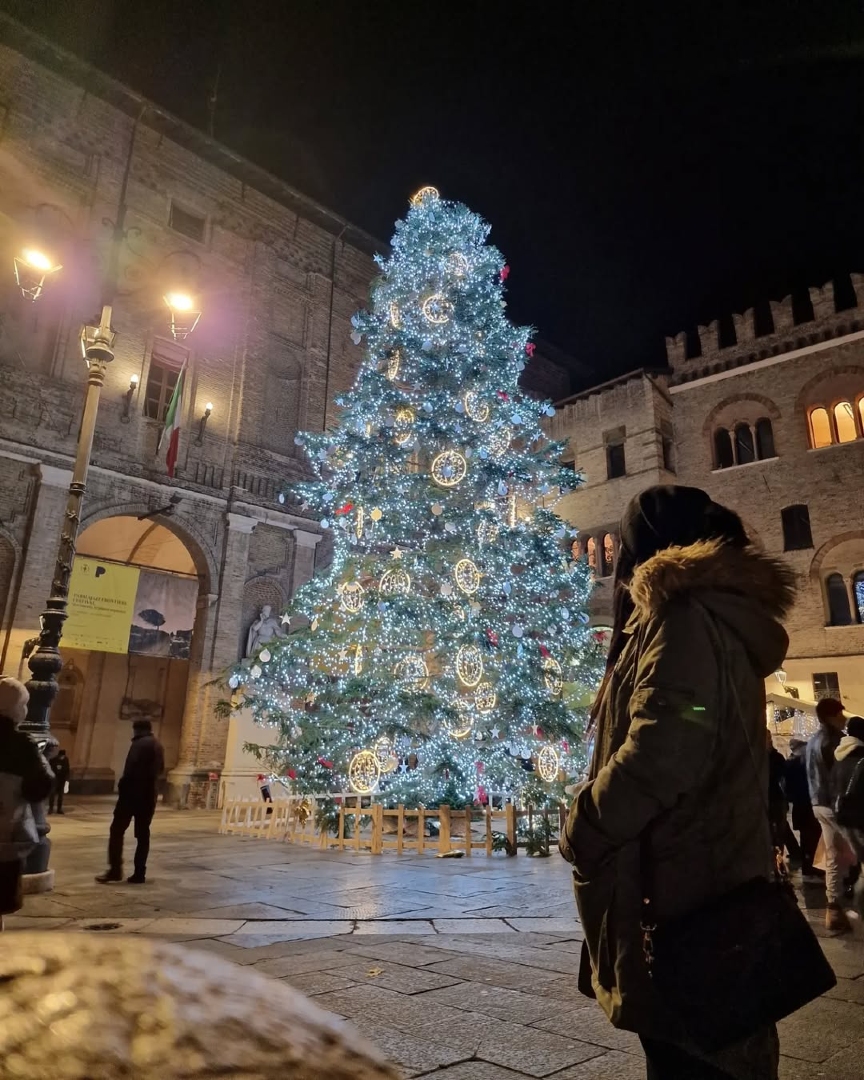
What: During the Christmas period, Parma is dressed in lights and welcomes visitors with:

  • Christmas Markets in Piazza Garibaldi, featuring handcrafted products, traditional sweets, and gift ideas
  • Artistic Nativity Scenes in historic churches
  • Christmas Concerts at the Teatro Regio and in the basilicas
  • Food and Wine Events: tastings, themed dinners, initiatives in the Food Museums

RicetteTypical Dishes and Local Products

You cannot truly say you have experienced Parma without tasting the Torta Fritta, the traditional Parmesan “bread” that accompanies cured meats and cheeses in every Emilia trattoria. In Modena and Reggio Emilia, they call it “gnocco fritto,” but in Parma, it’s “torta fritta” — and there is a historical reason for this.

History and Tradition

The torta fritta has ancient origins, likely dating back to the Lombards, a Germanic population that conquered Northern Italy after the fall of the Roman Empire. The Lombards had plenty of lard (pork fat) available and used it both in the dough and for frying. This simple fried bread became the daily food of Emilian farmers until the 1960s, replacing actual bread, which was more time-consuming to prepare.

But why “torta” (cake/tart)? Because in centuries past, it was customary to serve it at the end of the meal, dusted with sugar, as a sweet treat. Hence the name “torta,” even though today it is almost always eaten savory, accompanied by Prosciutto Crudo, Salame Felino, Culatello, Coppa, and Parmigiano Reggiano.

Torta Fritta Parmigiana Recipe

Torta fritta is surprisingly easy to prepare, even in a camper van! It requires few ingredients, and the result is guaranteed: fried diamonds of leavened dough, crispy outside and soft inside, which puff up like golden pillows.

Ingredients (for 4 people):
  • 500 g (about 4 cups) of 00 flour
  • 12 g (about 0.4 oz) of fresh brewer’s yeast (or 4 g of dry yeast)
  • 180 ml (about 3/4 cup) of lukewarm water
  • 3 tablespoons of extra virgin olive oil
  • 10 g (about 1/2 tablespoon) of fine salt
  • 1 pinch of sugar
  • Peanut oil (or other oil for frying) q.b. (as needed)
Method of Preparation:
  1. Prepare the yeast: Crumble the brewer’s yeast into a bowl with the pinch of sugar and 50 ml of lukewarm water. Mix until the yeast is completely dissolved and let it rest for 10 minutes until a light foam forms on the surface.
  2. Knead: On a pastry board (or in a large bowl), make a well with the flour. Pour the water with the dissolved yeast, extra virgin olive oil, salt, and the rest of the lukewarm water into the center. Using a fork, start mixing from the center outwards, gradually incorporating the flour. When the dough starts to take shape, knead vigorously with your hands for 8-10 minutes until you obtain a smooth, elastic, and non-sticky dough ball.
  3. Proofing: Form the dough into a ball, place it in a bowl lightly oiled, cover with plastic wrap or a damp cloth, and let it rise in a warm place for at least 1–1.5 hours, until the dough has doubled in volume.
  4. Roll and Cut: Turn the dough out onto a floured surface and roll it out with a rolling pin until you have a sheet about 3–4 mm thick. With a knife or a pizza cutter, cut out diamond shapes approximately 6×7 cm (or rectangles, if you prefer). You can make a small cut in the center of each diamond to facilitate frying and puffing.
  5. Fry: In a deep pan or pot, heat plenty of seed oil to 170–180°C (338–356°F). If you don’t have a thermometer, test the temperature with a small piece of dough: it should sizzle vigorously and immediately rise to the surface. Fry the diamonds a few at a time (2–3 at once, no more), turning them frequently with a slotted spoon. They will puff up like balloons! When they are uniformly golden (about 1–2 minutes per side), drain them and place them on kitchen paper towels.
  6. Serve: Torta fritta should be served piping hot, accompanied by generous slices of Prosciutto di Parma DOP, Salame Felino, Coppa di Parma, Culatello di Zibello, and flakes of 24–36 month aged Parmigiano Reggiano. Also add some soft cheeses like squacquerone or stracchino. To drink, a glass of chilled Lambrusco is the perfect pairing!
Historical and Cultural Note

Torta fritta is a symbol of Emilian hospitality. In the past, when unexpected guests arrived, all it took was lighting the fire and preparing torta fritta to offer a hearty and flavorful meal. Today, it is a communal ritual: Emilian families still gather to prepare torta fritta together, a gesture of love passed down from generation to generation. Grandmothers say that leftover torta fritta (if there ever is any!) is also excellent the next day, crunchy, and that some even dip it in warm milk for breakfast!

Useful Tips

When to Go

  • Spring (April–May): The best time to visit Parma. The climate is mild, the parks are in bloom, and the summer heat has not yet arrived. Ideal for walks and museum visits.
  • Autumn (September–October): Another excellent period, with pleasant temperatures. This is high season due to the Verdi Festival and the Ham Festival, so expect more crowds (but it is absolutely worth it!).
  • Summer (June–August): It is hot, but there are many outdoor events. Avoid the central hours of the day for monument visits.
  • Winter (December–February): Cold and fog typical of the Po Valley, but the Christmas atmosphere is charming, and the museums are less crowded.

Traffic Warning

Absolutely avoid taking your camper van into the historic center: almost the entire center is a ZTL (Limited Traffic Zone) with active cameras and hefty fines. The suggested parking areas are conveniently connected by public transport or bicycle.

Hills and Surroundings

If you have more days available, the province of Parma offers hidden treasures:

  • Torrechiara Castle (20 km): one of the most beautiful medieval castles in Italy
  • Busseto (40 km): the village of Giuseppe Verdi, with his birthplace and the Teatro Verdi
  • Langhirano (15 km): the kingdom of Prosciutto di Parma, with the Ham Museum and production plants open for visits
  • Food Museums (Musei del Cibo): thematic museums dedicated to Parmigiano Reggiano, Prosciutto di Parma, Pasta, Tomato, Wine, scattered throughout the hills

Shopping and Supplies

Before leaving Parma, stock up on local delicacies:

  • Parmigiano Reggiano DOP aged (the 36-month is extraordinary!)
  • Prosciutto di Parma DOP (have it sliced right then and there)
  • Culatello di Zibello DOP (if the budget allows, it’s the very best!)
  • Salame Felino IGP
  • Local Wines: Lambrusco, Malvasia dei Colli di Parma DOC, Fortana del Taro DOC

The best places to shop are the delicatessens (*salumerie*) and gourmet food shops (*gastronomie*) in the historic center (via Farini, via Cavour) and the dairies (*caseifici*) in the hills.

👉 Discover other itineraries and GPS coordinates on map.camperepoi.it (coming soon!)

👉 Subscribe to the CamperePoi newsletter to download the complete guide “La montagna in Camper” (The Mountain by Camper Van)

0

post a comment