
Top

Visit Nimes

Between Roman Antiquity and Provençal Charm

Nîmes is not a mainstream destination for those traveling by campervan, but if you love historical authenticity blended with Provençal charm, this city deserves a stop. Here you will find Roman monuments that defy the centuries, squares enlivened by cafes and restaurants, and an atmosphere that blows a touch of Spain mixed with the scent of Provence. It’s not a quick stop: Nîmes requires time to be savored, to get lost in its alleys, to sit at the outdoor tables and breathe the rhythm of a city that lives history as part of daily life.

Stopovers and overnight stays

For those arriving in Nîmes by motorhome/campervan, there is no shortage of parking options. In addition to the two highlighted below, other options include municipal campsites and private areas in the Camping-Car Park network scattered throughout the Gard region. France is generally tolerant of free overnight parking for campervans, but avoid the large motorway service areas (*autogrill*) in the southern regions: thefts are not uncommon.

Recommended areas

🅿️ Parking Rue du Capitaine Alfred Dreyfus
Pl. du Capitaine Dreyfus, 68000 Colmar, France
Paved and about 2 km from the historic centre. It does not offer services, but it is a good starting point for exploring the city. GPS: 48.076170, 7.344394

Remoulins CampingCar Park 14B Av. du Pont du Gard, 30210 Remoulins, France Full-service area; it is approximately 20 km away, reachable in a 20-minute drive. Parking is limited to 72 hours with a rate of 4 euros/24h, including access to grey and black water filling and draining. TEL: 0578.755109 WEB: campingcarpark.com
GPS: 43.937860, 4.555199

Getting Around

From the Rue du Capitaine Alfred Dreyfus parking lot, you will reach the historic center on foot in 20-25 minutes. The route is easy: head north towards the center, crossing quiet streets that gradually become more crowded as you approach the Arena. Once you enter the center, the rest is perfect for being explored on foot. The distances are not great – from one end of the historic center to the other it is a maximum of 1.5 km – and every corner offers surprises.

If you prefer to save your legs, you can find small paid parking lots and some local buses in the center, but the advice is to leave the campervan and walk: Nîmes is best discovered on foot.

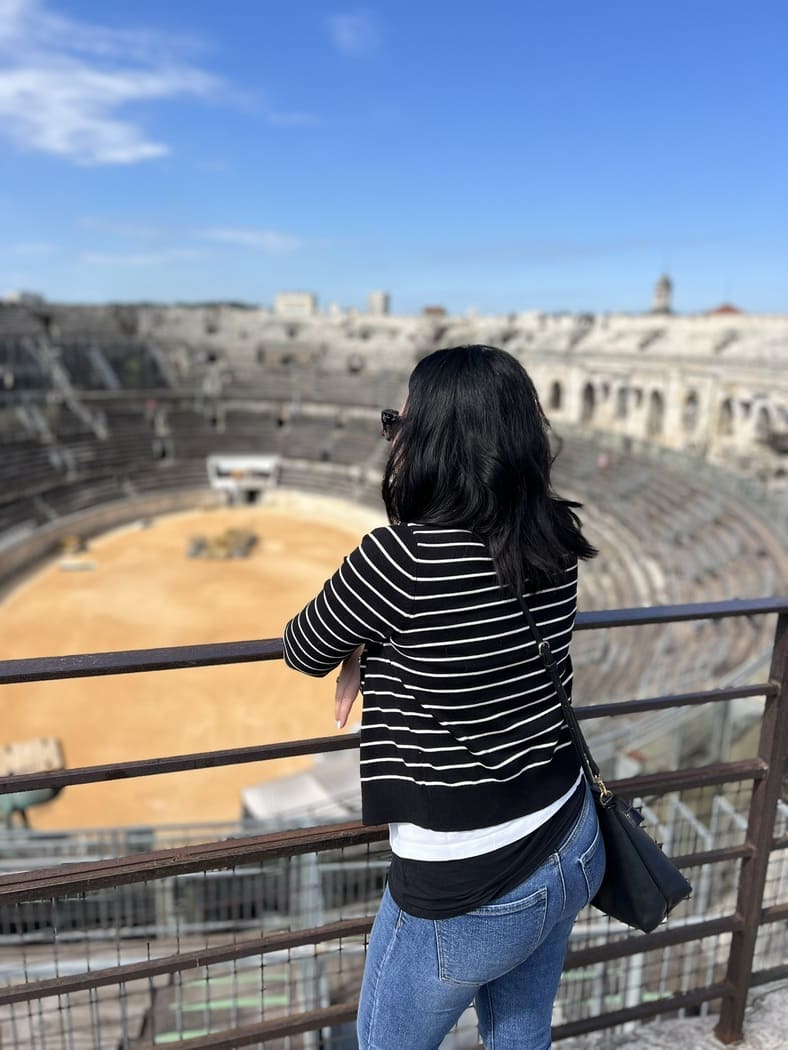
“view from the top of the Arena”

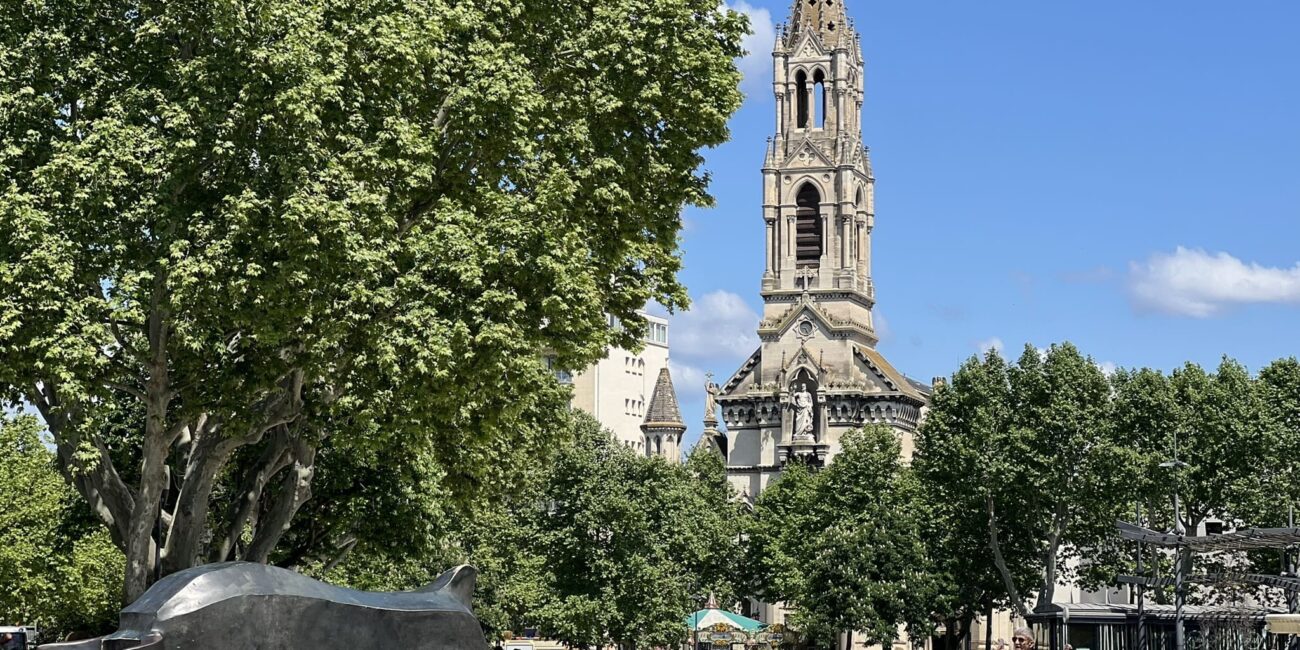
Church of Saint Paul

Points of Interest (PoI)

Nîmes is not a conventional tourist destination like Paris or the French Riviera, but that is exactly why it is worth stopping. Here, history is not confined to museums – it is in the stones of the streets you walk on, in the buildings you pass, and in the energy of the squares where you sit to drink coffee. It is a city that breathes history from every corner, but without being pompous or tiring. Allow yourself at least three days: one for the Arena and the Roman monuments, one for the historic center and the gardens, and one simply to breathe in the city, sit at the cafes, taste the brandade, and get lost in the alleys.
1
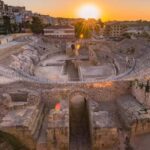
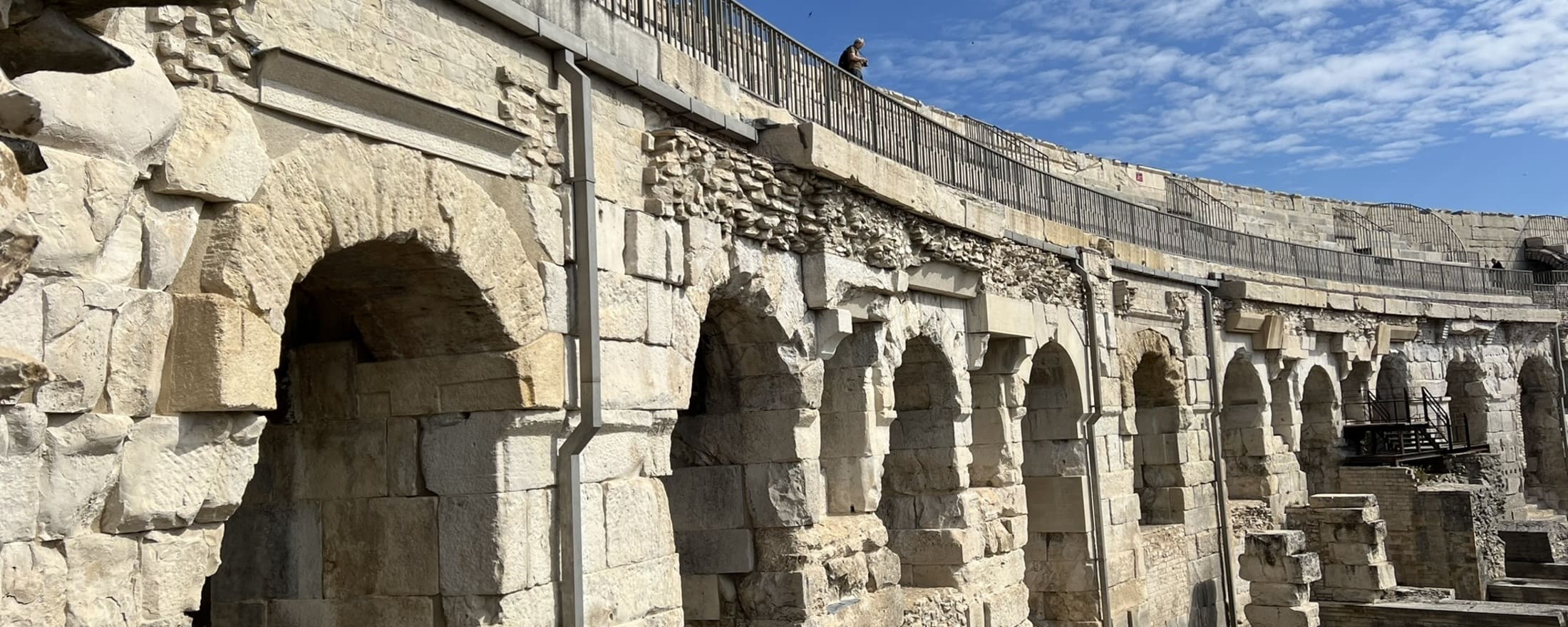
The Roman Amphitheater (Arènes de Nîmes) It is the symbol of the city, one of the largest and best-preserved Roman amphitheaters in the world. Built in the 1st century AD, it measures 133 meters long and 101 meters wide, with a capacity of approximately 24,000 spectators. It was used for spectacles until the Middle Ages, then it became a fortress complete with a moat and ramparts. In 1840, it was recognized as a historical monument of France and today it can be visited in all its parts: corridors, tiers, and subterranean levels. The view from the top is breathtaking, especially at sunset when the sunlight ignites the travertine blocks in golden hues. The spaces are still used for concerts and summer shows (especially the Férias). If you visit during one of these events, the arena comes alive just as it did in ancient times.
2
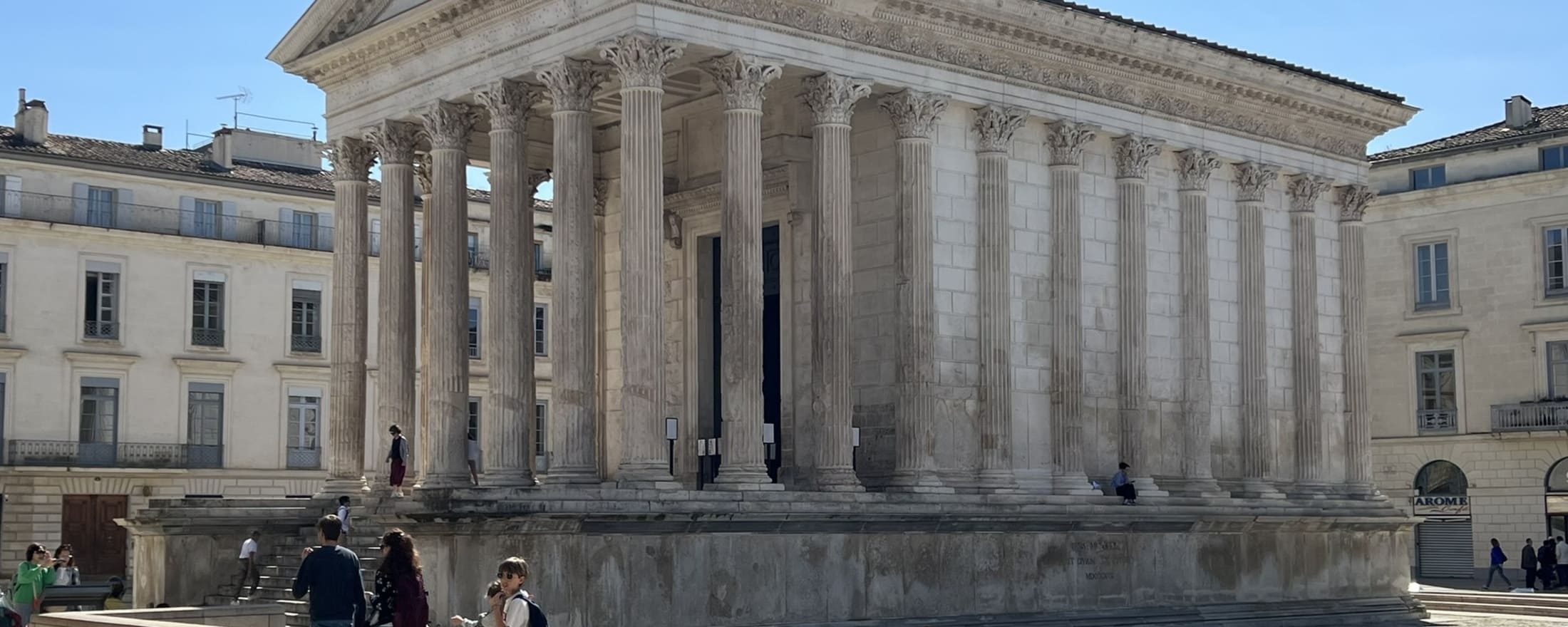
The Maison Carrée – The Perfect Temple This small temple is one of the best-preserved Roman monuments in the world. Dedicated to Gaius Caesar and Lucius Caesar (grandsons of Augustus), it dates back to 5 BC. Its 6 Corinthian columns at the front and its near-perfect proportion make it a masterpiece of architectural harmony. Upon entering, you will discover that the interior houses a museum dedicated to the history of Nîmes and Roman Gaul. What is striking when visiting it is the feeling of walking directly into the past: the temple is so well preserved that you can easily imagine what it looked like two thousand years ago.
3
The Garden of the Fountain (Jardin de la Fontaine) In 1665, the garden was created around the sacred spring of Nemausus, the river-god who gave Nîmes its name. It is a place that mixes Roman history, French Renaissance art, and simple beauty. Strolling through it, you will find the central Fountain, the remains of the Temple of Diana, ancient steps, and tree-lined avenues that gently slope down. During the day, it is crowded with families and elderly couples enjoying the cool shade beneath the plane trees. At sunset, when the sun goes down and the crowds thin out, the garden becomes an almost mystical place. Free, completely free. Perfect for a break from the heat and noise of the city.
4
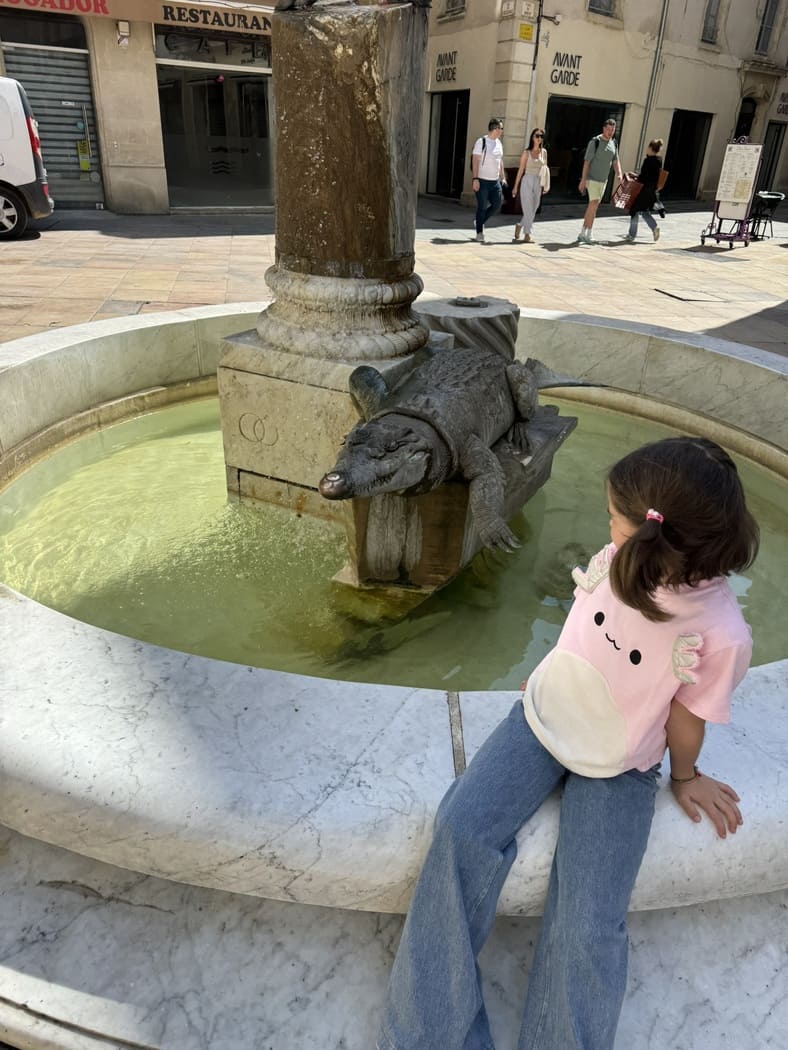
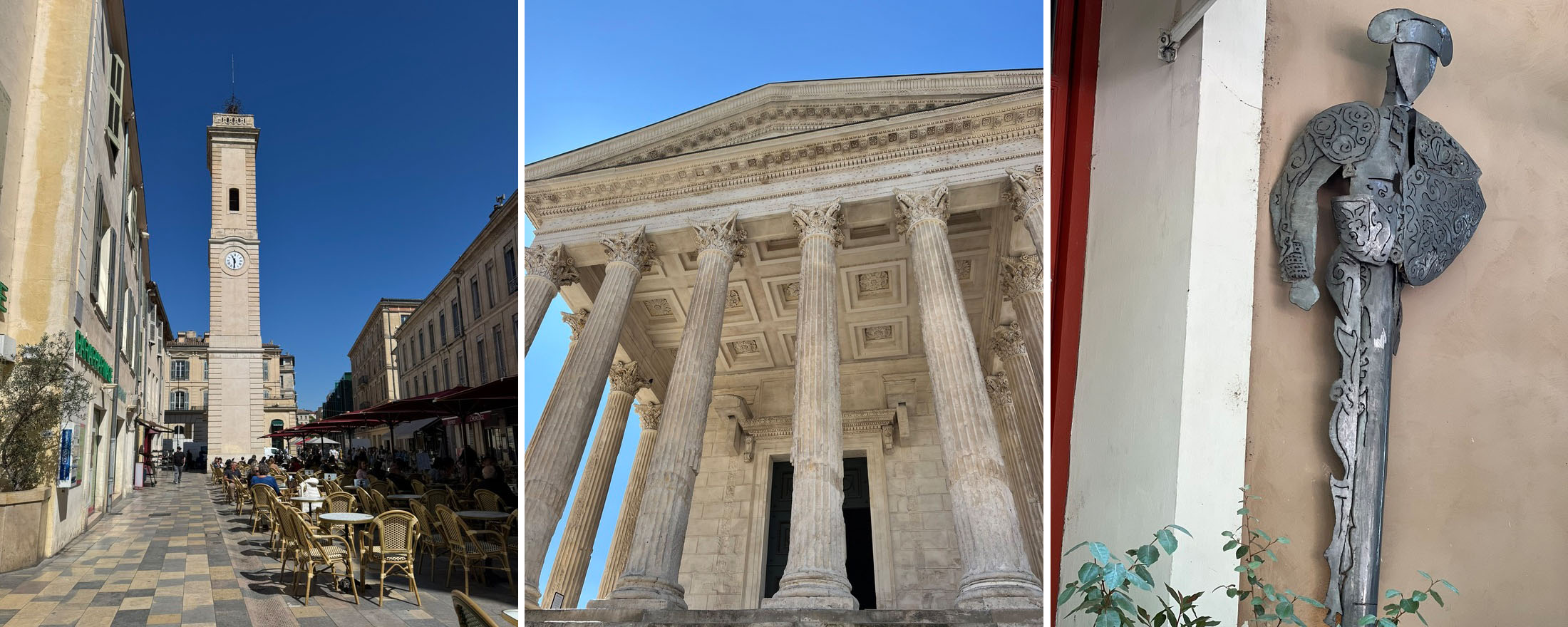
The Cathedral and the Historic Centre The Cathedral of Notre-Dame et St-Castor (built in 1096, rebuilt after the Wars of Religion) is not as grand as other cathedrals, but it has an intimate charm. Next to it, the Museum of Old Nîmes (Musée du Vieux Nîmes) preserves the city's memory from the end of the Middle Ages: textiles, clothing, and everyday objects that tell the story of how Nîmes lived in past centuries. Around it, characteristic squares and alleys unfold. Place du Marché is the iconic spot where the crocodile (the city's symbol, originating from a commemorative Roman coin) meets the palm tree. Sit at a café here and watch the people coming and going: you will see French and foreign tourists, but also locals living their normal day. This is authentic Provence.
5
The Pont du Gard (14 miles, outside the city) It is not in Nîmes, but in Remoulins, about 22 km away. If you have an hour to spare, it is worth the detour. It is the most spectacular part of the Roman aqueduct: three tiers of arches rising 50 metres above the Gardon River, built in the 1st century AD to transport water from Uzès to Nîmes over a distance of 50 km. It is no exaggeration to say that it is one of the masterpieces of Roman engineering. A UNESCO World Heritage site.

Seasonal Events

Férias di Nîmes
Where: Nîmes When: May and September What: Twice a year, Nîmes explodes with energy during the Férias. Corridas, flamenco, music, and street parties. The Arena hosts the most prestigious bullfights (corridas). If you love Spanish energy mixed with French spirit, this is the time to visit. If you prefer tranquility, avoid these periods: the city is overrun with tourists and prices increase.
Summer Festivals
Where: Nîmes When: from June to August What: During the summer, the Arena hosts concerts and theatrical performances. A night spent listening to music surrounded by the stones of a two-thousand-year-old amphitheater is something you won't forget.

“Fontaine du Crocodile”

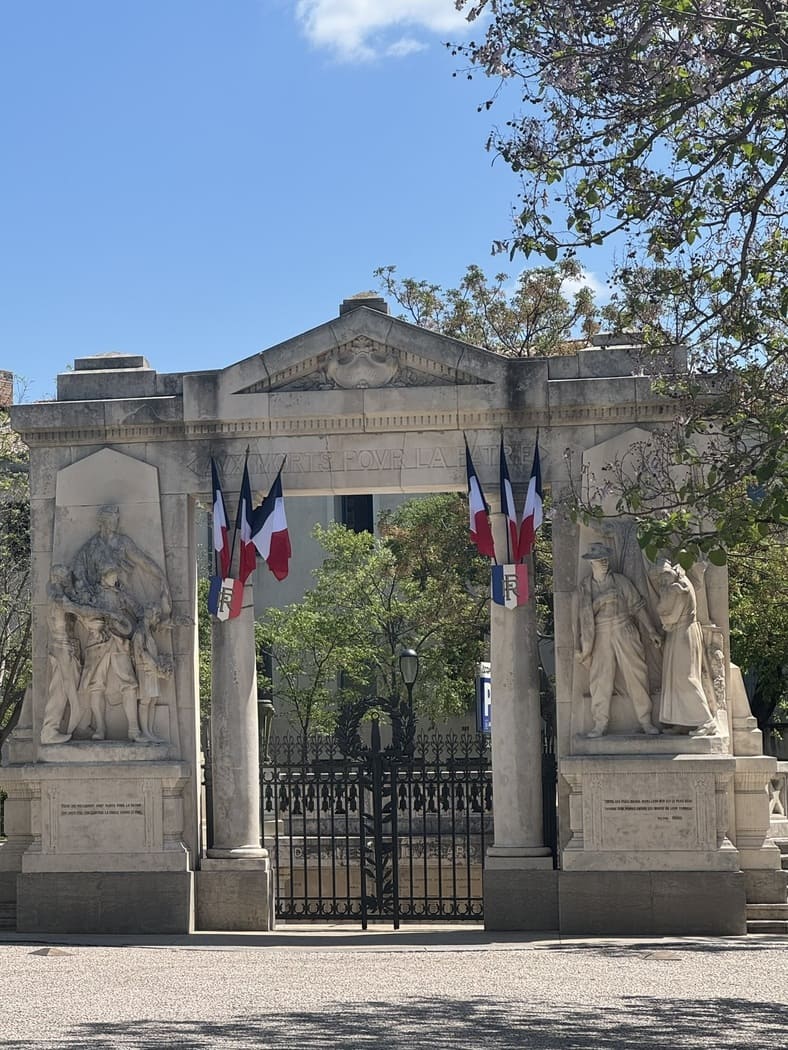
“Monument aux Morts de Nîmes”

Typical Dishes and Local Products

La Brandade de Morue is the emblematic dish of Nîmes, a simple dish that has become rich in history. It originated from dried and salted cod that the Norwegians bartered for salt from the Mediterranean salt pans (the famous ‘salt route’). In the 18th century, the chef Durand codified the recipe, transforming it into a culinary art. Even French President Thiers was so passionate about it that he had jars shipped to him from Nîmes to devour secretly in his library.

The brandade is a creamy mousse made of salt cod beaten with olive oil and milk, sometimes with the addition of potatoes. The name comes from the Provençal verb brandar which means “to stir” – and in fact, the secret of the authentic recipe is the constant movement, the very long stirring that transforms the salted cod into a soft and delicate cream.

Authentic Nîmes Brandade Recipe

Ingredients (for 4-6 people):

     
  • 500 g of good quality salted cod (baccalà)
  •  
  • 100 ml of extra virgin olive oil
  •  
  • 80 ml of whole milk, lightly warmed
  •  
  • 2-3 cloves of garlic
  •  
  • 1 bay leaf
  •  
  • Salt and black pepper to taste
  •  
  • Fresh parsley (optional)
  •  
  • Toasted bread slices (croutons) for serving

Method:

     
  1. Desalting the Cod: Place the whole cod in a bowl and cover it with cold water. Change the water every 6 hours for at least 24-36 hours. This step is essential: the cod must lose the excess salt but retain its character. Do not skip it.
  2.  
  3. Boiling: After desalting, rinse the cod. Place it in a pot with cold (unsalted) water and a bay leaf. Bring to a boil, then immediately turn off the heat and let it rest for 15 minutes. The cod will finish cooking in the residual heat. You do not want it to disintegrate.
  4.  
  5. Preparing: Drain the cod. Carefully remove the skin (if desired) and bones. Place the cooked

Useful Tips

Nîmes Tourist Office 📞 +33 (0)4 66 58 38 00 🌐 www.nimes-tourisme.com

General Opening Hours (check before visiting)

     
  • Arena: 9:00 AM – 7:00 PM (low season 10:00 AM – 5:00 PM)
  •  
  • Maison Carrée: 10:00 AM – 6:00 PM
  •  
  • Tour Magne: 9:30 AM – 6:30 PM
  •  
  • Garden of the Fountain: Free access, magical at sunset

Recommended Period to Visit April-May and September-October. Summer is extremely hot (35-38°C / 95-100°F) and the Arena can be crowded. Avoid May and September if the Férias make you uncomfortable.

👉 Discover other itineraries and GPS coordinates on map.camperepoi.it (coming soon!) 👉 Subscribe to the CamperePoi newsletter to download the complete guide “Val d’Orcia by Camper”
0

post a comment