
Top

Visit Monteriggioni

The Medieval Fortress That Defies Time Among the Tuscan Hills

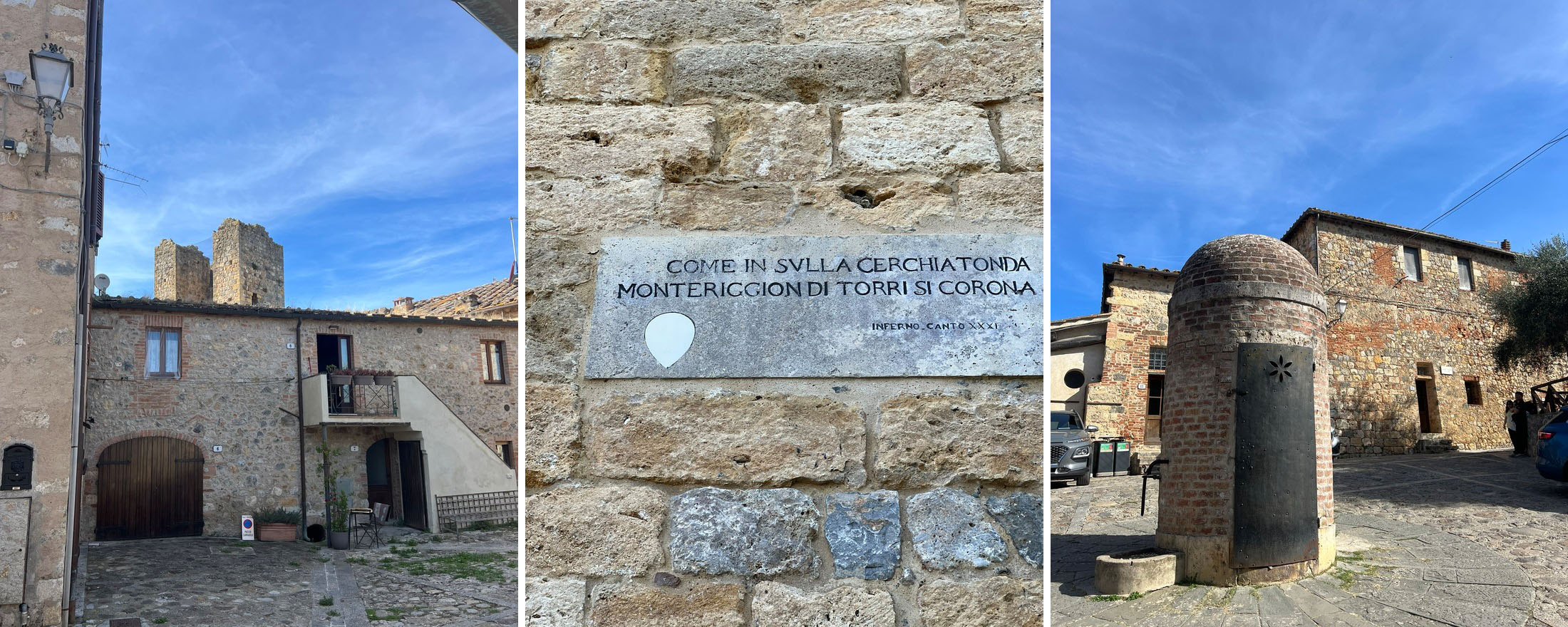
When Dante Alighieri wrote about the Inferno and compared the towers of Monteriggioni to giants imprisoned on the edge of the abyss, perhaps he did not imagine that those same walls would continue to dominate the Sienese landscape for another seven centuries. Monteriggioni is not a place you visit by chance: it is a destination you consciously reach, a perfectly preserved medieval island where time seems to have stopped at the days of the Republic of Siena.

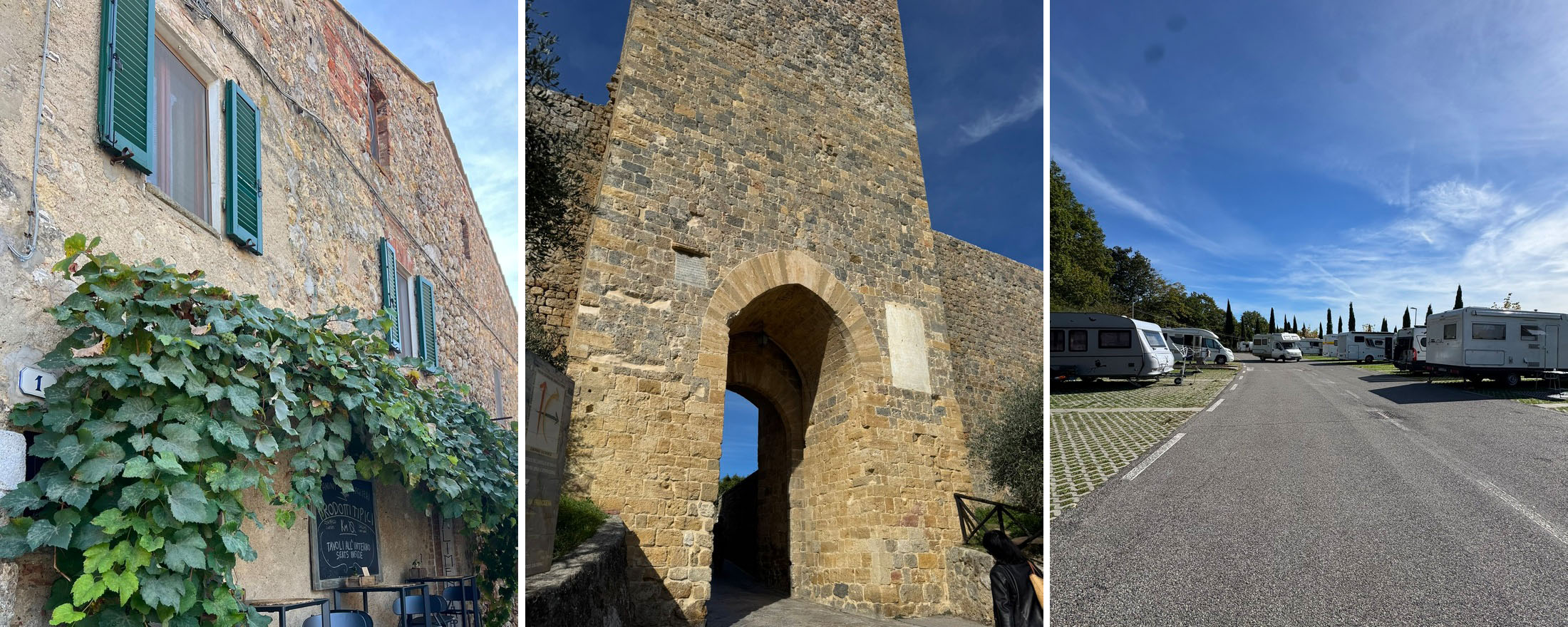
From your camper, reachable in a few minutes on foot from a convenient rest area, you will discover one of the most fascinating fortified villages in Tuscany—a place where military architecture and history merge with the most evocative hilly landscape the region can offer.

Stopover and overnight stay

Reaching Monteriggioni from your camper is a simple and well-managed logistic operation.

Recommended areas

🅿️ La Posta Camper Rest Area
Via Cassia Nord 142, 53035 Monteriggioni (SI)

Literally at the foot of the walls and less than a ten-minute walk from the historic center.

The area has 29 asphalt pitches plus one reserved for the disabled, all flat and with ample maneuvering space. Each pitch is equipped with a dedicated 220V power pedestal. The restrooms are clean and well-maintained, with paid hot showers (€1 for 3.5 minutes). The camper service is functional and modern: water loading and unloading, differentiated waste collection, all managed by an automated self-service cash register system. The lighting is widespread, video surveillance is active, and the children’s play area represents a rare amenity in rest areas. Pets are allowed without problems.

2025 Rates: €8 for 12 hours / €16 for 24 hours / €4 for camper service (separate loading/unloading). Payment is made via automated cash machine at the entrance (card or cash). Access is automated with a barrier and card.

GPS: 43.385907, 11.228065

Cipressino Parking Lot

Strada Comunale di Monteriggioni, 3, 53035 Monteriggioni (SI)

Just before the main entrance: it is a traditional parking lot suitable for short stays, without specific services for campers, but convenient for those who only want a short excursion of a few hours.

GPS: 43.388202, 11.225160

Getting around

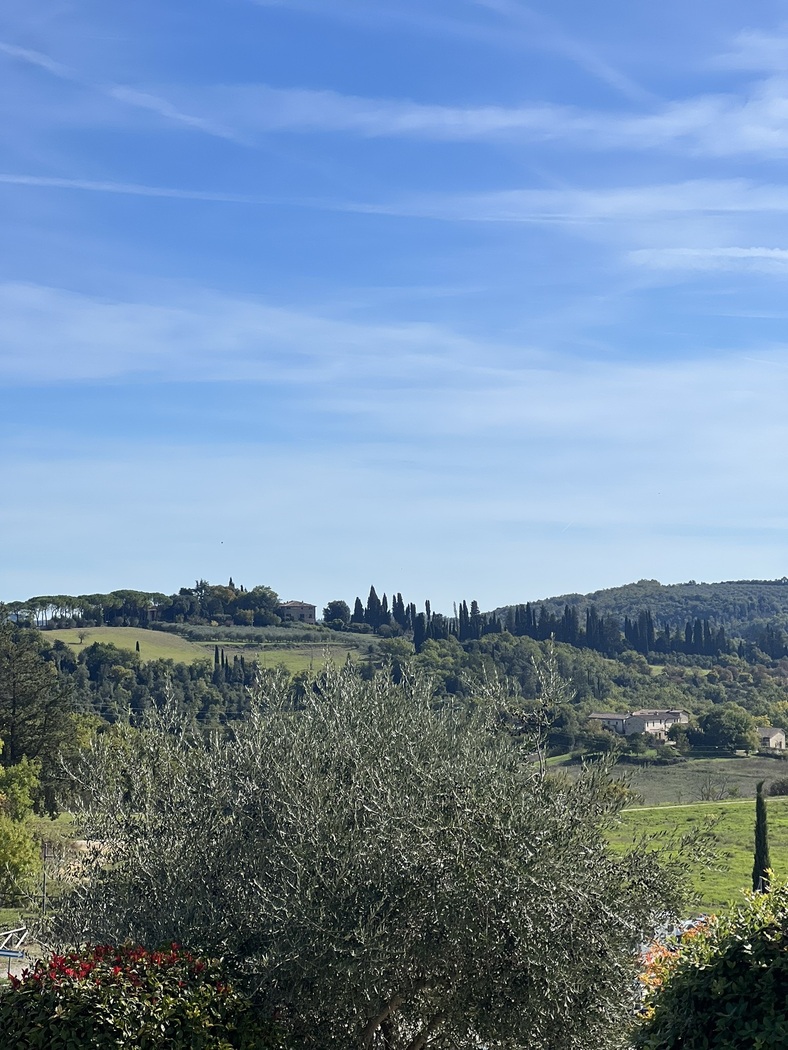
From the rest area to the heart of Monteriggioni, it only takes ten minutes on foot, following a well-marked path that retraces part of the Via Francigena. The path climbs gently through the hills, and as you walk, you will begin to glimpse the circular silhouette of the walls above the vegetation: a first taste of what awaits you. The atmosphere of the journey is unique—almost ritualistic—as if passing from La Posta to the castle meant crossing an invisible threshold between the present and the Middle Ages. Those who want a shortcut will find a narrower and slightly more challenging trail, ideal for those used to walking uphill. It is not suitable for strollers or the elderly.

“…open view above the walls”

“camminare nel Medioevo”

Points of interest (PoI)

Assolutamente. Ecco la traduzione del paragrafo, mantenendo la formattazione:

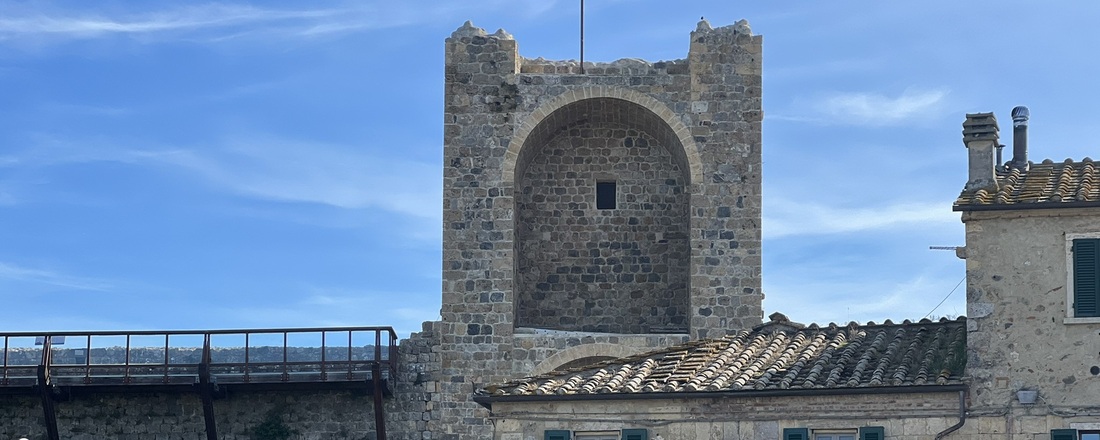
The circuit wall is a perfect ellipse about 570 meters in perimeter, surrounded by fourteen rectangular towers, 6 by 4 meters, and 15 meters high from the base of the wall. The thickness of the curtain wall is two meters—it is not decoration, it is construction seriousness. Two gates allowed access: the Porta Romea (Franca) to the east towards Siena, and the Porta San Giovanni (Fiorentina) to the west towards the Valdelsa.

What fascinates about Monteriggioni is that it was never captured by force. In 1269, after the defeat of Colle immortalized by Dante in Purgatory, the defeated Sienese took refuge here, and the Florentines failed to penetrate. In 1526, when 2,500 Florentine men and heavy artillery besieged the castle for months, the walls held. It was only in 1554 that Monteriggioni fell—not due to structural weakness, but by betrayal: Captain Giovannino Zeti handed the keys over to the enemy.

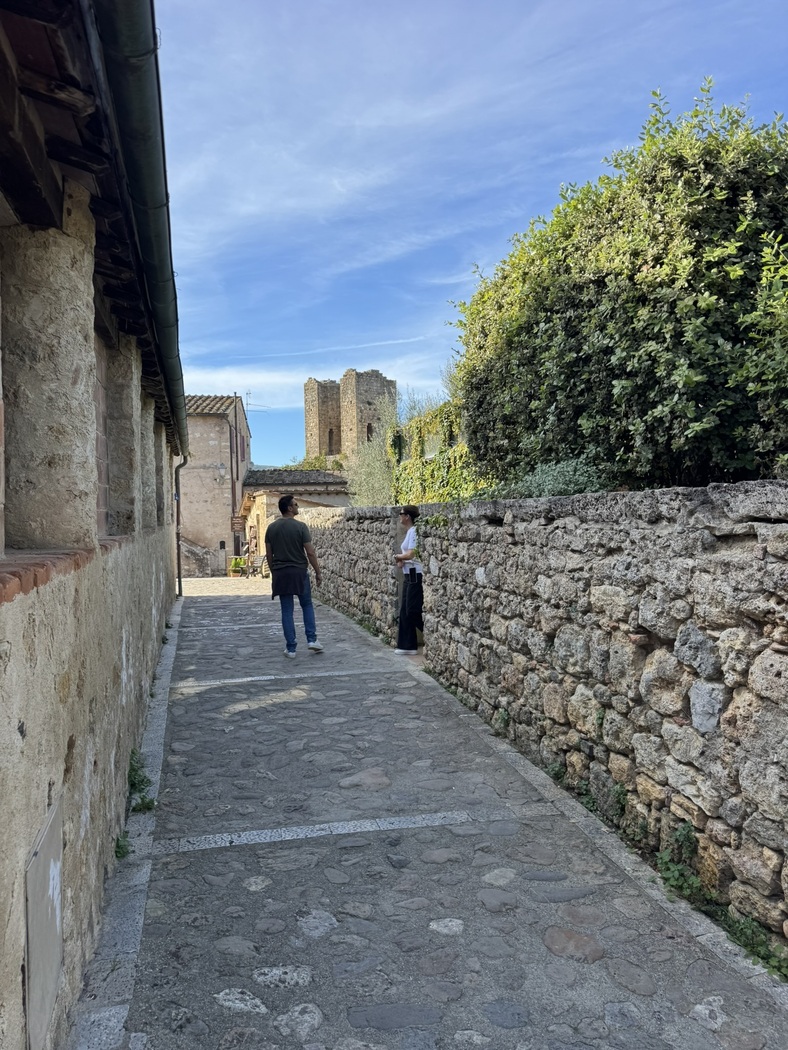
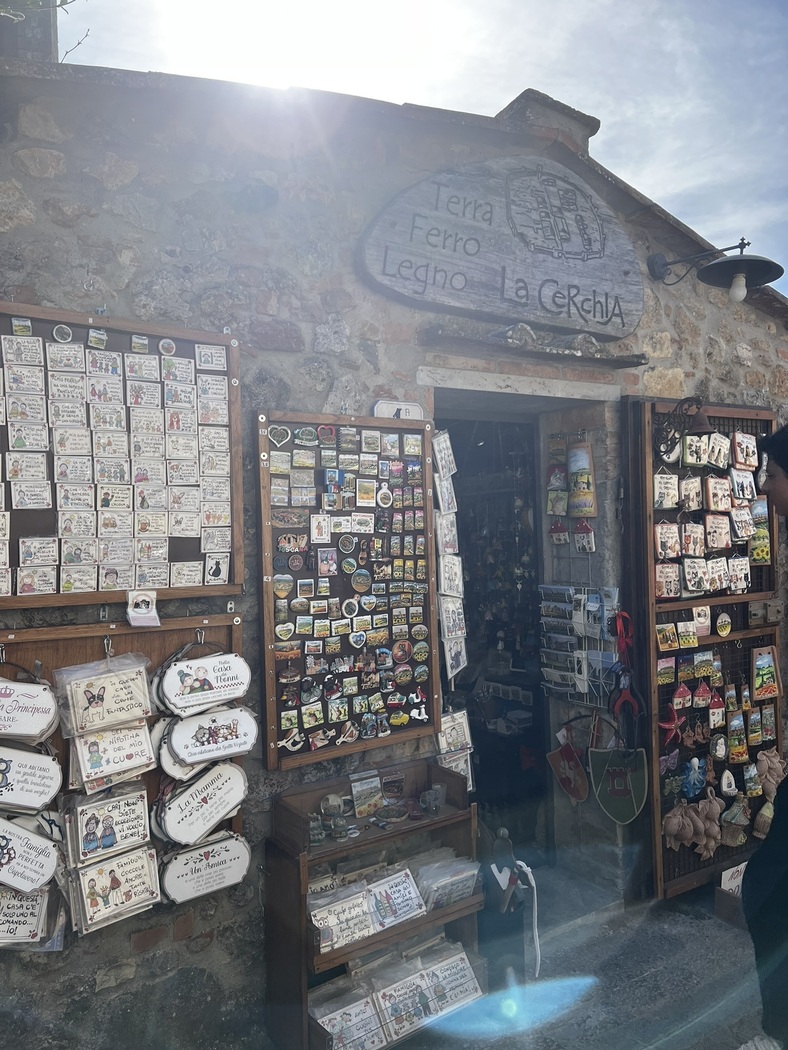
Inside the walls, the village is small and intact: a main street crosses Piazza Dante Alighieri (formerly Piazza Roma), overlooked by the Pieve di Santa Maria Assunta and where today you will find restaurants, bars, and local craft shops. It is not a frozen museum, it is still alive—the windows have curtains, the smells are those of real cooking, the voices echoing through the alleys are those of those who live here.

1
Walkway on the Walls The essential experience in Monteriggioni is walking on the patrol paths, along the same route where Sienese guards walked six centuries ago, monitoring the territory. Access is through the "Monteriggioni in Arme" Educational Path (entrance in Piazza Dante Alighieri 23), which is articulated in four small rooms that trace the history of the castle from the 13th to the 16th century with faithful reproductions of weapons, armor, and models of siege engines. A touch of genius lies in the fact that some weapons and parts of armor can be worn: this physical interaction transforms the visit from passive to immersive. Once on the walkways, the view changes perspective. To the south, you look at Chianti, with its infinite green undulations. To the north, the Valdelsa opens towards the horizon. On clear days, even the towers of San Gimignano are visible to the east. The southern walkway is the most fascinating: you are at the same height as the towers, surrounded by open air, with the sensation of being suspended between the Tuscan sky and earth.
2
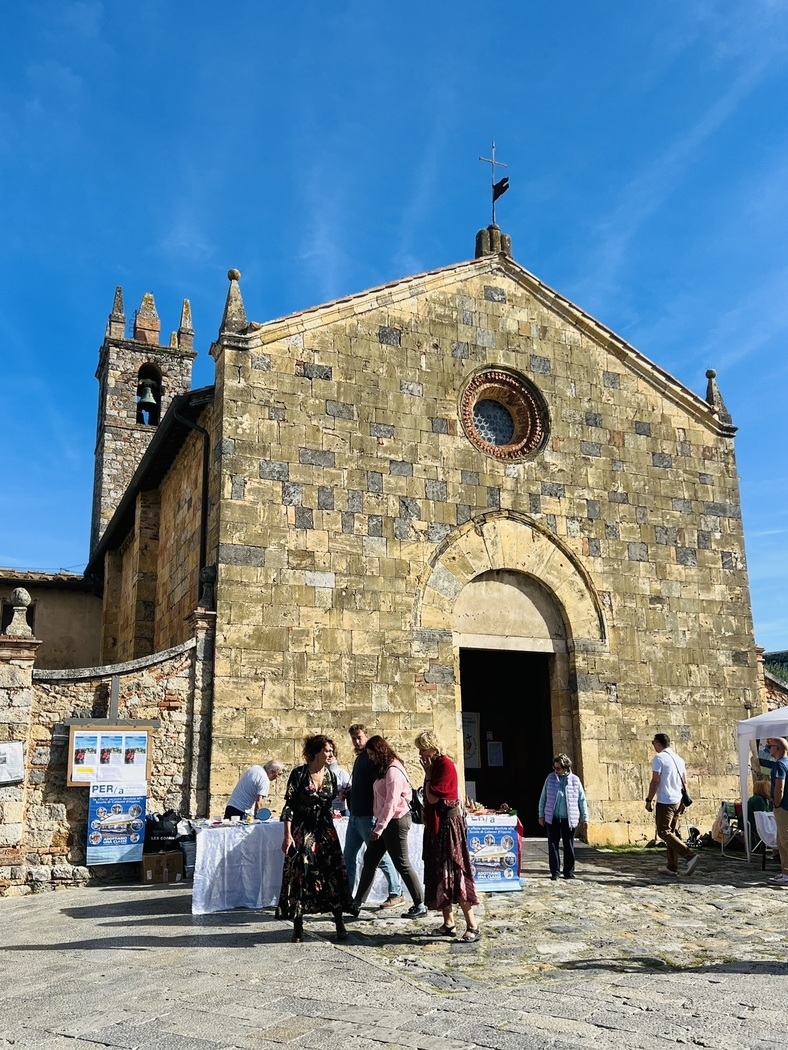
Pieve di Santa Maria Assunta It overlooks Piazza Dante Alighieri and can be visited every day. Built in the first half of the 13th century, it represents that fusion of Romanesque and Gothic that characterizes Sienese architecture. The interior is sober, essential—as a medieval church should be. The architectural details speak of masters who knew their craft.
3
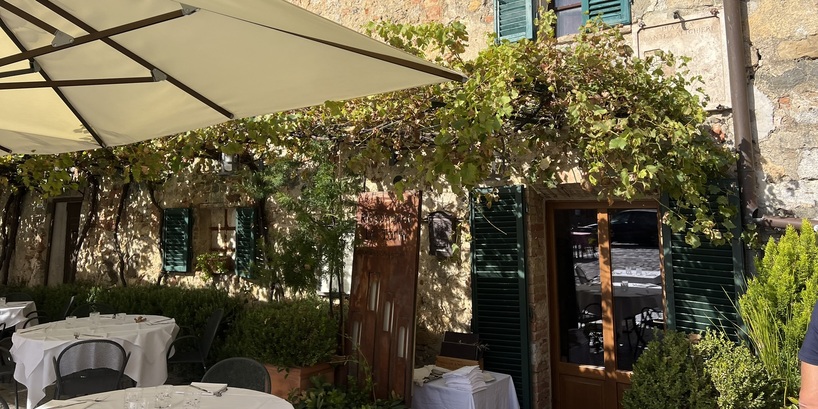
Historic Center and Piazza Dante Alighieri The central square is the beating heart, surrounded by restaurants and inns where you can taste local cuisine. It is not large—it is not crowded with hordes of tourists, precisely because Monteriggioni remains relatively authentic. The shops sell Chianti Classico wine, cured meats, pecorino cheese, and craft items. It is the place to stop to eat, drink, and observe the landscape while sitting at a table.
4
Archaeological Museum (Abbadia Isola) Included in the walkway ticket, it is located in the nearby hamlet of Abbadia Isola (reachable with a short trip). It displays Etruscan and medieval finds from the area, documenting human settlement in the area from ancient times.
5
Trekking Routes The Via Francigena passes through Monteriggioni: it is the historic path taken by pilgrims heading to Rome. Those who wish to follow traces of history on foot can undertake excursions from the Montagnola Senese (an ancient route of 21 km, 5 hours, medium difficulty, passing through smaller villages and castles). The area is also ideal for mountain biking and, in some sections, for horseback riding.

Seasonal Events

The Medieval Festival
Where: Monteriggioni When: early days of July What: The castle comes alive with costumed parades, historical re-enactments, (orchestrated and engaging) fights, street artists, jesters, musicians, themed taverns with medieval food, and artisan markets. There is particular attention to families with children, with dedicated spaces and specific entertainment.

“Pieve di Santa Maria Assunta ”

“unmissable stop for souvenirs”

Traditional Recipes and Local Product

Eating in Monteriggioni means savoring an earth-based cuisine, popular but not poor. It is the cuisine that the farmers of the Montagnola Senese cooked in their homes—genuine, rich in vegetables, legumes, and quality meats. Typical dishes include pappardelle with wild boar (fresh homemade pasta with game ragout), pici cacio e pepe, ribollita, Chianina breed Florentine steak, Cinta Senese cured meats (a very ancient pig breed), finocchiona (salami with fennel seeds), and Tuscan prosciutto. Recipe for Ribollita Ribollita is not just a dish—it is a philosophy. It originates from peasant cooking as intelligent recycling: leftovers from the week are transformed into a rich and comforting soup that, reheated (“ribolita”) the next day, becomes even tastier. The name contains the secret of its preparation. Ingredients for 4 people:
     
  • 400g cannellini beans (dried or canned)
  •  
  • 300g stale Tuscan bread, cut into pieces
  •  
  • 400g black cabbage (or Savoy cabbage), washed and torn by hand
  •  
  • 2 medium carrots, diced
  •  
  • 2 celery stalks, diced
  •  
  • 1 medium onion, sliced
  •  
  • 400g peeled tomatoes (or 2 fresh tomatoes)
  •  
  • 300g other seasonal vegetables (zucchini, beetroot, spinach—optional)
  •  
  • 1 liter vegetable broth (or water)
  •  
  • 6 tablespoons Tuscan extra virgin olive oil
  •  
  • Salt and ground black pepper
  •  
  • Garlic (optional)
Preparation:

If using dried beans, soak them overnight, then cook them in water for 1.5-2 hours until tender. If using canned beans, use the canning liquid.

In a large pot, heat 4 tablespoons of oil and sauté the onion until translucent. Add carrots and celery, let them sweat for 5 minutes until the vegetables start to release their juices. Pour in the peeled tomatoes, breaking up any pieces that are too large, and cook for 5 minutes. Add the black cabbage torn by hand and the other vegetables (if present): the black cabbage will release a lot of water, which is normal. Cover with the broth and bring to a boil. Add the cooked beans (with some of their cooking liquid), salt, and pepper. Reduce the heat and simmer for 30-40 minutes: the soup should become thick, almost like a cream, but still brothy.

In the last 10 minutes of cooking, add the stale bread torn by hand. Mix well: the bread will partially dissolve, binding the soup and making it creamy. If the consistency is too thick, add hot water.

Taste, adjust salt and pepper. At this point you can serve, but the traditional recipe requires leaving the ribollita to rest until the next day, when it will be even tastier.

The final touch: pour the ribollita into bowls or deep plates, add a drizzle of raw extra virgin olive oil (uncooked: the oil added at the end preserves the aroma), and if you wish, a touch of raw garlic rubbed on a slice of Tuscan bread is welcome.

Useful Tips

Take at least half a day to visit Monteriggioni. In our opinion, the best time of year is from April to October. The medieval festival in July is unmissable. The medieval streets have some steps and a pavement that is a bit challenging for people with reduced mobility.

📞 Tourist Office

A Reflection Before Returning to the Camper

Monteriggioni will not show you the great masterpieces of art like Siena will, twenty minutes away. It does not have the epic dimensions of San Gimignano. What it possesses is something rarer in contemporary Tuscany: a narrative integrity. Its walls still tell the story for which they were built, and the internal streets breathe a medieval daily life that time has preserved rather than destroyed. After a day spent inside these walls, walking where Dante gazed, eating a ribollita from ancient recipes, observing the sunset from the northern walkway with Chianti at your feet—the return to the camper will not be a conclusion, but a transition. Monteriggioni will remain within you as an immaterial memory, proof that the Middle Ages is not just in books.

👉 Scopri altri itinerari e coordinate GPS su map.camperepoi.it (a breve!) 👉 Iscriviti alla newsletter di CamperePoi per scaricare la guida completa “Val d’Orcia in Camper”
0

post a comment