
Top

Visit Brunico

Capital of the Puster Valley between Kronplatz and Tyrolean culture

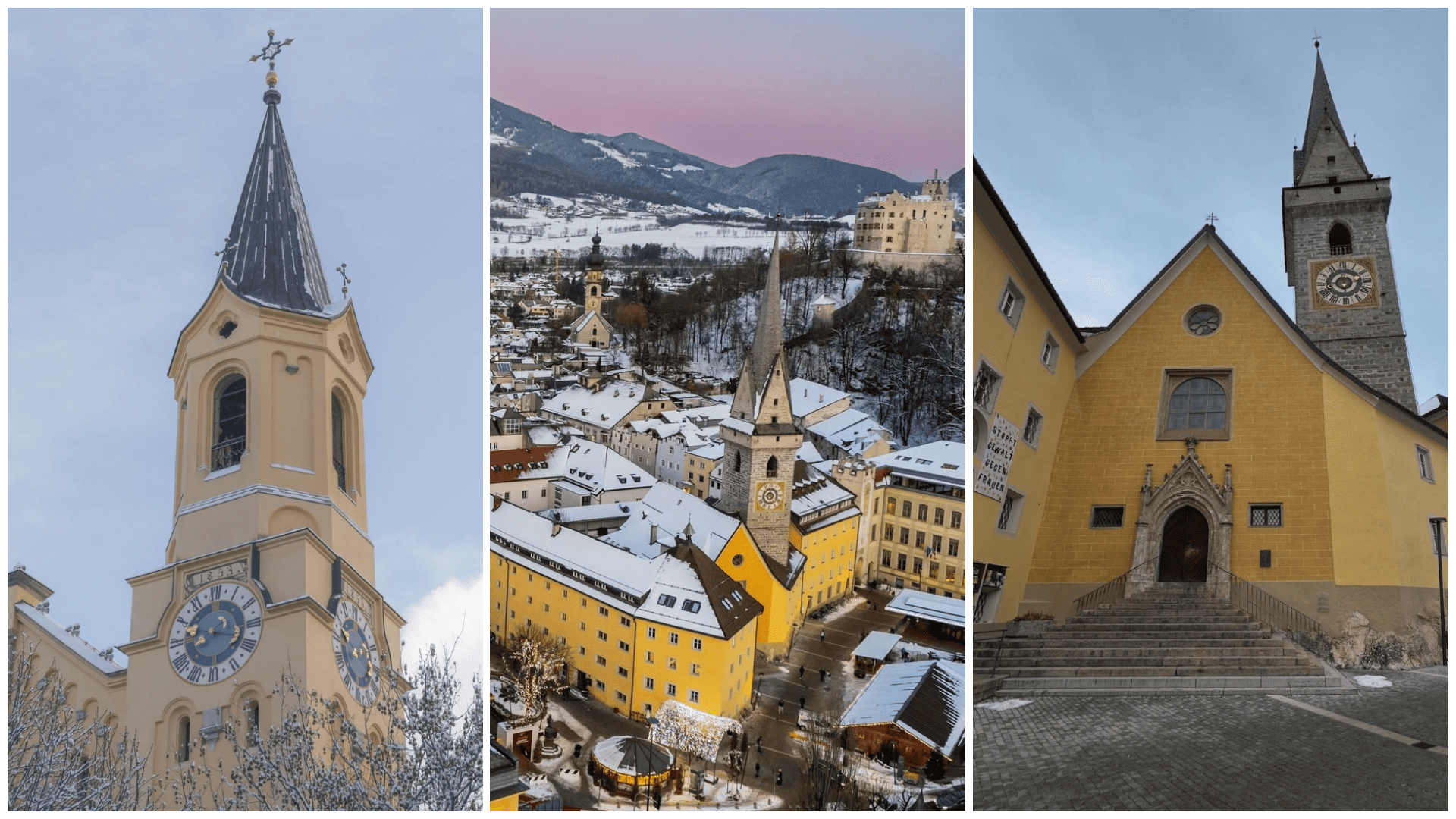
Brunico is the beating heart of the Puster Valley, a small city that knows how to reinvent itself following the rhythm of the seasons. In winter, when Kronplatz transforms into South Tyrol’s number one ski area, its medieval alleys come alive with Christmas markets and the scent of mulled wine. In summer, the same streets become the starting point for excursions in the Dolomites, while Reinhold Messner’s museums tell mountain stories that go far beyond skiing. Arriving in Brunico by camper means discovering a versatile and well-organized destination. The city offers practical stopping solutions for RVers, from traditional campsites to modern equipped areas, all a short distance from the historic center.

Once the vehicle is parked, Brunico can be explored on foot or by bicycle along the Rienza cycle path, which connects the city to the surrounding valleys. Whether you arrive to ski on Kronplatz, visit the valley’s castles, or simply get lost among historic wool mills and artisan workshops, Brunico offers Tyrolean authenticity without sacrificing modern amenities. It is the ideal base for exploring the Puster Valley, Val Badia, and the Tures and Aurina Valleys, with the certainty of returning every evening to a lively and welcoming city.

Stopovers and overnight stays

In Brunico, it is not advisable to enter the historic center with a camper: the medieval streets of Via Centrale and Città Alta are narrow, busy, and largely reserved for pedestrians. The best solution is to rely on the rest areas and campsites located around the city, all well connected to the center via cycle paths or short walks.

Here are three options that offer different services and amenities, suitable for every need.

Recommended areas

🅿️ City Camping Bruneck
Via Santa Croce 1b, 39031 Brunico
The most modern and complete area, recently opened and designed specifically for RVers. It is located along the Rienza cycle path, about 1 km from the historic center (10-15 minute walk). The area has 59 gravel pitches arranged on terraces, all with electrical hook-up. Check-in is completely automated via terminal: you arrive, register, pay, and receive a magnetic card that allows access to heated restrooms (showers, sinks for dishes, laundry). Camper service is available, although some users report that it is not easy for all vehicles. The price is €35 for 24 hours (2 people + electricity + tourist tax), which rises to €40 in high season (July 21 – August 24, 2025). It is possible to use only the emptying/filling service for €15 (30 minutes). The area is fenced, video-monitored, and open 24/7. Reservations are not accepted. Pros: new and clean services, convenient location, security. Cons: higher price compared to other solutions, proximity to agricultural fields (in some periods there may be a smell of manure and insects).

🌐 www.city-camping.it

GPS: 46.793440, 11.924860

🅿️ Brunico – Stegener Marktplatz (Public Parking)

A practical option but without services, located in Stegona Market Square, about a 10-minute walk from the center. This public parking lot is shared with cars and is convenient for those looking only for a temporary stop to visit the city. It is located near the train station and the pedestrian tunnel that leads directly to the heart of Brunico. Warning: prices have changed drastically in recent years. In the past it cost €7.50 per day, but after the opening of City Camping the rate has risen to €36 for 24 hours, with no services for campers (no electricity, no water emptying/filling). This pricing policy has caused many protests among RVers, who consider it out of market for a simple parking lot. Pros: proximity to the center and the station. Cons: very high price without services, parking on dirt/gravel shared with cars, trash bins often full.
📍 Address: Piazza Mercato di Stegona, 39031 Brunico
💶 Rate: €36/24h (€1.50/hour)

GPS: 46.795580, 11.930060

🅿️ Camping Schießstand (Shooting Range Campsite)

The traditional campsite for those who prefer a familiar atmosphere. Located about 2 km from the center of Brunico, along the Puster Valley state road, this small campsite has about 50 pitches arranged both on sunny lawn and in a shaded pine forest. Run by the same family for three generations, the campsite offers a quiet and well-maintained environment. The restrooms are equipped with hot water 24 hours a day, included in the price. There is a small shop with fresh bread, milk, cheese, speck, and basic necessities, as well as a bar for breakfast and snacks. All pitches have electrical hook-up. Camper service is available but reserved for campsite guests. Pros: family atmosphere, natural shade, lower prices (starting from €23.90). Cons: open only from May to September, some reviews report less flexible management for non-overnight guests, slight noise from the state road.
📍 Address: Via Puenland 6, 39031 Brunico
📞 Tel: +39 0474 401326
💶 Rate: starting from €23.90

GPS: 46.788740, 11.955990

“THE Christmas Market”

“sustainability” the keyword

Getting Around

Once the camper is parked, Brunico is easily explored on foot or by bicycle. The historic center is almost entirely pedestrian and very compact: from Piazza Municipio to Via Centrale up to the Castle, it is a pleasant 15-20 minute walk. On foot: If you stop at City Camping or the Stegener Marktplatz parking lot, the center is 10-15 minutes away.

From Camping Schießstand it takes about 25 minutes to walk along the cycle path or the main road. The atmosphere is pleasant in every season: in winter the snowy landscape offers postcard views, in summer you walk in the shade of the trees along the Rienza river. By bicycle: Brunico is crossed by the Val Pusteria cycle path, one of the most famous and scenic in Europe. Over 100 km long, it connects Brunico with other towns in the valley and offers flat routes suitable for everyone. If you are traveling with your bikes, this is the perfect opportunity to explore it. Along the way you will find rest areas, panoramic bridges, and kiosks. City Camping is located right on the cycle path, making the connection to the center very quick.

Public transport: Brunico is the main transport hub of the Puster Valley. Regional trains depart from the train station (near the Stegener Marktplatz parking lot) for Fortezza, San Candido, and Dobbiaco. The bus station is the largest in the valley and connects Brunico to the side valleys (Tures, Aurina, Badia) and the main neighboring towns. Tickets can be purchased at the station or via the Südtirol Mobile app. If you have the Kronplatz Guest Pass, you can use all public transport in South Tyrol free of charge. To reach Kronplatz: The cable car departs from Riscone, a district of Brunico, taking you to an altitude of 2275 meters in a few minutes. The valley station is about 2 km from the center, reachable by local bus or bicycle.

Points of Interest (PoI)

1
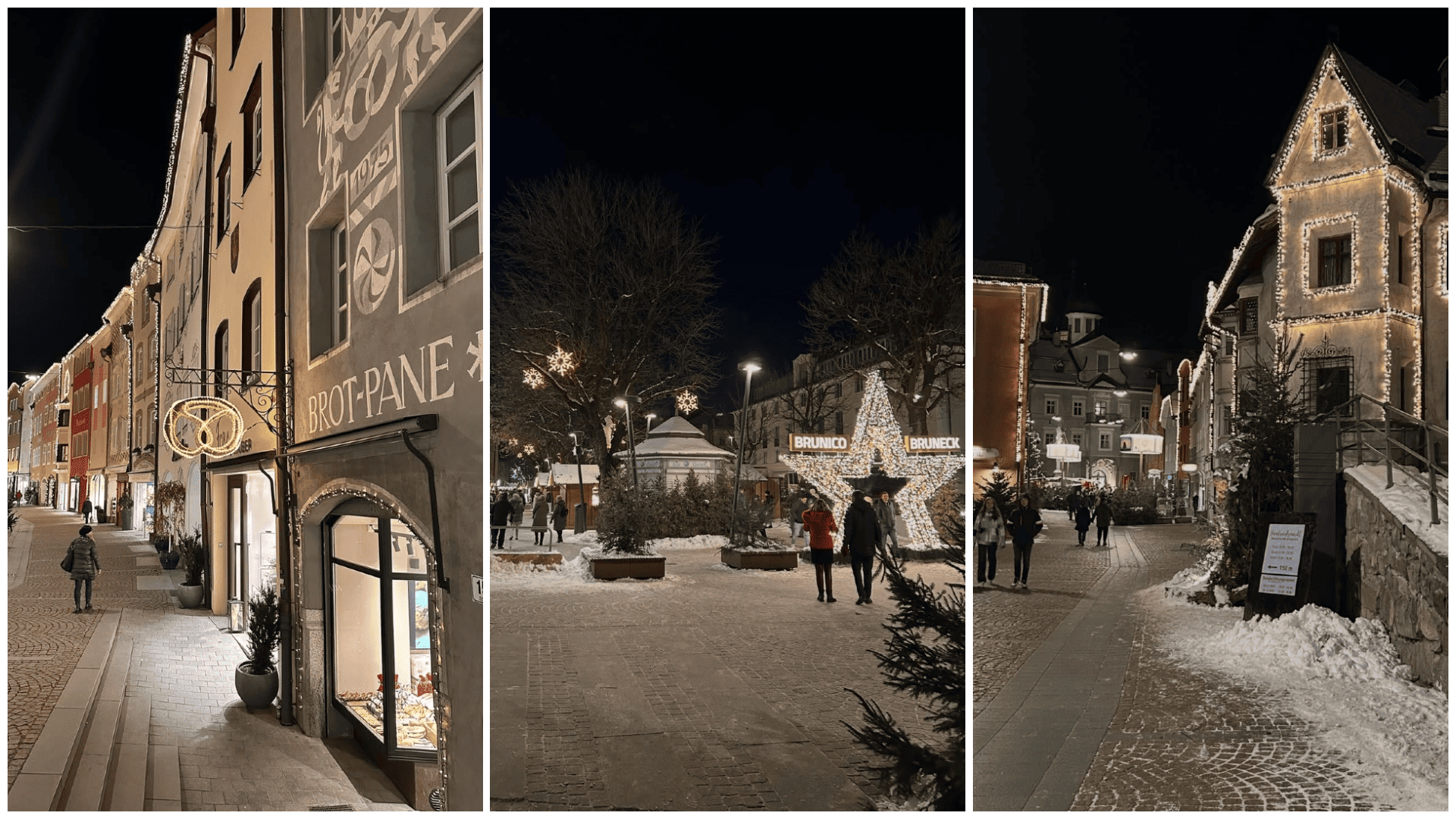
Via Centrale and the Medieval Historic Center The heart of Brunico is Via Centrale (Stadtgasse), a long street that runs through the entire medieval historic center. This pedestrian street is flanked by historic buildings with crenellated gables, frescoed facades, and arched doorways that tell centuries of Tyrolean history. Here, designer boutiques, artisan workshops, cafes, and local product shops alternate. Strolling along Via Centrale, you can feel the commercial and cultural soul of Brunico: historic wool mills like Moessmer (supplier to major brands such as Prada and Armani) and artisanal weaving shops like Ulbrich Textil Manufaktur testify to the city's textile tradition. There is no shortage of shops selling traditional Tyrolean clothing, hand-painted ceramics, and typical food products (speck, cheese, black rye bread). The best time for a walk is early morning, when the shops open and the sunlight illuminates the colorful facades, or late afternoon, when the bars come alive for aperitivo. In winter, during the Christmas markets, Via Centrale transforms into a living nativity scene illuminated by soft lights. Recommended time: 1 hour for a relaxed walk with stops in the shops.
2
Brunico Castle and MMM Ripa Brunico Castle dominates the city from atop a green hill. Built in the 13th century by the Bishop of Brixen, it has recently been renovated with a daring intervention that paired modern materials such as wood, glass, and steel with the ancient walls. Today it houses the Messner Mountain Museum Ripa, one of the six museums in the circuit founded by the alpinist Reinhold Messner. The museum is dedicated to the mountain peoples of the world: Sherpa, Incas, Tibetans, Mongols, and many other cultures that have lived for millennia in symbiosis with the peaks. The exhibition halls feature objects of daily life, tools, ritual masks, and testimonies of the religious and spiritual traditions of these peoples. It is a fascinating and unusual journey that makes you understand how the mountain is not just about skiing and climbing, but also home, culture, and resilience. The castle can be reached from the center via a panoramic path that starts at the foot of the hill and ascends gently through meadows and trees. The ascent takes 10-15 minutes and offers an increasingly expansive view of the city and the valley. In summer the route is very pleasant, in winter it can be slippery: wear suitable shoes.
3
Kronplatz: the paradise for skiing (and more) Il Plan de Corones (Kronplatz in German) is South Tyrol's number one ski area, with 121 km of perfectly groomed slopes that cater to skiers of all levels. In winter, from late November to early April, this 2275-meter mountain transforms into a white paradise with sunny slopes, modern ski lifts, snow parks, and gourmet refuges where you can taste canederli and strudel with a view of the Dolomites. But Kronplatz is not just about skiing. On the summit, there are two extraordinary museums: the Messner Mountain Museum Corones, designed by the architect Zaha Hadid, dedicated to alpinism and the three mountains that shaped the life of Reinhold Messner (also visible from the outside thanks to its futuristic "finger-like" architecture that stretches towards the peaks), and the Lumen Museum, dedicated to mountain photography, featuring works by international artists and a spectacular shutter-window that opens onto the landscape. In summer, Kronplatz becomes a paradise for hikers and cyclists: trekking trails, nordic walking routes, mountain bike tracks, and an adventure park. It is also home to the Concordia 2000 Peace Bell, with a 3-meter diameter and an 18-ton weight, which rings every day at 12:00, spreading a message of peace.
4
Provincial Museum of Customs and Traditions (Teodone) In the hamlet of Teodone, a few kilometers from Brunico, lies the Provincial Museum of Customs and Traditions, one of the most interesting open-air ethnographic museums in the Alpine region. The museum is housed in the historic Mair am Hof residence, an imposing building visible from every point in the hamlet. The exhibition is a journey into the past rural life of South Tyrol: reconstructed farmhouses, artisan workshops, agricultural tools, traditional costumes, and collections of everyday objects. Every section is meticulously detailed and enriched with explanatory panels and, during certain periods, with live demonstrations of ancient crafts (wool processing, butter production, bread making). The museum is designed to be interactive and engaging, perfect even for families with children. In summer, the outdoor path is particularly evocative, featuring farm animals, vegetable gardens, and fields cultivated using traditional techniques.
5
Riva Waterfalls (Tures Valley) Just a 30-minute drive from Brunico, in the Tures Valley, you'll find an unmissable natural spectacle: the Riva Waterfalls. Three successive cascades – the first, second, and third drops – plunge between the rocks in a crescendo of emotion and power. The path to reach them is relatively easy and suitable for everyone, although the last section, leading to the final drop, can be made slippery by the water spray. The third drop is the most spectacular: a wall of water that plunges loudly into a pool surrounded by rocky walls. The force of nature can be felt here in all its majesty. It is advisable to bring a raincoat or rain jacket, as the spray inevitably wets those who get close. The complete route takes approximately 1.5–2 hours round trip. The atmosphere is that of an unspoiled Alpine valley, with the sound of the water accompanying you throughout the journey. It is perfect for a half-day excursion away from the crowds, immersed in the most authentic nature.

Seasonal Events

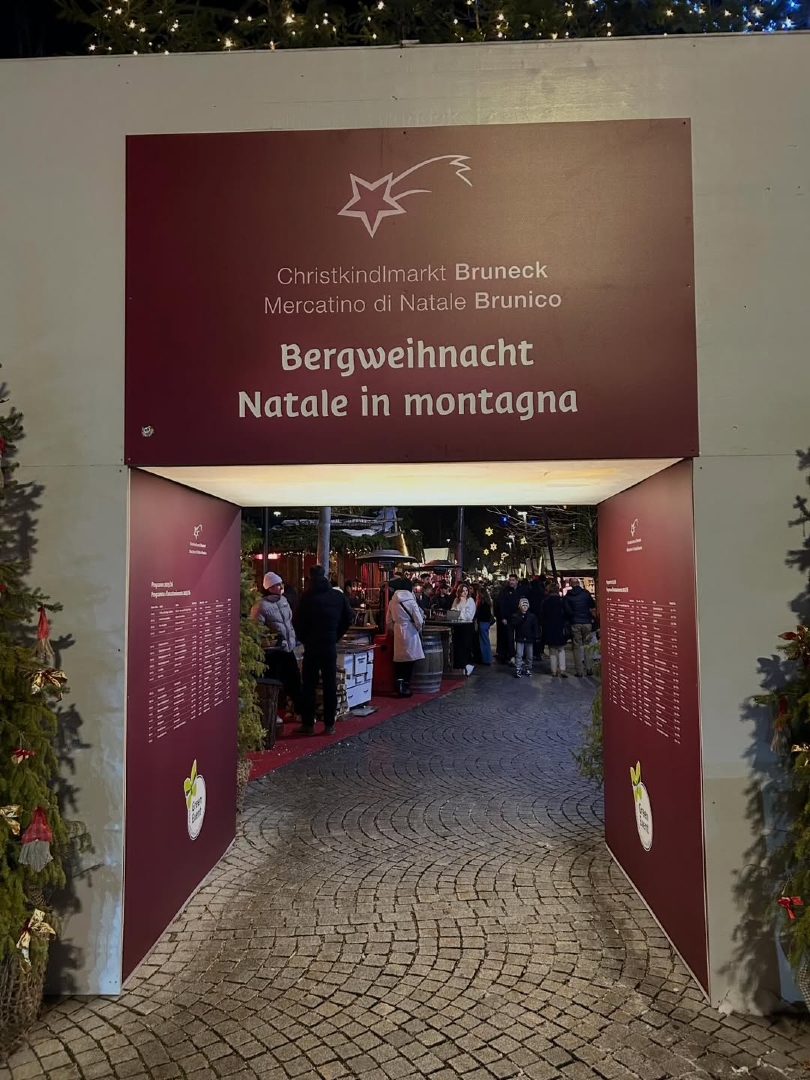
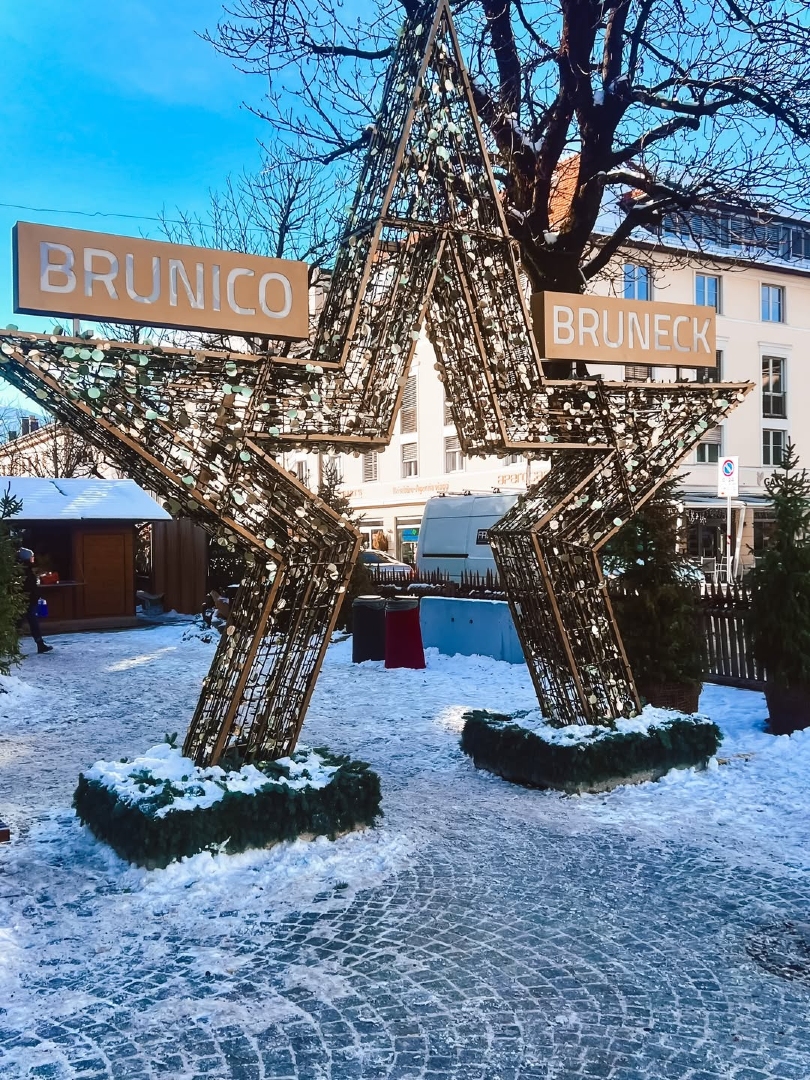
Brunico Christmas Markets

When: late November - January 6th
Where: Via Bastioni, Piazza Tschurtschenthaler, Ragen di Sopra
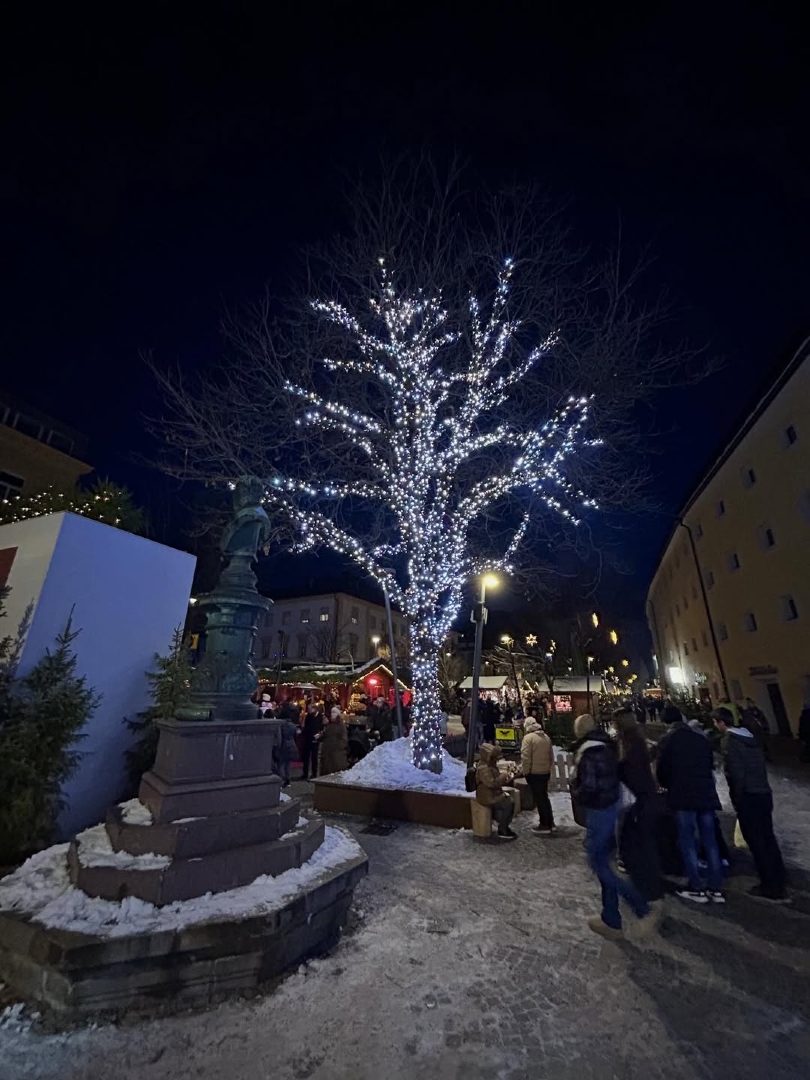
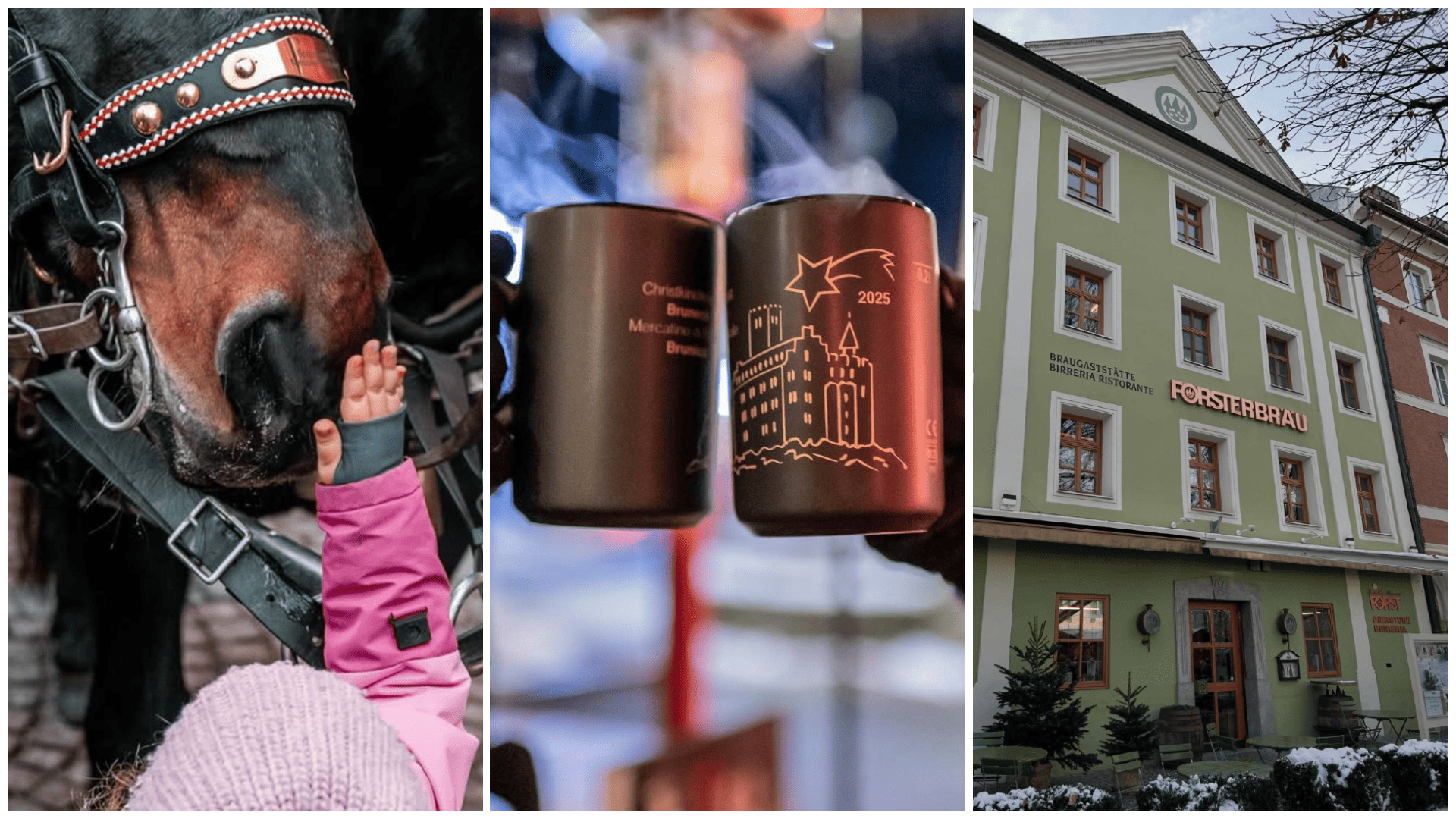
What: The Brunico Christmas Markets are among the five "Original South Tyrol Christmas Markets" and transform the historic center into a living nativity scene. Over 30 wooden stalls offer local handicrafts, Christmas decorations, wooden toys, ceramics, leather goods, and gastronomic specialties such as Lebkuchen (spiced biscuits), mulled wine (vin brûlé), and hot strudel. The atmosphere is magical, with ecological LED lights, Christmas carols, and live concerts. Recent additions include: the Scent Barn (an olfactory journey through typical fragrances), the Christmas Barn with textile products from the historic Ulbrich and Moessmer companies, and a wooden marble run for children.

Stegona Market
When: October 26-28 (annual)
Where: Stegona Market Square, Brunico
What: The Stegona Market is the largest market in Tyrol and one of the most anticipated events of the autumn. For three days, Brunico transforms into an open-air fair with hundreds of stalls selling everything: clothing, stuffed animals, household goods, tools, livestock (with vendors in traditional costume), and gastronomic stands featuring Tyrolean specialties and roasted chestnuts. There is also a funfair for children. The market has ancient roots and represents an important moment for the local community: according to an old proverb, "whoever wants to pass the winter well must come to the Stegona Market." The atmosphere is lively, colorful, and authentic, far removed from glossy tourism. It is the perfect opportunity to mingle with the locals and experience a tradition that has endured for centuries. If you visit Brunico during this period, expect crowds and contagious energy. Bring a large bag with you: you will find handicrafts, authentic food, and curious objects.
Kronplatz Ski Season Opening
When: Late November
Where: Kronplatz, Brunico
What: The opening of the ski season on Kronplatz is an event celebrated enthusiastically by skiers and winter sports lovers. The slopes are inaugurated with parties, live music, tastings in the mountain huts, and ski pass promotions. It is the moment when the mountain awakens after summer and Brunico fills up with tourists ready to enjoy the 121 km of perfectly snow-covered slopes. During the Christmas period, the resort is at its peak activity: slopes groomed nightly, modern and fast lifts, ski schools for children and adults, and mountain huts where you can taste typical dishes with a view of the Dolomites. Kronplatz is suitable for all skill levels: from beginners tackling blue runs to the more experienced looking for the famous Black Five, five of the most exciting black runs in South Tyrol. If you are traveling by camper during the winter, note that temperatures can be very low: make sure you have adequate heating systems and winter tires or chains.
Summer Concerts in Piazza Municipio
When: June - August (various dates)
Where: Piazza Municipio, Brunico historic center
What: During the summer months, Brunico organizes a series of open-air concerts in Piazza Municipio, ranging from Tyrolean folk music to jazz, from indie rock to classical music. The events are free and enliven summer evenings with a relaxed and convivial atmosphere.
It's the perfect opportunity to enjoy an evening outdoors after a day of hiking in the mountains or along the cycle path. Bring a blanket or a folding chair, grab a drink from one of the kiosks, and let the music lull you under the alpine stars. To find the updated program, consult the official Brunico tourism website or ask the tourist information office in Piazza Municipio.

Typical Dishes and Local Products

You cannot say you have truly experienced Brunico without tasting canederli (Knödel), the signature dish of South Tyrolean cuisine. These giant bread dumplings tell the story of the farming tradition: born as an intelligent way to salvage stale bread, today they have become a gastronomic icon found in every tavern, mountain hut, and restaurant in the Puster Valley.

Canederli are prepared in countless variations: with speck (the most classic version), with spinach, cheese, mushrooms, or red beets. They are served in hot broth, or dry with melted butter and Parmesan cheese, or as a side dish to goulash or sauerkraut. There is even a sweet version, with apricots or plums.

The recipe we suggest is for speck canederli, perfect to prepare even in a camper if you have an equipped kitchen. The process is simple, but it requires a little patience to achieve the right consistency.

Recipe for Speck Canederli

Ingredients (for 4 people, about 12 canederli):
  • 400g of stale bread (preferably black rye bread or mixed bread)
  • 150g of South Tyrolean Speck PGI, cut into small cubes
  • 200ml of whole milk
  • 3 fresh eggs
  • 1 small onion (or 1 small leek), finely chopped
  • 30g of butter
  • 1 tablespoon of fresh chopped parsley
  • 100g of all-purpose flour (approx.)
  • Salt and pepper to taste
  • Nutmeg (optional)
  • Meat or vegetable broth (for cooking)
Instructions:
  1. Preparing the bread: Cut the stale bread into cubes of about 1 cm. Place them in a large bowl and pour warm milk over them. Mix well and let stand for 10-15 minutes until the bread has absorbed all the milk and is soft.
  2. Sautéing speck and onion: In a pan, melt the butter and sauté the finely chopped onion (or leek). When it becomes translucent, add the speck cubes and cook for 2-3 minutes, stirring. The speck should release its aroma without burning.
  3. Preparing the dough: Add the sautéed speck and onion to the milk-soaked bread. Add the eggs (one at a time), chopped parsley, a pinch of salt, pepper, and a grating of nutmeg (if desired). Mix well with your hands or a wooden spoon.
  4. Adjusting the consistency: At this point, the dough should be soft but compact. If it is too liquid, add flour little by little; if it is too hard, add a splash of milk. The correct dough should allow you to form balls without them falling apart.
  5. Resting the dough: Cover the bowl with a tea towel and let the dough rest for 20-30 minutes. This step is important for the ingredients to blend together.
  6. Forming the canederli: Wet your hands with cold water (to prevent the dough from sticking) and form balls the size of a tennis ball (about 70-80g each). They must be well compacted.
  7. Cooking: Bring a large pot of meat broth (or salted water) to a boil. Gently immerse the canederli and lower the heat to medium-low. The canederli should cook for **15-20 minutes**, without boiling too vigorously (otherwise they will fall apart). They are ready when they float to the surface and have a firm but soft consistency inside.
  8. Serving: You can serve them in broth (pour them directly into bowls with hot broth) or dry, drained and seasoned with melted butter, grated Parmesan cheese, and a sprinkle of fresh chives. Another option is to serve them with sauerkraut or deer goulash.
Historical and Cultural Note

Canederli (Knödel in German) have deep roots in Tyrolean peasant cuisine. Born as a poor man’s dish to salvage leftover bread, today they are a symbol of cuisine that wastes nothing and values local ingredients. South Tyrolean Speck PGI is produced following strict regulations: it is slowly smoked with aromatic woods (juniper, laurel) and aged for at least 22 weeks. The result is a sweet and spiced cured meat, perfect for flavoring the canederli.

A curiosity: canederli are never cut with a knife! Tradition dictates that they be broken with a fork or spoon, to respect their soft and porous texture. Eating them in a Malga (alpine hut) or refuge at 2000 meters, after skiing or hiking, is an experience that warms the heart and stomach.

If you don’t have the time or desire to prepare them in your camper, you will find excellent canederli in all the taverns in and around Brunico. Always ask if they are homemade (hausgemacht): the difference is noticeable.

Useful Tip

  • When to go: Brunico is a perfect destination all year round. Winter (December–March) is ideal for skiing on Kronplatz and experiencing the Christmas market atmosphere. Summer (June–September) is perfect for hiking, mountain biking, and culture. The intermediate seasons – spring and autumn – offer fewer crowds, lower prices, and spectacular nature (spring blossoms or autumnal colors).
  • Traffic warning: Do not try to enter the historic center with your camper. The streets are narrow, busy, and largely pedestrianized. Rely on the designated parking areas and reach the center on foot, by bike, or by public transport.
  • Combine Brunico with other destinations: The Puster Valley is a very rich area. From Brunico, you can easily reach Lake Braies (30 km), Lake Anterselva (40 km), the Castles of Tures and Welsperg, and even venture towards Val Badia or the Tre Cime di Lavaredo (Three Peaks of Lavaredo). If you have several days, consider Brunico as a strategic base for exploring the entire Dolomite region.
  • Groceries and supplies: Brunico has several well-stocked supermarkets (Despar, Eurospar, Lidl) where you can stock up before leaving. If you are looking for local products, visit the shops on Via Centrale or the Saturday morning weekly market in Piazza Municipio.
  • Documents and tolls: South Tyrol requires the Austrian motorway vignette if you arrive via the Brenner Pass (A22). Alternatively, you can take the Puster Valley state road, which is slower but scenic. Make sure you have your vehicle documents and identity card with you.

👉 Discover more itineraries and GPS coordinates on map.camperepoi.it (coming soon!)

👉 Subscribe to the CamperePoi newsletter to download the complete guide “The Mountain by Camper”

0

post a comment