Top

Visit Borghetto sul Mincio

A Village of Mills Where Time Has Stood Still

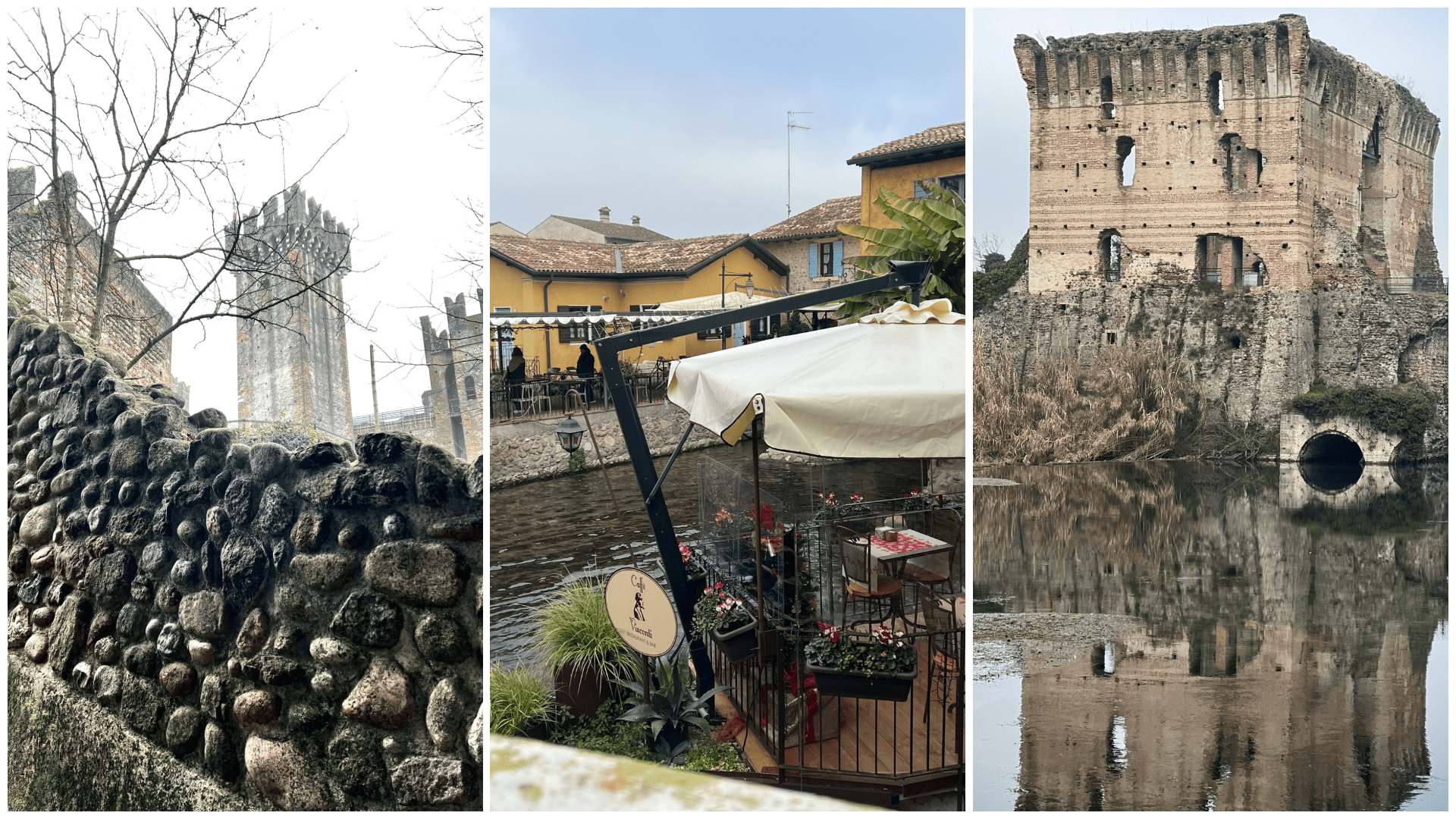
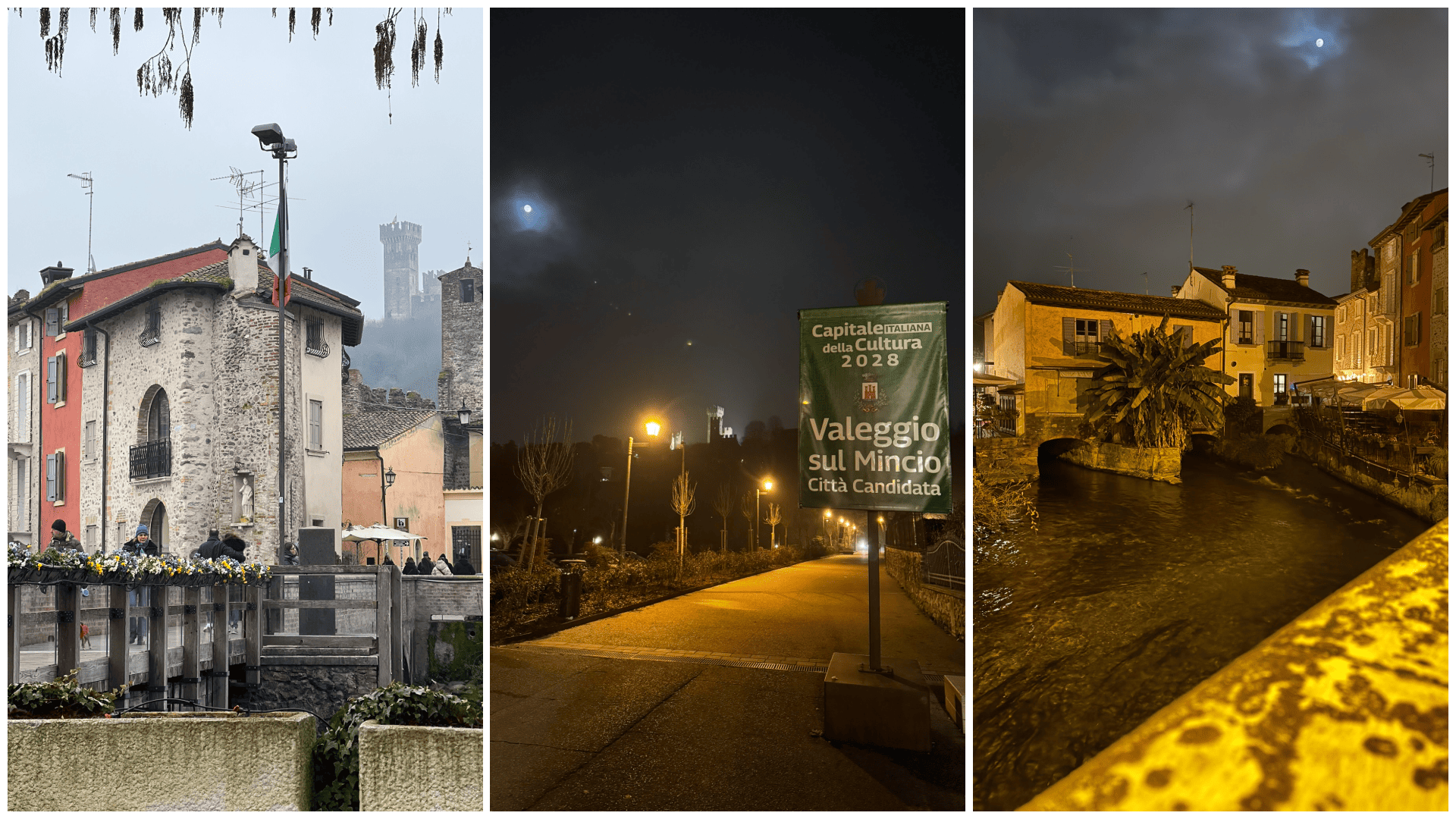
Imagine crossing a 650-meter medieval bridge, with the placid waters of the Mincio River flowing beneath you, brushing against ancient, still-functioning stone mills. This is Borghetto sul Mincio, a hamlet of Valeggio sul Mincio listed among the “Most Beautiful Villages in Italy” (Borghi più Belli d’Italia), where every corner tells stories of impossible loves, ladies, and knights.

Visiting Borghetto by camper means immersing yourself in an atmosphere suspended between the Middle Ages and untouched nature. Its Lombard origins (the name derives from the Germanic for “fortified settlement”) are intertwined with the romantic charm of mill wheels still turned by the current, wooden bridges connecting the two banks, and the majestic Visconteo Bridge—a fortified dam that looks like something out of a fairy tale.

The village is small: you can visit it all on foot in an hour. But it is precisely this intimate scale that makes it perfect for a relaxing camper stop. From here, you can easily reach Verona (28 km), Mantua (30 km), and Lake Garda (10 km). It also serves as an excellent base for exploring the Mantua-Peschiera del Garda cycle path, which passes right through the area. And don’t forget the nearby Parco Giardino Sigurtà, one of the most beautiful gardens in Europe.

Stopovers and overnight stays

Borghetto sul Mincio is one of those villages where a camper simply should not enter: narrow streets, an entirely pedestrianized center, and an atmosphere that can only be enjoyed on foot or by bicycle. The best solution is to park your camper in one of the two equipped rest areas located just a few minutes’ walk from the entrance to the village.

Both areas are convenient, safe, and allow you to enjoy Borghetto without any worries. The choice depends on your preferences: do you want more shade and a cozier atmosphere? Choose Parking Visconteo. Do you prefer more spacious pitches and the possibility of opening your awning? Head for Parcheggio Virgilio.

Recommended areas

🅿️ Camper Area – Parking Visconteo
Strada Provinciale, 55, 37067 Valeggio sul Mincio (VR)
This area is perfect if you are looking for shade and cool air even in the height of summer, and if you are interested in visiting Parco Sigurtà during the day. The pitches are quite narrow, making it difficult to open an awning; the area is close to two provincial roads and can be noisy at night.

Access: Automated 24/7 with a magnetic card for services.

Services: Electricity hookup, water loading/unloading, toilets (squat toilets), hot showers, washing machine, BBQ area, outdoor tables, children’s play area, vending machines, Wi-Fi.

GPS: 45.355479, 10.720015

🅿️ Camper Area – Parcheggio Virgilio
Via Michelangelo Buonarroti, 37067 Borghetto (VR)

This area is ideal if you are traveling with children (more space to play), if you want to open your awning, or if you are looking for a comfortable overnight stay without too many extra costs. The pitches are not clearly delimited: during high season, the parking can feel a bit “wild.”

Services: 220V electricity hookup on every pitch, water loading, chemical toilet and greywater discharge, very clean toilets and showers, sinks with hot water, BBQ area, tables, children’s play area, lighting, fenced area.

Access: Automated 24/7 with a barrier.

GPS: 45.354401, 10.721281

Getting Around

Borghetto is an entirely pedestrian village, so leave your camper in the rest area and get ready to enjoy a 5-minute walk that is a highlight in itself. The path from the rest area to the village is flat, on paved or well-trodden gravel roads, making it fully accessible even for strollers.

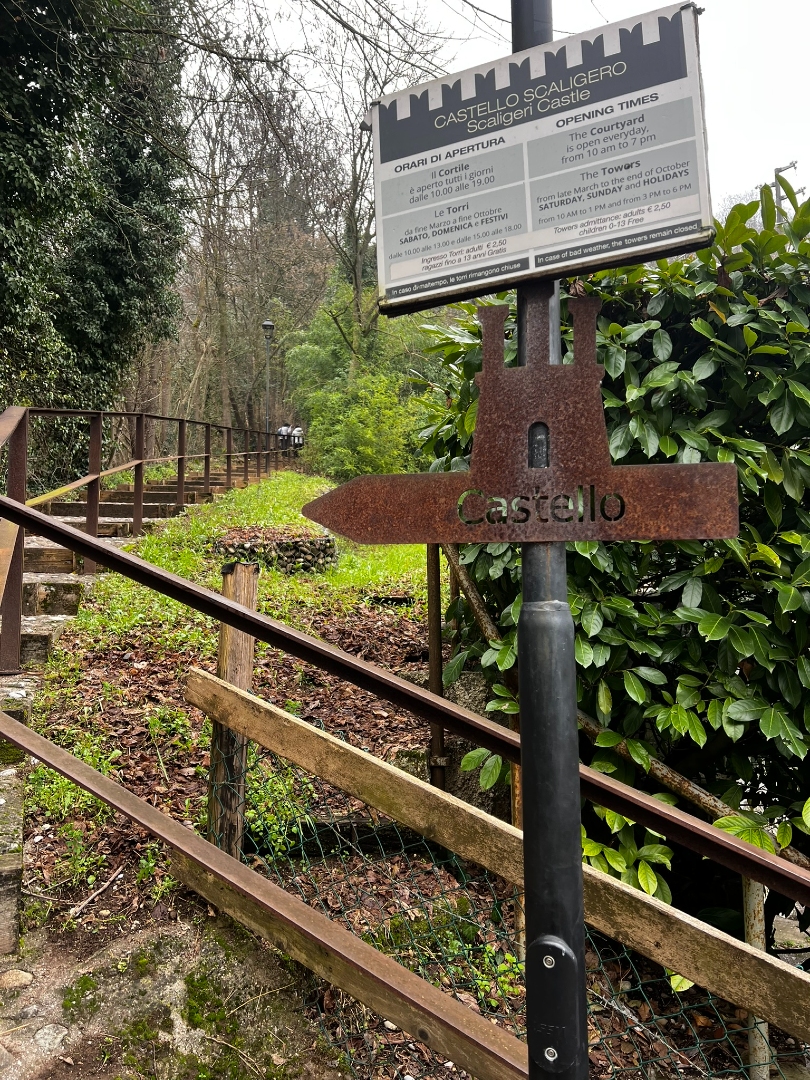
On foot: You can see the entire village in about an hour, but we recommend taking at least 2-3 hours to enjoy every corner at a slow pace. Stop for a coffee or a spritz overlooking the river, and perhaps visit the interior of one of the mills. From the village, you can also walk to the Scaligero Castle (1 km, a 15-minute climb), which overlooks the valley and offers spectacular panoramic views.

By bicycle: The rest areas are located right along the Mantua-Peschiera del Garda cycle path (45 km total, flat and suitable for everyone). You can pedal toward Lake Garda (Peschiera is 15 km away, about 1 hour) or toward Mantua. Alternatively, you can easily cycle to Parco Sigurtà (2.5 km, 10 minutes), which features a dedicated entrance for cyclists and a charging point for e-bikes.

By car/camper: To visit Valeggio sul Mincio (the upper town where the castle is located), you can use your camper: it is only 2 km from Borghetto and offers a large free public parking lot near the castle. This is also useful if you want to combine your visit to Borghetto with a dinner at one of Valeggio’s renowned restaurants.

Points of Interest (PoI)

Borghetto is small but brimming with charm. Every alleyway, every bridge, and every mill tells a story. Here are the must-see spots you shouldn’t miss during your visit.

1
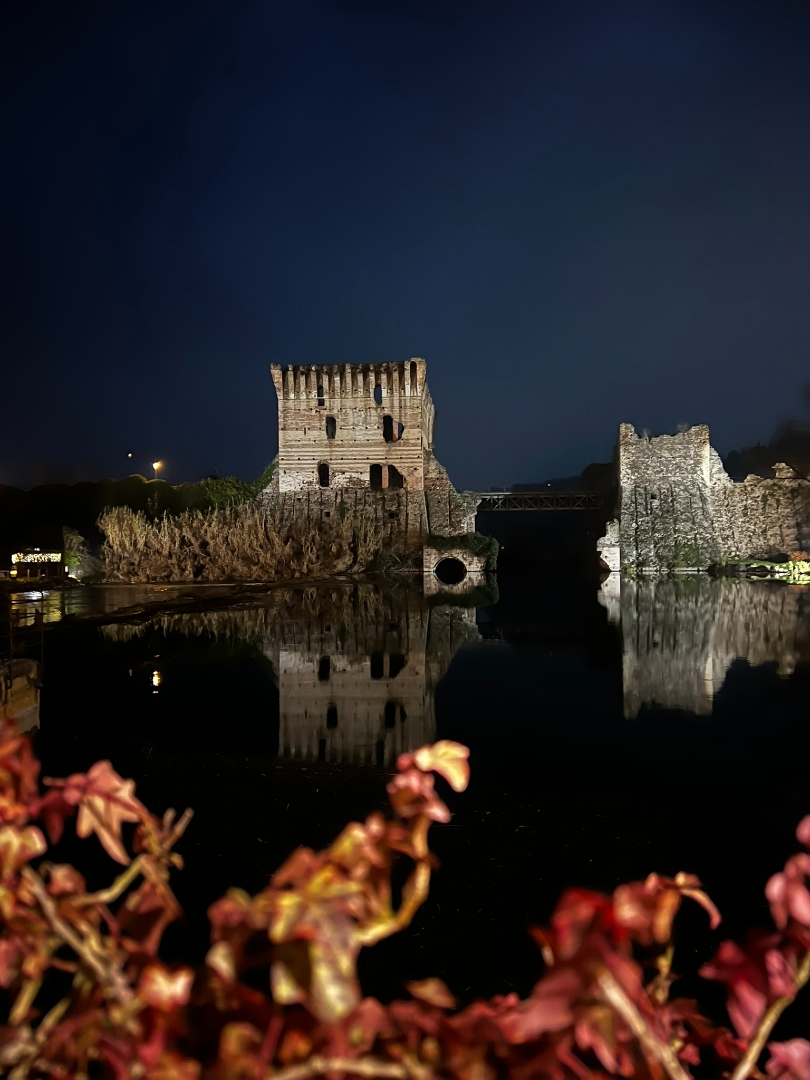
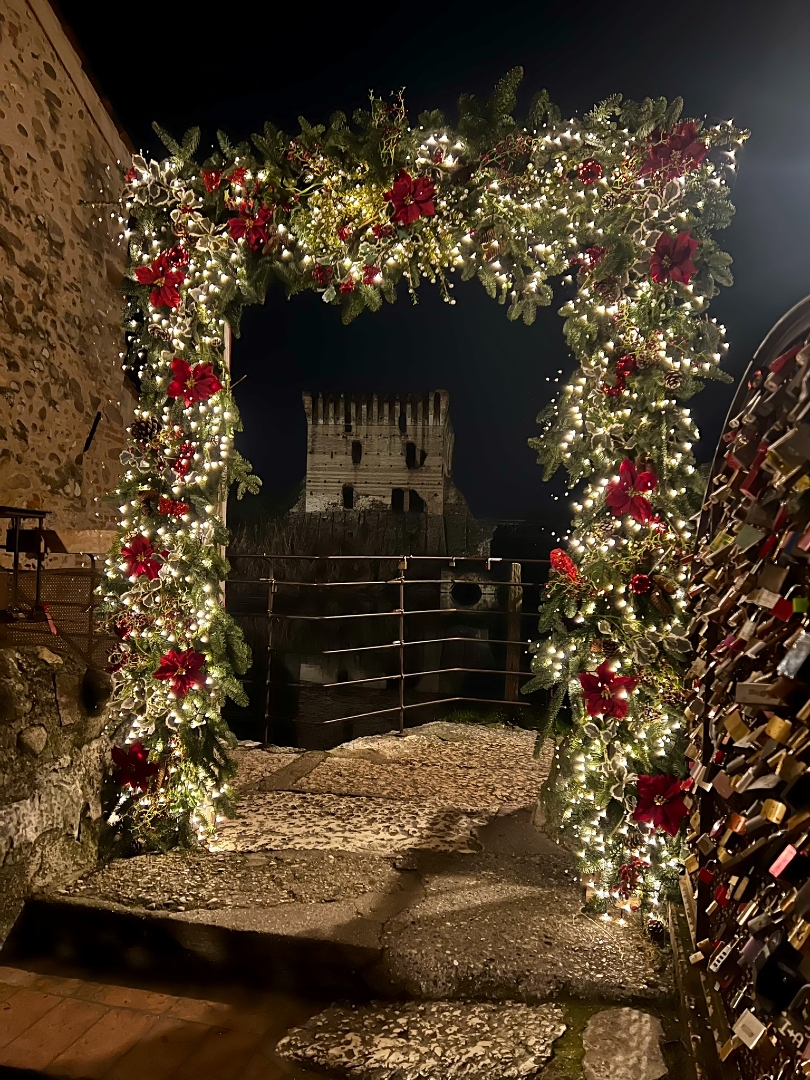
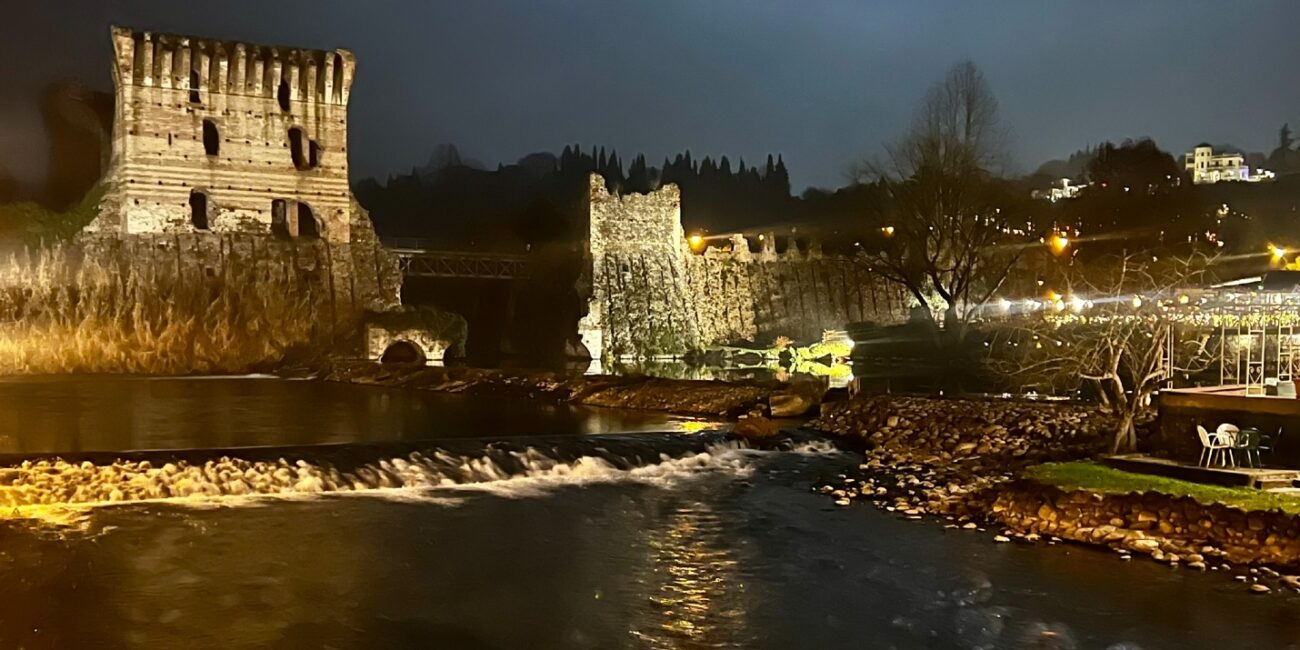
The Visconteo Bridge (or "Ponte Lungo") This is the symbol of Borghetto and arguably one of the most spectacular medieval bridges in Italy. Built between 1393 and 1395 at the behest of Gian Galeazzo Visconti, Duke of Milan, it is 650 meters long and 25 meters wide. It is not just a bridge: it is a true fortified dam, featuring a large central fortress (now partially in ruins) that once housed the surveillance garrison. The original objective was to divert the waters of the Mincio River to strip rival Mantua of its natural defenses, but the project was never completed. Today, the bridge can be crossed on foot or by car, offering a breathtaking view of the village and the Mincio valley, especially at sunset when the golden light illuminates the mills.
2
The Water Mills Some date back to the 15th century and are still in perfect working order. Their large metal wheels turn, driven by the river's current, creating a constant sonic backdrop that accompanies you throughout your entire visit. Long ago, they were used to grind wheat, cereals, and rice; today, many have been transformed into restaurants or charming B&Bs, yet they keep their ancient allure intact. You can visit the interior of some (a few offer guided tours) to see up close the gears that transfer the power of the water to the large stone millstone. It is a fascinating experience, especially for children.
3
San Marco Bridge (The Wooden Bridge) This is a small wooden pedestrian bridge that connects the two banks of the village, offering one of its most iconic and photographed views: from here, you can see the mills, the Visconteo Bridge, and the gentle flow of the river all in one glance. At the entrance of the bridge stands the statue of Saint John Nepomuk, the patron saint of rivers and bridges, who, according to tradition, protects those who fall into the water from drowning.
4
Church of San Marco Evangelista Built in the 18th century on the ruins of a previous 11th-century Romanesque parish church dedicated to Santa Maria, the church features a simple neoclassical facade. Inside, the single-nave structure houses four chapels and offers an atmosphere of tranquility that contrasts pleasantly with the liveliness of the village. In the churchyard, there are several plaques commemorating the major battles fought along the banks of the Mincio.
5
Parco Giardino Sigurtà It is one of the five most beautiful floral parks in the world and represents an almost mandatory stop if you visit Borghetto. The botanical garden covers 600,000 square meters and hosts spectacular attractions: the Avenue of Roses (1 km with 30,000 roses), the Labyrinth (1,500 yew trees), the Flowering Lakes, the Water Gardens reflecting the Scaligero Castle, the Fallow Deer Valley, the Farm, and above all, "Tulipanomania" (the blooming of over a million tulips from mid-March to early May). The park can be visited on foot (a route of about 10 km), by bicycle (you can bring your own or rent one on-site), with the panoramic tourist train, or by renting electric golf carts. Parking is free. Dogs are not allowed, but there are arrangements with nearby dog boarding facilities.
6
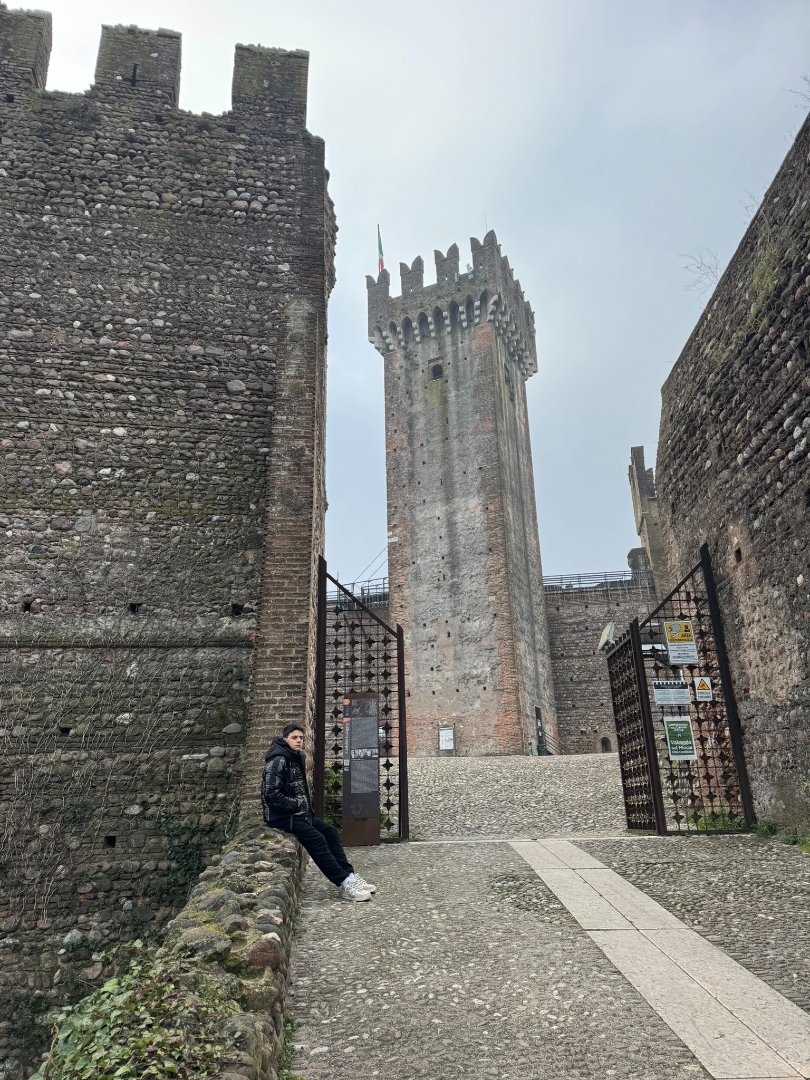
The Scaligero Castle of Valeggio sul Mincio Opening hours: Saturdays, Sundays, and public holidays (from late March to late October), 10:00 AM–1:00 PM and 3:00 PM–6:00 PM. The panoramic courtyard is open daily from 10:00 AM to 7:00 PM. The castle towers from the hilltop, dominating the entire Mincio Valley. Built by the Scaligeri family in the 14th century, it was once connected to the Visconteo Bridge by two high crenelated curtain walls that formed the "Serraglio" defensive system (approximately 16 km long). Of the oldest section, only the Torre Tonda (Round Tower) remains—a unique horseshoe-shaped structure dating back to the 10th century. From the top of the towers, you can enjoy a spectacular panoramic view of Borghetto, the Visconteo Bridge, the Mincio Valley, and, on clear days, as far as Lake Garda.

Seasonal Events

The Love Knot Festival (Festa del Nodo d’Amore)

When: third Tuesday of June

Where: Visconteo Bridge in Borghetto

What: It is the most spectacular event of the year and one of the most famous open-air banquets in Europe. The Visconteo Bridge is transformed into a table over 1 kilometer long, with approximately 3,000 diners seated to enjoy the famous Valeggio tortellini (a staggering 1.3 tons, 900,000 handmade tortellini!) accompanied by local wines, live music, historical reenactments in medieval costume, and a final fireworks display. The festival takes its name from the legend of Captain Malco and the nymph Silvia, whose impossible love is symbolized by a knotted silk handkerchief left on the banks of the Mincio. From this legend comes the "Love Knot" (Nodo d'Amore), the Valeggio tortellino. Note: The event is limited-entry and sells out quickly. The 2024 edition was cancelled, but it returned regularly in 2023 and 2025. If you wish to participate, book well in advance on the official website: www.festanododamore.it

Tortellini e Dintorni (Tortellini and Surroundings)

When: 3 days in September

Where: Historic center of Valeggio sul Mincio

What: A traveling food and wine festival that involves the entire town. For three days, you can taste tortellini in every kind of sauce (and with creative fillings), local wines, and typical regional products, all accompanied by live music, shows, and entertainment for children.

Creative Markets (Mercatini Creativi)

When: Spring-Summer

Where: lakeside (Mincio riverfront)

What: During the spring and summer months, craft markets are held along the lakeside featuring creatives, makers, art, and design, generally from 9:00 AM until sunset.

Typical Dishes and Local Products

Valeggio Tortellini: the Love Knot uniting legend and tradition

You cannot say you have visited Borghetto sul Mincio without tasting its famous Valeggio Tortellini, also known as the Love Knot (Nodo d’Amore). This is not just a simple first course: it is a symbol of eternal love that holds a medieval legend and the mastery of local pasta makers in every bite. Legend has it that at the end of the 14th century, Malco, a brave captain of the Visconti troops, fell hopelessly in love with Silvia, a sweet nymph of the Mincio River. Pursued by soldiers who wanted to separate them, the two lovers took refuge in the depths of the river, leaving a golden silk handkerchief tenderly knotted on the bank as a pledge of their eternal love. Since then, the women of Valeggio prepare these tortellini by rolling a dough as thin as silk and as bright as gold, which wraps around a delicate filling of mixed meats. The pasta is then “knotted” just like the handkerchief from the legend, creating a small treasure chest of flavor that guards a love story. Valeggio tortellini are recognized as a Traditional Agri-food Product (P.A.T.) by the Veneto Region, and the original recipe is safeguarded by the Association of Valeggio Restaurateurs. What makes them so special? The paper-thin pasta (about 2-3 mm), strictly hand-rolled, and a delicate filling made only of meats and natural aromas, without cheeses or aged cured meats (unlike Bolognese tortellini).

Recipe for Valeggio Tortellini (Love Knot)

Note: This is a home-style version of the traditional recipe, published by the Pro Loco of Valeggio sul Mincio. The original recipe registered by the Association of Restaurateurs involves even more elaborate times and techniques.
Ingredients (serves about 8):
For the pasta dough:
  • 600 g “00” flour
  • 5 whole eggs
  • Water as needed (about half a glass)
For the filling:
  • 150 g beef (stewing cut)
  • 100 g pork
  • 100 g veal
  • 200 g chicken breast (or alternatively 100 g chicken livers)
  • 100 g Prosciutto Crudo
  • 100 g grated Grana Padano or Parmigiano Reggiano cheese
  • 50 g breadcrumbs
  • 1 egg yolk
  • 1 onion
  • 1 carrot
  • 1 celery stalk
  • 1 sprig of rosemary
  • Nutmeg to taste
  • Butter
  • Extra virgin olive oil
  • Salt and pepper
  • Half a glass of red wine (optional, traditionally Bardolino)
For the dressing:
  • Capon broth (or mixed capon-beef) – traditional version
  • Or melted butter and sage leaves – alternative version
  • Grated Grana Padano for serving
Instructions:
1. Prepare the filling (to be done the day before or at least 3 hours ahead):
  1. Finely chop onion, carrot, and celery to make a soffritto.
  2. In a large pan, heat some oil and butter and sauté the soffritto.
  3. Add the meats cut into small pieces (beef, pork, veal, chicken) and brown well over medium heat.
  4. If using chicken livers, cook them separately in butter and add at the end.
  5. Deglaze with red wine (if using) and let it evaporate.
  6. Add the rosemary sprig, salt, pepper, and a pinch of nutmeg.
  7. Cover and cook over low heat for about 15-20 minutes, stirring often, until the meat is well cooked. If necessary, add a little water or broth.
  8. Remove the rosemary and let the meat cool completely.
  9. Blend the cooked meat together with the Prosciutto Crudo, egg yolk, Grana Padano, and breadcrumbs until you obtain a firm, homogeneous mixture.
  10. Taste and adjust salt, pepper, and nutmeg.
  11. Wrap the filling in plastic wrap and let it rest in the fridge until ready to use.
2. Prepare the dough:
  1. Arrange the flour in a fountain shape on a work surface and crack the eggs into the center.
  2. Start incorporating the eggs into the flour with a fork, then knead with your hands.
  3. Add water a little at a time, just enough to obtain a smooth, firm, and elastic ball.
  4. Work the dough for at least 10 minutes until it becomes uniform.
  5. Wrap in plastic wrap and let rest for at least 30 minutes at room temperature.
3. Shape the tortellini:
  1. Roll out the dough with a rolling pin (or a pasta machine) until it reaches a thickness of 2-3 mm—it must be extremely thin, almost transparent.
  2. Cut the dough into small squares of about 3 cm per side (you can use a serrated pasta cutter for a wavy edge, as tradition dictates).
  3. In the center of each square, place a small teaspoon of filling.
  4. Fold the square in half to form a triangle, pressing the edges well to seal.
  5. Bring the two opposite corners of the triangle towards the center and join them by overlapping them slightly, forming the characteristic “knot.”
  6. Arrange the tortellini on a clean, floured cloth, well-spaced, and let them dry for at least 30 minutes (but no more than 2 hours).
4. Cooking and Dressing: Traditional version (in broth):
  1. Bring a good capon broth (or mixed capon-beef) to a boil.
  2. Submerge the tortellini in the boiling broth and cook for 2-3 minutes (they should rise to the surface and the pasta should be al dente).
  3. Serve immediately in a soup bowl with plenty of hot broth and a dusting of Grana Padano.
Alternative version (butter and sage):
  1. Cook the tortellini in plenty of boiling salted water for 2-3 minutes.
  2. Meanwhile, in a large pan, melt butter with a few fresh sage leaves until the butter turns slightly golden.
  3. Drain the tortellini with a slotted spoon and transfer them to the pan with the butter and sage.
  4. Toss gently for a minute, plate, and serve with plenty of grated Grana Padano.
Cultural Notes and Tips:
  • The paper-thin dough is the secret: it must be rolled much thinner than Emilian tortellini. Expert pasta makers can see their hand through the dough.
  • Only meat, no cheese in the filling: unlike Bolognese tortellini (which contain mortadella and parmesan in the filling), Valeggio tortellini have a more delicate and “clean” taste.
  • The “knot” shape recalls the knotted handkerchief from the legend and is a symbol of eternal love.
  • Purists eat them strictly in broth, even in the middle of summer, but the butter and sage version is equally delicious and lighter.
  • In Valeggio, you will find numerous artisan pasta shops where you can buy fresh tortellini to take home: the most famous are Pastificio Remelli and Re del Tortellino.
  • Every restaurant in Borghetto and Valeggio has its own personal version: some add creative fillings with vegetables, cheeses, or game. But the true traditional “Love Knot” remains the one with the meat filling.
Preparing Valeggio tortellini requires time, patience, and love—just like the legend that inspired them. But the result will reward you with a dish that encompasses history, tradition, and the authentic flavor of the Veronese territory.

Useful Tips

Best time to visit: Spring (April-May) and early autumn (September-October) are the best times. The weather is mild, perfect for walks and bike rides, and you can combine your visit with the tulip bloom at Parco Sigurtà (March-May) or the autumn colors. Summer can be very crowded, especially on weekends, and parking areas tend to fill up. If you want to attend the Love Knot Festival (third Tuesday in June), book both the dinner and your parking spot well in advance.

Lake Garda and nature nearby: Borghetto is a perfect base for a tour of Lower Lake Garda. Peschiera del Garda is only 10 km away (15 minutes by motorhome), Sirmione 12 km, and Lazise 15 km. You can easily combine a visit to the village with a trip to the lake in a single day. Alternatively, dedicate a day to the Mantua-Peschiera cycle path: from Borghetto, you can reach Mantua (30 km) or Peschiera (15 km) cycling along the river on a flat path suitable for everyone. The Mincio Nature Reserve also offers nature trails and birdwatching.

Shopping and supplies: In Valeggio sul Mincio (2 km from Borghetto), you will find supermarkets, bakeries, butchers, and shops selling typical products. Don’t miss the artisan pasta shops to buy fresh tortellini to take home: Pastificio Remelli and Re del Tortellino are among the most famous. There are gas stations located near the motorhome parking areas.

Restaurants and where to eat: In Borghetto, you will find dozens of restaurants and trattorias, many directly overlooking the river with views of the mills. Prices are medium-high (as it is a tourist village), but the quality is generally excellent. Of course, you must taste the tortellini, but also try other traditional Veronese dishes: Amarone risotto, bigoli with sardines, or bollito with pearà sauce. Reservations are highly recommended on weekends and public holidays.

Tickets and access: Entry to Borghetto is free, as is the walk on the Visconteo Bridge. The Scaligero Castle requires an entrance ticket (check updated prices and hours at the Pro Loco: +39 045 7951880). Parco Sigurtà requires an entry ticket (€18 adults, €10 children): buy online on the official website to avoid queues.

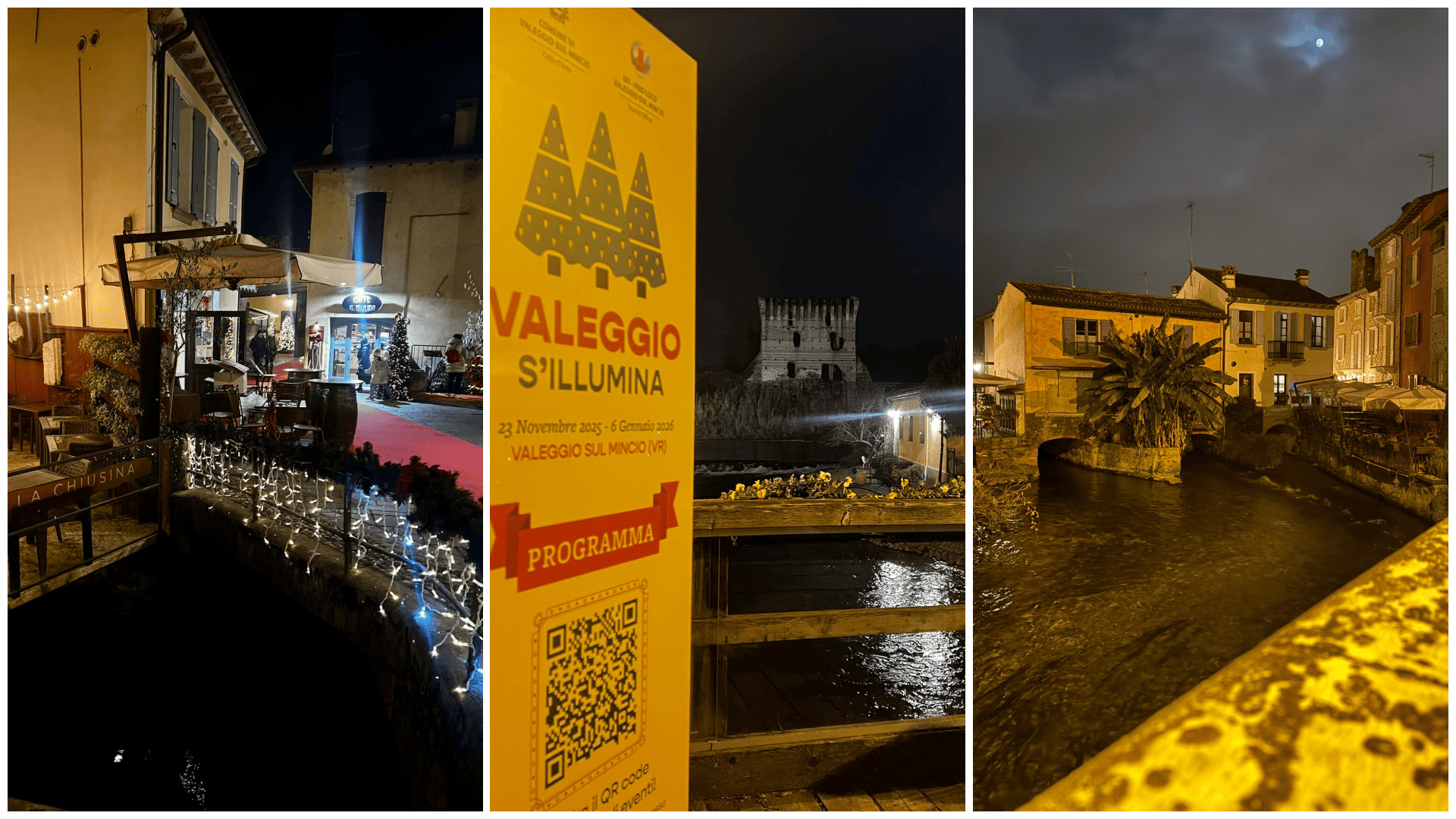
👉 Borghetto sul Mincio is a perfect destination for a 1-2 day stop by motorhome, ideal as an intermediate stage between Verona, Mantua, and Lake Garda. The romantic atmosphere, the beauty of the mills, the deliciousness of the tortellini, and the tranquility of the Mincio river will win you over. Don’t forget to visit the village at sunset, when the golden lights turn on and the Visconteo Bridge is reflected in the water: a breathtaking sight.

0

post a comment