
Top

Visit Bolzano

Bolzano by camper: between Christmas markets and Central European culture

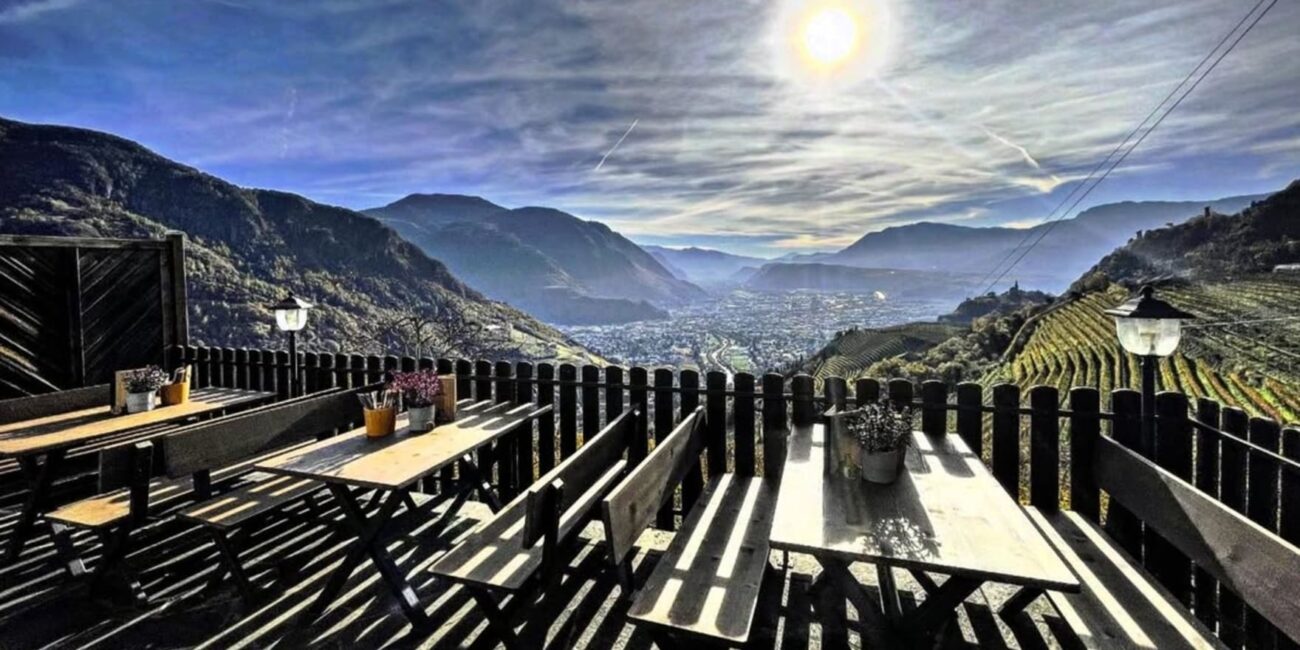
Bolzano is a city that surprises in every season, but it is especially during Advent that it releases all its magic. As a gateway to the Dolomites and a crossroads between Italian and Central European culture, the South Tyrolean capital offers motorhome travelers a perfect mix of history, art, and Alpine traditions—all within easy reach by bus from your camper.

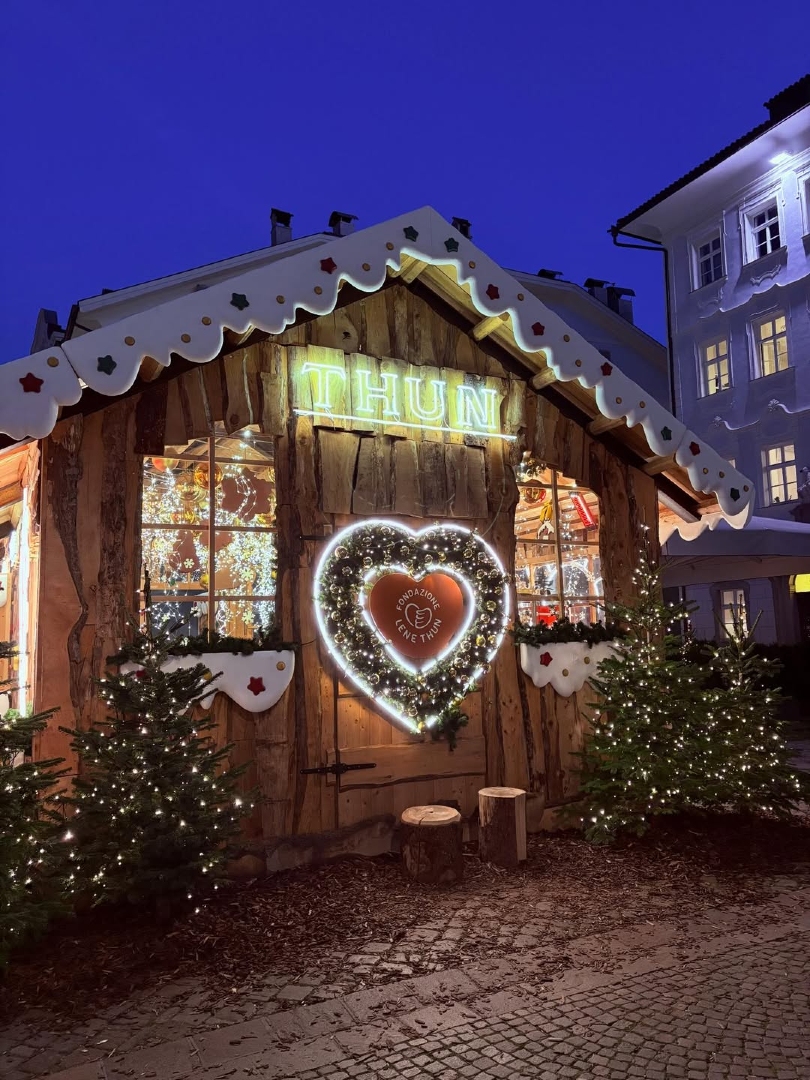
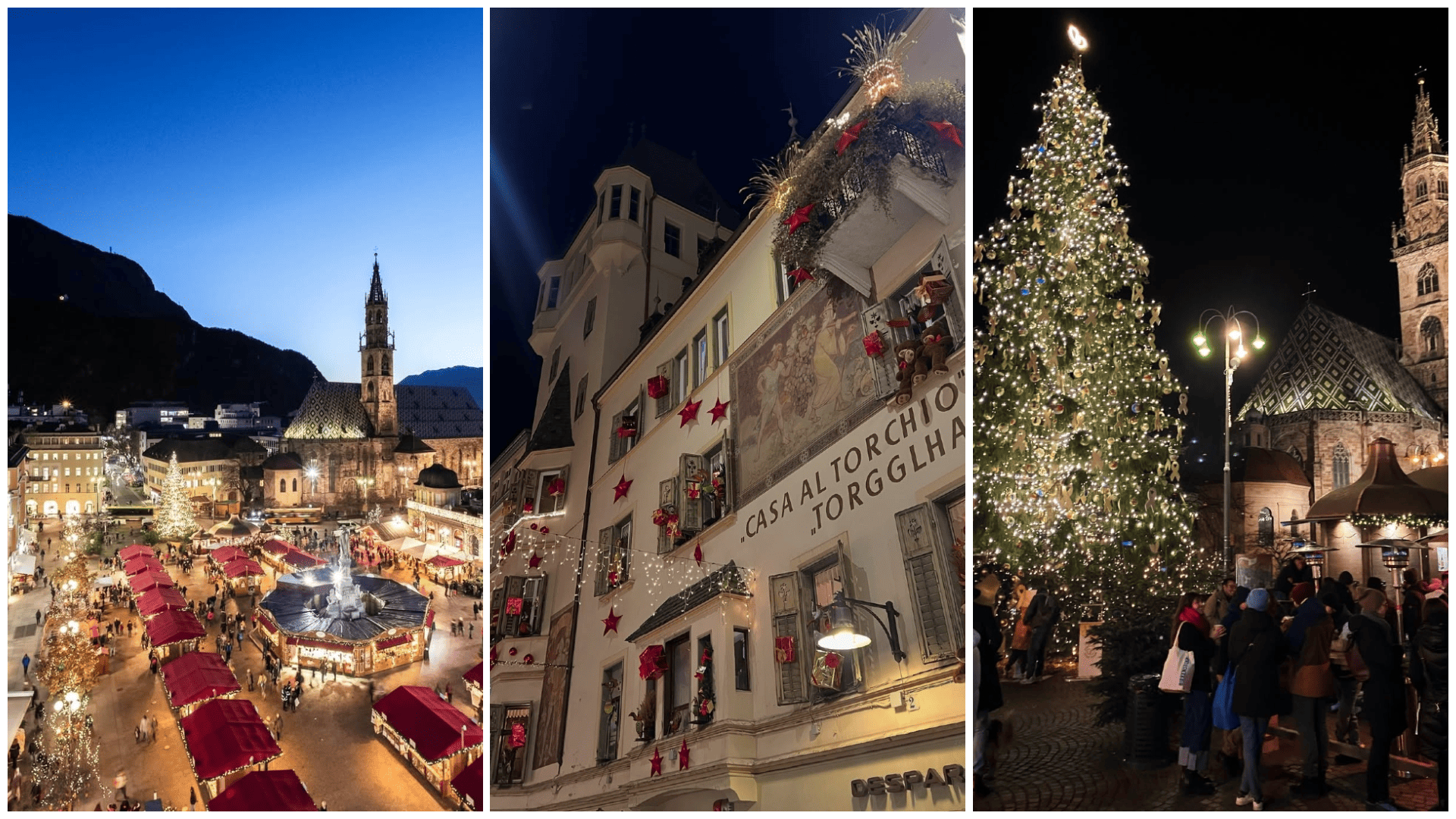
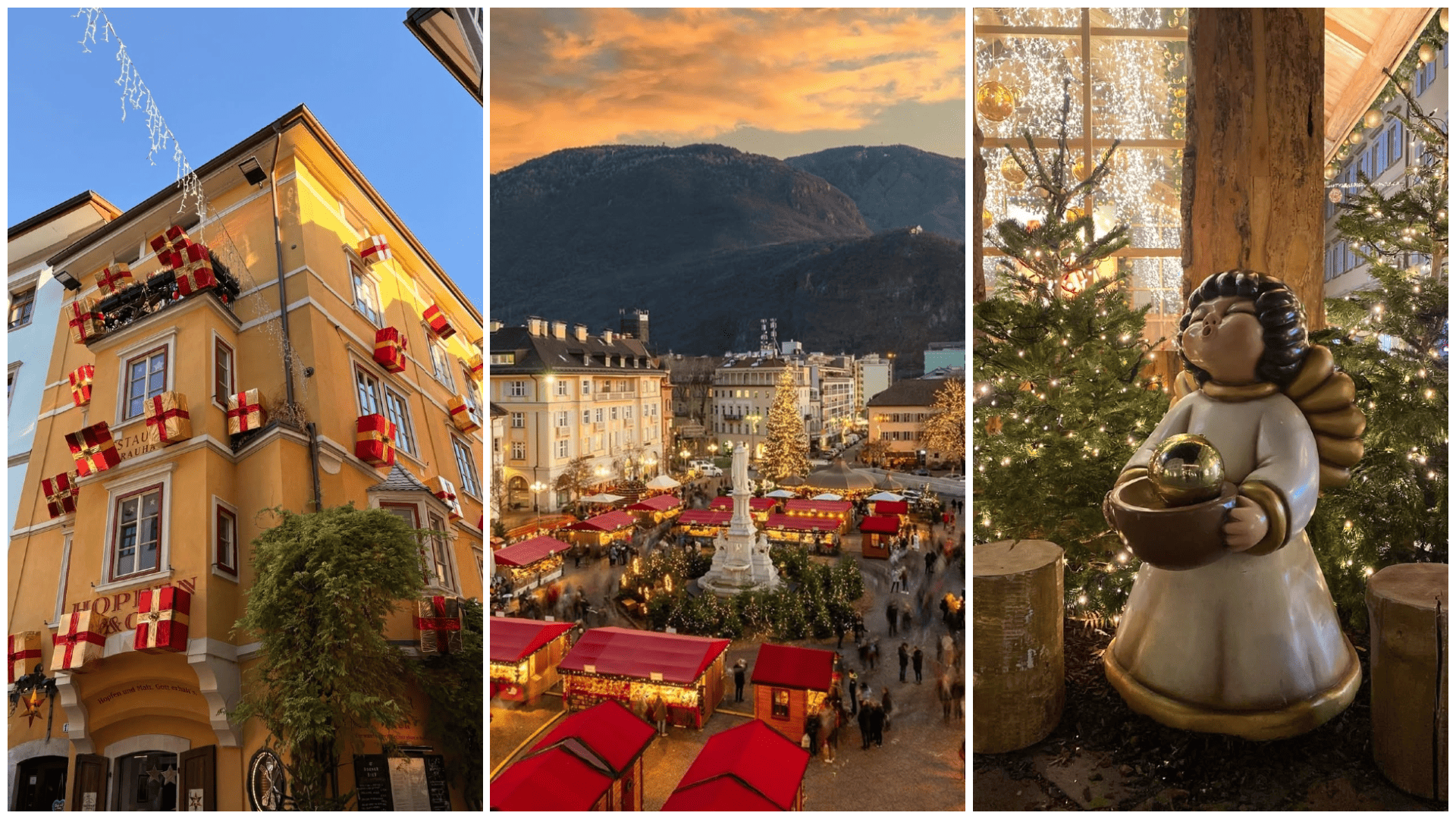
Visiting Bolzano by motorhome is a strategic choice: you can conveniently stay outside the city center and reach the heart of town by public transport in just a few minutes. The historic center, almost entirely pedestrianized, is easily explored on foot among medieval arcades, elegant squares, and world-class museums. And if you visit Bolzano between November and January, the famous Christmas Markets transform Piazza Walther into an enchanted world of lights, cinnamon scents, and mulled wine.

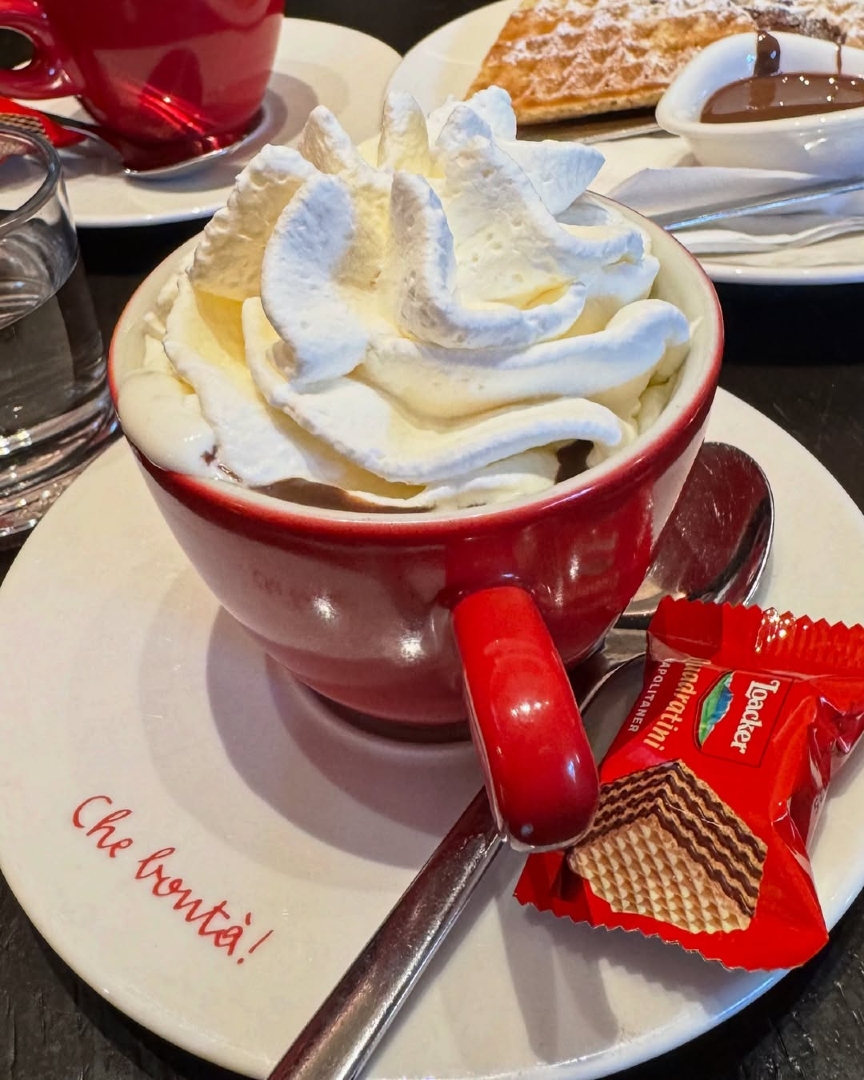
But Bolzano isn’t just about markets: it is home to Ötzi the Iceman, one of the most studied mummies in the world. And after a day of culture and shopping, nothing beats a steaming slice of Kaiserschmarrn in one of the historic inns downtown.

Stopovers and overnight stays

Bolzano offers various solutions for those traveling by motorhome, ranging from equipped rest areas to full-service campsites. Here are the three main options, from the most basic to the most comfortable.

Recommended areas

Ecco la traduzione in inglese, mantenendo intatti i tag e le classi HTML: 🅿️ Motorhome Service Area Via Maso della Pieve (Agriffa)
The municipal rest area closest to the center is located in Via Maso della Pieve, opposite the cemetery. It is a practical and functional solution, recently redeveloped by the Municipality with approximately 20 designated motorhome spaces. Free grey and black water disposal, electricity for a fee (€0.25/h), and a fresh water filling point. The area is paved and level. Rates: €1/hour from Monday to Friday (8:00 AM – 7:00 PM) and Saturday (8:00 AM – 1:00 PM). Free parking at night and on public holidays. During the Christmas Market period, the area is very busy.

Distance from the center: 4 km, easily accessible via bus lines 10A and 10B which stop right in front of the area (10-15 minutes to Piazza Walther).

Notes: The area is located between a busy road and the railway, so it can be noisy, but it is perfectly functional for a service stop or for visiting the city. There is an MD supermarket in the immediate vicinity.

GPS: 46.472769, 11.336977
🅿️ Via Sarentino Parking (San Genesio Cable Car)

For those with a compact motorhome, the parking lot at the valley station of the San Genesio cable car is a free and quiet alternative. No services (parking only), 12-hour parking disc required.

Distance from the center: 2.5 km, reachable with bus lines 12 and 14. Alternatively, you can take the cable car up to explore the San Genesio plateau.

Notes: The parking lot is sized for cars, so it is not suitable for XL motorhomes. Few spaces available, but the area is quiet and well-connected to both the city center and the cable car for high-altitude excursions.

GPS: 46.513899, 11.352100

🅿️ Camping Moosbauer

If you are looking for comfort, high-quality services, and the convenience of free public transport, Camping Moosbauer is the ideal solution. This 4-star campsite is located a few kilometers from the center, nestled among South Tyrolean apple orchards. 80 pitches of various sizes (category A up to 7.5m, B up to 8m, C up to 11m), all with electricity connection (6A or 16A), water, and drainage. Heated and spotless sanitary facilities, saltwater pool (open from April to October), restaurant-pizzeria with South Tyrolean cuisine, minimarket with local products, free Wi-Fi, free bicycle rental, children’s play area, washing machine, and dryer.

Rates: approximately €25-30/night per crew, electricity included. The price includes the Bolzano Card Mobility, which allows you to travel for free on all public transport in South Tyrol for the entire duration of your stay (a huge advantage for visiting Bolzano and its surroundings!).

Transport: In front of the campsite, you will find the stop for bus 201 (Bolzano-Merano line), which takes you directly to Piazza Walther in about 10 minutes. Trips are frequent (approximately every 30 minutes) and operate 7 days a week. The stop is just a 5-minute walk from the campsite entrance.

Notes: The campsite is open year-round and is particularly popular during the Christmas Market period. In winter, it operates with essential services (camper service, electricity, sanitary facilities with hot water but not heated, restaurant and market closed). Booking is recommended during high season. Dogs are allowed only with management authorization.

Website: www.moosbauer.com

Our choice undoubtedly falls on Camping Moosbauer: the combination of service quality, free transport with the Bolzano Card Mobility, and the possibility of using bikes to explore the city (direct cycle path) makes it unbeatable.

GPS: 46.503508, 11.299240
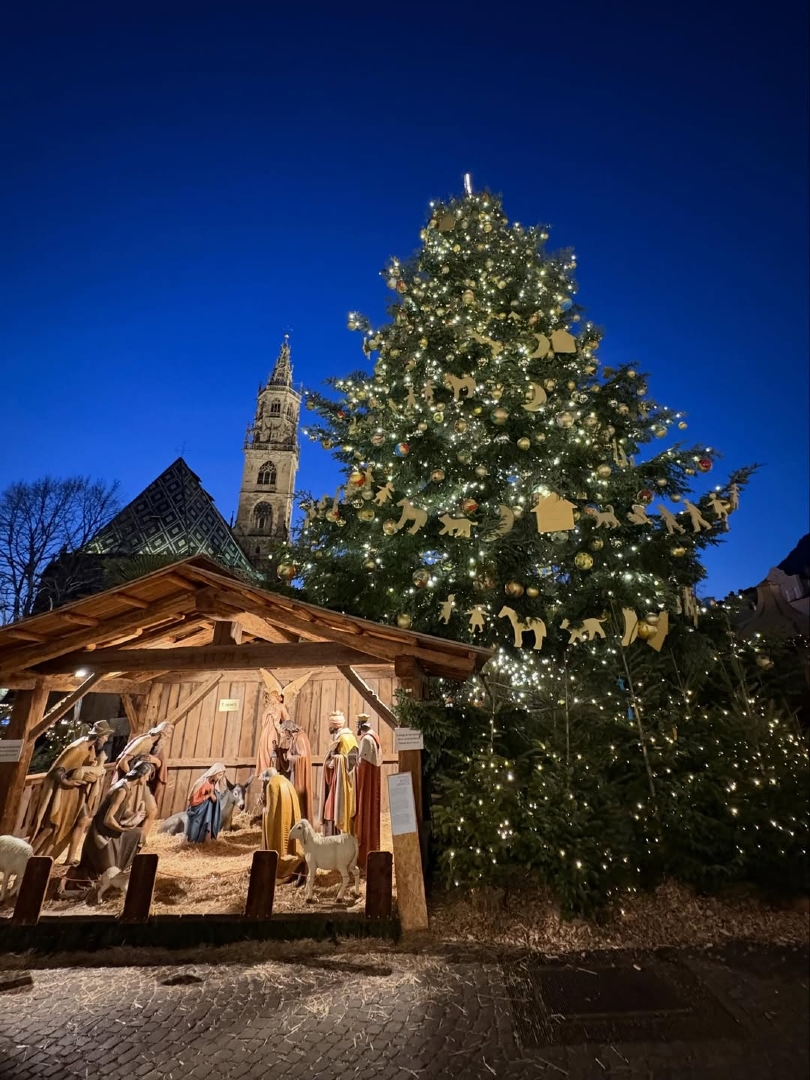
“Bolzano and the Christmas markets”

“Bolzano and the Christmas markets”

Getting Around

Bolzano is a motorhome-friendly city: compact, well-served by public transport, and featuring an entirely pedestrianized historic center that is perfect to explore on foot.

By bus from the campsite to the center If you are staying at Camping Moosbauer, line 201 (Bolzano-Merano) is your best friend: the stop is right in front of the campsite, runs every 30 minutes, and in 10 minutes you are in Piazza Walther. With the Bolzano Card Mobility included in the campsite rate, the trip is free. From the rest area in Via Maso della Pieve, instead, you can take lines 10A or 10B, which stop right in front (about 10-15 minutes to the center). From the Via Sarentino parking lot, lines 12 and 14 depart, taking you to the city in about fifteen minutes. Alternatively, you can take the cable car up to San Genesio and enjoy a scenic walk before heading down to the center.

On foot in the historic center Once you arrive in Piazza Walther, everything is within walking distance. Bolzano’s historic center is cozy and very pleasant to walk around: from the medieval arcades to the Cathedral, from the Archaeological Museum (Ötzi) to Piazza delle Erbe, distances are short and the streets are pedestrian or limited-traffic zones. Allow 5 minutes on foot between Piazza Walther and the Archaeological Museum, 10 minutes to reach Castel Mareccio or the Talvera meadows, and 15 minutes to reach Castel Roncolo following the riverside promenade.

By bike If you love cycling, Bolzano offers a well-developed network of cycle paths. From Camping Moosbauer, you can reach the center by bicycle (free rental at the campsite) following the cycle path in about 15-20 minutes. There is also a direct cycle path from the Via Maso della Pieve area towards Piazza Walther.

Practical tips

  • The Bolzano Card Mobility (if staying at Moosbauer) also allows you to use the Renon and Colle cable cars for free, which are perfect for panoramic excursions.
  • The center is a ZTL (Limited Traffic Zone): do not attempt to enter with a motorhome, as the entrances are monitored by cameras.
  • The closest paid parking lots to the center are Fiera Bolzano and Bolzano Centro (via Mayr Nusser), but if you are in a motorhome, it is better to leave it at the rest area and use public transport.
  • Bus schedules are well-coordinated: check the website www.sasabz.it or the Südtirol Pass app to plan your movements.

Points of Interest (PoI)

1
South Tyrol Museum of Archaeology (Ötzi) Ecco la traduzione in inglese del testo: The South Tyrol Museum of Archaeology is a must-see stop on any visit to Bolzano. Here, in a cold cell maintained at -6°C and controlled humidity, lies Ötzi the Iceman: a natural mummy over 5,300 years old, discovered in 1991 on the Similaun glacier, on the border between Italy and Austria. He is not just a mummy: Ötzi is a time machine. Thanks to scientific studies, we know what he ate (ibex and cereals), how he dressed (leather and fur clothing), what his health conditions were (arthritis, therapeutic tattoos), and even how he died (an arrow in the shoulder). The museum also exhibits his extraordinary equipment: a copper axe, bow and arrows, a wooden backpack, and hay-padded shoes. A perfect snapshot of life in the Copper Age. The permanent exhibition spans several floors and explains Ötzi's life and historical context through multimedia supports, 3D reconstructions, and original artifacts. It is a fascinating experience even for those who are not archaeology enthusiasts. Address: Via Museo 43, 39100 Bolzano Booking: strongly recommended, especially on weekends and during high season. Book online at www.iceman.it Visit duration: 1.5–2 hours
2
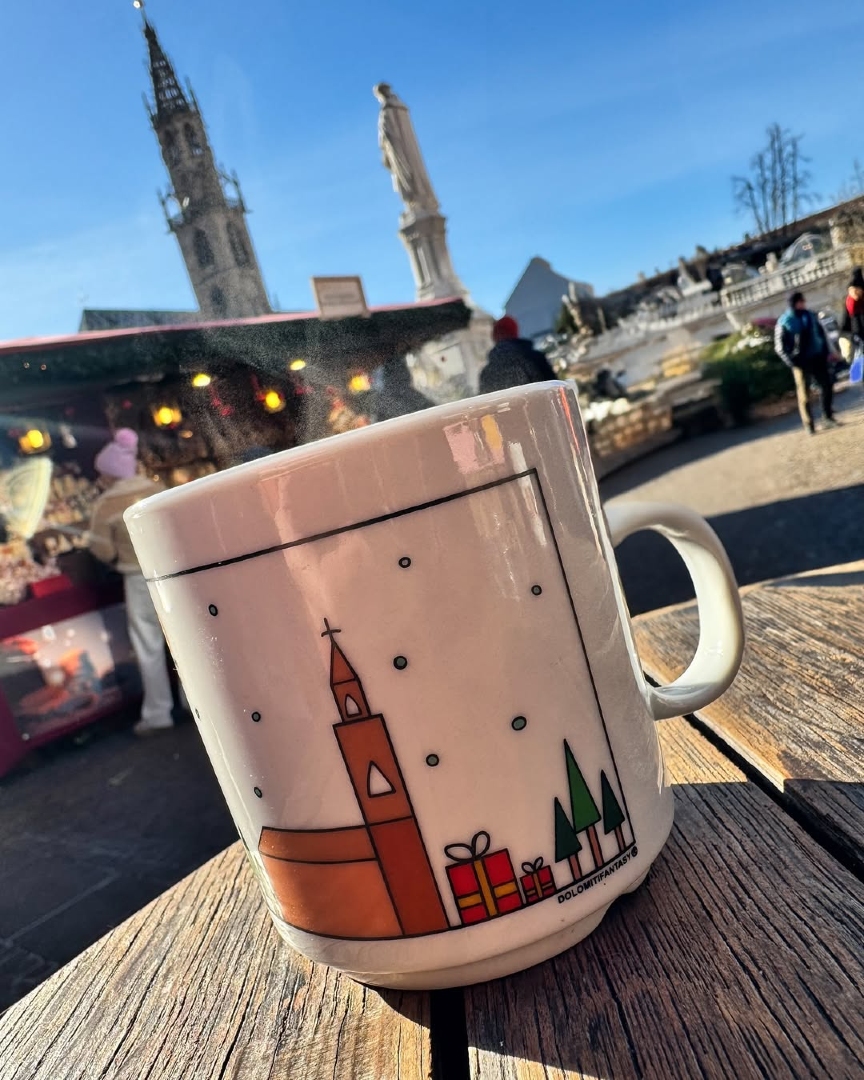
Piazza Walther and Bolzano Cathedral Ecco la traduzione in inglese del testo: Piazza Walther is the beating heart of Bolzano, the city's "living room" where tourists, students, and locals of all ages meet. Created at the beginning of the 19th century by order of the Bavarian King Maximilian, the square is named after the medieval poet Walther von der Vogelweide, whose statue stands prominently in the center. Surrounding the square are elegant historic buildings such as Palazzo Campofranco (18th century) and cafes with outdoor tables where you can stop for a cappuccino or a spritz. However, the true protagonist of the square is the Cathedral of Santa Maria Assunta, a Gothic masterpiece featuring a polychrome roof of glazed tiles (green, gold, and white) and a filigree bell tower considered the most beautiful in South Tyrol. Inside, the Cathedral houses 15th-century frescoes, a carved Gothic pulpit, and, beneath the floor, the remains of three previous churches (an early Christian one from the 4th century, an early medieval one, and a Romanesque one). Entry is free. During the Advent period, Piazza Walther transforms into the magical setting for the Christmas Markets, with over 80 wooden huts, sparkling lights, and the scents of cinnamon and mulled wine. It is a spectacle that is worth the trip all on its own. What to do: Stroll through the square, visit the Cathedral, sit in one of the historic cafes, and photograph the bell tower at sunset. During the markets, lose yourself among the stalls of handicrafts and gastronomic specialties.
3
Via dei Portici (Laubengasse) If there is a street that tells the soul of Bolzano, it is Via dei Portici (Laubengasse). Created in the 12th century by the Bishops of Trento as the core of the medieval merchant district, this 300-meter-long street has been the commercial heart of the city for over 800 years. Walking under the round-arched arcades is like taking a step back in time: three-story houses with internal courtyards, ancient wrought-iron signs, and faded frescoes on the facades. Today, traditional shops (ceramics, Tyrolean clothing, delicatessens with speck and cheese) alternate with modern boutiques and international chains. Historic buildings of great value line the street: at number 30, the Old Town Hall (now the Historical Archive) with the city's coat of arms on the Gothic arch; and the baroque Mercantile Palace, home to the Mercantile Museum, which tells the economic history of Bolzano with a route leading down into the city's ancient vaulted cellars. Via dei Portici is also a continuous reference to side alleys that invite you to get lost: Via Argentieri, Via della Mostra, Via Bottai. Every corner hides secret courtyards, historic cafes, and artisan workshops. Tip: Spend at least half an hour strolling calmly, looking up to admire the architectural details. And if it’s lunchtime, stop at one of the traditional taverns to taste some "canederli" (knödel) or a platter of speck.
4
Piazza delle Erbe (Obstmarkt) ust a stone's throw from Via dei Portici, Piazza delle Erbe (Obstmarkt) is the oldest and most authentic heart of Bolzano. Since 1295, every day (except Sundays), the fruit and vegetable market stalls color the square with crates of apples, pears, cabbages, pumpkins and, in autumn, fresh porcini mushrooms from the South Tyrolean valleys. It is a real market, not a tourist trap: locals still do their shopping here, and the atmosphere is a perfect mix of Central European cordiality and Mediterranean vivacity. The vendors speak both German and Italian, sometimes in the same conversation, and almost all products are local. In the center of the square stands the Neptune Fountain (1745), the symbol of the square, while all around it are historic houses with frescoed facades and elegant arcades. The architecture is a mosaic of styles, from Gothic to Baroque, telling centuries of history. Piazza delle Erbe is also the ideal starting point for exploring the surrounding alleys: Via Dr. Streiter, with the Museum of Natural Sciences, and Via Bottai, which leads toward the most intimate part of the historic center. What to do: Stroll through the market stalls (open Mon-Sat morning), photograph the fountain, buy local apples or a bag of roasted chestnuts in autumn. If it’s Saturday morning, look for the flower market.
5
Castel Roncolo (Runkelstein Castle) About 3 km from the center, along the Talvera promenade, stands Castel Roncolo (Runkelstein Castle), one of the most important frescoed castles in Europe. Perched on a rocky outcrop at the entrance to the Val Sarentina, the castle dominates the valley with its imposing structure. Built in 1237, Castel Roncolo is famous for its extraordinary cycle of medieval secular frescoes: hunting scenes, knightly tournaments, and literary episodes taken from the Arthurian cycles and the story of Tristan and Isolde. The frescoes, created between the 14th and 15th centuries, are a unique visual record of courtly and chivalric life in the Middle Ages. The castle has been expanded and restored several times (the last major intervention dates back to the early 2000s), and today it houses a museum that tells its story through a modern and engaging multimedia path. The frescoed rooms are the true treasure: vivid colors, elegant figures, and surprising details that seem to tell stories from a world long ago. How to get there: on foot from the center (a 30-minute walk along the Talvera river, well-signposted) or by bus (line 12, Castel Roncolo stop). Alternatively, you can reach it by bicycle along the cycle path.

Seasonal Events

Bolzano Christmas Markets (Christkindlmarkt)

When: late November - Epiphany

Where: Piazza Walther

What: The Bolzano Christmas Markets are among the oldest and most atmospheric in Italy, running since 1991. For over a month, the historic center transforms into a Christmas village with more than 80 wooden huts offering local handicrafts, handmade decorations, scented candles, ceramics, wooden toys, and South Tyrolean gastronomic specialties.

The atmosphere is magical: the twinkling lights of the tree in Piazza Walther, the scent of cinnamon and cloves, the steam of mulled wine rising from steaming mugs, and the notes of traditional music echoing through the arcades. It is a unique sensory experience that warms the heart even on the coldest days.

Festa della Primavera

When: April - May

Where: Piazza Walther

What: Every spring, Bolzano celebrates the awakening of nature with the Spring Festival in Piazza Walther. Stalls filled with flowers, aromatic herbs, garden produce, and spring handicrafts fill the square, alongside food stands featuring seasonal specialties (white asparagus, strawberries, fresh cheeses).

Thanksgiving Festival (Erntedankfest)

When: October

Where: Piazza Walther

What: The Thanksgiving Festival is a celebration of the autumn harvest. Local farmers and producers present the fruits of the vintage and harvest: apples, pears, grapes, chestnuts, pumpkins, honey, and jams. It is a perfect opportunity to taste typical South Tyrolean products and meet the farmers from the surrounding valleys.

Bolzano Film Festival - Bozen

When: April

Where: Various cinemas and theaters across the city

What: The Bolzano Film Festival is dedicated to mountain cinema, documentaries, and short films that explore nature, mountaineering, mountain cultures, and environmental challenges. A high-quality cultural event featuring screenings, meetings with directors and mountaineers, and debates.

Organic Agriculture Fair

When: November

Where: Fiera Bolzano (Exhibition Centre)

What: Biolife is the fair dedicated to organic farming and sustainable living. It features stands from organic producers, natural food, ecological cosmetics, sustainable clothing, tastings, and workshops. An essential event for those mindful of the environment and food quality.

Typical Dishes and Local Products

If there is a dessert that represents the soul of South Tyrol, it is the Kaiserschmarrn, literally “the emperor’s shredded pancake.” This simple yet irresistible dish was born from the peasant traditions of mountain huts, where shepherds and cheesemakers had only a few ingredients at their disposal: eggs, flour, milk, and butter. And yet, from this essentiality, one of the most beloved desserts of the entire Alpine region was born.

Legend has it that the Kaiserschmarrn owes its name to a mistake by Emperor Franz Joseph I of Austria’s chef. One evening, the Emperor asked for a crepe to eat quickly in his study. The chef, busy with a banquet for the royal family, forgot the crepe on the heat: it burned slightly and broke when he tried to flip it. Having no time to remake it, the chef cut it into small pieces, sprinkled it with sugar to hide the charred parts, and served it with a bowl of cranberry jam. The Emperor was so enthusiastic that from then on, he wanted his crepes to always be prepared that way.

Today, Kaiserschmarrn is served in all mountain shelters, huts, and traditional restaurants in South Tyrol. It is a cross between a crepe and a pancake: fluffy, slightly sweet, scented with vanilla and rum, served shredded and accompanied by plenty of cranberry jam (the classic Preiselbeeren). It is perfect as a snack after a hike, but many also order it as a main course for dinner, given its hearty consistency.

Ingredients (serves 4):

  • 5 eggs
  • 250 g all-purpose flour
  • 250 ml milk
  • 50 g sugar
  • 1 pinch of salt
  • 1 packet of vanilla sugar (or vanilla bean)
  • 1 handful of raisins (optional)
  • 2 tablespoons of rum or grappa
  • 80 g butter
  • Powdered sugar for dusting
  • Cranberry jam for serving

Preparation:

  1. If using raisins, soak them in rum for at least 15 minutes.
  2. Separate the yolks from the egg whites. In a bowl, whisk the yolks with the sugar and vanilla sugar until the mixture is light and fluffy.
  3. Add the sifted flour and mix. Pour in the milk slowly, continuing to whisk to avoid lumps. The mixture should be smooth and fairly liquid.
  4. Whip the egg whites with a pinch of salt until very stiff peaks form. Gently fold them into the yolk mixture with upward movements so as not to deflate them.
  5. Add the raisins drained from the rum (and, if you like, a drop of rum into the batter as well).
  6. Heat a large skillet (preferably non-stick or stainless steel) and melt half the butter. When very hot, pour in half of the batter and cover with a lid. Cook over medium heat for 3-4 minutes until the base is golden brown.
  7. Using two spatulas, flip the Kaiserschmarrn (don’t worry if it breaks, you’ll be shredding it anyway!). Cook the other side for another 2-3 minutes.
  8. Remove the lid and, using two forks, “tear” the batter into coarse, irregular pieces. Let it sauté in the pan without the lid for a couple of minutes so the pieces brown slightly.
  9. Sprinkle with a tablespoon of granulated sugar and cover briefly with the lid: the sugar will caramelize slightly. Stir one last time.
  10. Repeat the process with the second half of the batter.
  11. Serve the Kaiserschmarrn while still hot, dusted with plenty of powdered sugar and accompanied by a generous bowl of cranberry jam.

Tips:

  • The secret to a good Kaiserschmarrn is the right pan: it must have a thick base and distribute heat well. Every South Tyrolean cook has “their” pan!
  • The consistency should be fluffy and slightly crispy on the edges. If it turns out too dense, you used too much flour; if it’s too liquid, add a little more flour.
  • Traditionally it is served with cranberry jam (Preiselbeeren), but you can also use currant jam, raspberry jam, or cooked apples.
  • In the more rustic version found in mountain huts, Kaiserschmarrn was cooked in lard instead of butter, giving it an even more intense flavor.

Tasting a steaming Kaiserschmarrn in a high-altitude mountain hut, perhaps after a walk through the woods, is one of the most authentic experiences you can have in South Tyrol. But preparing it at home, in your camper with a view of the Dolomites, has a charm all its own.

Useful Tips

South Tyrol is bilingual (Italian and German), and Bolzano is the city where this double soul perfectly coexists. You will find signs in both languages, and many people speak Italian, German, and often English fluently. You will have no trouble communicating in Italian, but learning a few words of German (Guten Tag, Danke, Grüß Gott) will always be appreciated.

The cuisine is an extraordinary mix of Italian and Central European traditions: canederli, speck, and strudel live alongside pasta, risottos, and pizza. Trying both gastronomic souls is part of the experience.

When to go

Bolzano is beautiful all year round, but each season has its own charm:

  • Winter (November-January): The Christmas Market period is magical but also crowded. If you want to experience the Christmas atmosphere without too many crowds, come in late November or the first week of January. Temperatures: 0-8°C.
  • Spring (April-June): Mild climate, apple blossom season, and pleasant temperatures for walks and mountain trips. Perfect for avoiding summer crowds. Temperatures: 15-25°C.
  • Summer (July-August): Warm but not overwhelming (25-30°C). Ideal for combining a city visit with mountain excursions. Note: August is very crowded.
  • Autumn (September-October): The season for harvest and foliage. Spectacular colors on the mountains, cool but pleasant temperatures. Fewer tourists. Temperatures: 12-20°C.

Safety and Motorhome Parking

  • The Via Maso della Pieve area is safe and monitored, but being close to the road and railway, it can be noisy.
  • Camping Moosbauer is quiet and guarded. We have never had reports of safety issues.
  • During the Christmas Market period, parking areas fill up quickly: book in advance or arrive early in the morning.

👉 Discover other itineraries and GPS coordinates on map.camperepoi.it (coming soon!)

👉 Subscribe to the CamperePoi newsletter to download the complete guide “The Mountains by Motorhome”

0

post a comment