
Top

Visit Barcellona

Barcelona by Camper: When Art and the Sea Meet

Barcelona is not just a tourist destination, it is a state of mind. Capital of Catalonia and Spain’s second-largest city, this Mediterranean metropolis fascinates travelers with a rare balance: on one side, the visionary architecture of Antoni Gaudí which seems to defy the laws of gravity and aesthetics; on the other, the sandy beaches of Barceloneta where the Mediterranean Sea invites you to slow down the pace.
For those traveling by camper, Barcelona represents the perfect opportunity to combine the freedom of the road with immersion in one of Europe’s most vibrant cultures. It is not a quick stop, but an experience that deserves at least three or four days, during which you will discover why this city continues to reinvent itself without ever losing the roots of its deeply Catalan identity. From the human towers of the Castellers to the fireworks of the patron saint’s festival, from a hidden work of art in a quiet square to dinner on a crowded terrace on Passeig de Gràcia: Barcelona knows how to capture the heart even of the most experienced travelers.

Stopovers and overnight stays

Two Stop Proposals with Different Souls

Recommended areas

🅿️ Area Sosta Camper Barri de Can Julià (La Colònia Güell)
Barri de Can Julià, 14, 08690 La Colònia Güell, Barcelona
This is the choice for those looking for authenticity and savings. Located about 15 kilometers from the center of Barcelona, the La Colònia Güell stop area represents a fascinating part of Catalonia’s industrial history. The area is quiet and well-maintained, ideal if you want a more relaxed stop away from the urban chaos. Access to services (water loading and unloading) is simple, although available spots are limited and tend to fill up quickly, especially on summer weekends. From here, you will reach the center of Barcelona in about 30-40 minutes using local public transport. We advise you to always check local signs and current regulations before parking, especially concerning Barcelona’s Low Emission Zone (ZBE), which imposes restrictions on unregistered vehicles during peak hours (Monday–Friday 7:00 AM–8:00 PM).
GPS: 41.3654, 2.0254
🅿️ Área Camper Barcelona Beach (Cabrera de Mar) Calle de Montnegre, 08349 Cabrera de Mar, Barcelona
Questa è la scelta ideale se desideri il meglio dei due mondi: la vicinanza al mare e l’accesso rapido alla città. Situata a Cabrera de Mar, circa 30 chilometri a nord di Barcellona, l’Área Camper Barcelona Beach è una struttura moderna e ben organizzata. Le piazzole sono spaziose e completamente illuminate, e il personale è disponibile e cortese. La fermata della stazione ferroviaria dista appena 5-10 minuti a piedi, da dove partono treni diretti per il centro città (Plaça Catalunya) ogni 20-35 minuti, con un costo di circa €3,30 per singolo viaggio. A soli 500 metri di distanza troverai una bellissima spiaggia dove potrai nuotare o semplicemente rilassarti al tramonto. Durante l’estate, l’area tende a riempirsi velocemente, quindi è consigliabile arrivare presto o prenotare in anticipo contattando direttamente la struttura.
Servizi: Elettricità 10A, carico/scarico acque grigie e nere, riempimento serbatoio, WiFi, WC, doccia (€1 per 5 minuti), lavatrice (€4), asciugatrice (€4), sorveglianza 24 ore, minimarket

GPS: 43.472007, 11.887689

Getting Around

Public Transport System

Barcelona boasts one of the most efficient transport systems in Europe. The network is managed by TMB (Transports Metropolitans de Barcelona) and includes the metro, buses, trams, and suburban trains (Rodalies and FGC).
 
Recommended Tickets and Passes
Hola Barcelona Travel Card
– Validity: 2, 3, 4, or 5 consecutive days
– Price (2025): €8.40-9.05 per day
– Includes: Metro (all lines), urban buses (TMB), trams, FGC and Rodalies suburban trains (zone 1), connection to/from the airport
– Purchase: Online or at automatic vending machines in stations
– Advantages: Maximum flexibility for exploring the city worry-free. Recommended if you plan to visit 2-3 main attractions and move around frequently


Single Ticket
– Price: €2.65
– Journey duration: 75 minutes with the possibility of transfer between different modes of transport
– Useful for: Occasional travel


T-Casual
– Price: ~€11.40
– Includes: 10 journeys (personal use, non-transferable)
– Validity: No expiration date
 
Essential Metro Lines
– L3 (Green Line): Connects Plaça Catalunya to Parc Güell (Lesseps and Vallcarca stations)
– L5 (Blue Line): Passes through Sagrada Família and connects the north and south of the city
– L1 (Red Line): Passes through Plaça España (access to Montjuïc)
 
Mobility Alternatives
On foot: Barcelona is a fairly compact city. Many downtown attractions are reachable on foot, even if the distances may seem long on the map. Dedicate at least half a day to wandering aimlessly through the Born and Gòtic neighborhoods: you will discover hidden restaurants, enchanting squares, and small art galleries that you won’t find in any tourist guide.
Bicycle: The city offers bike-sharing services. However, if you are not accustomed to Spanish urban traffic, it might prove challenging.
Taxi/App: Inexpensive and widespread. An average ride in the city costs €8-15.

Points of Interest (PoI)

1
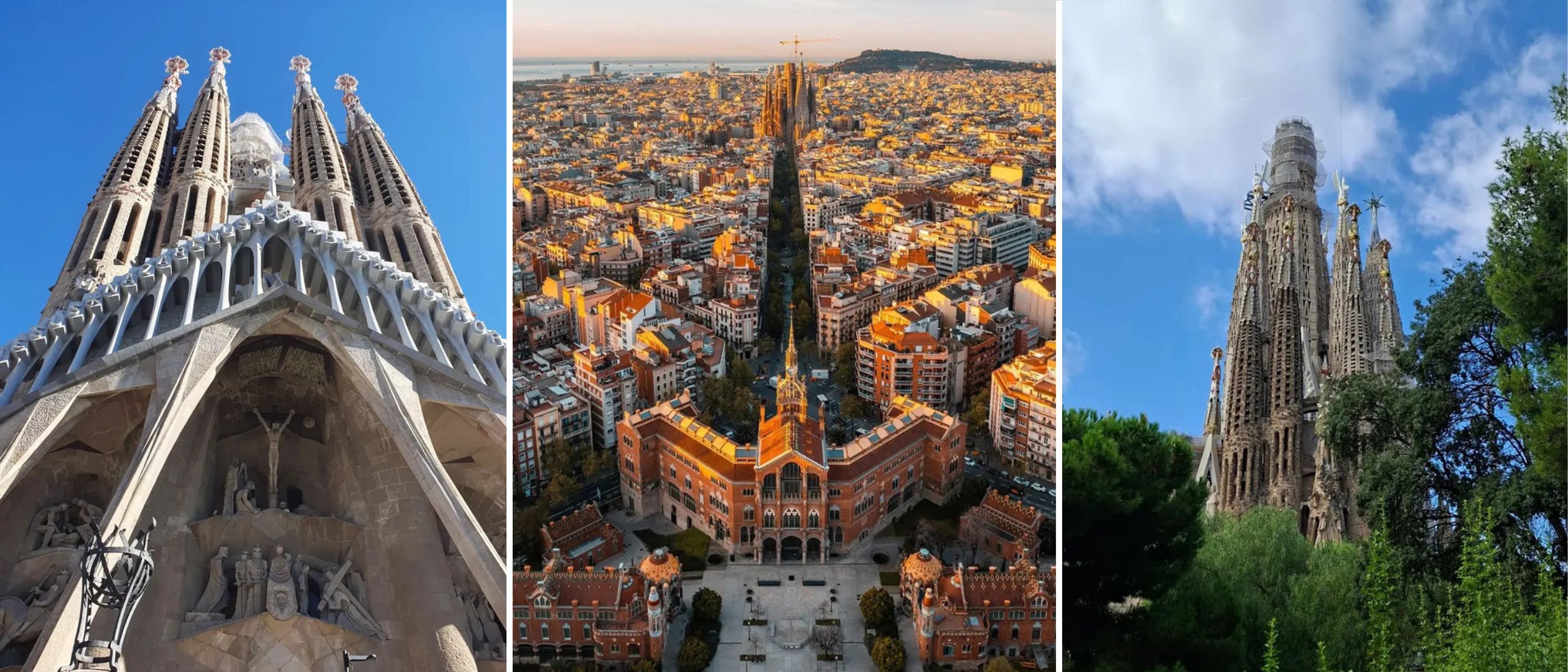
Sagrada Família The Sagrada Família is not merely a church; it is a work in progress for over 140 years that embodies the visionary genius of Antoni Gaudí. When you arrive in front of this basilica, the first reaction is almost always one of awe: the façades appear alive, the organic details recall natural forms (roots, leaves, bones). The structure is enormously complex, and every element conceals a symbolic meaning. The Nativity Façade (part of which Gaudí himself supervised) tells the story of Jesus' birth through a profusion of details; the Passion Façade, on the other hand, is more austere and geometric. If you have the time and budget, I recommend climbing the towers to enjoy an impressive panoramic view of Barcelona. Important: tickets sell out quickly, especially during high season. Book at least a week in advance through the official website.
2
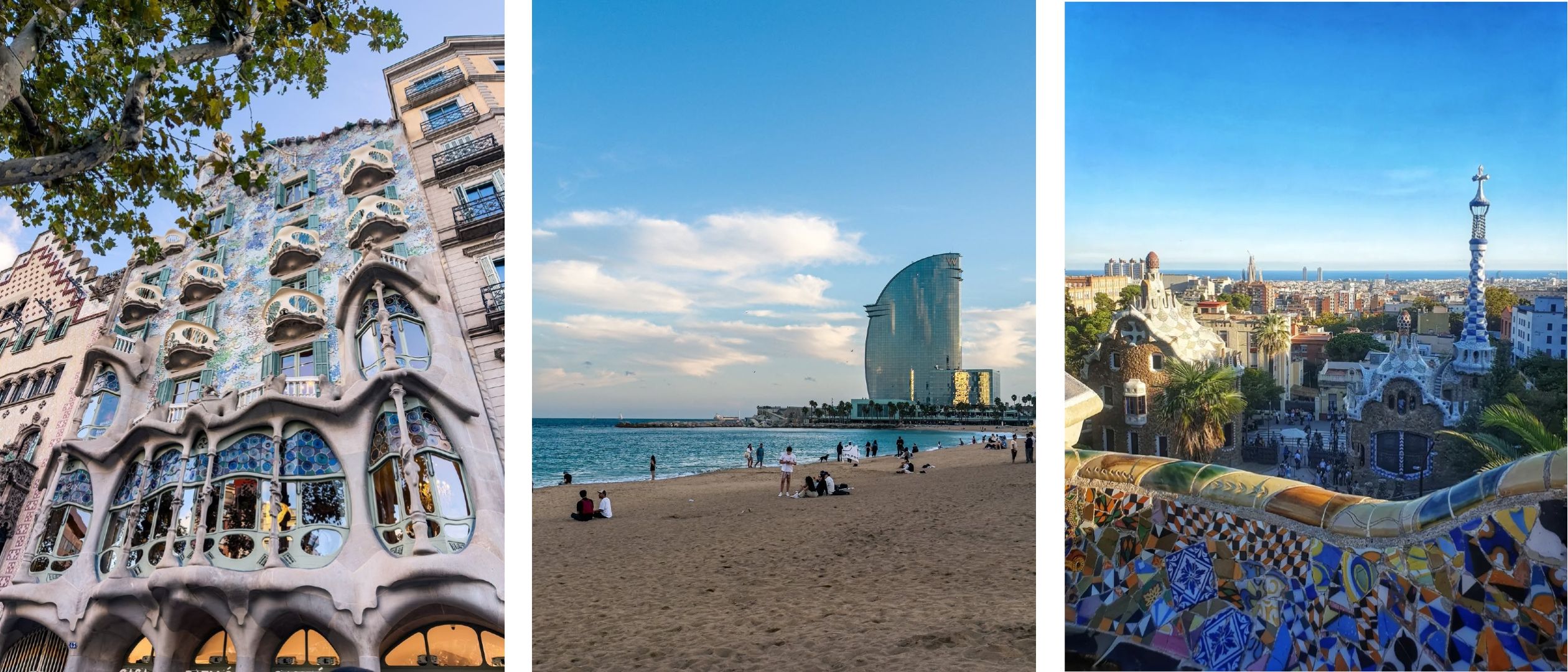
Güell park (Parc Güell) Probably the most Instagrammed spot in Barcelona, but deservedly so. Park Güell is a fascinating fusion of landscaping, architecture, and fantasy. What began as a residential urbanization project transformed into a masterpiece where every element—from the undulating benches covered in ceramic tiles to the winding paths, from the curved pillars to the gardens—seems part of a large living organism. It is not a park in the traditional sense, but rather a space where nature and architecture converse in an almost surrealist way. From the upper area, you can enjoy a spectacular view of the city and the sea. Visit during sunrise or sunset to avoid the crowds and capture the magic of the light caressing the colorful mosaics.
3
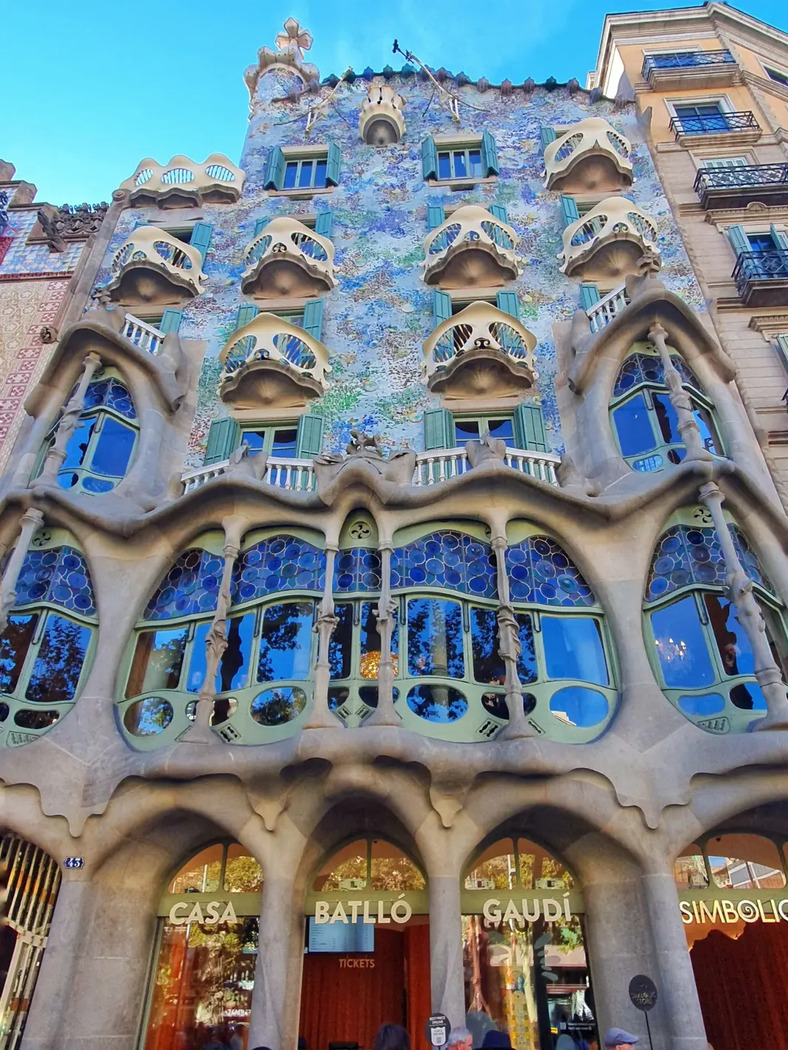
Casa Batlló Casa Batlló is Gaudí's residential masterpiece, a building that defies every traditional concept of architecture. The undulating façade, the balconies that look like grotesque masks, the roof that mimics the scales of a dragon: everything contributes to creating an almost dreamlike atmosphere. Inside, the spaces have no right angles, the windows are of different sizes and shapes, and the flow of light is masterfully orchestrated. The immersive app that accompanies the visit is well-made and adds depth to the understanding of the work. If you are passionate about Modernist architecture, dedicate the necessary time to study every detail.
4
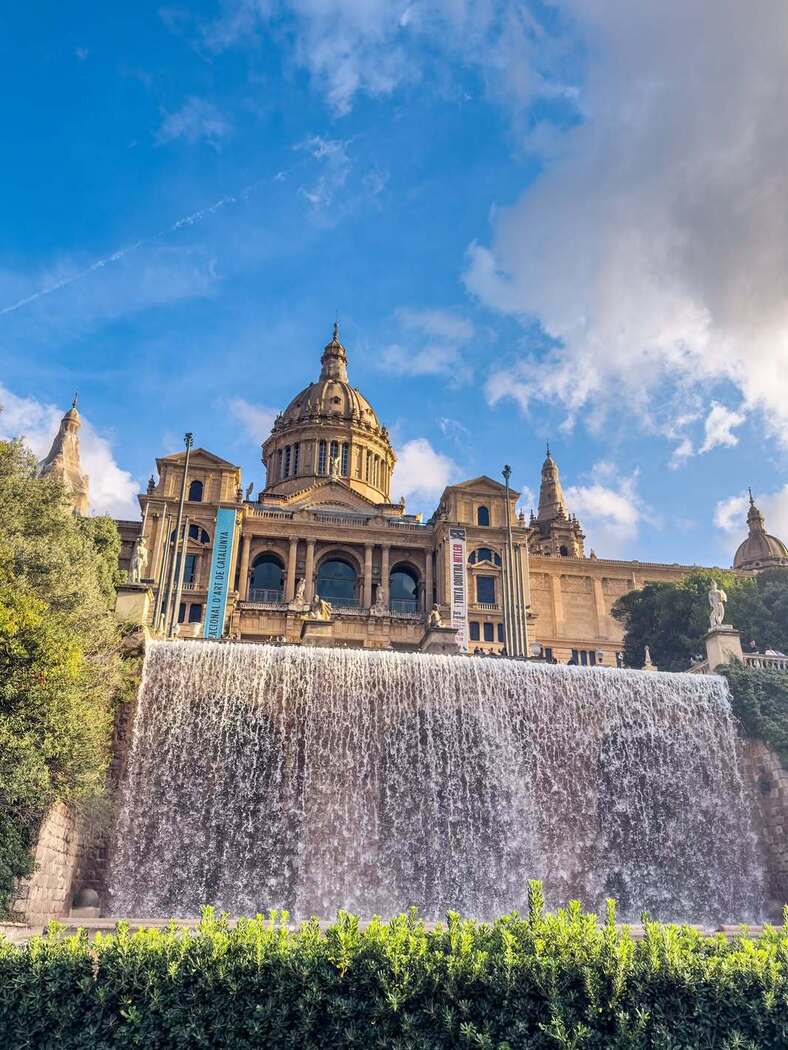
Museu Nacional d'Art de Catalunya (MNAC) The MNAC houses the most extraordinary collection of Romanesque art in the world, featuring frescoes and panels brought from small rural churches in the Pyrenees. In addition to the medieval works, the museum presents extensive sections dedicated to Gothic, Renaissance, Baroque, and Catalan Modern art. The building itself—the Palau Nacional, built for the 1929 International Exposition—is imposing and evocative, with a façade that recalls the Italian Neoclassical style. The museum's terrace offers a spectacular panoramic view of Barcelona, especially at sunset. Easy access from Plaça Espanya via the Montjuïc escalators.
5
Barri Gòtic (Gothic Quarter) The Barri Gòtic is the medieval heart of Barcelona, a labyrinth of narrow streets where time seems to have stopped in the 14th century. Here you will find the Catedral de la Santa Creu, the Plaça Reial with its elegant arcades, small artisan shops, and countless bars where locals sip natural vermouth. The streets are so narrow that in some places the sun reaches the ground for only a few hours a day, creating a characteristic atmosphere of cool twilight. I recommend intentionally getting lost: you will discover hidden courtyards, vintage rare book shops, and authentic restaurants where the menu is handwritten. It is not the Barcelona of grand monuments, but it is the real Barcelona, the one where the barceloneses live and breathe.
6
Las Ramblas and Barceloneta Las Ramblas is the famous pedestrian boulevard that connects Plaça de Catalunya to Port Vell (Old Port). It is a mandatory passage but also a bit chaotic, crowded with tourists and street performers. Despite the chaos, it remains a characteristic experience. Continue south until you reach Port Vell and Barceloneta, the coastal neighborhood where you will find beaches, fresh seafood restaurants, and a more relaxed, local atmosphere. Barceloneta is the ideal place for a sunset dinner overlooking the sea.

“the Sagrada Familia dominates Barcelona”

Casa Batlló

Seasonal Events

La Mercè (Patron Saint Festival) - Late September

Where: Barcelona

When: September 23-28

What: La Mercè is Barcelona's most important festival, celebrating the Virgin of Mercy, the city's patron saint. If your trip coincides with this festival, you are lucky: the city transforms completely, with a program of over 500 different activities.

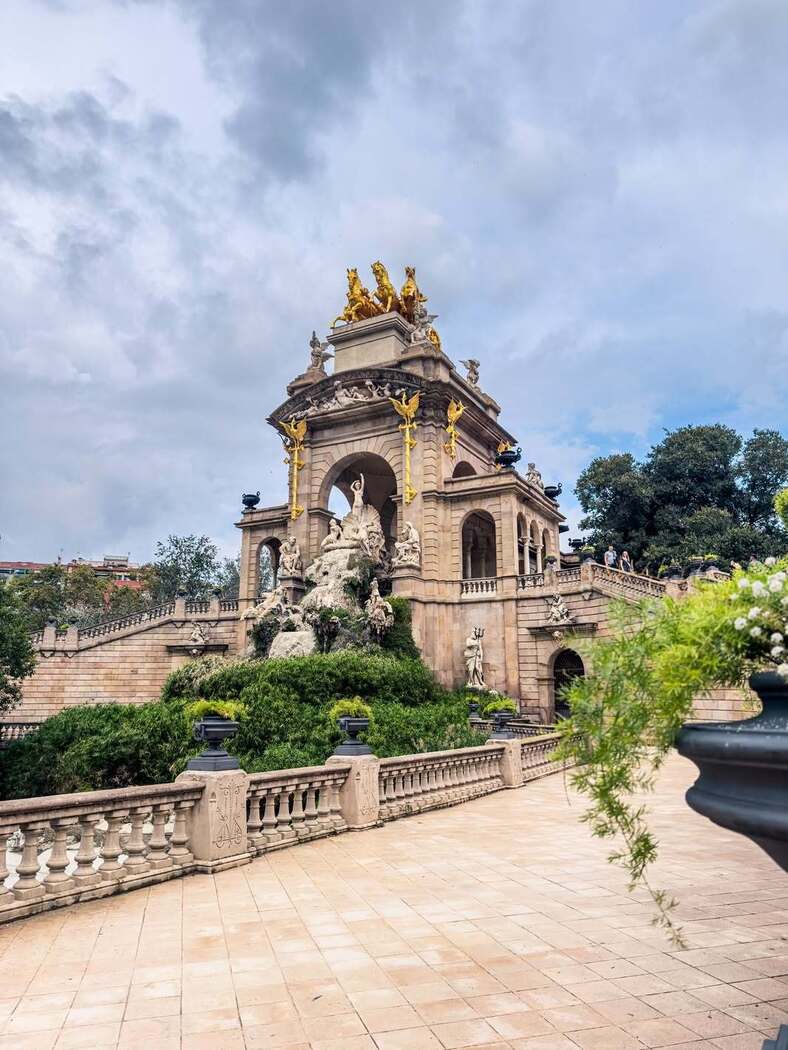
“the Cascada Monumental, at Parc de la Ciutadella”

“Museu Nacional d’Art de Catalunya MNAC”

Typical Dishes and Local Products

You can’t say you’ve experienced Barcelona without tasting the pa amb tomàquet (bread with tomato), also known as pan con tomate in Castilian. This simple dish, made with just a few ingredients, represents the essence of Catalan rural cuisine and remains ubiquitous in traditional taverns, tapas bars, and home breakfasts.

Recipe for Pa amb Tomàquet

Ingredients (for 2 people):
     
  • 1 loaf of rustic Catalan bread (pan de pagès) or Tuscan bread, at least one day old
  •  
  • 2-3 ripe and juicy tomatoes (preferably “bull’s heart” variety or sauce tomatoes)
  •  
  • 1-2 cloves of garlic
  •  
  • Good quality extra virgin olive oil
  •  
  • Fine sea salt
Method:
     
  1. Toasting the bread: Slice the bread into pieces about 1.5 cm thick. Lightly toast them in the oven at 180°C for 3-4 minutes, or on a grill, until the outside is crispy and the inside is still soft. The goal is to create a base that won’t fall apart under the moisture of the tomato, but still remains pleasant to bite into.
  2.  
  3. Flavoring with garlic: Cut the garlic clove in half and rub it vigorously on the toasted surface of the bread, allowing its aroma to penetrate the crumb. This step is optional but highly recommended: it provides a very pleasant spicy undertone.
  4.  
  5. Applying the tomato: Cut the tomatoes in half (do not remove the skin). Take one-half of the tomato and squeeze it against the slice of bread, spreading the pulp and juice with a circular motion, as if you were “painting” the bread red. Repeat until the surface is completely covered in juice and fragments of pulp. The secret is to use very juicy and ripe tomatoes: the bread should become intensely red, saturated with flavor.
  6.  
  7. Final seasoning: Pour a generous drizzle of good quality extra virgin olive oil over the surface, followed by a pinch of sea salt. If you used two slices of bread (cut lengthwise), you can “close” the sandwich and press lightly with your hands so the oil penetrates both sides.
  8.  
  9. Serving: Eat immediately, while the bread is still crunchy and the tomato is fresh. Pa amb tomàquet is perfect on its own, but it is traditionally accompanied by jamón serrano (excellent quality Spanish cured ham), cheese, preserved anchovies, or during meals, alongside grilled meats.
Historical and Cultural Note
Pa amb tomàquet originated from a peasant necessity: to soften stale bread without wasting it, transforming it into something delicious. During the 17th-18th centuries, when the tomato arrived from the Americas and spread into Mediterranean cuisine, the Catalans had the intuition to pair it with bread. What started as a necessity became a tradition, then a cultural identity. Even today, eating pa amb tomàquet in Catalonia is not just eating; it is participating in a ritual that connects the present to the region’s rural past.

Useful Tips

Barcelona is a destination that rewards the time invested. It is not a place where you can “check off a list” of attractions in two days; it is a city that demands to be inhabited, experienced, savored. As a camper traveler, you have the advantage of choosing the pace: one night in the tranquility of the La Colònia Güell stop area, another in Cabrera de Mar with your feet just meters from the sea, and all the time you want to wander the alleys of the Gòtic or sit on a terrace on Passeig de Gràcia to watch the Barcelonians go by.
If you visit in September and coincide with La Mercè, you will have witnessed one of Spain’s most authentic festivals—a spectacle that no tourist guide could fully capture. If you come in other seasons, you will discover a quieter but no less fascinating Barcelona, where architecture, history, the beach, and gastronomy intertwine into an unparalleled experience.

👉 Discover other itineraries and GPS coordinates on map.camperepoi.it (coming soon!)

👉 Subscribe to the CamperePoi newsletter to stay updated on new destinations

0

post a comment