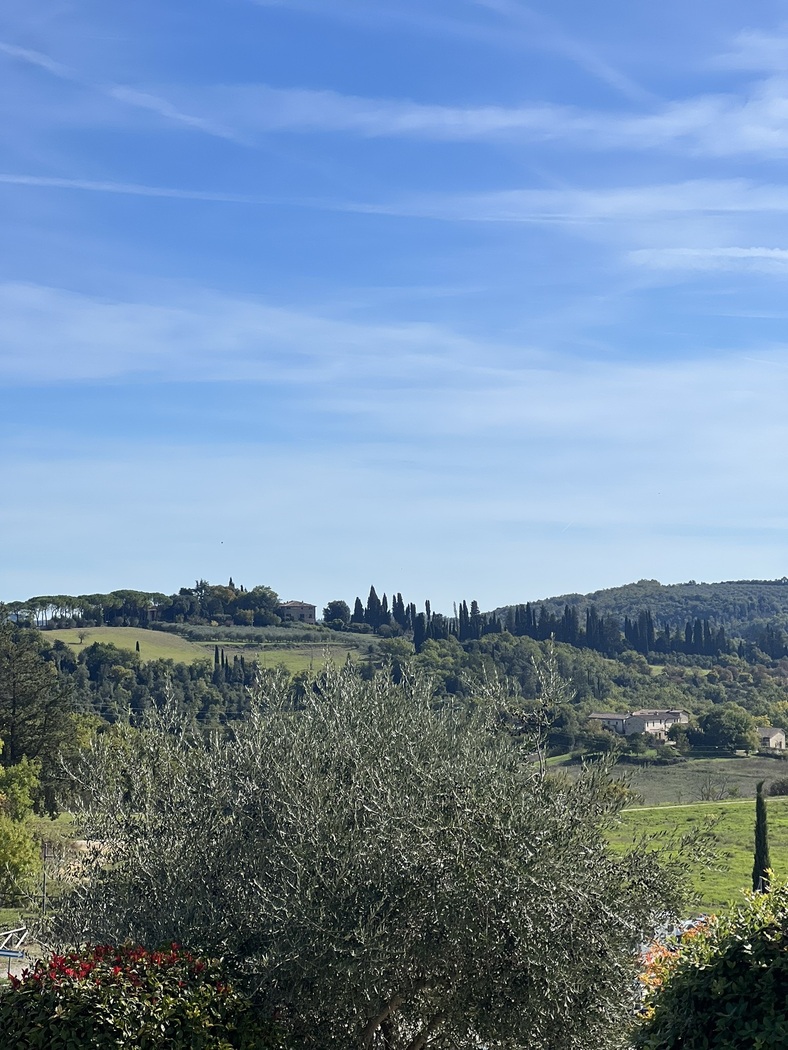
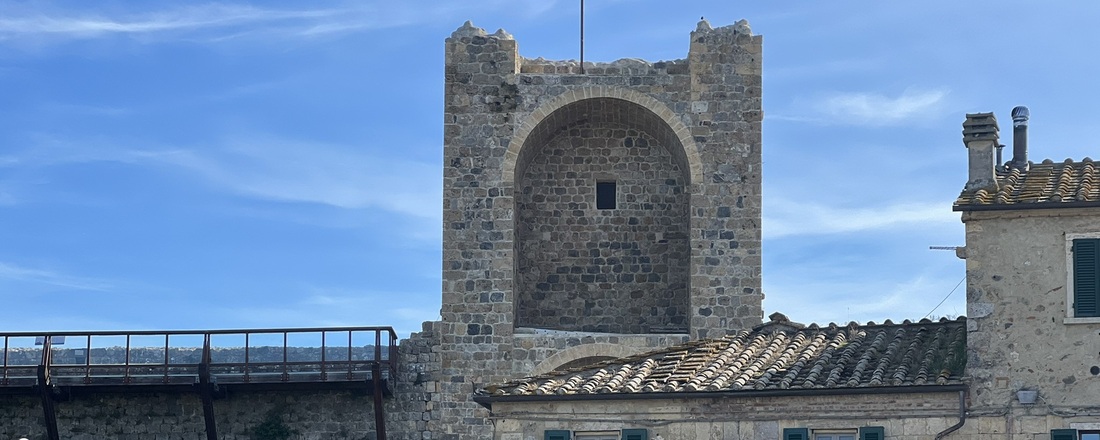
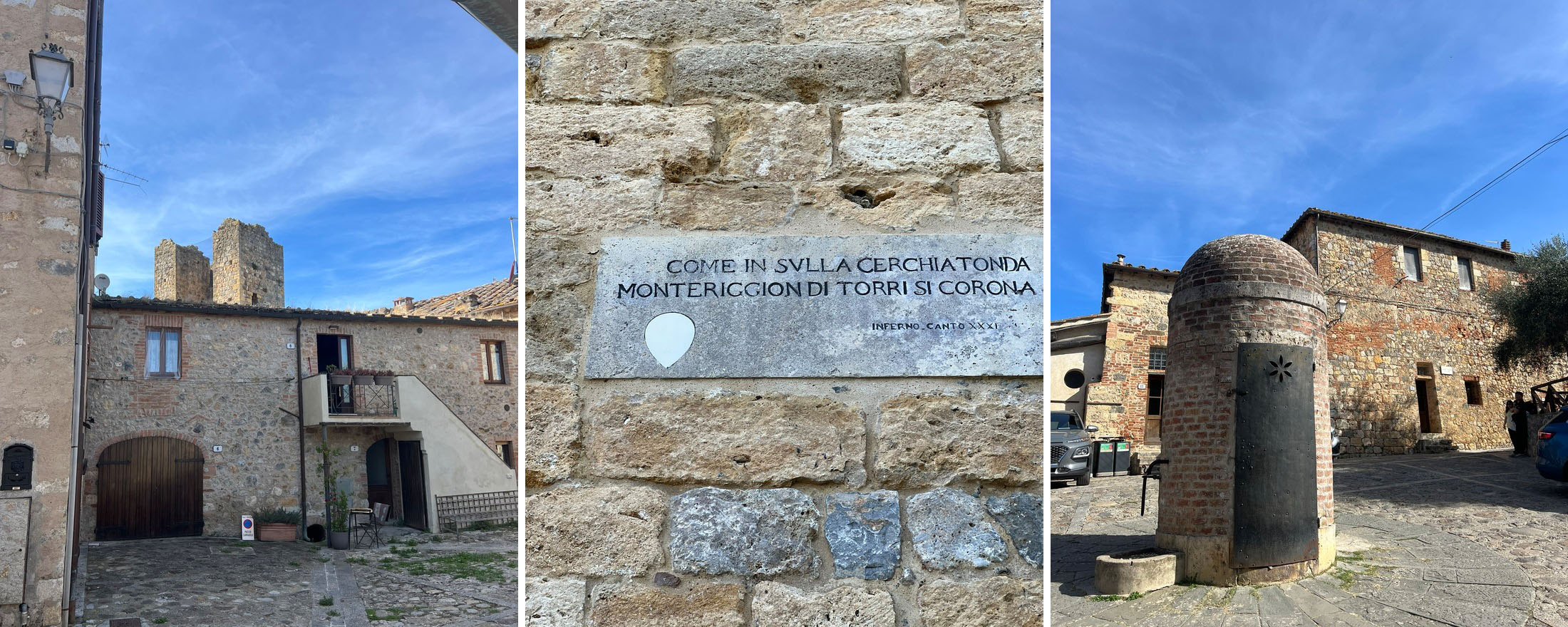

When Dante Alighieri wrote about the Inferno and compared the towers of Monteriggioni to giants imprisoned on the edge of the abyss, perhaps he did not imagine that those same walls would continue to dominate the Sienese landscape for another seven centuries. Monteriggioni is not a place you visit by chance: it is a destination you consciously reach, a perfectly preserved medieval island where time seems to have stopped at the days of the Republic of Siena.
From your camper, reachable in a few minutes on foot from a convenient rest area, you will discover one of the most fascinating fortified villages in Tuscany—a place where military architecture and history merge with the most evocative hilly landscape the region can offer.
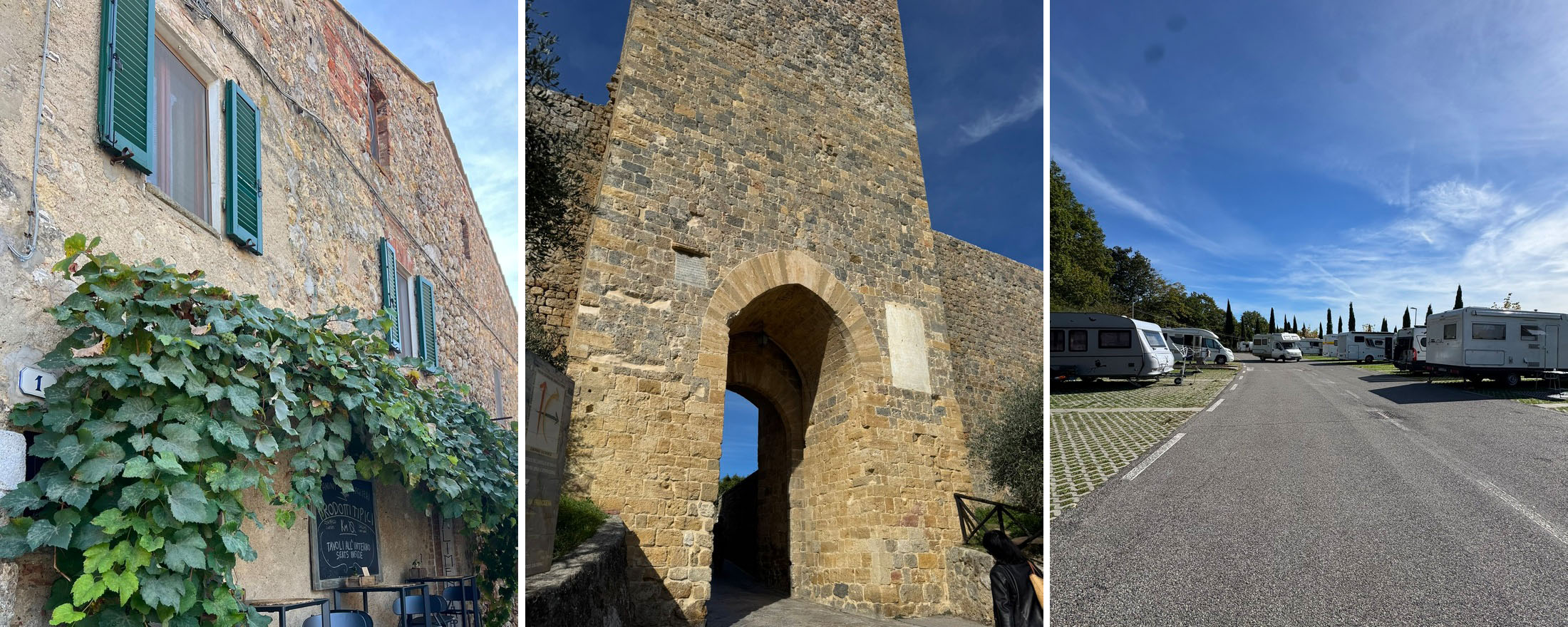
Stopover and overnight stayLiterally at the foot of the walls and less than a ten-minute walk from the historic center.
The area has 29 asphalt pitches plus one reserved for the disabled, all flat and with ample maneuvering space. Each pitch is equipped with a dedicated 220V power pedestal. The restrooms are clean and well-maintained, with paid hot showers (€1 for 3.5 minutes). The camper service is functional and modern: water loading and unloading, differentiated waste collection, all managed by an automated self-service cash register system. The lighting is widespread, video surveillance is active, and the children’s play area represents a rare amenity in rest areas. Pets are allowed without problems.
2025 Rates: €8 for 12 hours / €16 for 24 hours / €4 for camper service (separate loading/unloading). Payment is made via automated cash machine at the entrance (card or cash). Access is automated with a barrier and card.
GPS: 43.385907, 11.228065Strada Comunale di Monteriggioni, 3, 53035 Monteriggioni (SI)

Just before the main entrance: it is a traditional parking lot suitable for short stays, without specific services for campers, but convenient for those who only want a short excursion of a few hours.
GPS: 43.388202, 11.225160
Getting around
“…open view above the walls”
“camminare nel Medioevo”
Points of interest (PoI)Assolutamente. Ecco la traduzione del paragrafo, mantenendo la formattazione:
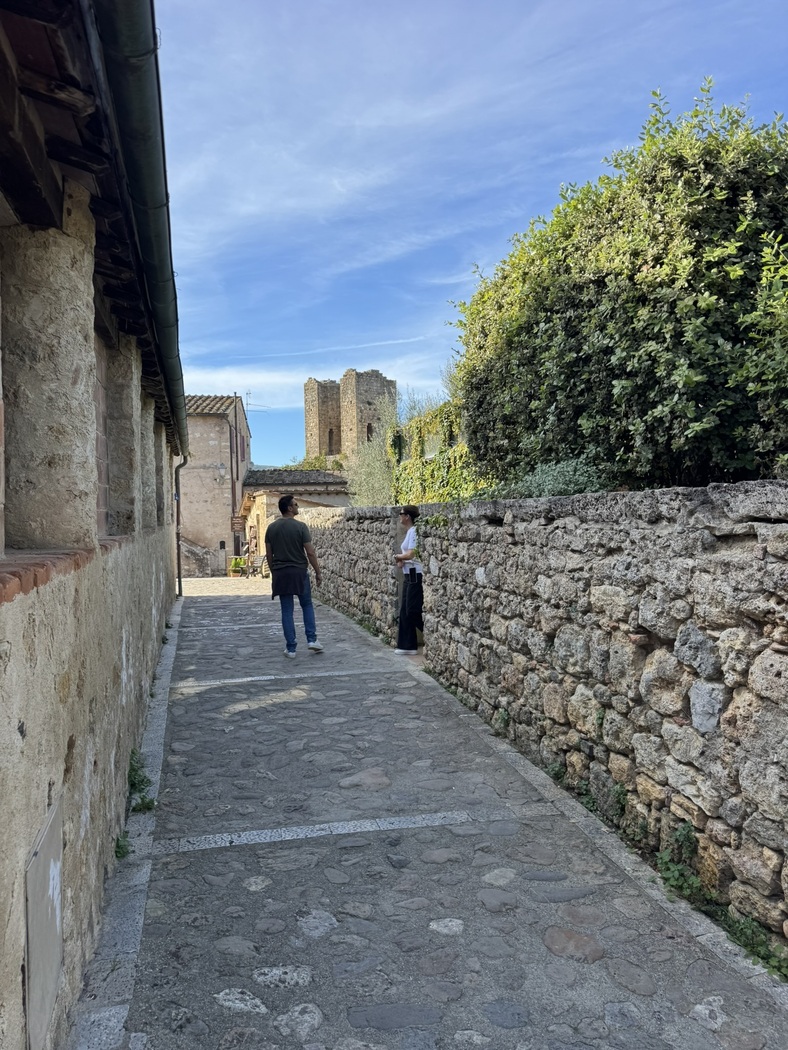
The circuit wall is a perfect ellipse about 570 meters in perimeter, surrounded by fourteen rectangular towers, 6 by 4 meters, and 15 meters high from the base of the wall. The thickness of the curtain wall is two meters—it is not decoration, it is construction seriousness. Two gates allowed access: the Porta Romea (Franca) to the east towards Siena, and the Porta San Giovanni (Fiorentina) to the west towards the Valdelsa.
What fascinates about Monteriggioni is that it was never captured by force. In 1269, after the defeat of Colle immortalized by Dante in Purgatory, the defeated Sienese took refuge here, and the Florentines failed to penetrate. In 1526, when 2,500 Florentine men and heavy artillery besieged the castle for months, the walls held. It was only in 1554 that Monteriggioni fell—not due to structural weakness, but by betrayal: Captain Giovannino Zeti handed the keys over to the enemy.
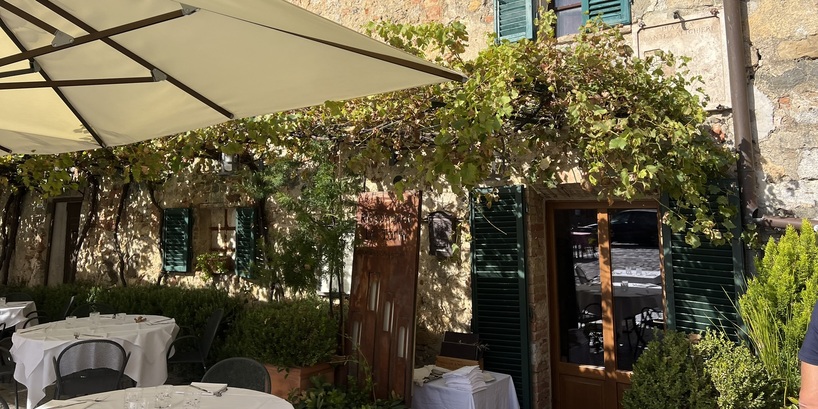
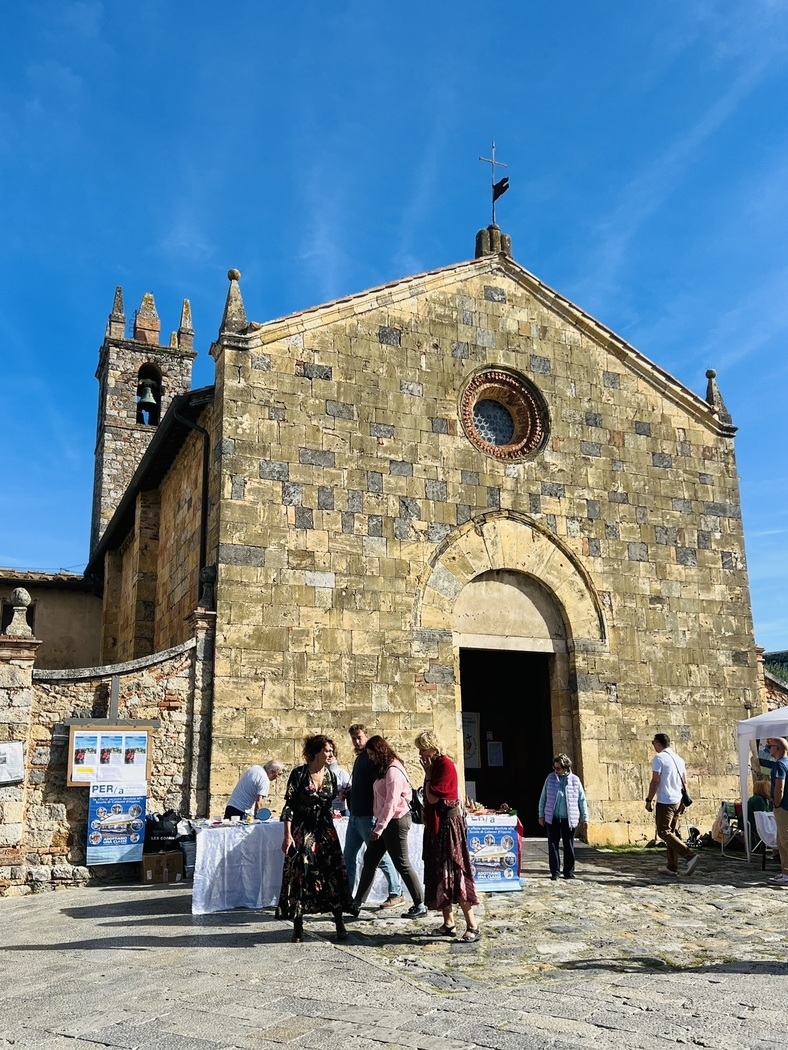
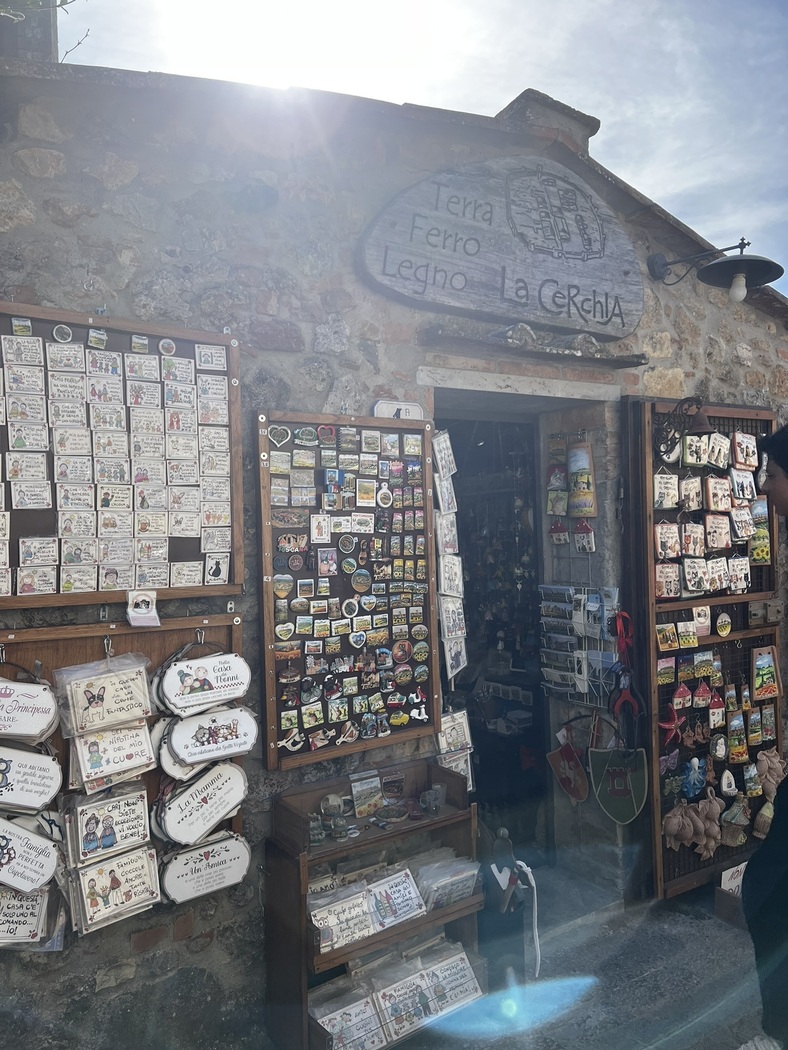
Inside the walls, the village is small and intact: a main street crosses Piazza Dante Alighieri (formerly Piazza Roma), overlooked by the Pieve di Santa Maria Assunta and where today you will find restaurants, bars, and local craft shops. It is not a frozen museum, it is still alive—the windows have curtains, the smells are those of real cooking, the voices echoing through the alleys are those of those who live here.
Seasonal Events
“Pieve di Santa Maria Assunta ”
“unmissable stop for souvenirs”
Traditional Recipes and Local ProductIf using dried beans, soak them overnight, then cook them in water for 1.5-2 hours until tender. If using canned beans, use the canning liquid.
In a large pot, heat 4 tablespoons of oil and sauté the onion until translucent. Add carrots and celery, let them sweat for 5 minutes until the vegetables start to release their juices. Pour in the peeled tomatoes, breaking up any pieces that are too large, and cook for 5 minutes. Add the black cabbage torn by hand and the other vegetables (if present): the black cabbage will release a lot of water, which is normal. Cover with the broth and bring to a boil. Add the cooked beans (with some of their cooking liquid), salt, and pepper. Reduce the heat and simmer for 30-40 minutes: the soup should become thick, almost like a cream, but still brothy.
In the last 10 minutes of cooking, add the stale bread torn by hand. Mix well: the bread will partially dissolve, binding the soup and making it creamy. If the consistency is too thick, add hot water.
Taste, adjust salt and pepper. At this point you can serve, but the traditional recipe requires leaving the ribollita to rest until the next day, when it will be even tastier.
The final touch: pour the ribollita into bowls or deep plates, add a drizzle of raw extra virgin olive oil (uncooked: the oil added at the end preserves the aroma), and if you wish, a touch of raw garlic rubbed on a slice of Tuscan bread is welcome.
Useful Tips📞 Tourist Office
Monteriggioni will not show you the great masterpieces of art like Siena will, twenty minutes away. It does not have the epic dimensions of San Gimignano. What it possesses is something rarer in contemporary Tuscany: a narrative integrity. Its walls still tell the story for which they were built, and the internal streets breathe a medieval daily life that time has preserved rather than destroyed. After a day spent inside these walls, walking where Dante gazed, eating a ribollita from ancient recipes, observing the sunset from the northern walkway with Chianti at your feet—the return to the camper will not be a conclusion, but a transition. Monteriggioni will remain within you as an immaterial memory, proof that the Middle Ages is not just in books.