Top
When your camper van engine switches off in Arezzo’s Parcheggio Tarlati, it is not just the murmur of the medieval city that greets you, but the silent invitation of eight centuries of beauty housed within a Renaissance palace. The National Museum of Medieval and Modern Art awaits you—a journey through the centuries that feels like an authentic discovery, far from the crowds of the most beaten tourist routes.

From Camper to Museum: An Easy and Fascinating Path

Leaving your camper parking will not require epic efforts. From Parcheggio Tarlati (Via Guido Tarlati), the museum is about 800 meters on foot—a pleasant fifteen-minute walk through the narrow streets of the Porta del Foro district, an authentic area where Arezzo’s life flows far from the postcards. The way is simple: from Via Tarlati head towards the **escalators** (which you find about 200 meters from the parking lot). Go up towards the walls, then orient yourself towards **via San Lorentino**. This is where you will find **Palazzo Bruni Ciocchi**, one of the most beautiful Renaissance palaces in the city—your destination. **A practical note:** the area is illuminated and quiet even at dusk.

Palazzo Bruni Ciocchi: Where Architecture Tells a Story

Before even entering, let the palace itself speak to you. Built in the mid-fifteenth century at the behest of Donato Bruni—son of Leonardo, the celebrated humanist chancellor of the Florentine Republic—the palace develops over three floors around a porticoed courtyard of extraordinary elegance. The columns of pietra serena, the Brunelleschi-style arches, the hanging garden on the first floor: everything here breathes the Renaissance at its moment of greatest awareness. Over the centuries, the palace has hosted important figures—Cardinal Giovanni Maria Ciocchi del Monte, who became Pope Julius III, stayed there—and during the Second World War it was the scene of dramatic choices to protect Italian artistic heritage. Today, since 1972, it has been the official seat of one of Tuscany’s most fascinating museums.

Opening Hours (Ed. note: at the time of writing the article):

     
  • Tuesday and Wednesday: 8:30-19:00
  •  
  • Thursday, Friday, Saturday: 8:30-13:30
  •  
  • Sunday (1st and 3rd of the month) and Holidays: 8:30-13:30
  •  
  • Monday: Closed

Admission: €6.00 (full price) | Free on the first Sunday of the month

The ticket office closes one hour before the museum closes.

Inside the Twenty Rooms: An Itinerary Through the Centuries

The museum is articulated as a chronological journey that starts from the High Middle Ages and reaches the nineteenth century. It is not a collection for its own sake, but a coherent narrative of the artistic and cultural development of Arezzo. Allow yourself to be guided unhurriedly—each room has something special to whisper to you.

Ground Floor: The Weight of Stone

Your journey begins here. The ground floor houses medieval sculptures and lapidary fragments—the remains of a city that has undergone profound transformations. You will see Romanesque reliefs, capitals, and columns from the Cathedral and from churches that have now disappeared. Among these fragments, two sculptures particularly catch the eye: Saint Michael the Archangel and the statues of the Madonna with Child, which once protected the city gates.

There is a melancholic beauty in these pieces—they are the witnesses of a past that no longer exists, yet they continue to speak of the devotion and craftsmanship of generations of artists whose names we have forgotten.

First Floor: The Gold and the Intimacy of the Sacred

Go up the monumental stairs and you will find the first floor dedicated to medieval and Renaissance art. This is where the magic truly begins.

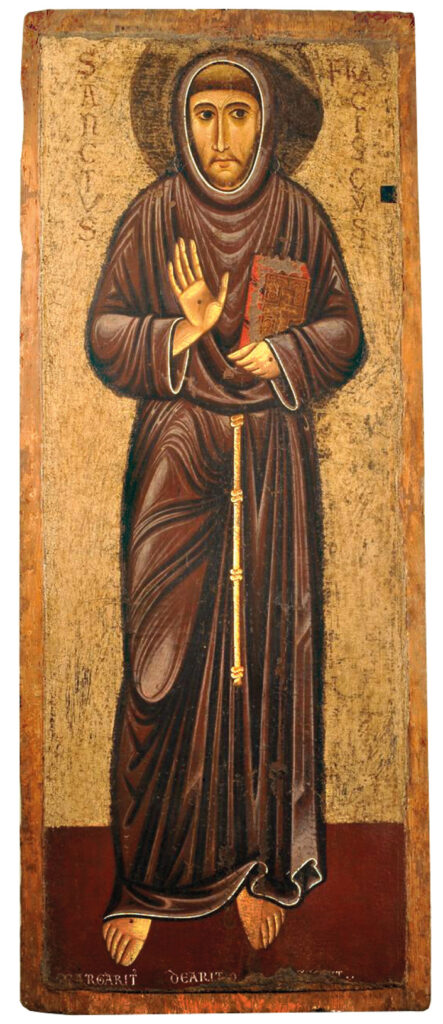
Margaritone d’Arezzo (circa 1240-1290)—the first great documented Aretine painter—will welcome you with his gold-ground panels. They are not simple paintings; they are windows to the medieval sky. The panels depicting the Madonna Enthroned with Child and Saint Francis of Assisi show a faith that knows no doubt, a visual innocence that strikes deeply.

Observe the details: how Margaritone represents the Virgin’s veils, how he captures the serene gaze of the Child, how Saint Francis emerges from the stigmata with the dignity of one who has known pain and transformed it. These paintings were destined for convent churches, and imagine the significance they had for the monks who knelt before them daily.

Continuing on the first floor, you will encounter:

     
  • Detached frescoes by Spinello Aretino and his son Parri di Spinello—masters of line, creators of dramatic stories
  •  
  • The Madonna della Misericordia by Parri di Spinello—an image of maternal protection that still conveys comfort today
  •  
  • Paintings by Bartolomeo della Gatta—elegant figures, balanced compositions
  •  
  • An extraordinary collection of Renaissance majolica—plates and vases that naturally combine utility and beauty
  •  
  • Sculptures, ivories, bronzes, and precious goldsmith objects that testify to the ancient roots of the Aretine goldsmith tradition

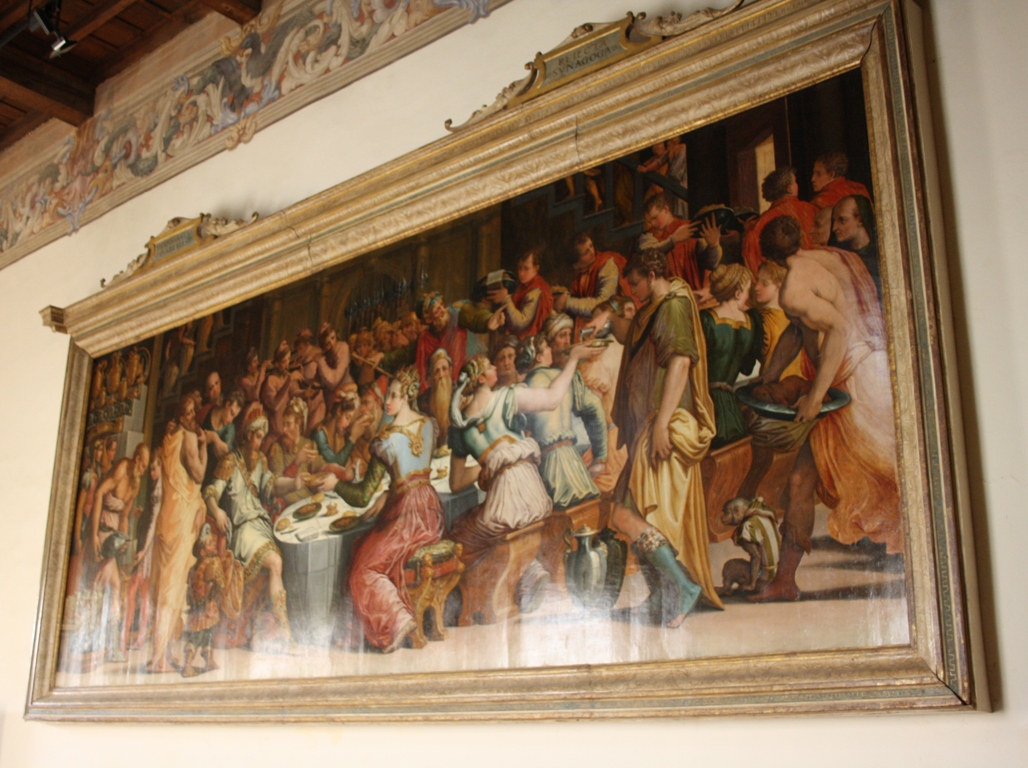
The most famous piece on this floor, however, is found in a corridor: the “Feast for the Wedding of Esther and Ahasuerus” by Giorgio Vasari.

foto tratte da discoverarezzo.com

Giorgio Vasari’s Feast: The Work That Will Change Your Visit

Stop here for a long time. This painting deserves time.

In July 1548, Giorgio Vasari—the great Aretine master, painter, architect, and art historian—received the commission from a Benedictine abbot to paint a large panel destined for the refectory of the Badia delle Sante Flora e Lucilla. The abbot wanted the story of Esther, the Jewish queen who saved her people from slaughter at the court of the Persian king Ahasuerus.

Vasari accepted and, in forty-two intense days of work, created the monumental work of his career.

The dimensions will surprise you: 2.89 meters high by 7.45 meters long. A panel composed of 39 vertical planks, on which Vasari painted directly with preparatory studies carried out on-site to capture lights and shadows with perfect accuracy.

The Wedding of Esther and Ahasuerus, Banquet of Esther (painting) by Giorgio Vasari

What you see is a Renaissance banquet teeming with life: beautiful women in dazzling dresses, attentive pages, musicians intent on playing, busy servants, guarding soldiers. In the center, Queen Esther, in a gesture of absolute awareness, publicly accuses Haman, the advisor who plotted the massacre of her people. It is a moment of restrained tension, of female courage, of truth spoken in the midst of corruption.

The painting is not just narrative—it is theological. In the Middle Ages, the story of Esther was interpreted as a prefiguration of the Virgin Mary, the savior of humanity. Vasari knew this, and therefore every figure in the feast holds meanings that go beyond the visual surface.

The panel was transferred from its original location in the 1950s to become part of the museum, where today it benefits from studied lighting that reveals every nuance. In the 1990s, it underwent conservative restoration, and today a special exhibition (visitable until February 2025) displays the preparatory drawings alongside the finished masterpiece.

A fascinating curiosity: Vasari himself narrates in his “Vite” that he created the work in exchange for only one hundred and twenty-eight gold scudi—a meager compensation even for the time—out of love for his friend the abbot. The epitaph of this generosity remains visible today.

Second Floor: From the Renaissance to Modernity

The second floor continues the journey from the 16th to the 20th century, with an emphasis on Tuscan Renaissance painting: new panels by Giorgio Vasari, works by Luca Signorelli (including an extraordinary Madonna with Child and Saints), and continuing with masters from the Baroque and nineteenth-century periods.

Here you will also find an important collection of Macchiaioli paintings—the painters who prefigured European Impressionism. Names like Giovanni Fattori, Telemaco Signorini, Luigi Gioli, and Adriano Cecioni represent a season of Tuscan art still little known outside the region, but of extraordinary quality.

Practical Advice for Your Visit

How much time to dedicate?

The museum deserves at least 2-3 hours. If you are passionate about medieval and Renaissance art, you can easily stay for 4 hours. If you rush through, you risk missing the essence.

Which day to choose?

If your stop in Arezzo coincides with the first Sunday of the month, admission is free. It is a precious opportunity, even though the museum will be more crowded. If you prefer intimacy, avoid Monday (closed) and visit Tuesday-Wednesday morning, or Thursday-Saturday at 8:30 in the morning.

What to bring with you?

     
  • A notebook to jot down your impressions in front of the works
  •  
  • Comfortable walking shoes—the floor is mainly marble and stone
  •  
  • A reusable water bottle—there is no trattoria inside, but there are public fountains in the historic center
  •  
  • If you are a photographer, know that photography is permitted without flash—the internal lighting has been designed to preserve the paintings

Guide or freedom?

The museum does not provide official audio guides, but each room has sufficiently detailed information panels in Italian and English. If you prefer a human guide, it is possible to book guided tours by contacting the museum directly at (+39) 0575 1696257 or by email at info@arezzointour.it.

After the museum?

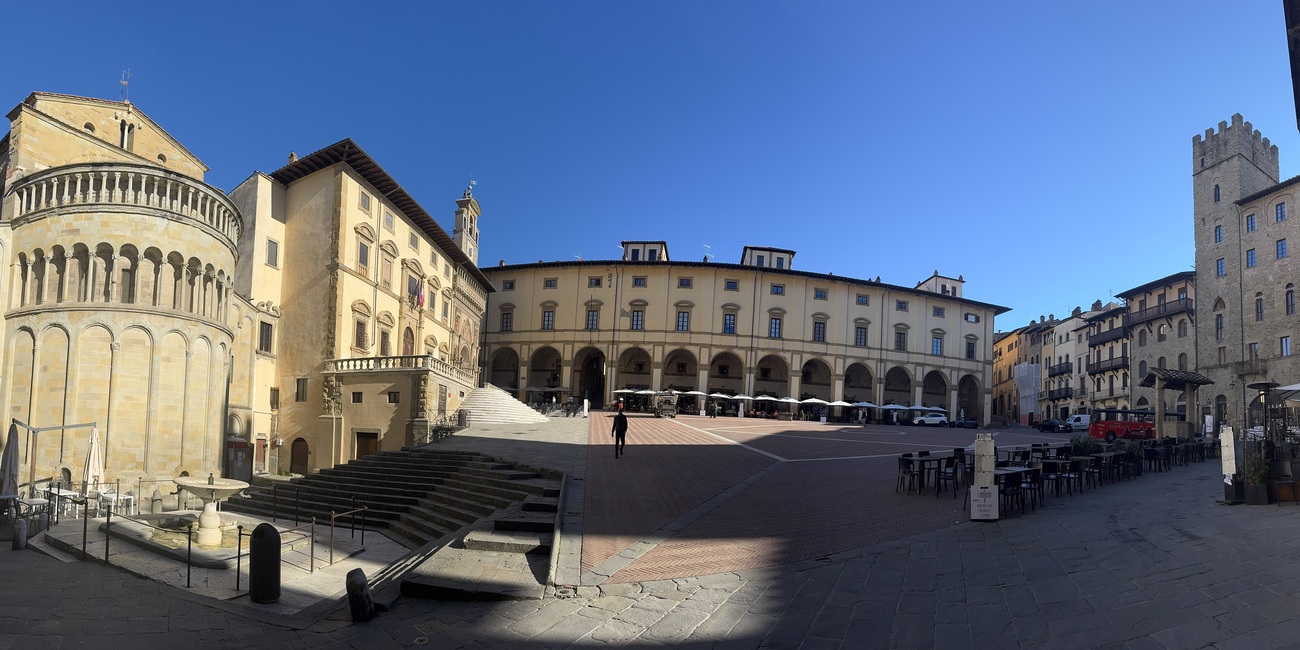
The historic center of Arezzo is very close. You can go down to Piazza Grande, visit the Basilica of San Francesco (famous for the frescoes by Piero della Francesca), or simply get lost in the narrow medieval alleys. If you visit on the first Sunday of the month, there is also the Antiques Market—one of the largest in Italy—which occupies the entire square and surrounding streets.

Do you prefer to discover destinations via the map?

Here are all the places we have visited
0

post a comment