
Top

Visit Pienza

The Pearl of the Val d’Orcia — where history, flavors, and breathtaking landscapes meet.

In the heart of the Val d’Orcia, a UNESCO World Heritage Site, lies Pienza — a village that embodies the very idea of the “ideal Renaissance city.” With its orderly streets, pecorino cheese shops, and postcard-perfect views, Pienza is an unmissable stop for those traveling by camper between Tuscany and Umbria. In this guide, we’ll show you where to park, what to visit, and how to make the most of the village with your motorhome.

Stopover and overnight stay

If you’re looking for a place to park your camper in Pienza, the main reference point is the parking area located on Via Mario Mencatelli. Some spaces are specifically designated for campers, although they are often occupied by cars.

Recommended areas

🅿️ Mencatelli Parking Area
Via Mario Mencatelli, 40, 53026 Pienza (SI)
Excellent location just a short walk from the town center; paid during the day, but free at night.

GPS: 43.078369, 11.680129

Organic Farm Campsite Podere Il Casale

Strada Comunale, 53026 Pienza (SI)
If you prefer the comfort of a campsite or a more rural setting, just 2.9 km from the center of Pienza you’ll find the Organic Farm Campsite Podere Il Casale. It offers the opportunity to stay with your camper surrounded by the iconic hills of the Val d’Orcia, while enjoying essential services, joining farm activities, and tasting local products.


TEL: 0578 755109
WEB: podereilcasale.com
GPS: 43.081402, 11.711133

Getting around

The village of Pienza is entirely pedestrian: from the main parking area, the town center can be reached in just 5 minutes on foot.
No public transport is needed — the walk is short and pleasant, with views of Tuscan hills and cypress trees.
 
To explore the surroundings:
Bicycle or e-bike: a great way to reach Monticchiello (4 km) or San Quirico d’Orcia (10 km).
Tiemme local buses: connect Pienza with Montepulciano and Montalcino (line 112A).

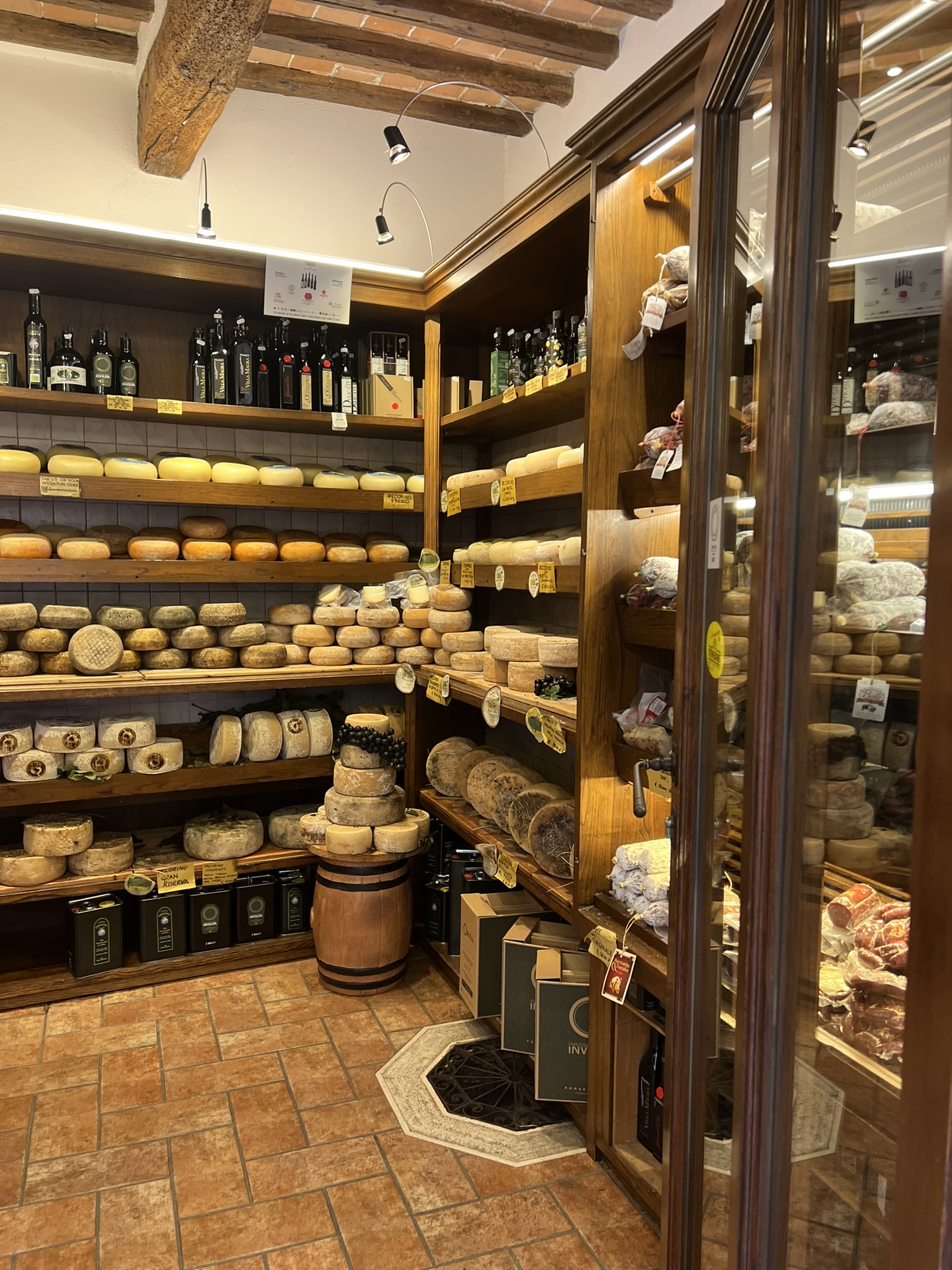
“…and of course, you just *have* to buy some cheese!”

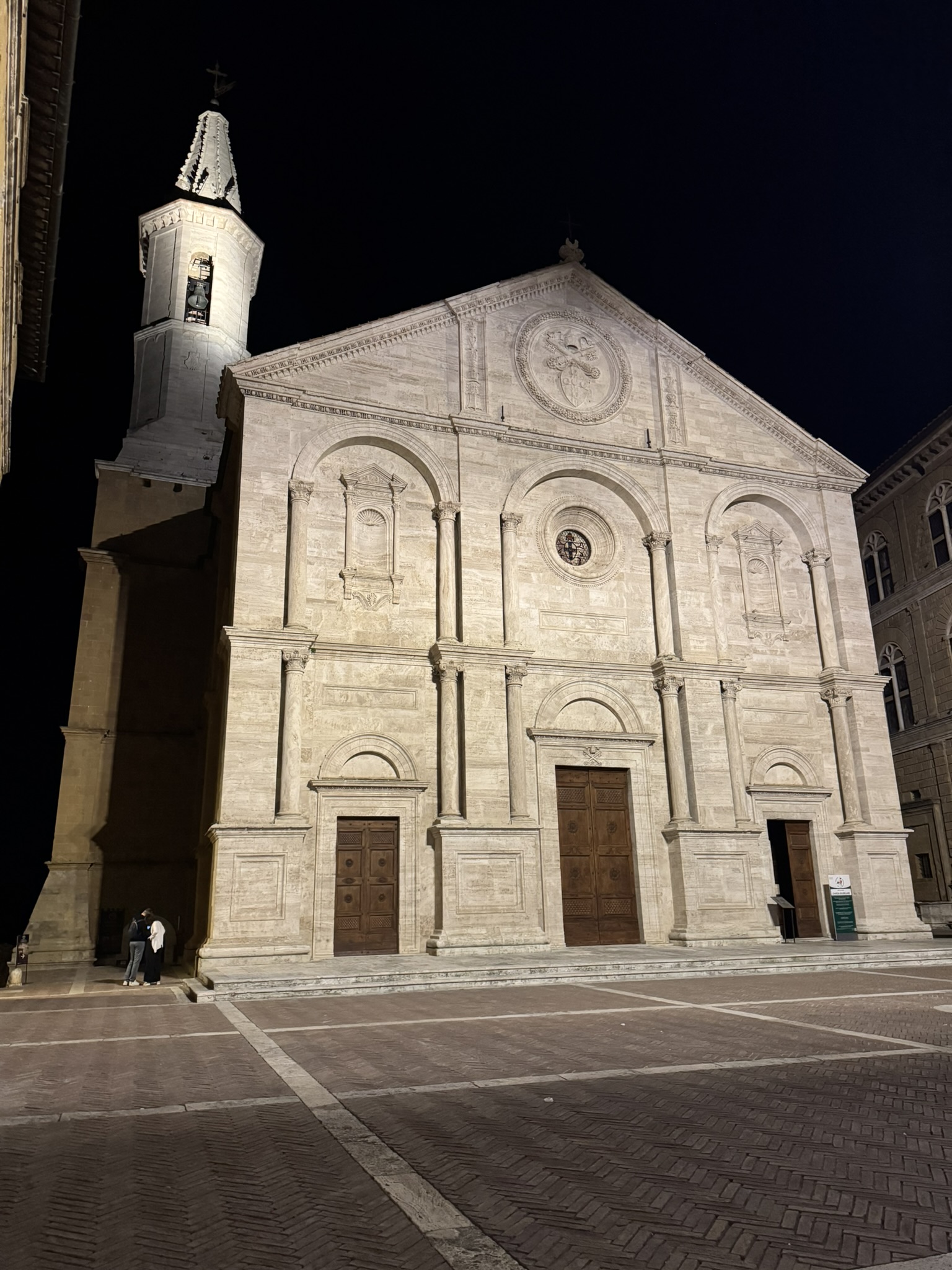
“the Duomo”: Cathedral of Santa Maria Assunta

Points of interest (PoI)

Visiting all five villages in a single day is possible, but you’ll need plenty of courage and energy — the terrain is a continuous series of ups and downs, and the train stops can get very crowded. If you’re coming from far away and have only one day, you simply can’t miss it. However, if you can stay longer or plan to return to the Cinque Terre another time, we recommend focusing on two or three villages at most.
1
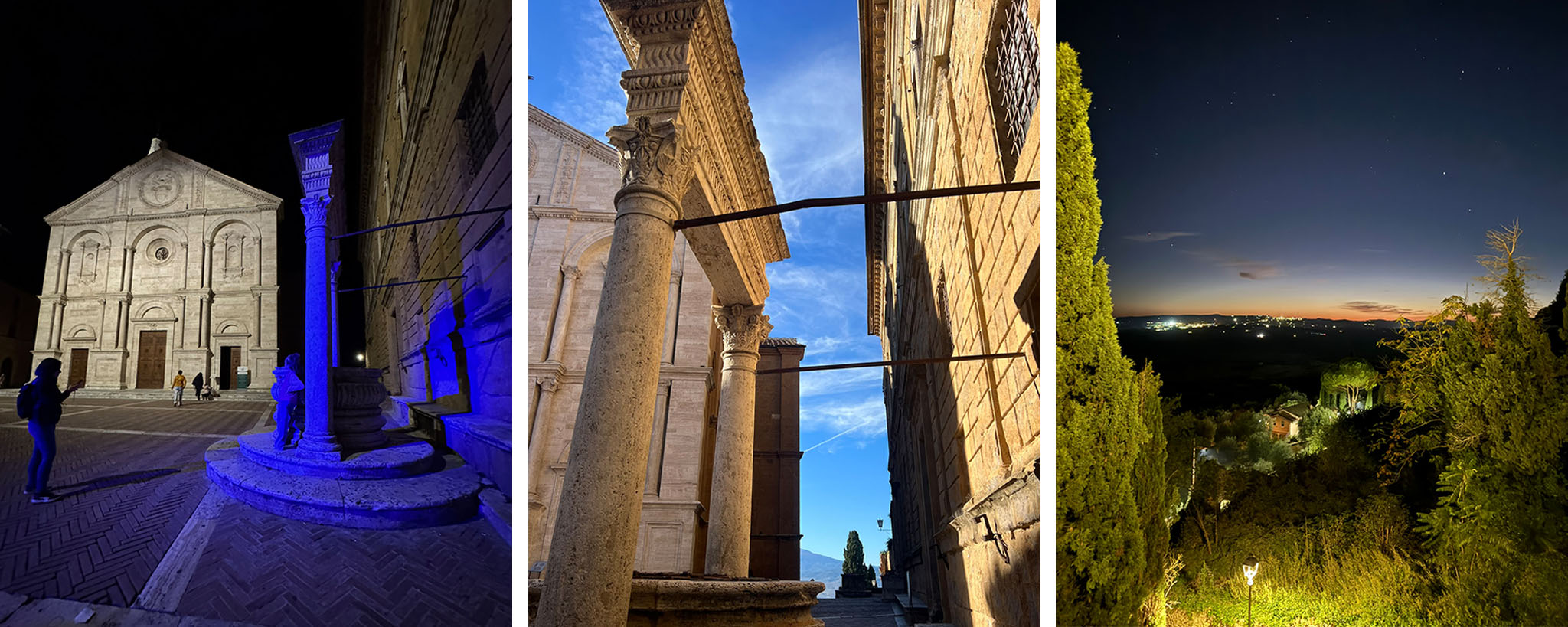
Pio II square Piazza Pio II is the vibrant heart of Pienza and stands as one of the purest and most significant expressions of Renaissance urban ideals. Designed by architect Bernardo Rossellino at the request of Pope Pius II (Enea Silvio Piccolomini) around 1462, the square is renowned for its trapezoidal layout and evocative herringbone brick pavement. Overlooking the square, in perfect perspectival harmony, are the main monuments of the “ideal city”: the majestic Cathedral of the Assumption, the elegant Town Hall with its tower, and the Renaissance palaces such as Palazzo Piccolomini and Palazzo Borgia. The entire composition offers visitors a sense of composed and deliberate beauty — a true masterpiece of architectural balance.
2
Palazzo Piccolomini Palazzo Piccolomini is the magnificent former papal residence and the true emblem of the Renaissance in Pienza, located right next to the Duomo. Designed by Bernardo Rossellino for Pope Pius II, it was inspired by Florence’s Palazzo Rucellai and stands out for its elegant rusticated façade and, above all, for its extraordinary three-tiered loggia that opens in a revolutionary way toward the surrounding landscape. This panoramic design offers breathtaking views over the Val d’Orcia and Mount Amiata, seamlessly integrating nature into architecture. Inside, the palace serves as a house-museum, preserving original furnishings and featuring an evocative hanging garden — considered one of the earliest examples of its kind from the Renaissance.
3
The Cathedral of Pienza The **Cathedral of Pienza**, or **Cathedral of Santa Maria Assunta**, is the centerpiece of the “ideal city” project envisioned by Pope Pius II and brought to life by Bernardo Rossellino. Its façade, made of gleaming travertine, is a magnificent example of Renaissance architecture, articulated with pilasters and crowned by the Piccolomini family’s papal coat of arms. The interior, with a Latin cross plan, is surprisingly inspired by German Gothic style — featuring three naves of equal height that create a spacious and luminous atmosphere, in contrast to the building’s austere exterior. The cathedral houses precious altarpieces from the Sienese school of the 15th century, making it a key monument in the history of Italian Renaissance art and urban design.
4
Corso Rossellino **Corso Rossellino** is the elegant pedestrian thoroughfare that serves as the backbone of Pienza’s historic center, connecting the entrance of the village to its Renaissance heart. This street is not only a historical route but also a lively urban promenade, lined with artisan shops and, above all, local gastronomic treasures such as the renowned *Pecorino di Pienza* and traditional cured meats. Walking along it means fully immersing yourself in the refined and delightful atmosphere of the “ideal city.”
5
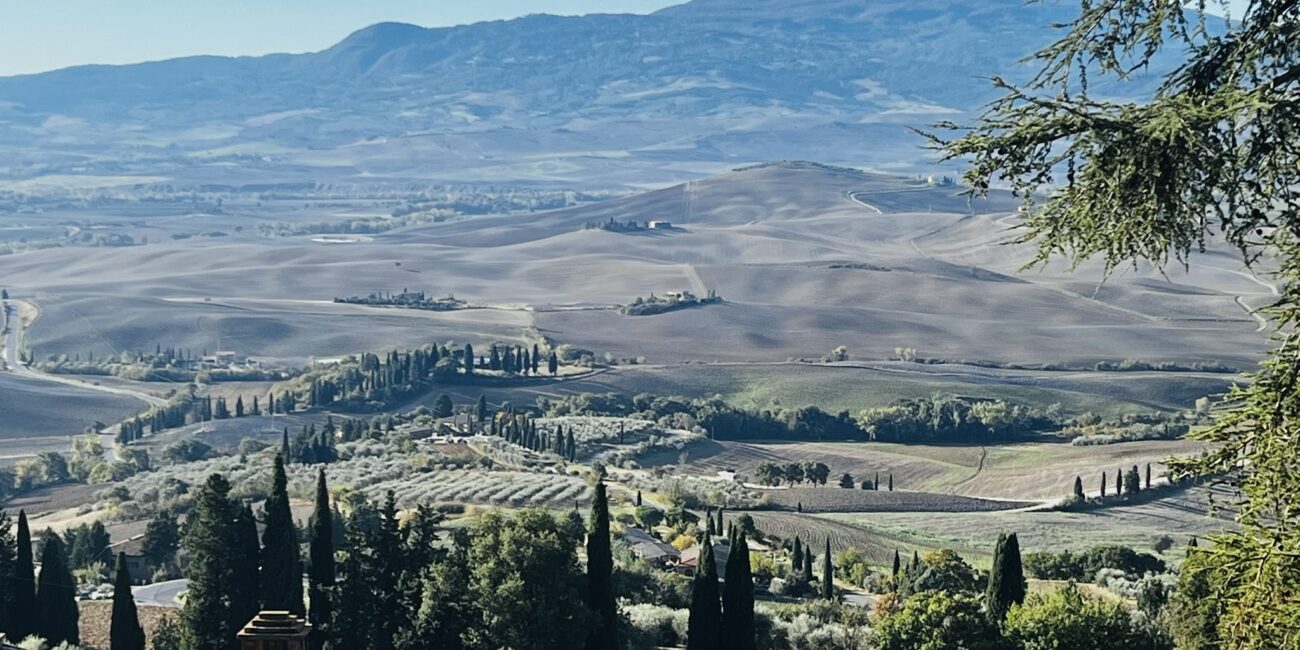
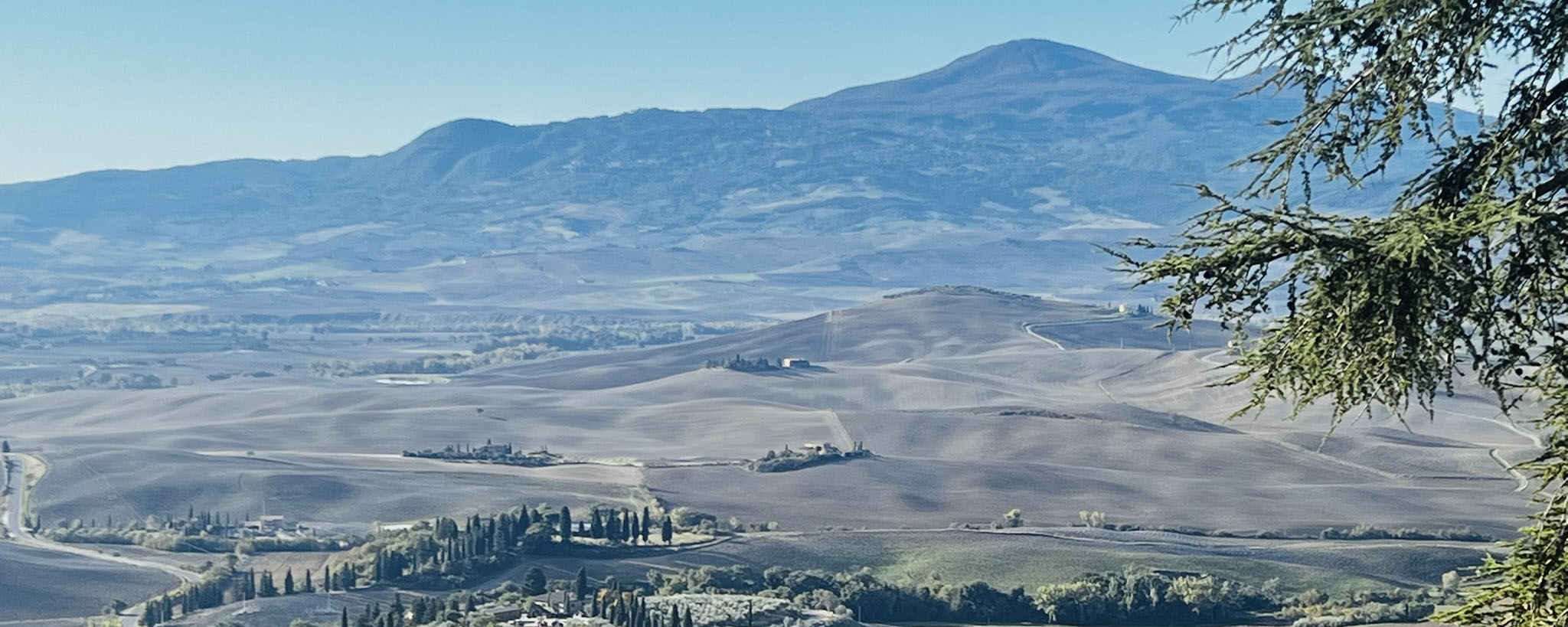
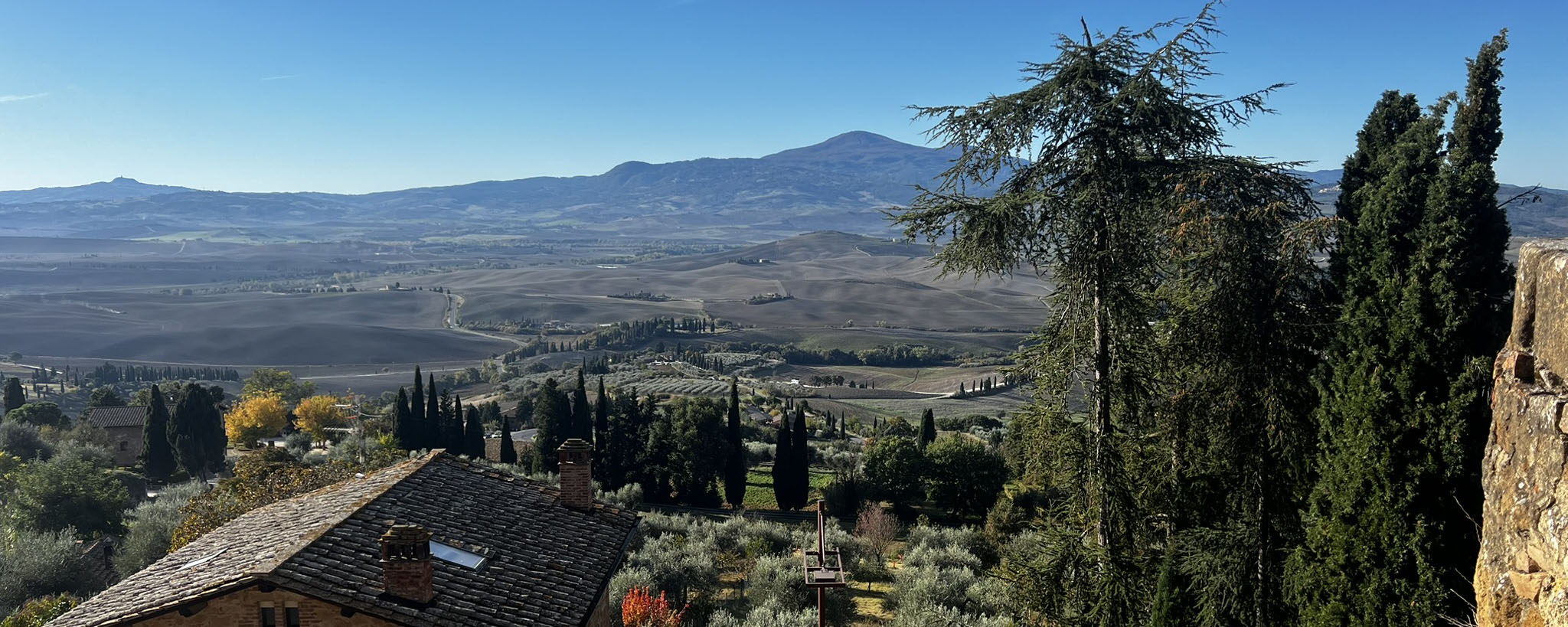
Belvedere della Val d’Orcia The **Belvedere of the Val d’Orcia** in Pienza is not a single viewpoint, but rather a series of scenic overlooks that open up from the town’s walls and gardens, especially along **Via del Casello** and near **Palazzo Piccolomini**. From these spots, you can admire the most famous and iconic view of Tuscany: a vast panorama where gentle hills, shaped by centuries of agriculture, unfold in perfect harmony, dotted with solitary cypresses and farmhouses. The scene is postcard-perfect, particularly enchanting at sunrise and sunset. It is the direct gaze onto the UNESCO landscape that made Pienza renowned as the “ideal city.”

Seasonal Events

Cheese Fair (Fiera del Cacio)

Where: Pienza

When: First week of September
What: Pienza’s most famous festival, featuring tastings of local pecorino cheeses and the traditional “cacio al fuso” game held in the main square.

Pienza and the Flowers (Pienza e i Fiori)

Where: Pienza

When: May

What: The historic center transforms into an open-air garden — a paradise for those who love photography and strolling among vibrant colors.

Christmas Market in the Village (Mercatino di Natale nel Borgo)

Where: Pienza

When: December

What: Small but charming, featuring mulled wine and local products.

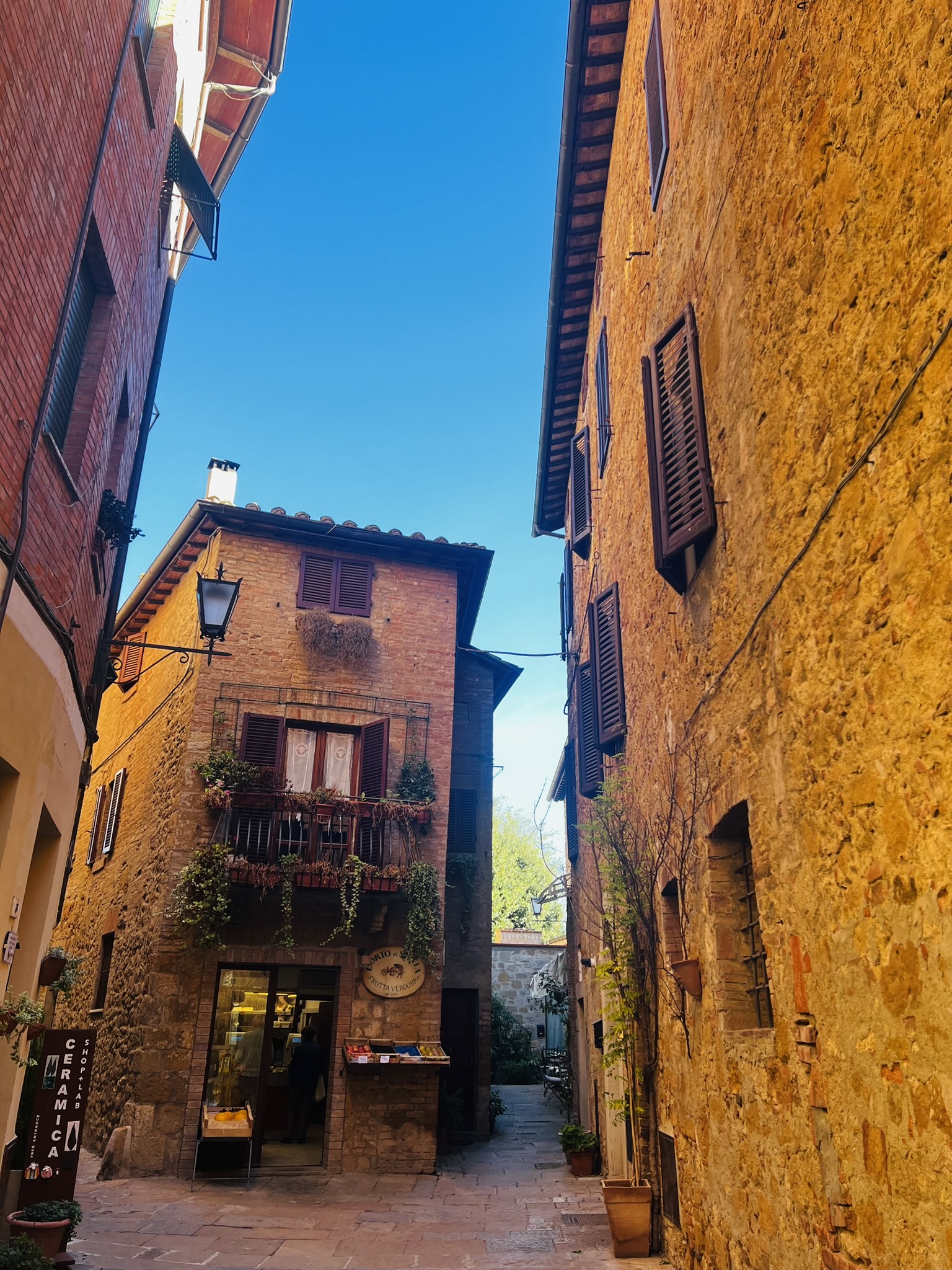
“imagine living here ”

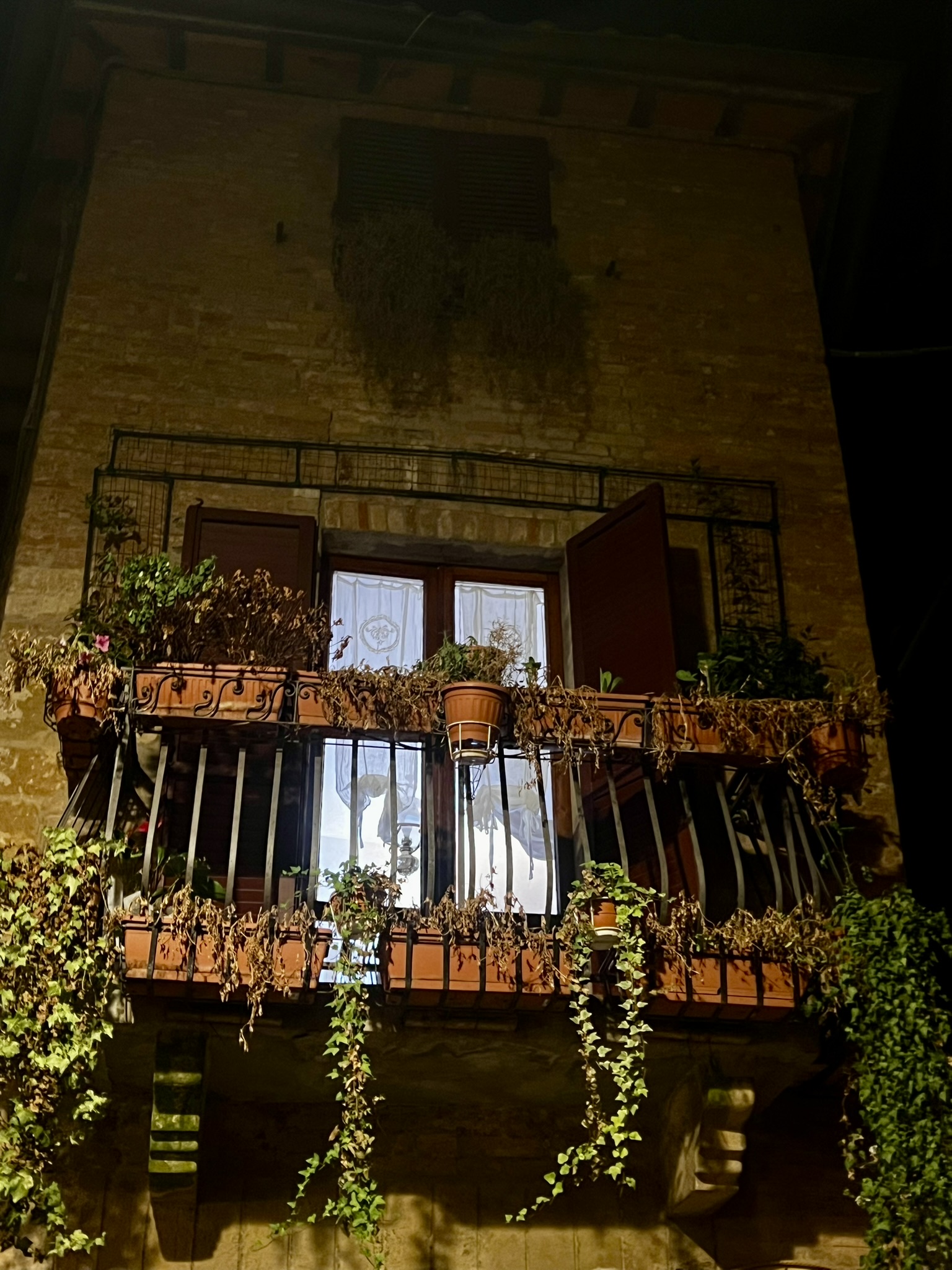
“to get lost among the alleys”

Traditional Recipes and Local Product

The most iconic local dish is Pici Cacio e Pepe
Recipe for Pici Cacio e Pepe
Ingredients for 4 people:
  • 400 g of pici (typical Tuscan pasta)
  • 200 g of aged Pecorino di Pienza
  • Freshly ground black pepper
  • Salt to taste
Preparation:
Cook the pici in plenty of salted water, then drain them *al dente*, keeping some of the cooking water aside.
In a bowl, mix the pecorino and pepper, gradually adding the hot cooking water until you obtain a creamy sauce.
Add the pasta and toss well until evenly coated. Serve immediately with an extra sprinkle of pecorino and black pepper.

Useful Tips

Pienza is an ideal destination for a slow weekend by camper, combining culture, flavors, and dreamlike landscapes.
Thanks to its central location, it can serve as the perfect starting point for a tour of the Val d’Orcia villages:
Montalcino, San Quirico, Bagno Vignoni, and Radicofani.

👉 Discover more itineraries and GPS coordinates on map.camperepoi.it (coming soon!)

👉 Subscribe to the CamperePoi newsletter to download the complete guide “Val d’Orcia by Camper.”

0

post a comment