
Top

Visit Mantua

Renaissance jewel among the three lakes

Mantua is one of the most fascinating cities in Northern Italy, a Renaissance jewel that surprises with its uniqueness: it is a city of water in the heart of the Po Valley. Surrounded by three artificial lakes created by the Mincio River, it offers an extraordinary urban panorama that is best admired from the San Giorgio Bridge, where the historic skyline is reflected in the calm waters.

A UNESCO World Heritage site since 2008, Mantua still bears the marks of the greatness of the Gonzaga family, who ruled it from 1328 to 1707, transforming it into one of the most important artistic centers of the Italian Renaissance. Ducal Palace, Palazzo Te, the Bibiena Theater: every corner tells stories of art, culture, and courtly splendor.

By motorhome, it is a strategic destination: the historic center is almost entirely pedestrian and can be easily visited on foot or by bicycle, while the equipped rest areas are well-positioned and connected. If you visit Mantua between July and August, do not miss the spectacle of the lotus flowers blooming on Lake Superiore: an oriental touch that makes the landscape even more magical.

Stopovers and overnight stays

Mantua has a historic center with Limited Traffic Zones (ZTL) active during the day, so it is not advisable to enter with a motorhome: the streets are narrow, traffic is regulated, and parking is limited. The best solution is to leave your motorhome in one of the equipped areas outside the center and reach the city on foot, by bicycle along the beautiful cycle paths that run alongside the lakes, or by using the free shuttle.

Mantua offers two excellent rest areas for motorhome travelers, both well-equipped and strategically located for exploring the city. Here are the recommended solutions for staying overnight and visiting Mantua stress-free.

Recommended areas

🅿️ “Sparafucile” Equipped Motorhome Area

Via Legnago, 1, 46100 Lunetta-frassino (MN)

Located in front of the city’s northern entrance, the Sparafucile area is completely immersed in the greenery of the Mincio Park, with a view of the Mantua skyline. It is the most convenient option for those who want to be close to the center: by crossing the San Giorgio bridge and the pedestrian-cycle eco-tunnel, you can reach the Ducal Palace complex and the UNESCO monumental area in 10-15 minutes on foot. The area has 56 grass pitches, all with electricity connection (1 kW) and water, full motorhome service, and restrooms with heated hot showers. It is under video surveillance and fully automated with an automatic pay station. Key strength: the free shuttle that departs from the nearby Campo Canoa Parking (reachable on foot via the eco-tunnel) and takes you to the center every 12-15 minutes.

GPS: 45.1650, 10.8119

🅿️ Grazie di Curtatone Motorhome Area

Parco Paganini, Via della Fiera, 1, 46010 Grazie (MN)

Located in the hamlet of Grazie di Curtatone, about 7 km from Mantua, this municipal area is managed by volunteers from the Camper Solidale Mantova association. With 103 pitches surrounded by greenery and partially shaded, it offers a quieter and more relaxed atmosphere. It features motorhome service, electricity and water connections for each pitch, restrooms with hot showers (€1 per token), free WiFi, a children’s playground, and a barbecue area. Perfect for families and those wishing to explore the surrounding territory: it is just a few steps from the charming Sanctuary of Santa Maria delle Grazie and the Mincio Boatmen’s pier for excursions on the lake. Mantua can be reached by bicycle via the cycle path (10 km) or by shuttle/bus. All proceeds, net of expenses, are donated to charity.

GPS: 45.1536, 10.6911

🅿️ Paid parking in the city center

It is also possible to park in some public parking lots closer to the center (such as Parcheggio Te or Parcheggio Anconetta), but be careful: Mantua has extensive Limited Traffic Zones (ZTL) active in the historic center, generally from 7:00 AM to 7:00 PM. Always check the signs and ZTL hours before entering to avoid fines. These parking lots do not have motorhome facilities (no motorhome service) and are less equipped than the dedicated areas. They are practical solutions for short daytime stops, but for overnight stays, we recommend the Sparafucile or Grazie di Curtatone equipped areas, which offer all necessary services and convenient connections to the center.

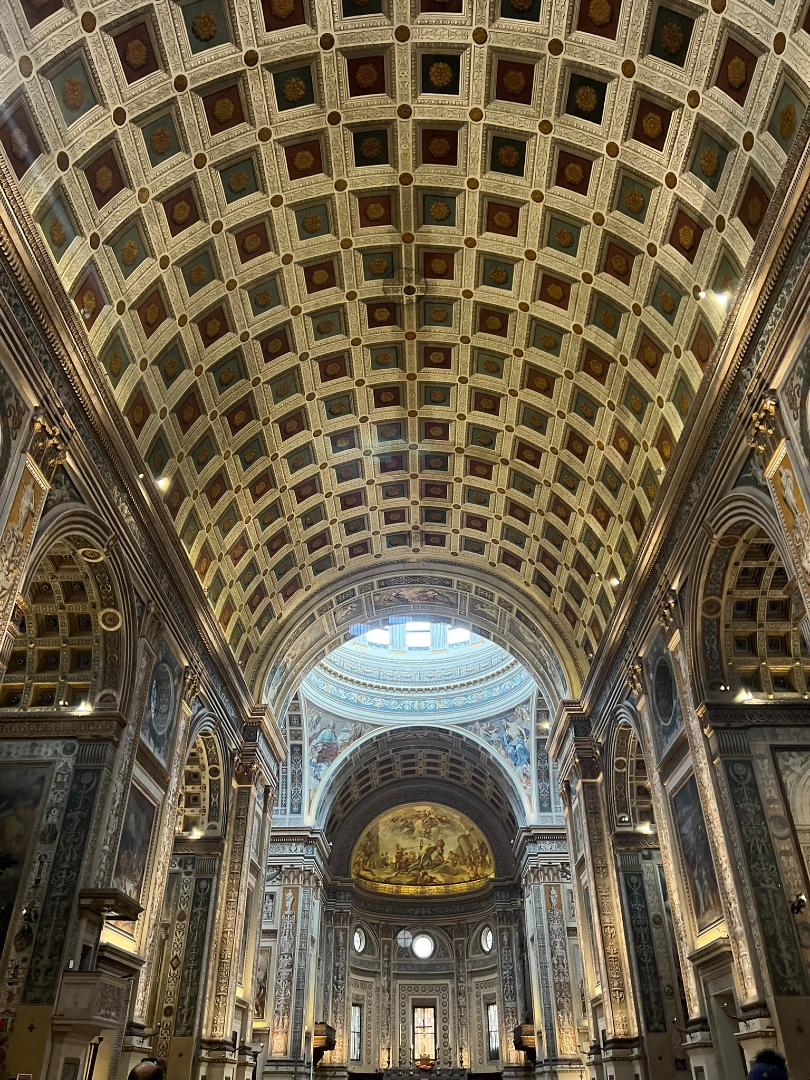
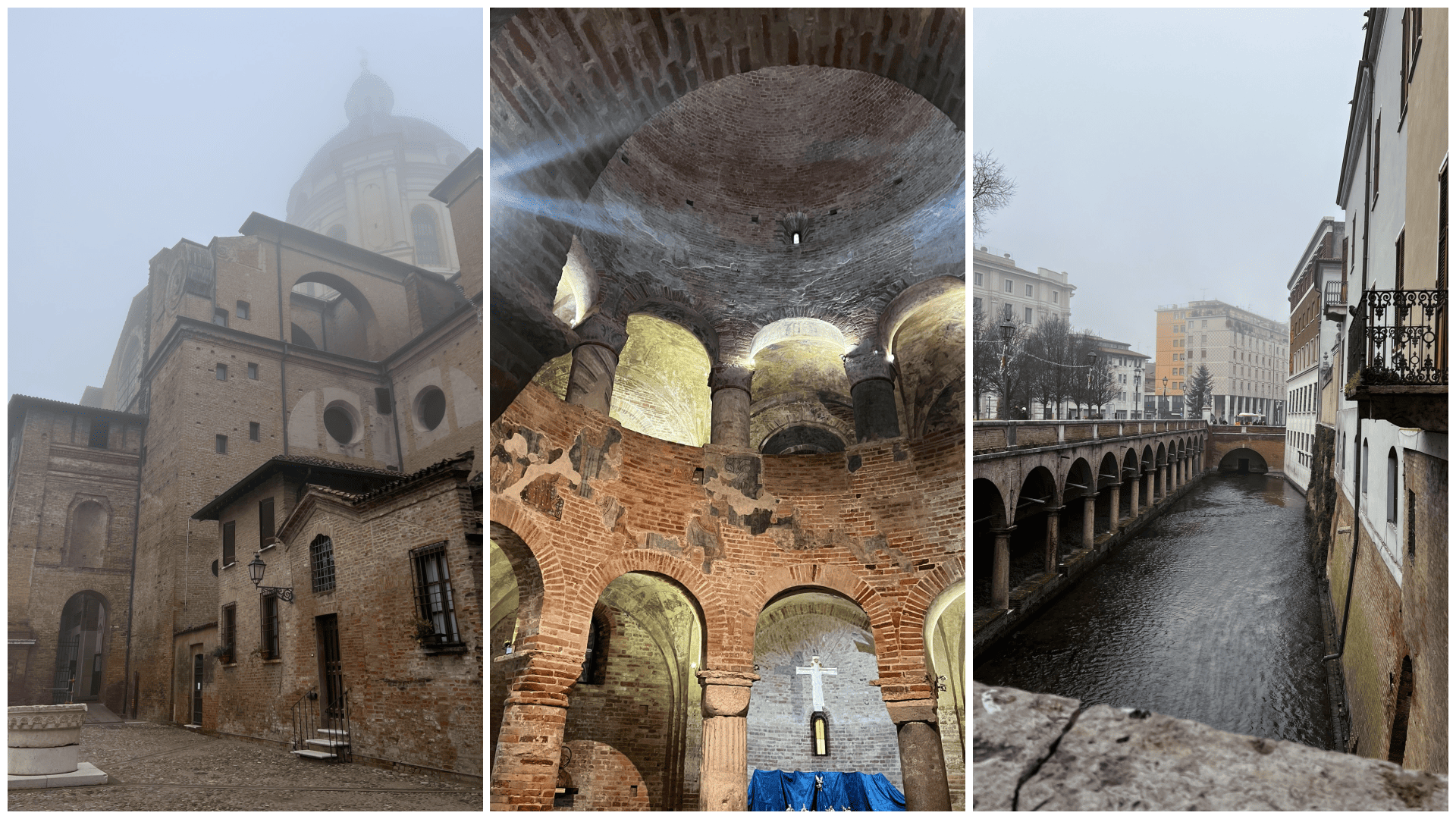
“Basilica of Saint Andrew”

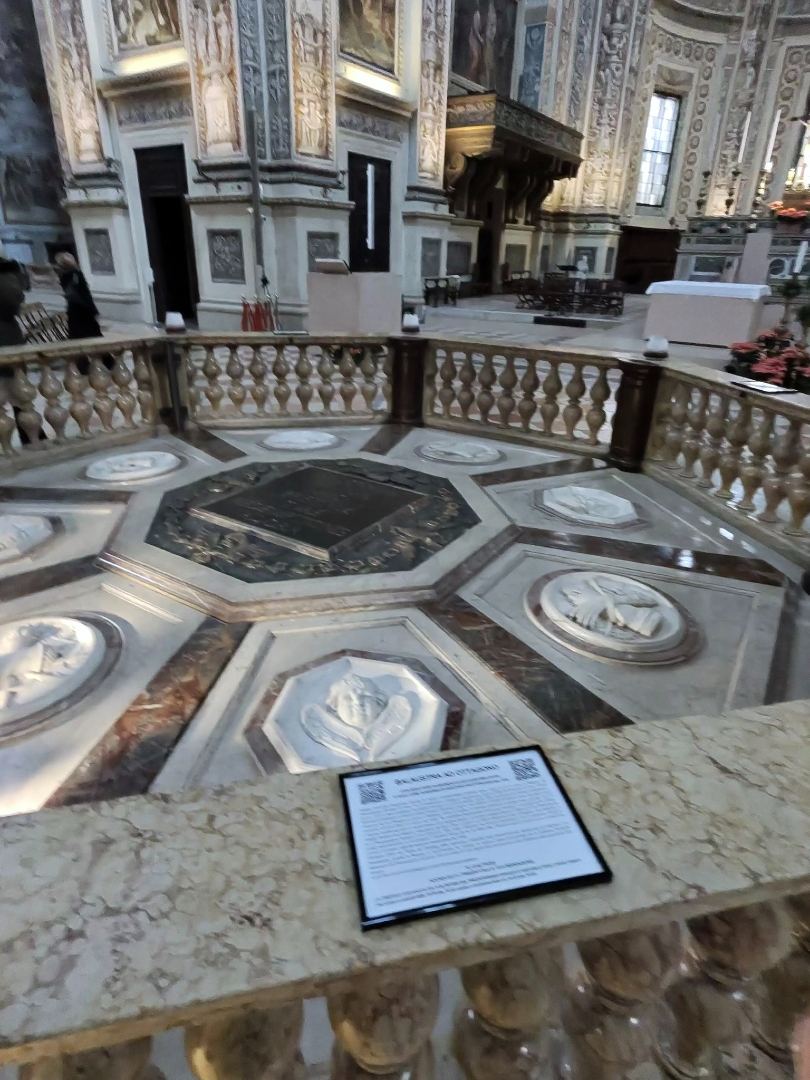
“The Octagon of Saint Andrew”

Getting Around

Mantua is a motorhome-friendly city: compact, pedestrianized, and with excellent infrastructure for getting around without a car.

On foot: the historic center is very compact and easy to explore on foot. From the Sparafucile area, by crossing the San Giorgio bridge and the pedestrian-cycle eco-tunnel, you can reach the Ducal Palace in a pleasant 10-15 minute walk, with views of the city skyline reflected in the lakes. Once in the center, Piazza Sordello, Piazza delle Erbe, the Cathedral, and the shopping streets are all within walking distance of each other.

By bicycle: Mantua is the ideal city for cycling. There are over 400 km of cycle paths in the Mantuan territory, and many run alongside the three lakes offering splendid views. From the Sparafucile area, the cycle path takes you to the center in 5-10 minutes. From Grazie di Curtatone, the cycle path covers about 10 km through the Mincio Park: a flat route immersed in nature, perfect for families as well. Many motorhome travelers bring their bikes specifically to enjoy these itineraries.

Free shuttle: from the Sparafucile area, you can reach the nearby Campo Canoa Parking lot on foot (via the eco-tunnel), where a free urban shuttle departs, connecting the parking lot with the historic center (Piazza Sordello and Palazzo Te). Runs are frequent: every 12-15 minutes on weekdays, with service active from approximately 7:00 AM to 9:00 PM. Extremely convenient if you are traveling with children or luggage.

Urban bus: from Grazie di Curtatone, there are urban bus connections that lead to the center of Mantua. The stop is near the motorhome area, and tickets can be purchased from the area managers. The journey takes about 15-20 minutes.

Points of Interest (PoI)

1
Ducal Palace and St. George's Castle The Ducal Palace of Mantua is one of the largest architectural complexes in Europe: over 500 rooms, courtyards, gardens, and galleries that tell four centuries of the Gonzaga family's history. Here, the ruling family lived, governed, and collected extraordinary works of art, calling the finest Renaissance artists to their court: Mantegna, Pisanello, Tintoretto, and Titian. The main entrance is located in Piazza Sordello, the monumental heart of the city. The palace is a fascinating labyrinth of noble apartments, frescoed halls, and art collections. Do not miss the Hall of the Archers (Sala degli Arcieri), the Apartments of Isabella d'Este, and the rooms decorated by Giulio Romano. However, the true jewel of the complex is found in St. George's Castle, connected to the Ducal Palace: the Camera degli Sposi (Bridal Chamber), painted by Andrea Mantegna between 1465 and 1474. It is one of the most extraordinary works of the Italian Renaissance. Mantegna transformed the walls and ceiling into an illusionistic theater: family portraits, court scenes, ideal landscapes, and the famous "oculus" on the ceiling, where cherubs and figures look down from above in a brilliant game of perspective. Access to the Camera degli Sposi is restricted and requires a fee (a separate ticket from the rest of the Palace), so it is advisable to book in advance, especially on weekends. Practical tips: allow at least 2-3 hours to visit the Ducal Palace at a relaxed pace. If you are short on time, focus on the Camera degli Sposi and the Apartments of Isabella d'Este. The Mantua Card (€20, valid for 72 hours) includes admission to the Ducal Palace, Palazzo Te, and other city museums: an excellent investment if you plan to visit multiple sites.
2
Palazzo Te Just a few steps from the center, Palazzo Te is the Mannerist masterpiece of Giulio Romano, Raphael's favorite pupil. Built between 1524 and 1534 at the behest of Federico II Gonzaga, the palace was not an official residence, but a "villa of delights": a refuge where the duke retired to escape court obligations, dedicate himself to leisure, and receive Isabella Boschetti, his mistress. Architecturally, Palazzo Te is a triumph of the Mannerist style: facades with games of broken symmetries, Doric pilasters, blind windows, and a sense of surprise and theatricality. But the true wonder lies inside, in the frescoes that Giulio Romano and his workshop created in every room. The Hall of Cupid and Psyche (Sala di Amore e Psiche) tells the mythological legend of the nymph and the god of love with sensuality and irony: walls and ceiling are a riot of erotic scenes, divine banquets, and alchemical symbols. It is a declaration of love in a Renaissance key: sophisticated, cultured, and joyful. But it is the Hall of the Giants (Sala dei Giganti) that will leave you breathless. Here, Giulio Romano created a 360-degree fresco that completely envelops the viewer: it represents the struggle between Zeus and the Giants, with the latter being crushed by the collapse of Mount Olympus. The painted architecture crumbles above you, bodies writhe, and cosmic chaos surrounds you. It is an immersive and overwhelming experience, one of the most innovative works of the sixteenth century. Practical tips: visit Palazzo Te early in the morning or in the late afternoon to avoid school groups. Allow at least 1.5–2 hours. The palace also houses the Civic Museum of Mantua and temporary exhibitions. It is reachable on foot from the center in 15 minutes, or by using the free shuttle.
3
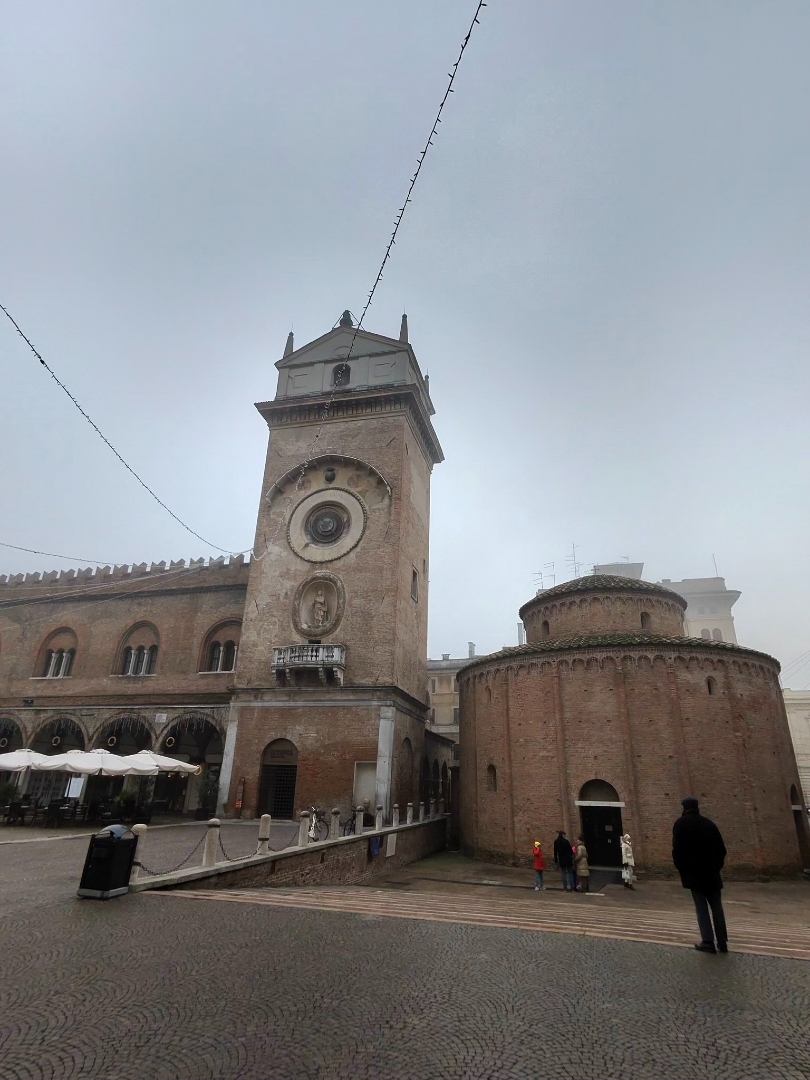
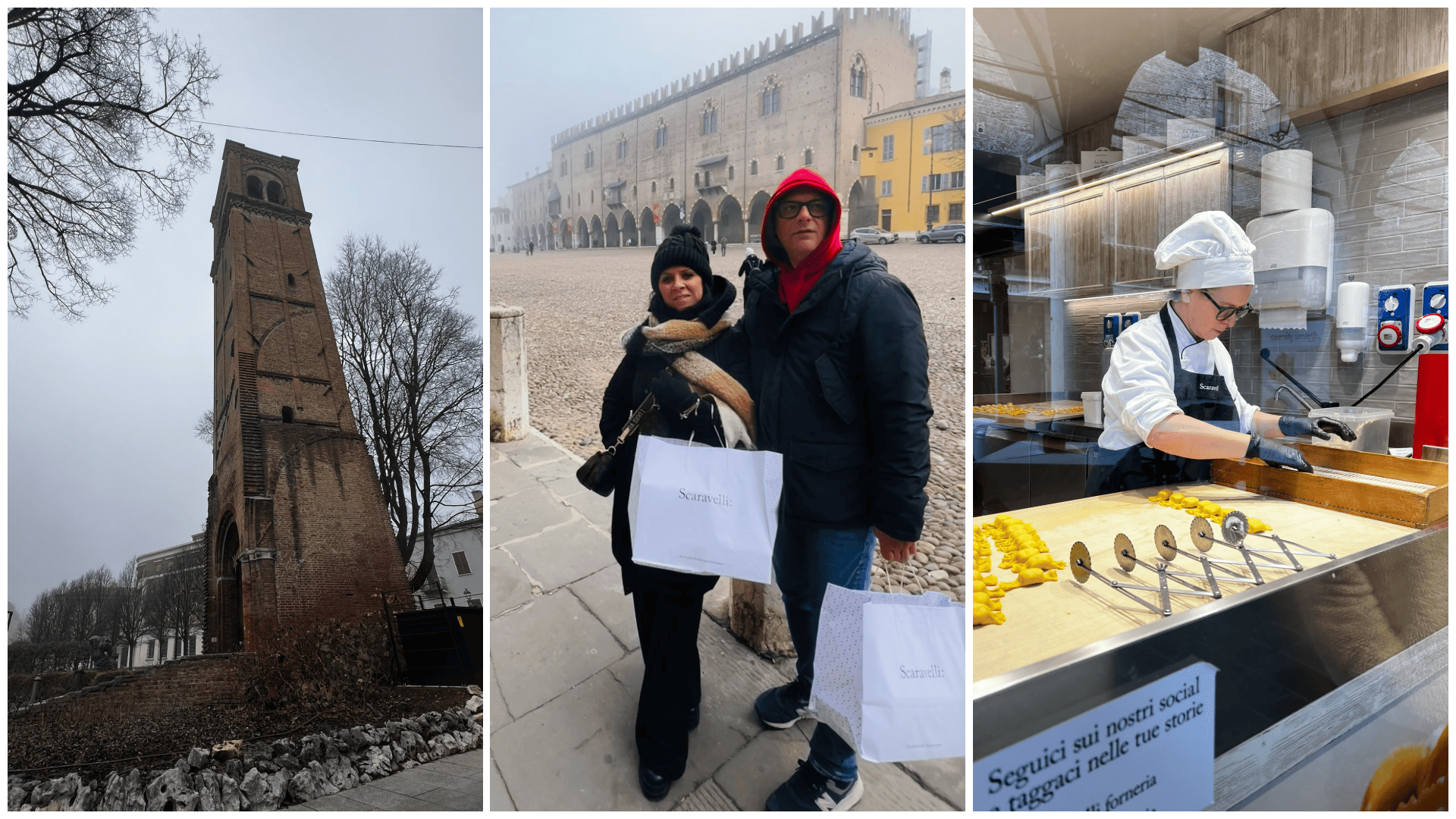
Piazza Sordello and Piazza delle Erbe Mantova tells its story through its squares, and the two most important are Piazza Sordello and Piazza Erbe, the beating heart of the city. Piazza Sordello is the largest and most solemn square in Mantua, dedicated to the troubadour poet Sordello da Goito. This enormous cobbled square is overlooked by the palaces of power: the Ducal Palace with its imposing Palazzo del Capitano, the Mantua Cathedral (Cathedral of St. Peter), the Bishop's Palace, Palazzo Bonacolsi (now Castiglioni), and the Cage Tower (Torre della Gabbia). The atmosphere is majestic and silent: it was here that the Gonzaga family exercised their political and religious power. It is worth stopping in front of the bronze statue of Rigoletto, the court jester and protagonist of Verdi's opera set right here in Mantua. The Cathedral of Mantua (Duomo) is well worth a visit: the facade is late Baroque, but different styles coexist inside. The Romanesque bell tower soars on the side, while the central nave features a magnificent coffered ceiling. Members of the Gonzaga family are buried in the underground crypts. Just a few steps away lies Piazza Erbe, the center of daily life in Mantua. More intimate and lively, it is surrounded by porticos, cafes, and historic shops. Three must-see buildings overlook this square: the Palazzo della Ragione, with its crenelated facade; the Clock Tower (Torre dell'Orologio, 1493) featuring the astronomical clock designed by Bartolomeo Manfredi; and the Rotonda di San Lorenzo, the oldest church in Mantua (1082), built in the image of the Holy Sepulcher in Jerusalem. Practical tips: climb the Clock Tower (admission included in the Mantua Card) for a bird's-eye view of the historic center. You can also visit the interior of the Rotonda di San Lorenzo, which is small but fascinating. Piazza Erbe is perfect for a coffee break or an aperitivo under the porticos.
4
The Three Lakes and the Lotus Flowers Mantua is a city of water: three artificial lakes, created in the 12th century by regulating the course of the Mincio River, surround the historic center, offering unique views and a distinctive microclimate. These are Lake Superiore (to the north), Lake di Mezzo, and Lake Inferiore (to the south). This feature makes Mantua a unique gem in the Po Valley: an island-city immersed in nature. The most spectacular time to visit Mantua? Between July and August, when thousands of lotus flowers bloom on Lake Superiore. It is an extraordinary sight: the lake is tinted with pink and green, with enormous flowers emerging from the water to create an almost oriental landscape. While the bloom is visible from the road, the best way to enjoy it is a boat trip with the "Barcaioli del Mincio," who depart from the pier at Grazie di Curtatone and navigate through the Mincio Valleys and the lotus flowers. Another unmissable panoramic spot is the San Giorgio Bridge, which crosses Lake di Mezzo, connecting the historic center with the Sparafucile area. From here, the Mantua skyline is reflected in the calm waters of the Mincio: you will see towers, bell towers, domes, and palaces mirrored in the water, creating a postcard-perfect image. It is one of the most photographed spots in Mantua, especially at sunset. Practical tips: boat excursions on the lakes last about 1-2 hours and depart from Grazie di Curtatone. Those staying at the Grazie motorhome area can request a 10% discount at the pier. Bring a camera (or your smartphone): the views are breathtaking. The cycle path along the lakes is perfect for a walk or a bike ride: flat, shaded, and immersed in the greenery of the Mincio Park.
5
Bibiena Theater The Bibiena Theater (also known as the Scientific Theater) is one of Mantua's hidden gems, a small masterpiece of Rococo theatrical architecture. It was designed by the architect Antonio Galli Bibiena and inaugurated in 1769. The plan is bell-shaped, with boxes arranged on four tiers that create perfect acoustics and an intimate, refined atmosphere. The decorations are sumptuous: gilded stuccos, Corinthian columns, frescoes on the vaults, and elegant balustrades. Every detail is designed to create a precious and theatrical environment, worthy of the Gonzaga court, even though it was built at the end of their era. A famous anecdote: in January 1770, a very young Wolfgang Amadeus Mozart, just fourteen years old, performed here during his first Italian tour. The child prodigy was fascinated by the theater, and this concert is still remembered today as one of the most prestigious moments in the history of the Bibiena. Today, the theater no longer hosts regular theatrical performances (it is too delicate), but it is used for chamber music concerts, cultural events, and guided tours. The visit is brief but evocative: it is well worth it to immerse yourself in an atmosphere of other times. Practical tips: the visit lasts about 20-30 minutes. Admission is included in the Mantua Card. The theater is located in Via Accademia, just a few steps from Piazza Sordello. Check the Mantua Card website for opening hours, which vary seasonally.

Seasonal Events

Festivaletteratura

When: September

Where: Mantua

What: it is Mantua's most important cultural event, an international festival dedicated to literature held every year in September. For five days, the city transforms into a large literary lounge: squares, courtyards, cloisters, and historic palaces host meetings with writers, readings, performances, and debates. The atmosphere is magical, with thousands of readers moving from one appointment to another, creating a unique energy. Even if you are not a die-hard book lover, it is worth visiting Mantua during Festivaletteratura: the city is extremely lively, the venues are full, and the air is filled with culture and sharing.

Ancient Fair of the Grazie and Madonnari Competition

When: August 15th

Where: hamlet of Grazie di Curtatone

What: in mid-August, one of the oldest fairs in Italy takes place. The highlight is the national competition of the Madonnari, street artists who paint with colored chalk on the churchyard of the Sanctuary of the Grazie, reproducing sacred images, faces, landscapes, and works of art with incredible skill. It is an evocative and popular spectacle that attracts thousands of visitors. During the Fair, the Grazie motorhome area remains closed to host the market stalls, so plan your visit accordingly: you can stay at the Sparafucile area and reach Grazie by bicycle along the cycle path.

Lotus Flower Bloom

When: July and August

Where: Lake Superiore

What: although it is not an "organized" event, the lotus flower bloom on Lake Superiore is an unmissable natural occurrence. Between July and August, the lake is tinted with pink and green, offering a unique spectacle. Many motorhome travelers plan their trip to Mantua specifically during this period to enjoy this extraordinary phenomenon. Boat excursions through the lotus flowers depart from the pier at Grazie di Curtatone and are in high demand: it is best to book in advance.

Typical Dishes and Local Products

If there is one dish that represents the soul of Mantua, it is pumpkin tortelli: bundles of egg pasta filled with a sweet-and-sour mixture of pumpkin, amaretti cookies, mostarda, and Grana Padano cheese. It is a Renaissance recipe born at the Gonzaga court, when family chefs prepared dishes that combined sweet and savory according to the taste of the era. Pumpkin tortelli were served at noble banquets, and even today, tradition dictates they be eaten on Christmas Eve.

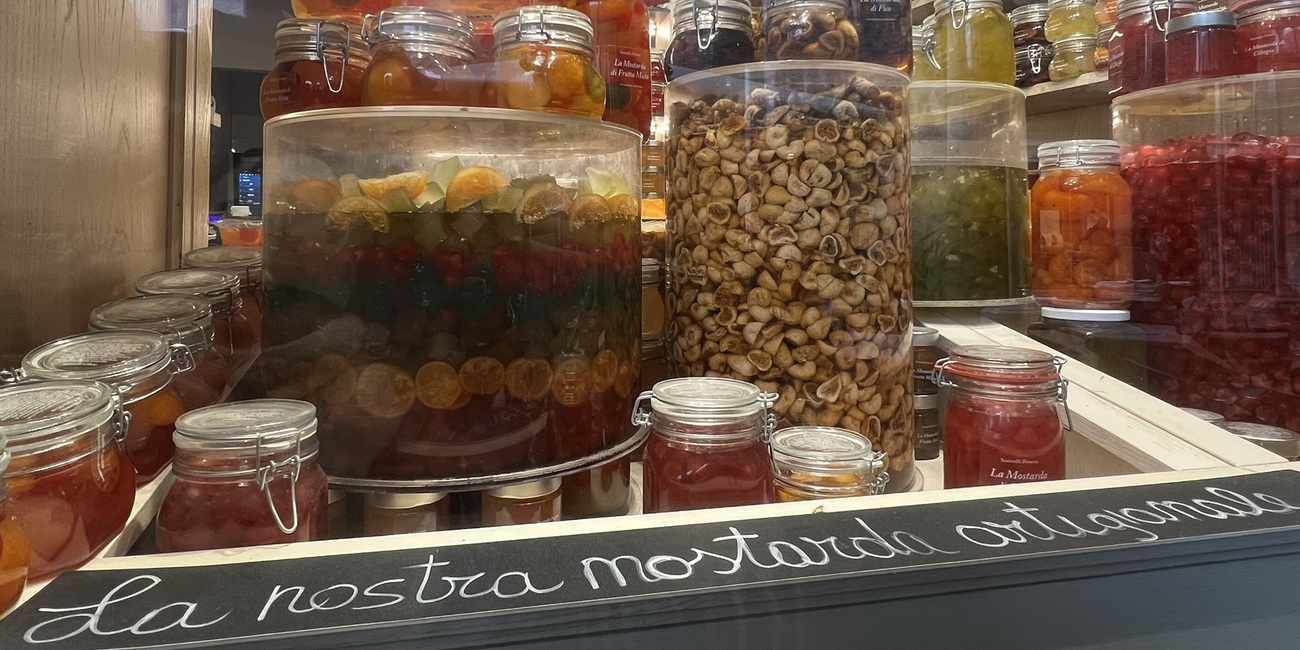
The secret lies in the filling: the Mantuan pumpkin (or alternatively the delica variety) is oven-baked until soft, then mashed and mixed with crumbled amaretti, Mantuan apple or pear mostarda, grated Grana Padano, nutmeg, and a pinch of salt. The result is a perfect balance between the sweetness of the pumpkin, the spicy aroma of the amaretti, the heat of the mostarda, and the richness of the cheese. A complex, sophisticated, and unique flavor.

The pasta sheet is thin, hand-rolled with eggs and flour, and cut into squares that are folded into triangles or half-moons and carefully sealed. The cooking time is very fast: 1-2 minutes in boiling salted water. The traditional dressing? Melted butter with sage and a generous dusting of Grana Padano. Simple, elegant, and regal.

Recipe for Mantuan Pumpkin Tortelli (serves 6)

Ingredients for the filling:

  • 1 kg of Mantuan pumpkin (or delica)
  • 160 g of dry amaretti cookies
  • 160 g of Mantuan mostarda (apple or pear)
  • 180 g of grated Grana Padano
  • Nutmeg to taste
  • Salt to taste

Ingredients for the pasta:

  • 600 g of all-purpose flour
  • 6 eggs
  • 1 pinch of salt

For the dressing:

  • 80 g of butter
  • Fresh sage leaves
  • Grated Grana Padano for garnish

Preparation:

  1. Cut the pumpkin into thick slices, remove the seeds, and bake in the oven at 180°C for about 1 hour, covered with aluminum foil, until the flesh is soft. Let it cool slightly, then remove the skin and mash the flesh with a potato masher or a fork.
  2. In a bowl, mix the pumpkin puree with the finely crumbled amaretti, chopped mostarda, grated Grana Padano, a grating of nutmeg, and a pinch of salt. Blend the mixture well until you have a smooth and compact filling. Let it rest in the refrigerator for at least 1 hour (or better, overnight).
  3. Prepare the pasta: arrange the flour in a mound on a work surface, crack the eggs into the center, and add a pinch of salt. Knead until you obtain a smooth and elastic dough. Wrap the dough in plastic wrap and let it rest for 30 minutes at room temperature.
  4. Roll out the pasta very thin with a rolling pin or a pasta machine. Cut the sheet into squares about 6-7 cm on each side. Place a teaspoon of filling in the center of each square, fold the square into a triangle (or half-moon), and seal the edges well by pressing with your fingers. Continue until all the dough and filling are used.
  5. Bring a pot of salted water to a boil. Meanwhile, melt the butter in a large pan with a few sage leaves. Cook the tortelli in the boiling water for 1-2 minutes, drain them gently with a slotted spoon, and transfer them directly into the pan with the melted butter. Sauté for a few seconds, then plate and finish with a dusting of grated Grana Padano.

Where to taste them: pumpkin tortelli can be found in almost every restaurant and trattoria in Mantua. Some historic spots: Osteria dell’Oca, Trattoria Cento Rampini, Aquila Nigra. If you visit in autumn or winter, it is almost impossible not to find them on the daily menus.

Enjoy your meal, and have a wonderful trip to Mantua!

Useful Tips

How much time to dedicate: Mantua can be visited in a long weekend (2-3 days). A full day is sufficient for the historic center (Ducal Palace, Piazza Sordello, Piazza Erbe, Palazzo Te), but if you want to visit the museums at a relaxed pace, take a boat excursion on the lakes, and enjoy the atmosphere without rushing, it is better to plan for at least two nights. If you are visiting Mantua during Festivaletteratura or want to explore the surroundings (Sabbioneta, a UNESCO village 30 km away, or Castellaro Lagusello, one of Italy’s most beautiful villages), add another day.

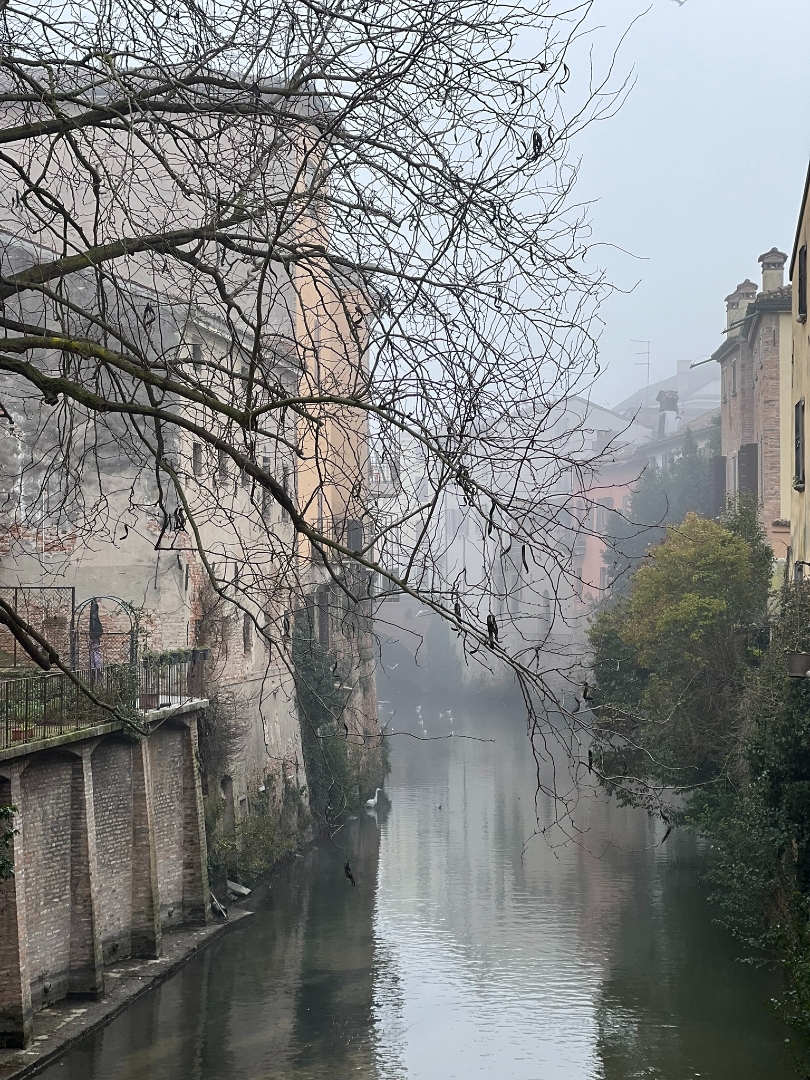
Best time to visit: Mantua is beautiful all year round, but each season has its charm. Spring (April-May) and autumn (September-October) are perfect for mild weather and evocative colors. Summer (July-August) can be hot and humid, but it is the period of the lotus flower bloom on the lake: a sight not to be missed. Winter is colder and foggier, but Mantua takes on a romantic and melancholic atmosphere, perfect for visiting palaces and museums and enjoying pumpkin tortelli in the city center restaurants.

Mantua Card: if you plan to visit multiple museums and monuments, the Mantua Sabbioneta Card is an excellent investment. It costs €20 (valid for 72 hours) and includes admission to the Ducal Palace (excluding the Camera degli Sposi, which requires a supplementary ticket), Palazzo Te, the Museum of Palazzo San Sebastiano, the Clock Tower, the Bibiena Theater, the museums of Sabbioneta, and other minor sites. It can be purchased directly at the ticket office of the Ducal Palace or the main museums.

What to bring: bicycles (the cycle paths are wonderful and allow you to enjoy the lakes in a unique way), comfortable shoes for walking on the cobbled historic center, and a camera or smartphone for the views of the lakes and the city skyline. If visiting in summer, bring mosquito repellent (areas near the lakes can be prone to insects). In winter, wear heavy clothing: Mantua can be cold and foggy.

Watch out for the ZTL: the historic center of Mantua has extensive Limited Traffic Zones (ZTL) active during the day (generally 7:00 AM–7:00 PM). Do not enter with your motorhome without checking times and permits to avoid fines. The recommended parking areas (Sparafucile and Grazie) are outside the ZTL and well-connected to the center via shuttles, cycle paths, and pedestrian routes.

Unmissable experiences: a boat trip on the lakes with the “Barcaioli del Mincio” (especially during the lotus bloom), a visit to Mantegna’s Camera degli Sposi (booking recommended), a walk on the San Giorgio Bridge at sunset to photograph the skyline reflected in the water, an aperitivo in Piazza Erbe under the historic porticos, and of course, tasting pumpkin tortelli in a typical trattoria.

Have a great trip to Mantua!

0

post a comment