Amarone: When Mistake Becomes Excellence
Valpolicella has always been, for two millennia, the land of Recioto—a sweet, velvety wine, produced from dried grapes according to a Roman technique dating back to Cassiodorus in the 4th century, who requested “winter must, the cold blood of grapes” at his table. Recioto was the Easter wine, the sweet wine for celebration.
But around 1936, in the Cantina Sociale Valpolicella (Valpolicella Cooperative Winery), the cellar master Adelino Lucchese forgot a barrel of Recioto that was fermenting. When he found it months later, he discovered that the yeasts had done their relentless work: they had transformed all the sugar into alcohol, creating a dry, structured, slightly bitter (precisely), and impossibly complex wine. Drawing from it, Lucchese exclaimed: “This isn’t an amaro (bitter), it’s an amarone (big bitter).”
Thus, one of Italy’s most important wines was born by chance.
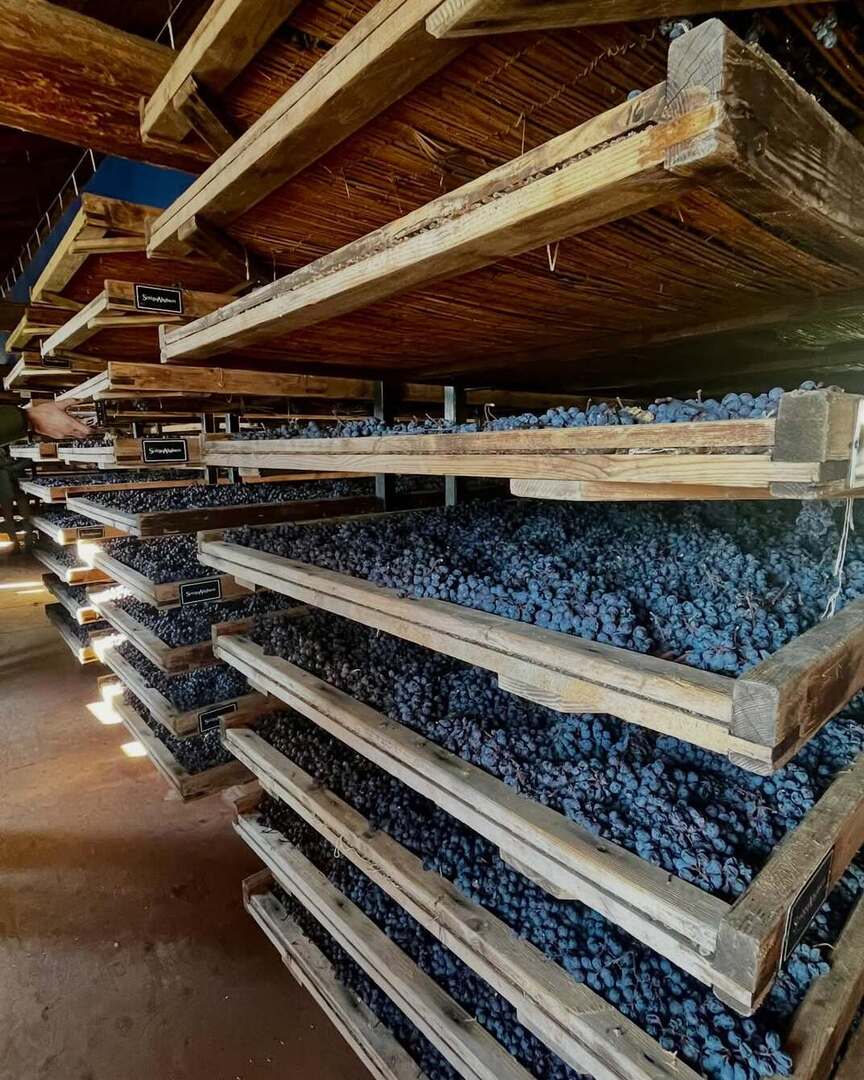
What makes Amarone profoundly different from any other great red wine in the world is its anatomy: it is not a concentration of freshness like a Barolo, nor is it a fierce challenge like a Bordeaux. It is the result of a voluntary reduction—the grapes lose 40% of their weight during the 3–4 month appassimento (drying process) on bamboo racks in the fruttai (drying lofts)—followed by a prolonged fermentation that lasts up to 30 days, double that of common wines. The result is a wine that contains twice the sugar and twice the tannins of a fresh wine, but which, unlike Recioto, has seen all that sugar transformed into robust alcohol.
It is a living oxymoron: a sweet wine (passito) that is not sweet, a challenge to oenological logic, a wine that exists because someone forgot the right barrel at the wrong time.
The Masi Visit: What to Expect
Guided Tour Structure
The “Masi Wine Experience” is a structured itinerary in three movements:
1. The Serego Alighieri Estate and Vineyards (30–45 minutes)
It begins at the Serego Alighieri Estate, a historic property that Masi manages in collaboration with the Counts Serego Alighieri—direct descendants of the poet Dante Alighieri since 1353 (this is not a historical joke: the Serego Alighieri are among the oldest landowners in Italy). Here you walk in the vineyards, observing the Veronese pergolas, the training systems, and the geological arrangement of the soil. If you visit in summer, you will see the bunches of grapes forming; if you visit in autumn, you will see the harvest in progress (a spectacle).
2. The Drying Loft (Fruttaio) for Appassimento (15–20 minutes)
This is the visceral heart of the visit. You enter cool, semi-dark rooms, where hundreds of wooden crates contain grapes undergoing appassimento (drying). The guide will show you the anatomy of a crate, how the grapes are laid out in a single layer, and how the bamboo structure allows air circulation. If you visit from October to January, you will see the process in real time—fresh grapes in the early months that gradually shrivel, concentrating themselves. The light filtering through the fruttaio’s windows illuminates the berries as if they were precious stones.
3. The Underground Ageing Cellars (30–45 minutes)
You descend into the belly of the cellar. It is an architectural spectacle: a labyrinth of corridors and halls with imposing vaults, along which rows of oak barrels follow one another. Some have been there for decades. The underground temperature remains constant at around 12–13°C (53–55°F) all year round—a natural climate control that the Romans knew well and that Masi exploits. Along the route, you will find contemporary works of art, architectural installations that interpret the theme of the vine and wine: it is not a sterile museum-cellar, but a space where art, history, and wine dialogue.
Here you will also see the Masi Wine Discovery Museum, a section dedicated to the history of Amarone, the appassimento technique through the centuries, with archaeological finds and historical documents.
The Tasting
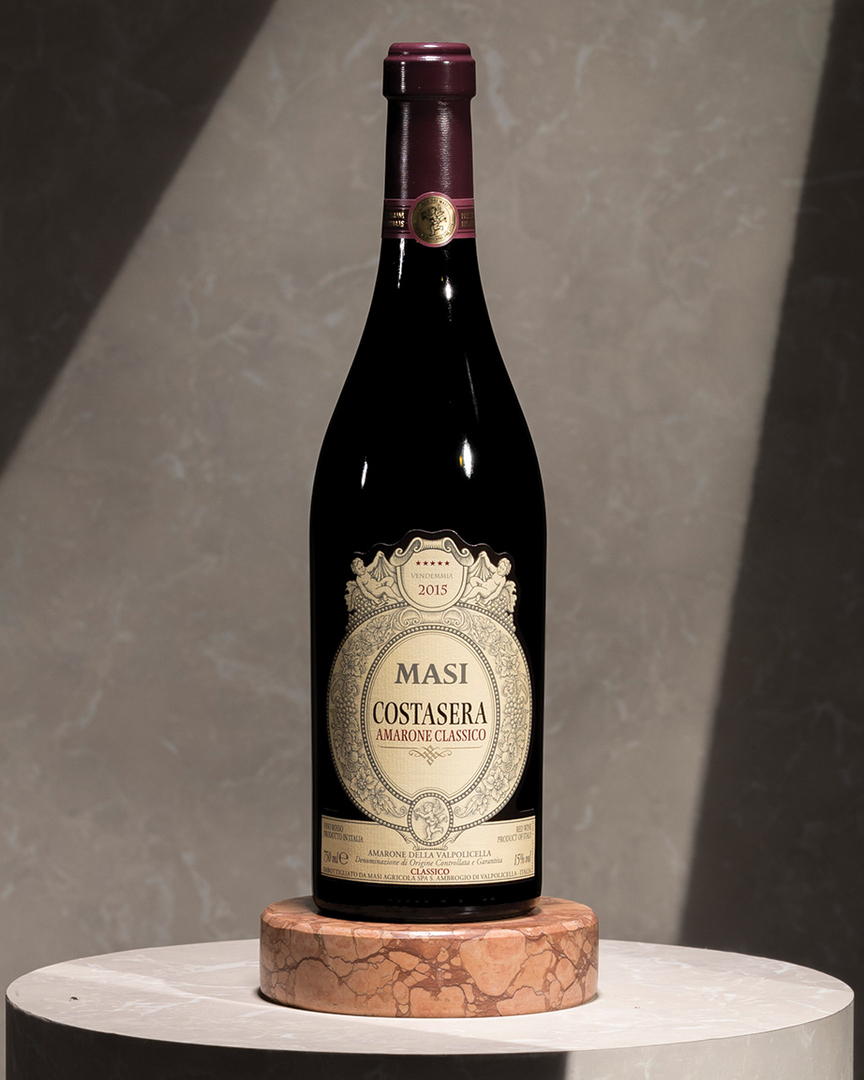
After the visit, you go back up to the ground floor at the Serego Alighieri Sales Point (Rivendita). Here the staff—knowledgeable and prepared, expert tasters—will guide you through a structured tasting. The tastings are varied: you can opt for the classic tasting of 4 wines (Valpolicella Superiore MontePiazzo, Rosso Verona Brolo Campofiorin, Amarone Riserva di Costasera, Recioto Casal dei Ronchi), or for more in-depth thematic tastings. Upon request, you can add a selection of local cheeses—Grana Padano, Taleggio, cheeses that resonate with the aromas of the wine.
During the tasting, the sommelier will guide you through the sensory experience: observing the color with your eye, smelling the aromas (cooked fruit, tobacco, spices, cocoa for a mature Costasera), tasting, trying to isolate the different layers of flavor. It is a school of attention.
The Significance of This Stop
Leaving Masi in the late afternoon, your camper parked as the sun sets behind the Valpolicella hills, you will have touched one of the foundations of Italian oenological civilization. You will have seen with your own eyes how the happy mistake of a distracted man in 1936 became one of the world’s most celebrated excellences. You will have understood that behind every bottle of Amarone are two generations of work: nature drying the grapes during the coldest months, and man guiding that process with patience, observation, and knowledge.
Masi is not just another tourist stop. It is a place where the true history of viticulture can be felt firsthand—through the wood of the fruttai (drying lofts), the bamboo of the racks, the oak barrels that contain liquid time. It is a place where you understand that excellence does not mean the pursuit of the ephemeral, but the conscious repetition of techniques that the Romans already practiced two thousand years ago.
And the wine you return home to drink—whether it’s a Costasera or a simple Valpolicella Classico—will taste different. You will know where it was born, who struggled with the grapes, in which fruttaio it dried, which barrel refined it, and which generation of the Boscaini family supervised it from vine to bottle.
Essential Information
📍 Address: Via Stazione Vecchia 472, Loc. Gargagnago, 37015 Sant’Ambrogio di Valpolicella (VR)
📞 Phone: +39 045 7703622
🌐 Website: https://www.masi.it/
Hours: Monday–Saturday, 10:00 AM–7:00 PM | Sunday Closed
Booking: Mandatory for guided tours with tasting; not required for informal tastings at the counter
Recommended Duration: 2.5–3 hours (including tour + tasting)
Best Period: September–January (harvest and appassimento in progress)
Camper Parking: Available in the front square
Tasting Prices: €20–80 per person depending on the selection
Distance from Verona (Porta Palio Camper Stop Area): 30–35 km | ~45 minutes by camper