
Top

Visit Verona

Verona by camper: the city of love between Roman history and opera melodies

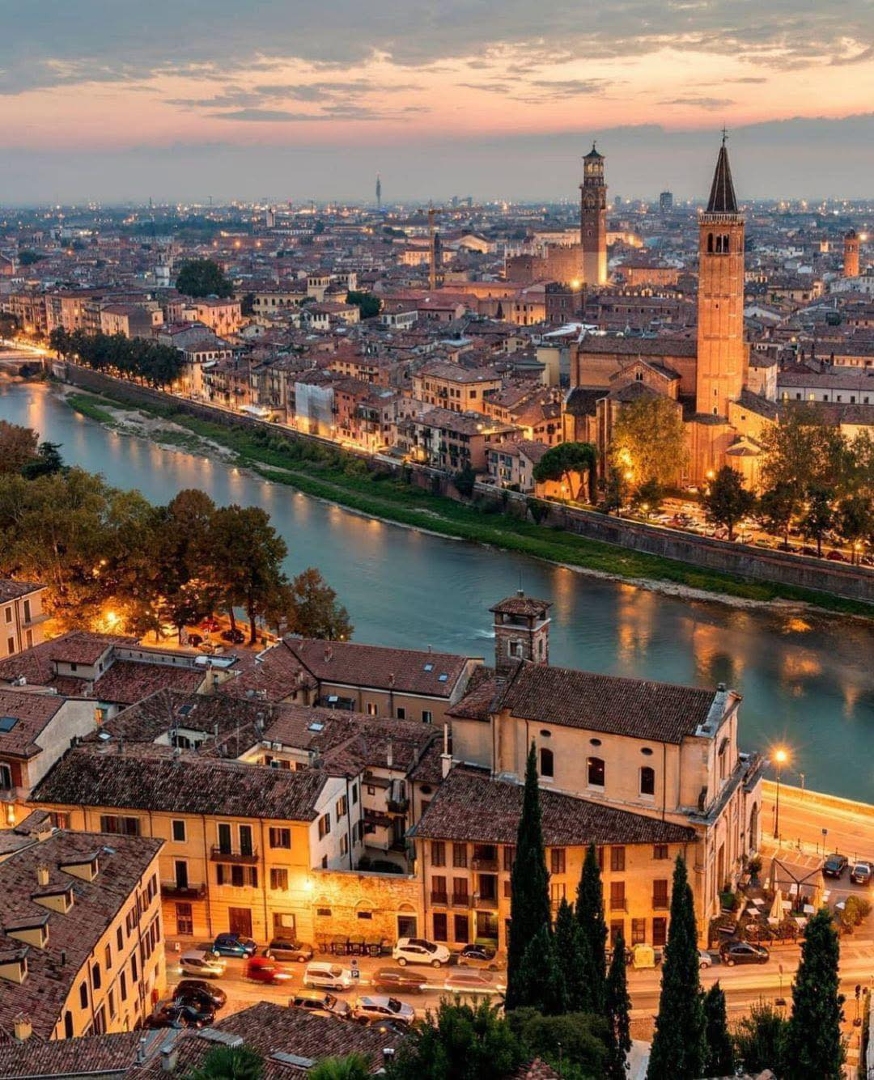
Assolutamente! Ecco la traduzione in inglese delle frasi che hai fornito, senza modifiche al testo non-HTML: Verona is one of those cities that captivates you at first glance. Nestled on the bends of the Adige river, it preserves two thousand years of history among Roman amphitheatres, medieval palaces, and the eternal charm of Romeo and Juliet. A UNESCO World Heritage Site since 2000, the Scaliger city offers travellers in a camper van a complete experience: culture, food and wine, and that magic that only places rich in stories can provide. For a camper van traveller, Verona is a strategic destination: located at the intersection of the Brenner and Serenissima motorways, it represents the ideal starting point for exploring Lake Garda, Valpolicella, and the Soave hills. The historic centre, almost entirely pedestrian, can be comfortably explored on foot in a day, leaving you time for an aperitif on the Liston while admiring the Arena at sunset. Whether you arrive to attend an opera under the summer stars or to get lost among the Christmas markets in Piazza dei Signori, Verona will surprise you with its discreet elegance and the authenticity of its traditions.

Stopovers and overnight stays

In Verona, it is not advisable to enter the city center with a camper van: the streets are often narrow and busy, the historic center is a Restricted Traffic Zone (ZTL), and parking is scarce. The best solution is to leave the vehicle in one of the equipped areas in the outskirts and reach the center on foot, by bike, or by public transport. The ATV urban bus network is efficient and connects the main parking areas with Piazza BrĂ  in a few minutes. Below are three solutions for visiting Verona by leaving your camper van in peace.

Recommended areas

🅿️Porta Palio Camper Stop Area
Via Gianattilio dalla Bona, 37138 Verona

The municipal stop area managed by AMT3 is the most convenient solution for visiting Verona. It has 36 asphalted pitches with automated access via a barrier and ticket. Water loading and wastewater discharge are included in the price. The area is illuminated and under video surveillance, although not guarded. The location is optimal: a pleasant walk along the canal takes you directly to Porta Palio and from there to the historic center. Alternatively, bus line 62 stops right in front of the entrance and reaches Piazza BrĂ  in a few minutes. Caution: during high season periods and events at the Arena, the area fills up quickly, so it’s better to arrive by noon.
Price: €10/24h (max 48 consecutive hours)
Services: water loading, wastewater discharge included. No electricity.
Transport: bus stop line 62, 20 meters from the entrance
Distance from the center: 1.5-2 km (15-20 minutes on foot)

GPS: 45.433852, 10.978266

🅿️Free Parking II Traversa Spianà II Traversa Spianà 45, 37138 Verona For those looking for an economical solution, this free parking lot is located in the immediate vicinity of the Porta Palio area. It is a simple street parking lot without dedicated services for camper vans, but it can be a valid alternative when the equipped area is full. The area is quiet, and the distance from the center is similar to that of the Porta Palio area. Recommended for short, daytime stops; for overnight stays, the equipped area is preferable for safety and comfort reasons. GPS: 45.431992, 10.965998

Camping Verona Village
Via Forte Tomba 44, 37135 Verona

Per chi cerca tutti i comfort di un campeggio, il Verona Village è la scelta ideale. Struttura moderna aperta tutto l’anno, offre piazzole spaziose su erbablock con tutti gli allacciamenti. I servizi sono di ottimo livello: bagni puliti, docce calde incluse, lavanderia e persino un dog wash per chi viaggia con amici a quattro zampe. La fermata dell’autobus è letteralmente davanti all’ingresso e i biglietti si acquistano alla reception. Posizione strategica anche per chi deve raggiungere Veronafiere (3,5 km) per eventi come Vinitaly o Fieracavalli. Animali ammessi.
GPS: 45.392537, 10.993196

Getting Around

On foot
Verona’s historic center is compact and perfect to explore on foot. From Piazza BrĂ , where the Arena is located, all the main attractions are reachable in a few minutes: Juliet’s House is 10 minutes away, Piazza delle Erbe about 10 minutes, and Ponte Pietra less than 20 minutes. A walk along the Adige river up to Castel San Pietro is an unmissable experience, especially at sunset.

Public transport
The urban network is managed by ATV (Azienda Trasporti Verona). The urban ticket costs €1.30 for 90 minutes, purchasable at tobacconists, newsagents, or via the “Ticket Bus Verona” app. For those planning multiple journeys, the urban daily ticket costs €4.00. The main lines connecting the parking areas to the center are the 62 (from Porta Palio) and lines 21, 51, 52 (from the Fiera/Camping area).

Verona Card
For those who want to visit multiple attractions, the Verona Card (€27 for 24h or €32 for 48h) includes free entry to the main museums and monuments, unlimited use of ATV urban buses, and priority entry to the Arena. It activates upon first use.

By bike
Verona has cycle paths that connect the peripheral areas to the center. From the Porta Palio stop area, a cycle path runs along the canal to the center. The “Verona Bike” bike-sharing service offers traditional and electric bicycles (approximately €0.50 every half hour).

Points of Interest (PoI)

1
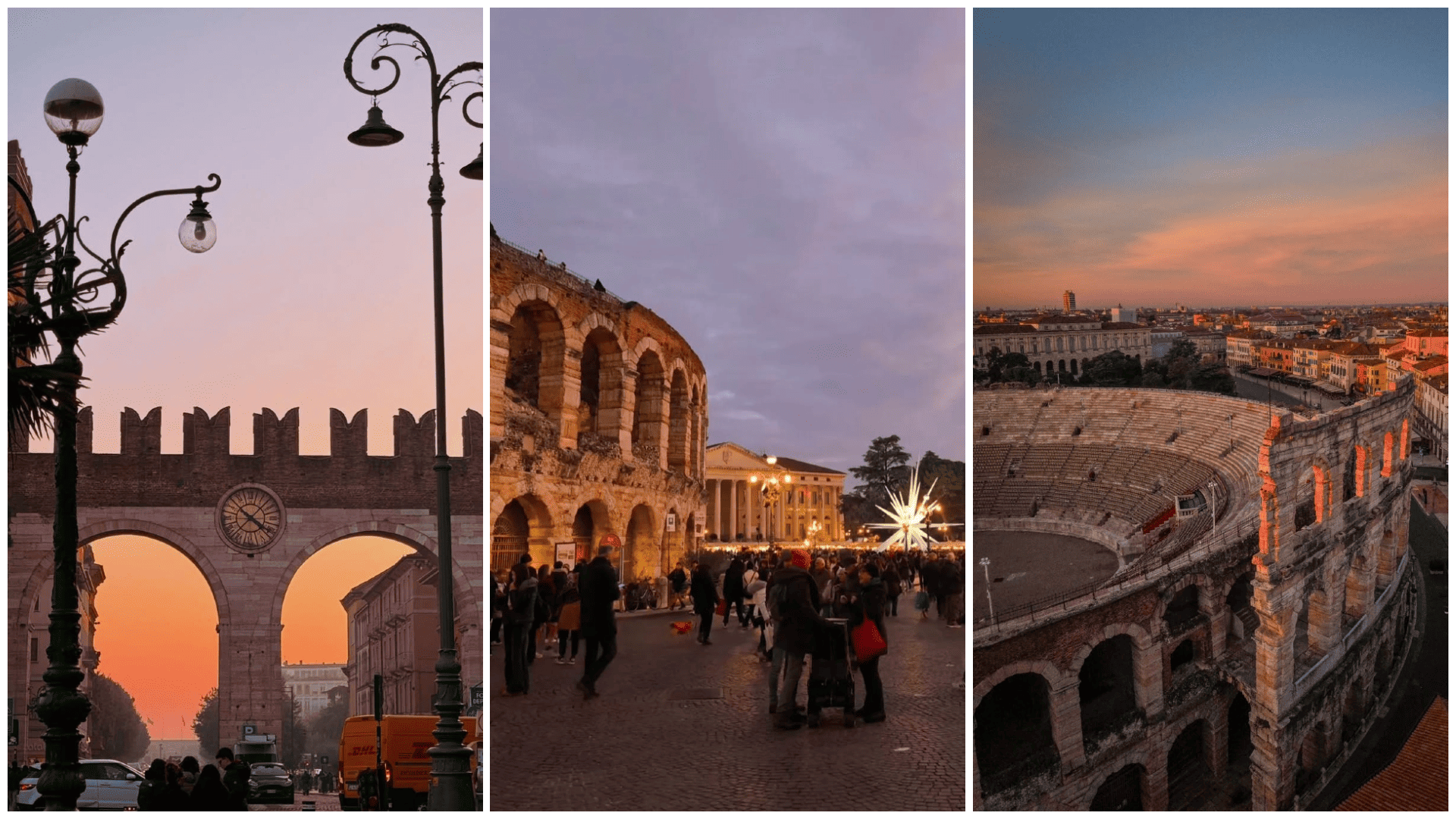
Arena di Verona The Arena di Verona is the third largest Roman amphitheater in Italy after the Colosseum and the Arena of Capua. Built in the 1st century A.D., it could host up to 30,000 spectators for gladiatorial shows and games. Extraordinarily preserved thanks to restorations that began as early as the sixteenth century, today it is the beating heart of Verona's cultural life. In the summer, it hosts the famous Opera Festival (Festival Lirico), one of the most important operatic events in the world, where works like Aida, Carmen, and La Traviata are performed under the stars with monumental stage designs. Visiting the interior allows you to climb the tiers and admire the perfect acoustics that have made this place legendary. From the highest point, the view over Piazza BrĂ  and the rooftops of Verona is priceless.
2
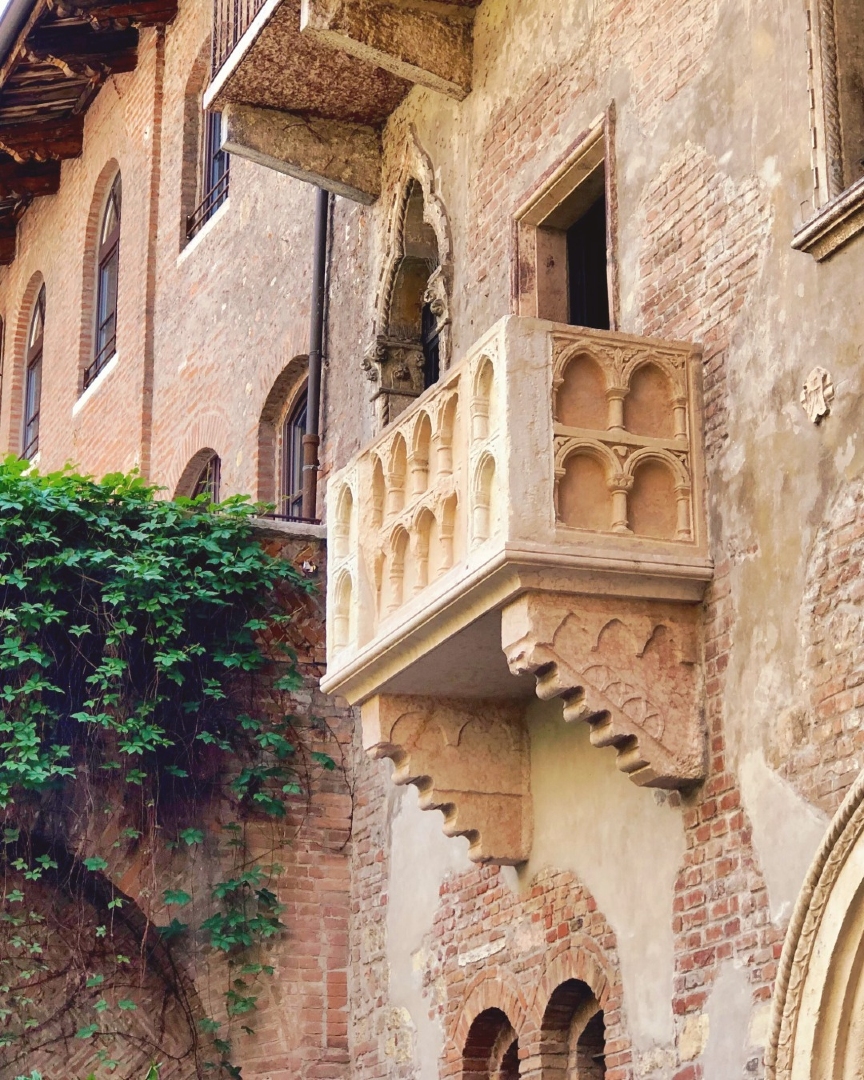
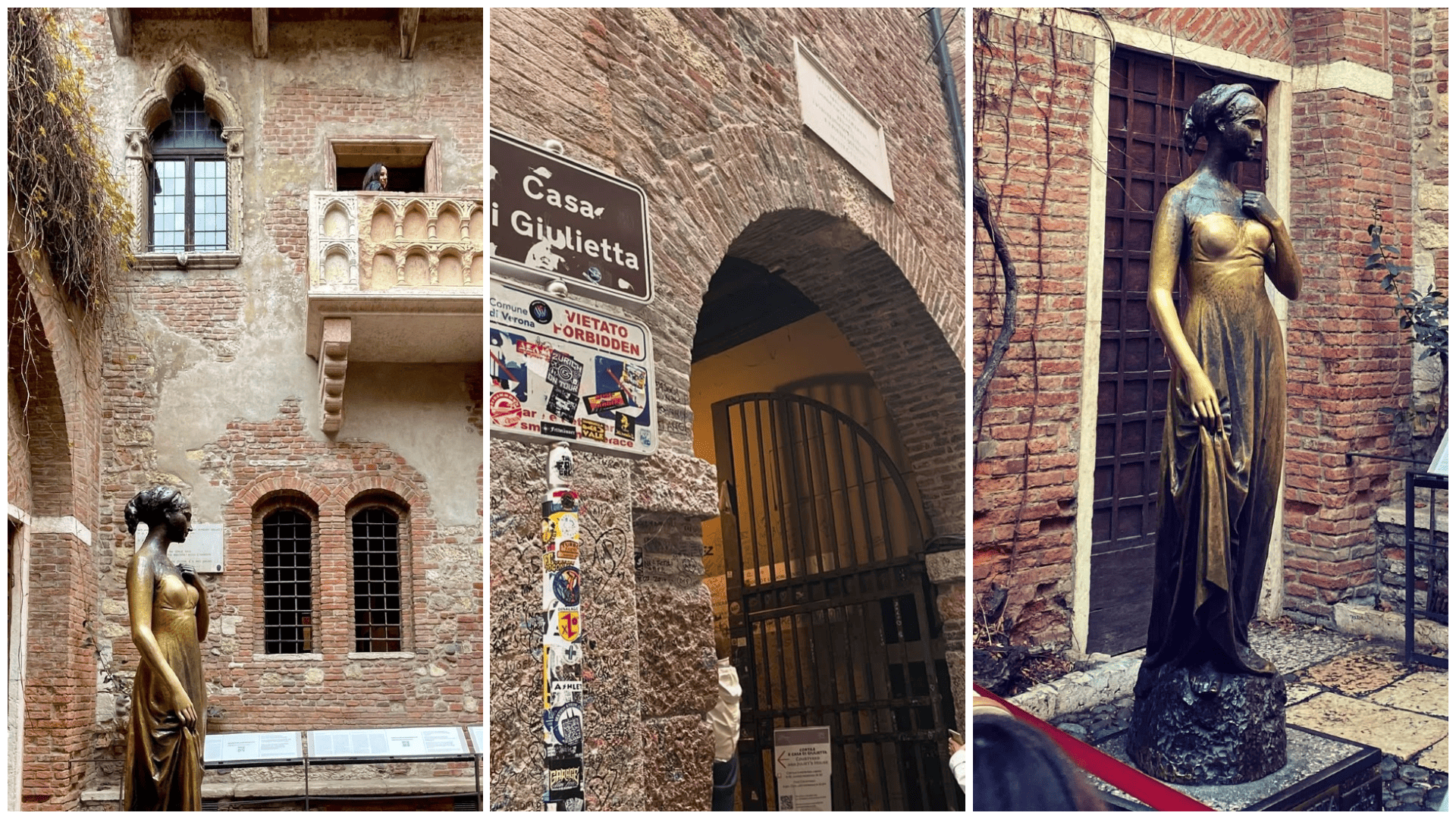
Juliet's House In the heart of the historic center, just a few steps from Piazza delle Erbe, stands the house that tradition attributes to the Capulet family, protagonists of Shakespeare's tragedy. The 13th-century medieval palace, with its brick facade and the famous balcony, has become a pilgrimage site for lovers from all over the world. The bronze statue of Juliet stands in the inner courtyard: legend has it that touching her right breast brings good luck in love. The walls of the entrance passage are covered with notes and padlocks left by visitors. The interior museum displays period costumes and the bed used in Zeffirelli's 1968 film. To go up to the balcony and relive literature's most romantic scene, you must purchase a museum ticket.
3
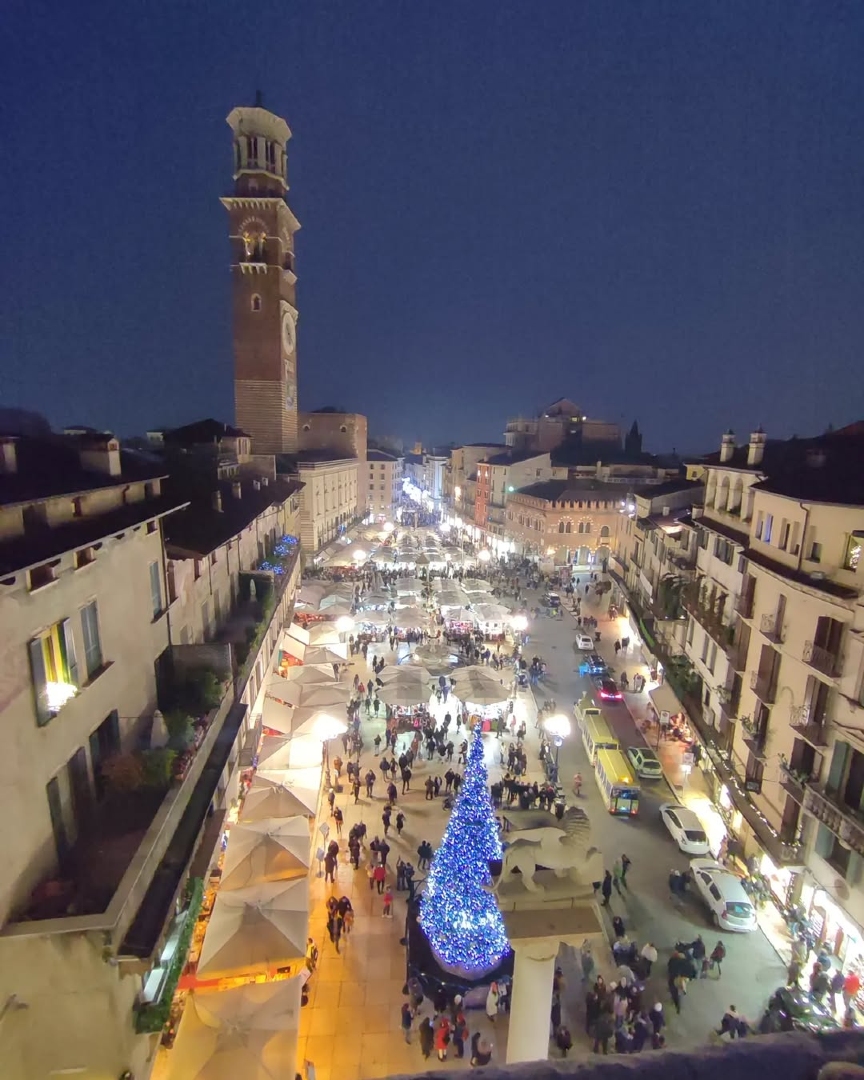
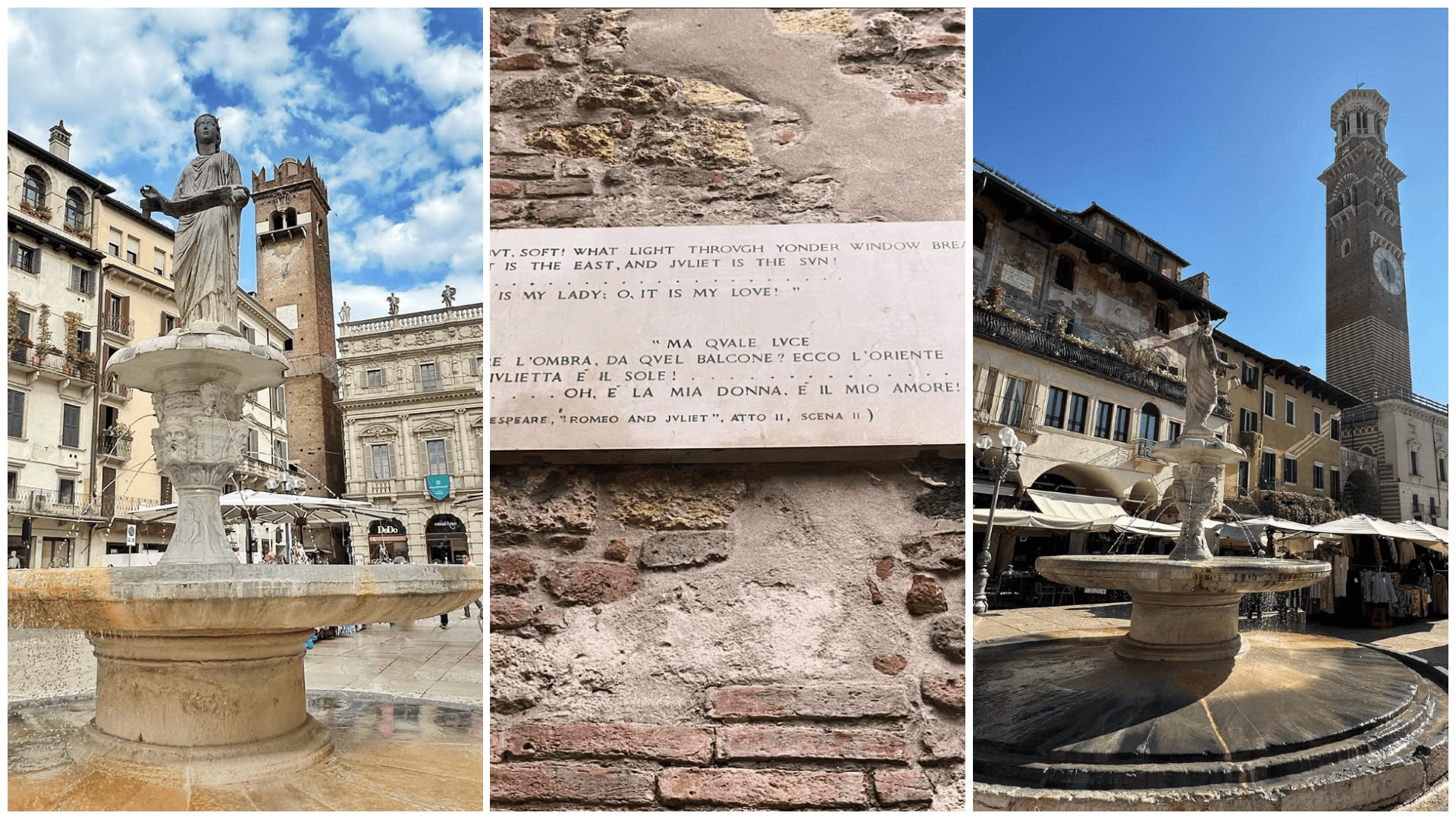
Piazza delle Erbe Piazza delle Erbe is the beating heart of Verona, built on the ancient Roman Forum. Its elongated and irregular shape narrates two thousand years of history through the buildings that surround it: the Palazzo del Comune (Town Hall) with the Lamberti Tower, the Case Mazzanti with their Renaissance frescoes, the Baroque Palazzo Maffei surmounted by statues of deities, and the medieval Casa dei Mercanti (Merchants' House). In the center is the Madonna Verona fountain with the 1st-century Roman statue. Every morning, colorful stalls sell fruit, flowers, souvenirs, and local specialties. Don't miss the Arco della Costa, the passageway that connects to Piazza dei Signori: a whale rib hangs from the vault which, according to legend, will fall on the first truly honest person who walks beneath it. The square is perfect for a stop at the tables of historical cafés, observing the hustle and bustle of Veronese life.
4
Castelvecchio and Ponte Scaligero Castelvecchio is the most imposing military structure of the Scaliger dynasty. Built in the fourteenth century by Cangrande II della Scala as a fortress and residence, the castle is divided into two parts: the armory courtyard and the royal palace. Today it houses the Civic Museum with an extraordinary collection of medieval, Renaissance, and modern art, set up according to the project of the architect Carlo Scarpa, who masterfully created a dialogue between the ancient and the contemporary. But the real jewel is the Scaliger Bridge (Ponte Scaligero): built in red bricks with three arches and Ghibelline battlements, it crosses the Adige river, offering unforgettable photographic views, especially at sunset when the golden light ignites the colors of the stone. The bridge was built as an escape route towards the countryside in case of city revolts. Destroyed by the Germans in 1945, it was faithfully reconstructed by recovering the original stones from the riverbed.
5
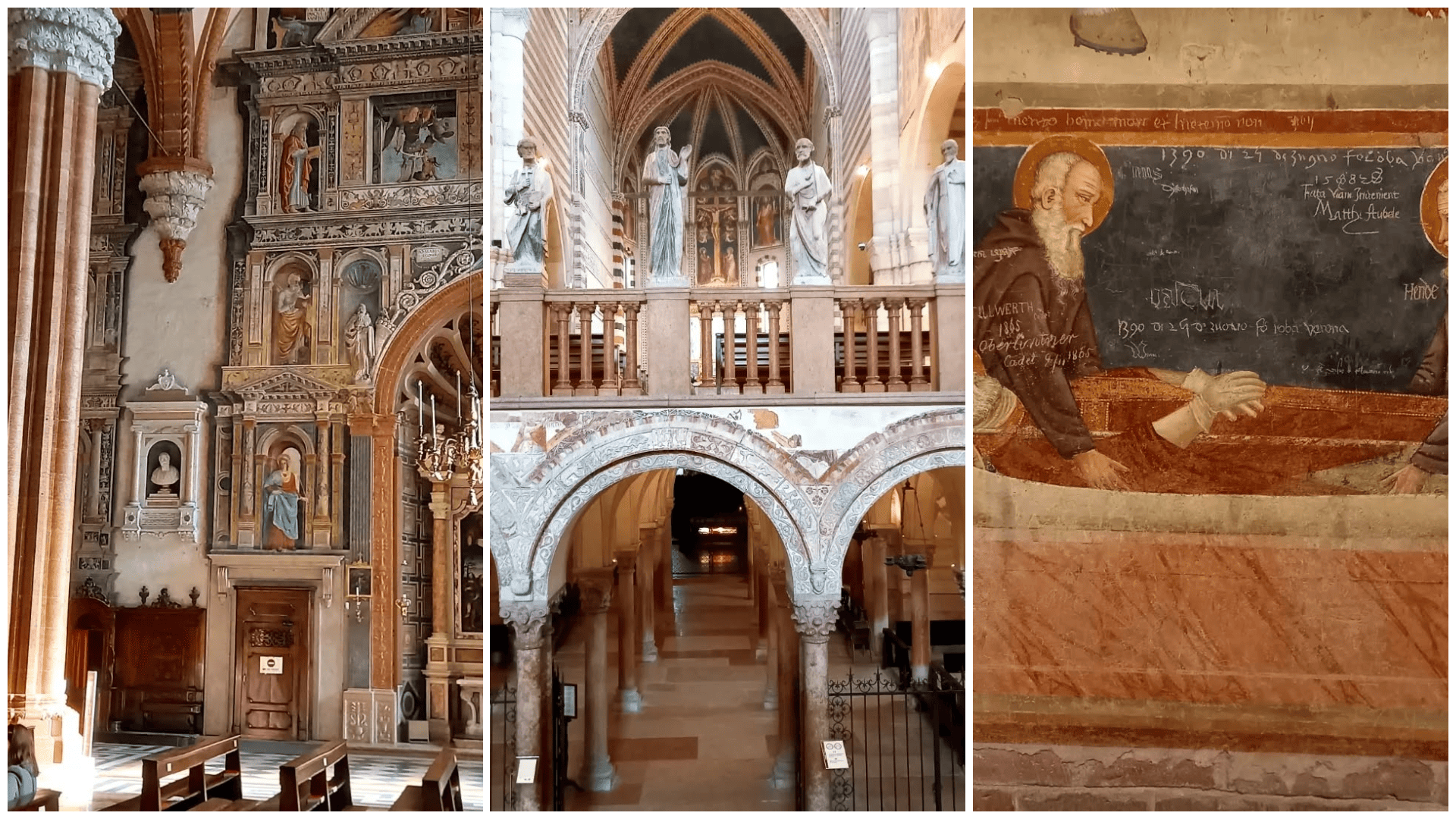
Basilica of San Zeno Maggiore Considered the masterpiece of Italian Romanesque architecture, the Basilica of San Zeno stands slightly outside the historic center, in the neighborhood of the same name. The church, dedicated to the patron saint of Verona, is striking right from the tufa and brick facade with the magnificent rose window called the "Wheel of Fortune." But the bronze portals from the 11th–12th centuries are the real treasure: 48 panels narrate biblical stories and the life of the saint with extraordinary narrative vividness. The three-nave interior preserves the San Zeno Altarpiece (Pala di San Zeno) by Andrea Mantegna in the apse, considered one of the pinnacles of the Italian Renaissance. The remains of San Zeno, an African fisherman who became the eighth bishop of Verona, rest in the crypt. According to tradition, the secret wedding of Romeo and Juliet was celebrated in this very church. The adjacent cloister, with its Romanesque arches, is an oasis of peace where one can pause for reflection.

“Verona”

“Piazza delle Erbe”

Seasonal Events

Arena Opera Festival

When: June - September

Where: Arena di Verona, Piazza BrĂ 
What: Since 1913, the Arena di Verona has hosted the most famous opera festival in the world. Every summer, for about 50 evenings, the great operas of the Italian tradition come to life under the stars with monumental productions and internationally renowned casts. Aida, Carmen, La Traviata, Tosca, and Nabucco are the recurring titles, performed with set designs that only the immensity of the Roman amphitheater can contain. The atmosphere is unique: thousands of spectators on the ancient steps, the starry night as a ceiling, and the flames of small candles lighting up at sunset. Booking well in advance is essential, especially for the best seats. A tip: the stone steps are hard, so bring a cushion. For those traveling by camper van, opera evenings are the perfect time to combine culture and adventure.

Vinitaly

When: April (usually the first or second week)

Where: Veronafiere and historic center

What: Vinitaly is the most important wine fair in Italy and one of the most relevant in the world. Established in 1967, it welcomes over 4,000 exhibitors and hundreds of thousands of visitors each year, including industry professionals and enthusiasts. The Veronafiere pavilions host the best of Italian wine production, from large wineries to small artisanal producers. Concurrently, Vinitaly and the City enlivens the historic center with tastings, events, and special aperitifs in bars and squares. For camper van travelers, it is an unmissable opportunity to discover local wines: Amarone, Valpolicella, Soave, Bardolino, and Lugana are all within reach. Caution: during Vinitaly, finding a spot in the rest areas can be difficult, so it is better to book at the campsite or arrive a few days in advance.

Mercatini di Natale

When: mid-November - December 26th
Where: Piazza dei Signori, adjacent courtyards and historic center
What: During the Advent season, Verona transforms into an enchanted village. Piazza dei Signori, with its elegant medieval palaces, hosts about 100 wooden huts that offer handicrafts, Christmas decorations, typical products, and gastronomic specialties. Steaming mulled wine (*vin brulè*), spiced sweets, artisan nativity scenes, and original gift ideas create a magical atmosphere. In Piazza Brà, next to the Arena, a large luminous comet star is set up, while the Palazzo della Gran Guardia hosts the "Nativity Scenes from the World" exhibition (*Presepi dal Mondo*), cited in the Guinness World Records for its 400 nativity scenes from all over the planet. On weekends, free shuttles connect the peripheral parking lots to the center. The Saint Lucia Fair (*Fiera di Santa Lucia*) (December 10th–13th) enriches the offering with traditional stalls along the city center streets. A tip: visit the markets during the week to avoid the weekend crowds.

Tocatì - Festival Internazionale dei Giochi in Strada

When: mid-September (three days, Friday to Sunday)
Where: historic center, squares, and pedestrian streets
What: Tocatì, which means "it's your turn" in Veronese dialect, is a unique festival of its kind: it celebrates traditional street games from all over Italy and the world. Since 2003, every September the historic center transforms into an immense playful arena where adults and children alike can try their hand at almost forgotten ancient games. *Lippa*, *ruzzola*, *morra*, tops, marbles, and dozens of other traditional pastimes come to life in the squares, with demonstrations, tournaments, and the opportunity for active participation. International delegations bring games from their cultures, creating a fascinating encounter of traditions. The festival is free and takes place even in case of bad weather. For the camper traveler, it is a perfect opportunity to experience the city in an authentic and engaging way, far from conventional tourist circuits.

Carnevale Veronese - Bacanal del Gnoco

When: February–March (last Friday of Carnival and preceding days)
Where: historic center and city districts
What: The Carnival of Verona is one of the oldest in Italy, documented since the Middle Ages. Tradition holds that in 1531, during a severe famine, the doctor Tommaso Da Vico bequeathed his assets so that gnocchi would be distributed to the poor of the San Zeno district every last Friday of Carnival. Since then, the "Venerdì Gnocolar" (Gnocchi Friday) has been the most deeply felt celebration by the Veronese people. The grand parade of allegorical floats passes through the central streets, led by the *Papà del Gnoco* (Father of the Gnocchi), the symbolic mask of Verona: a bearded old man dressed in red holding a large fork with a huge *gnocco*. Confetti, masks, music, and cheer invade the city. In the preceding days, the floats also parade in the districts and municipalities of the province. A genuine and popular carnival, perfect for those seeking authentic traditions.

“Quella finestra è l’oriente, e Giulietta è il sole!”

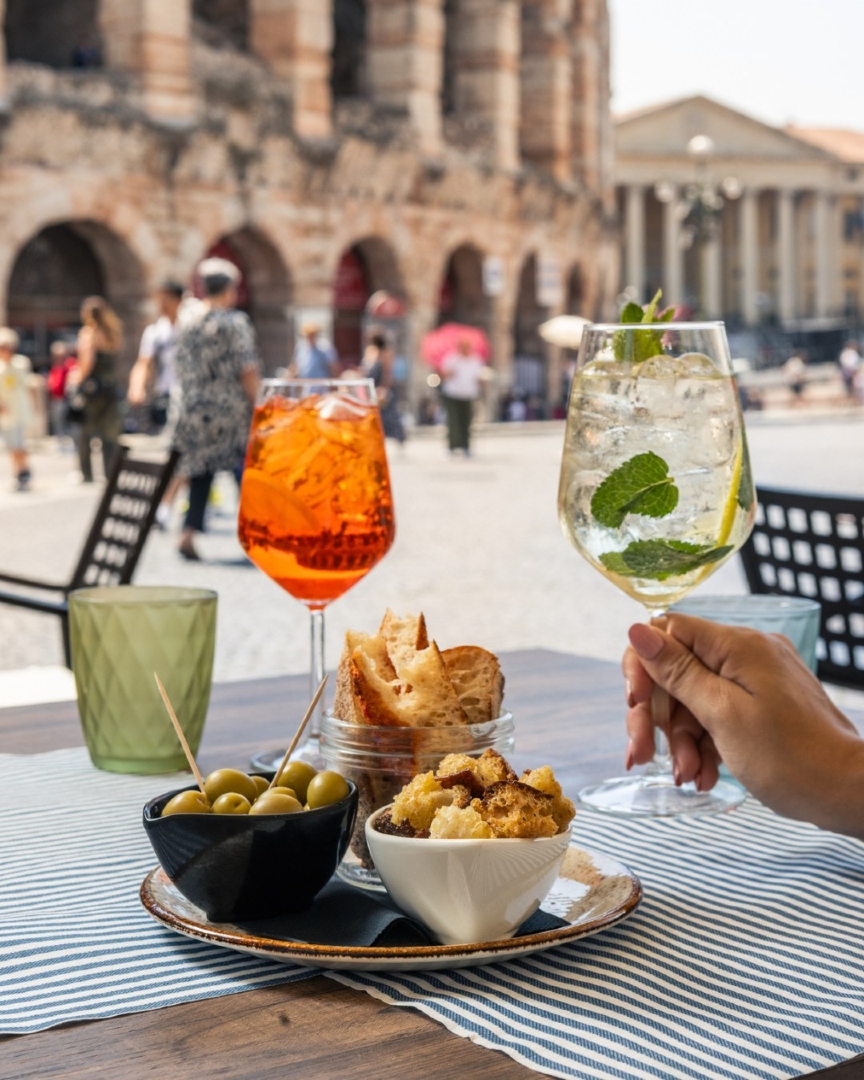
“tempo di aperitivo”

Typical Dishes and Local Products

You cannot claim to have experienced Verona without tasting pearĂ , the traditional sauce that accompanies the mixed boiled meats (bolliti misti) of Veronese cuisine. This dressing with an intense and slightly spicy flavor is the soul of winter holidays and major family occasions.

PearĂ  Recipe

Ingredients (for 6 people):
  • 200 g of coarsely grated stale bread
  • 150 g of beef marrow
  • 1 liter of meat broth (preferably from the boiled meat)
  • 80 g of butter
  • 80 g of grated Grana Padano
  • Plenty of black pepper
  • Salt to taste (q.b.)
Method:
  1. Preparation of the marrow: Cut the marrow into small pieces and melt it in a saucepan over low heat together with the butter, stirring gently.
  2. Toasting the bread: When the fat is completely melted, add the grated bread and stir carefully. Let it toast lightly for a few minutes, turning often.
  3. Cooking: Start adding the hot broth, one ladleful at a time, stirring constantly as you would for a risotto. Continue for at least 2–3 hours over very low heat, adding broth as it is absorbed. The pearà must be creamy and velvety.
  4. Final seasoning: At the end of cooking, adjust the salt and add plenty of freshly ground black pepper (it is what gives the sauce its name, from “pevarada”). Incorporate the grated Grana Padano and stir until a homogeneous cream is obtained.
Historical and Cultural Note

PearĂ  is much more than a simple sauce: it is the symbol of Veronese holiday cuisine. The name derives from the dialect word “pevare” (to pepper), indicating the generous use of pepper that characterizes it. It was traditionally prepared by grandmothers on holidays, especially at Christmas and during Carnival, when mixed boiled meats (*bollito misto

Useful Tips

When to go: Spring (April–May) and Autumn (September–October) offer the best weather for exploring the city on foot without the summer heat or the crowds of major events. Summer is perfect for those who want to attend the Opera in the Arena, while the Christmas period offers a magical atmosphere with the markets.
Traffic Warning: The historic center is a ZTL (Restricted Traffic Zone); do not venture into the internal streets with your camper van. Use the designated stop areas and move around on foot or by public transport. The police are strict and the fines are heavy.
Lake Garda within easy reach: If you have a few extra days, Verona is the ideal base for exploring the eastern shore of Garda. Bardolino, Lazise, and Peschiera can be reached in half an hour and offer other stop areas with lake views.
Valpolicella awaits you: A few kilometers from Verona lie the Valpolicella hills, home of Amarone wine. Many wineries offer tastings, and some have dedicated areas for camper stopovers. An unmissable food and wine experience.
Shopping and supplies: Before leaving Verona, stock up on typical products: Monte Veronese (PDO cheese), *pandoro* (invented right here), Valpolicella wines, and Garda oil. Well-stocked supermarkets can be found in the Porta Palio area and along the main road toward the campsite.
👉 Verona is a perfect destination for a romantic weekend, a cultural stop along the route to the Brenner Pass, or a base for exploring western Veneto. The city of love wins everyone over, including camper travelers. Happy travels!

0

post a comment