
Top

Visit Montpellier

A young city a stone’s throw from the Mediterranean

Montpellier is one of the liveliest and most dynamic cities in the South of France: medieval alleys, elegant squares, a strong university presence, and the sea just a few kilometers away. By camper, it is a strategic destination: easy to reach from Italy, perfect as a stopover on a tour towards Spain, or as a base for exploring the Occitan coast between Sète, Palavas-les-Flots, and the Camargue. The historic center, almost entirely pedestrian, is great to explore on foot or by tram, while the camper remains safe in a designated area or campsite in the immediate vicinity.

Stopovers and overnight stays

In Montpellier, it is not advisable to enter the center with your camper: the streets are often narrow, busy, and have many pedestrian or tram-reserved zones. The best solution is to park in a designated area or campsite in the urban belt, and reach the heart of the city by tram or bus. Below are three convenient solutions for visiting Montpellier while leaving your camper in a relatively quiet spot.

Recommended areas

? ?️ Paid Parking Rue du Comté de Melgueil 243
This is a public car park in a residential area, classified as a paid “blue zone”. Its strength is its proximity to the city center (about 15 minutes on foot) and a tram stop, making it convenient for visiting Montpellier. The presence of a police station nearby is a factor that contributes to a greater sense of security. It does not offer specific services for campers such as fresh water and waste disposal facilities or electricity; it is a simple urban car park.
GPS: 43.603228, 3.892138
? ?️ Camping Le Floréal Rue de la Première Écluse, 34970 Lattes, France
Camping Le Floréal, located in Lattes, at the gates of Montpellier and only 6 km from the beaches, offers large and shaded pitches, suitable for campers, caravans, and tents. The facility has a dedicated waste disposal area for campers. It is considered a practical stopover point for visiting Montpellier, with easy access to the city center via public transport or the cycle path (about 20 minutes by bike).
Services: Electricity, grey and black water emptying and disposal, tank filling, WiFi, WC, shower, washing machine, mini-market
GPS: 43.589325, 3.901938
If you want to combine city and sea, you can choose a stop along the coast and move towards Montpellier by public transport or by bike. One solution could be: ? ?️ Camper Stop Area – Paul Riquet Le Bass. de Plaisance, 34250 Palavas-les-Flots, France
The area is exclusively for campers and has a good value for money; it offers all the essential services for campers, located in a convenient position near the marina and the city center. You can find updated information on their website: https://portspalavaslesflots.com/aire-camping-car-palavas/

Getting Around

Montpellier is served by a very efficient tram network, perfect for those arriving by camper and leaving their vehicle in a stopover area or campsite. The lines connect the peripheral districts to the historic center (Place de la Comédie) with frequent services throughout the day.

  • From the campsite or stopover area, check for the nearest stop: it often takes just 10–15 minutes on foot to reach the tram.
  • Tickets can be bought at the vending machines at the stops or via app; convenient daily passes are available if you plan to use public transport often. The historic center (Écusson) is highly pedestrianized: once you arrive at Place de la Comédie, you can move around on foot among alleys, shops, and squares. The bike is an excellent ally, but be careful of cobblestone sections and tram rails.

Points of Interest (PoI)

1
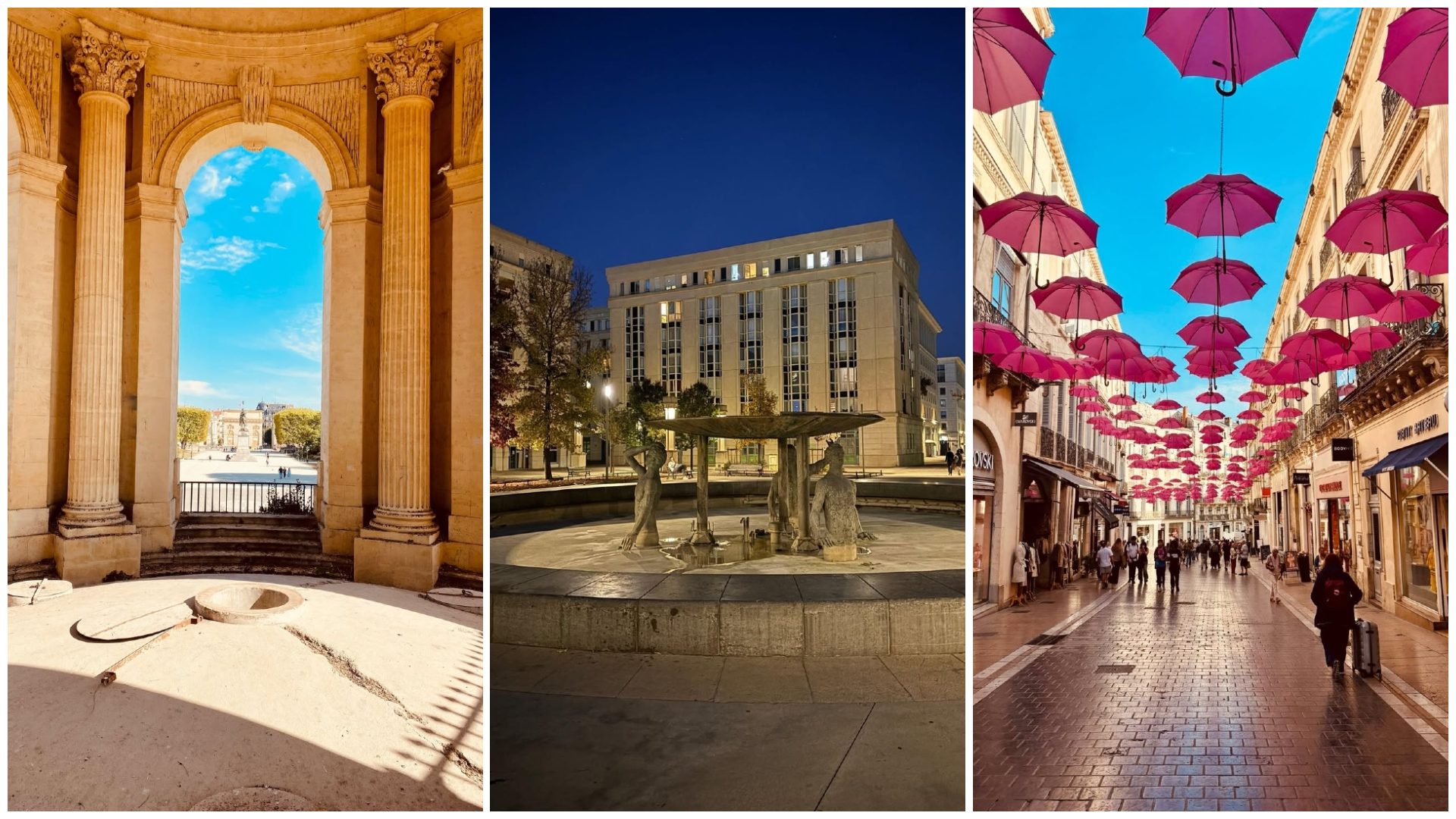
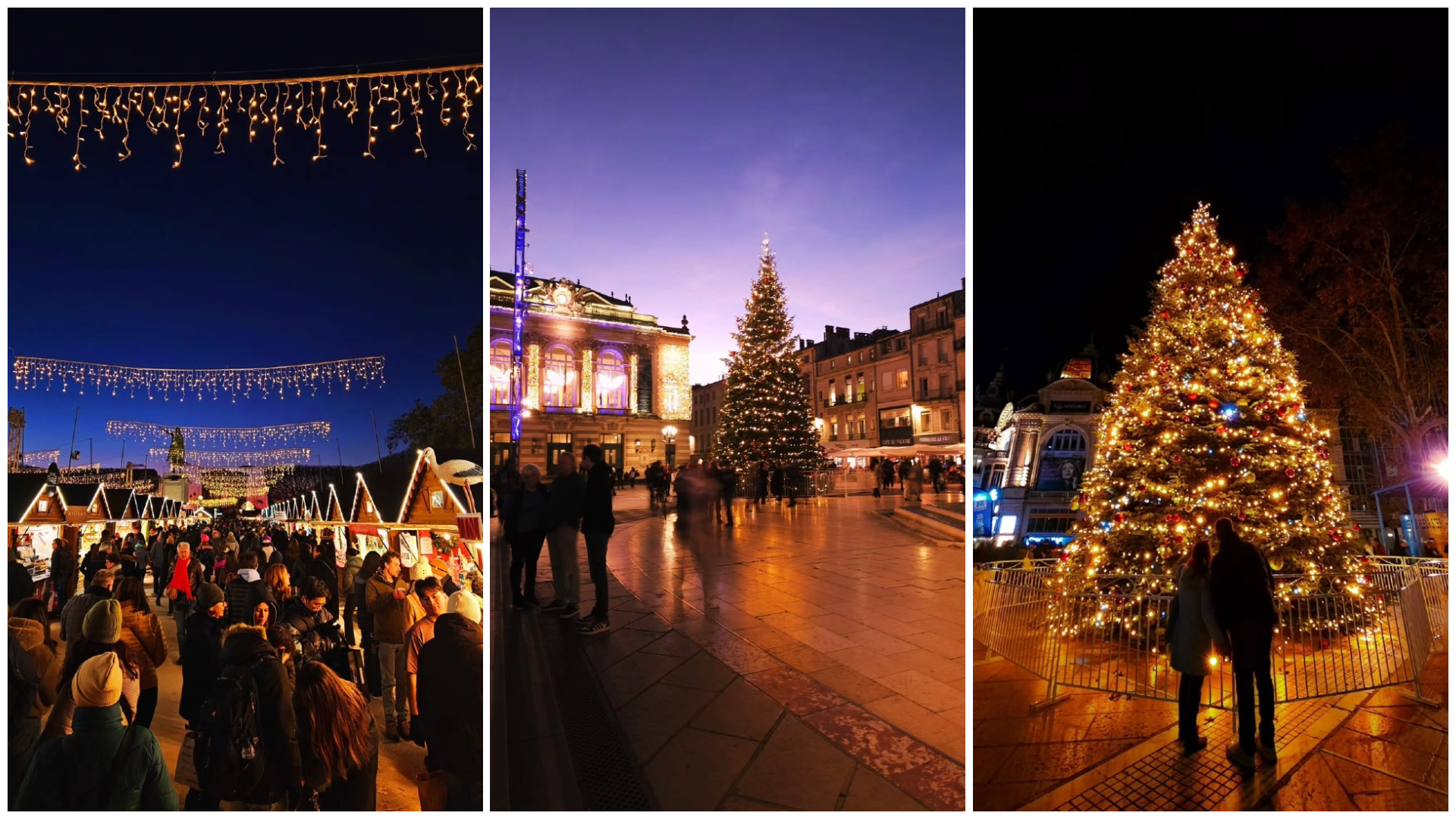
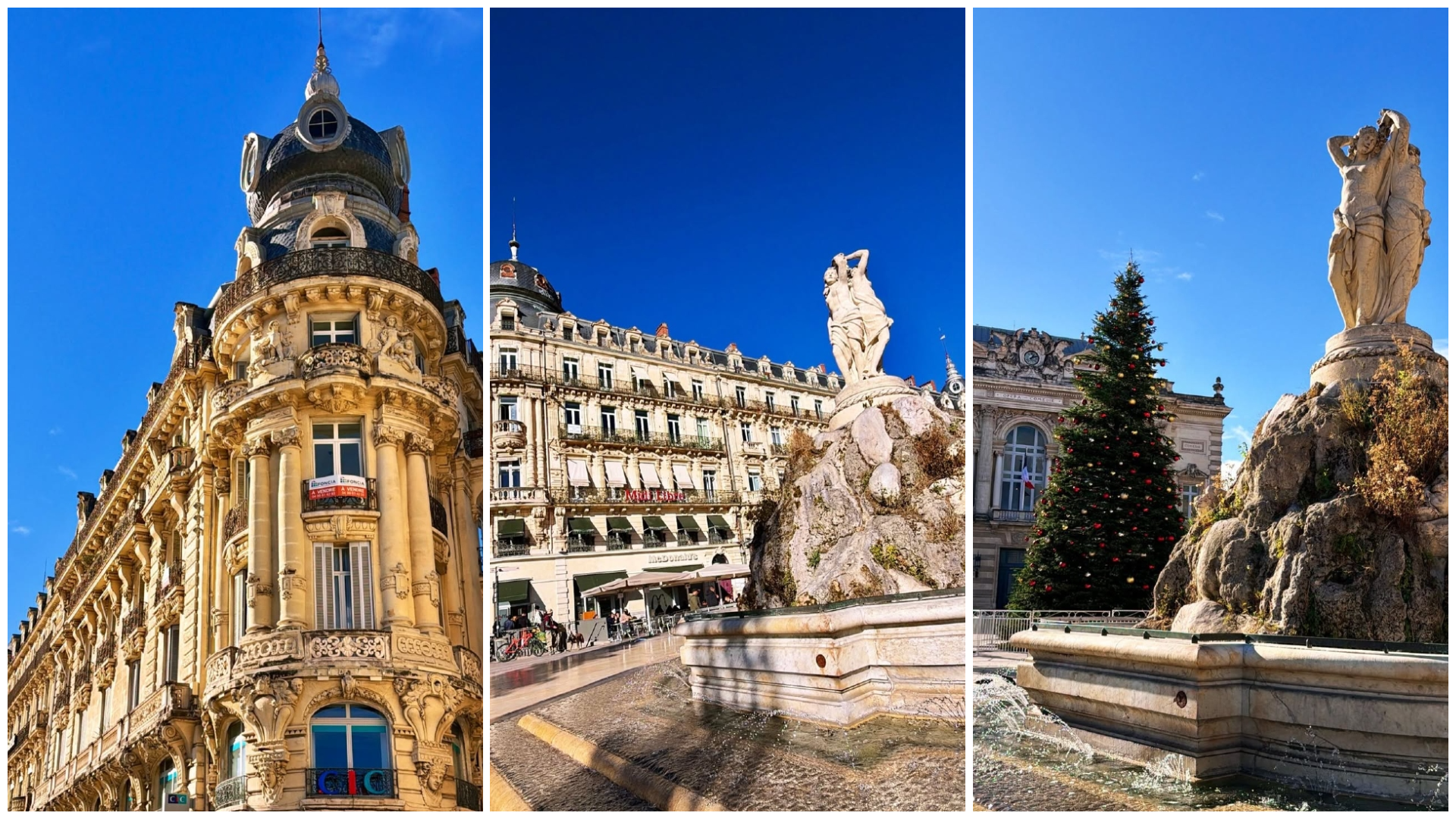
Place de la Comédie and the historic center It is the beating heart of Montpellier: a large square bustling with cafés, restaurants, and street artists, dominated by the Opéra Comédie. From here, you enter the medieval labyrinth of the Écusson, made up of alleys, boutiques, shops, and small shaded squares. Ideal for a first orientation walk, perhaps at sunset, when the light softens and the buildings and the city fill with life.
2
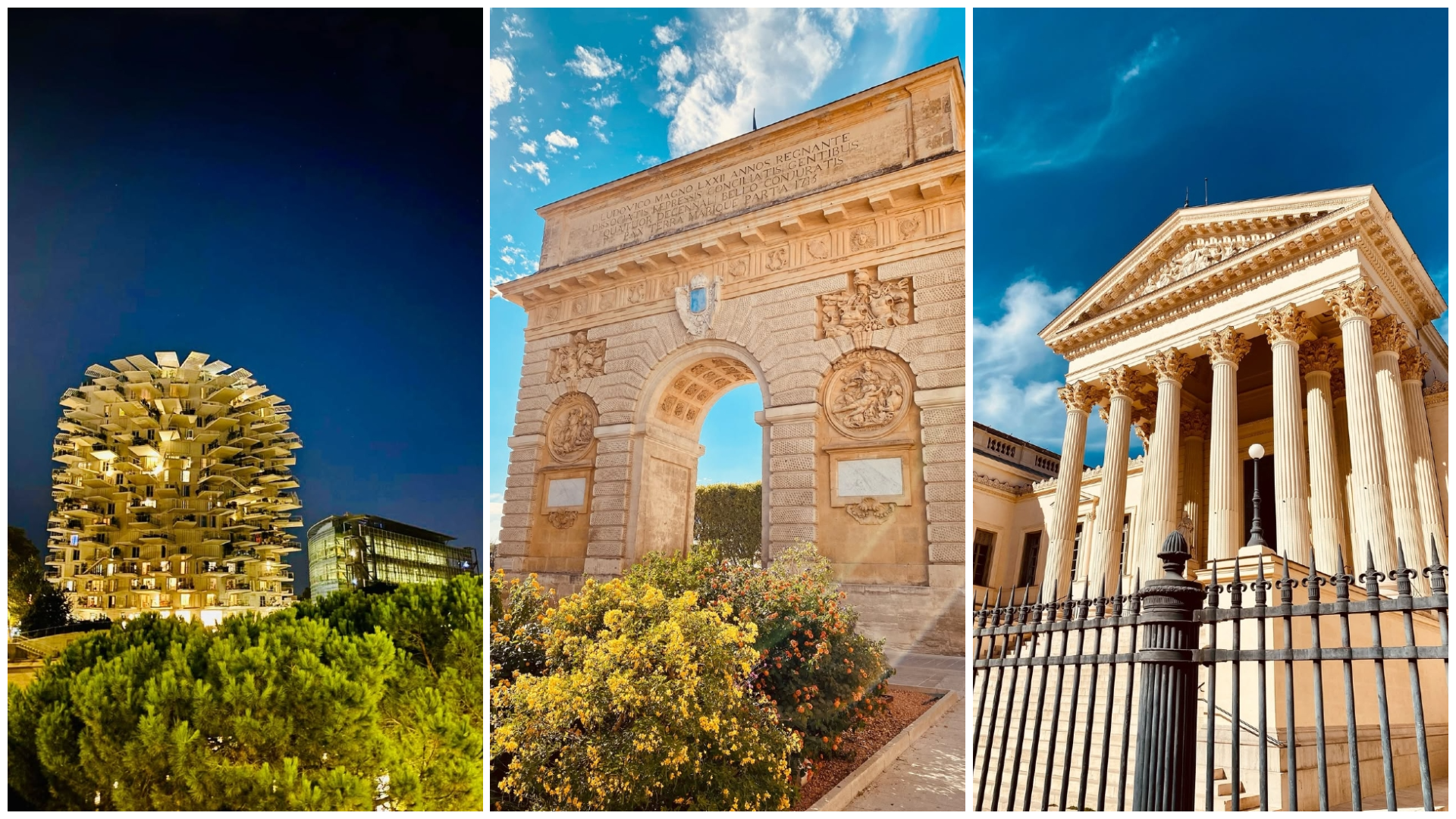
Promenade du Peyrou and Arc de Triomphe A panoramic terrace above the city, with tidy gardens, the equestrian statue of Louis XIV, and an open view extending to the aqueduct and the surrounding hills. The Arc de Triomphe marks one of the historic entrances to the city. It is a perfect spot for a break surrounded by greenery after walking through the city center streets, and for taking some photos with an excellent perspective on Montpellier.
3
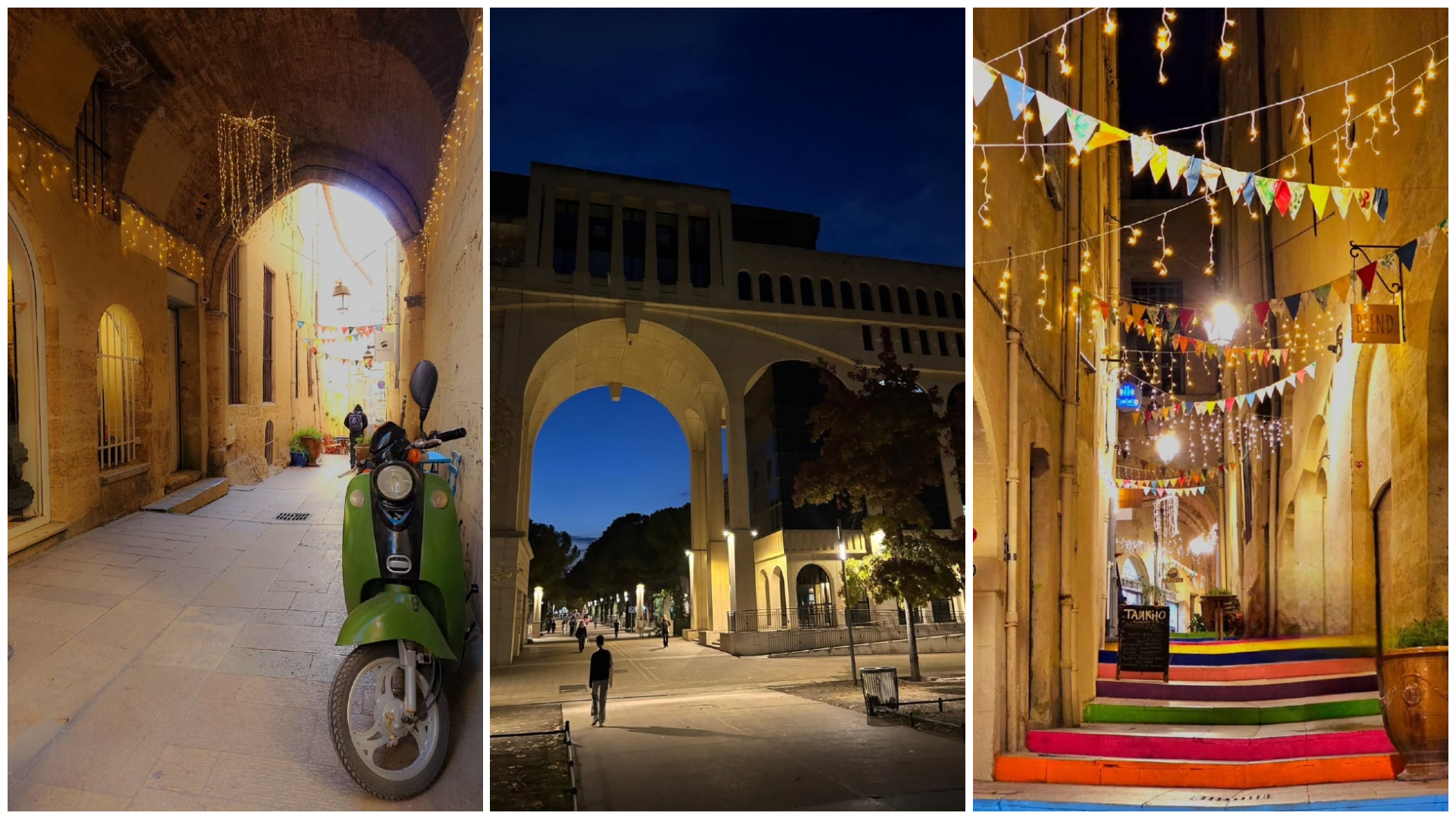
Antigone District and the contemporary side of the city Designed by the architect Ricardo Bofill, the Antigone district is a succession of squares, colonnades, and monumental geometries in a revisited neoclassical style. It is easily reached on foot or by tram from the center, following the pedestrian axis that runs alongside the River Lez. Here you discover the most recent and "experimental" face of Montpellier, with wide spaces, water features, and a strong architectural identity.

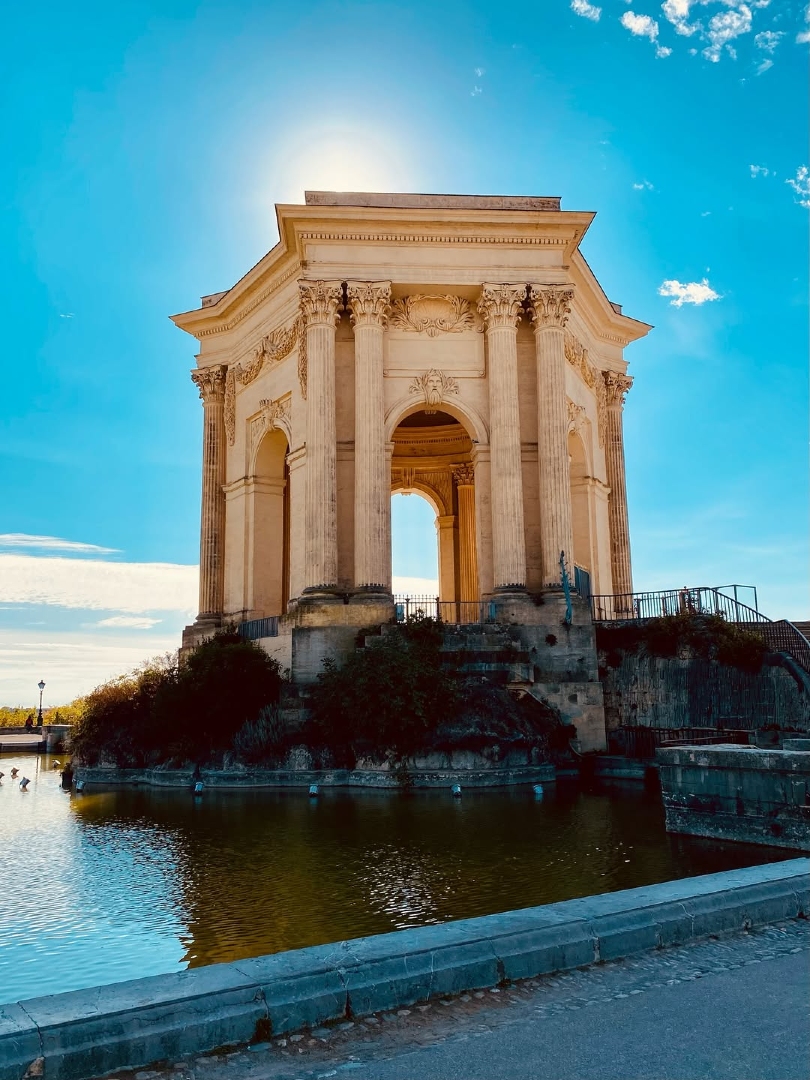
Château d’eau du Peyrou

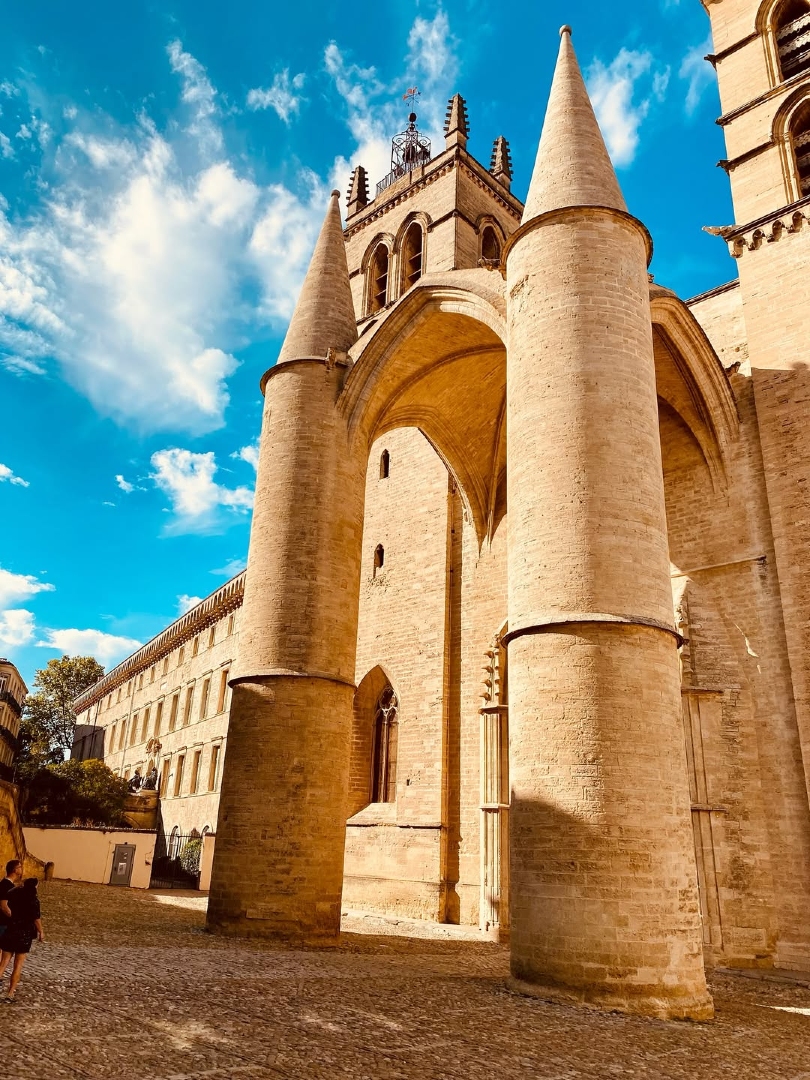
Saint-Pierre Cathedral (Saint Peter)

Seasonal Events

Summer in Montpellier: festivals, music, and outdoor life
When: June - August
Where: Various locations in the city
What: During the summer, Montpellier comes alive with music festivals, open-air theatre performances, and cultural events. The city transforms into an open-air stage with concerts, cinema under the stars, and night markets. A festive atmosphere that attracts visitors from all over Europe.
Markets and gastronomic events
When: throughout the year
Where: Montpellier
What: Thematic markets, wine fairs, and regional products alternate throughout the year. The covered markets (such as the Marché des Halles Castellane) are an essential stop for discovering cheeses, cured meats, and local specialties. Often, in the pre-Christmas period, stalls and stands appear with typical products, vin chaud, and seasonal sweets.
Events along the coast and in the nearby Camargue
When: throughout the year
Where: Within a few kilometers of Montpellier
What: Traditional festivals and events related to the sea and the Camargue take place: horse races, abrivado, wine festivals, and fishing festivals. They can be an opportunity for a day trip, combining a visit to the city and the discovery of the surrounding territory.
Festival Montpellier Danse
When: June/July
Where: Montpellier
What: International festival of contemporary and traditional dance. It attracts companies and artists from all over the world. If you travel by camper during this period, you can attend world-class shows in an evocative setting.

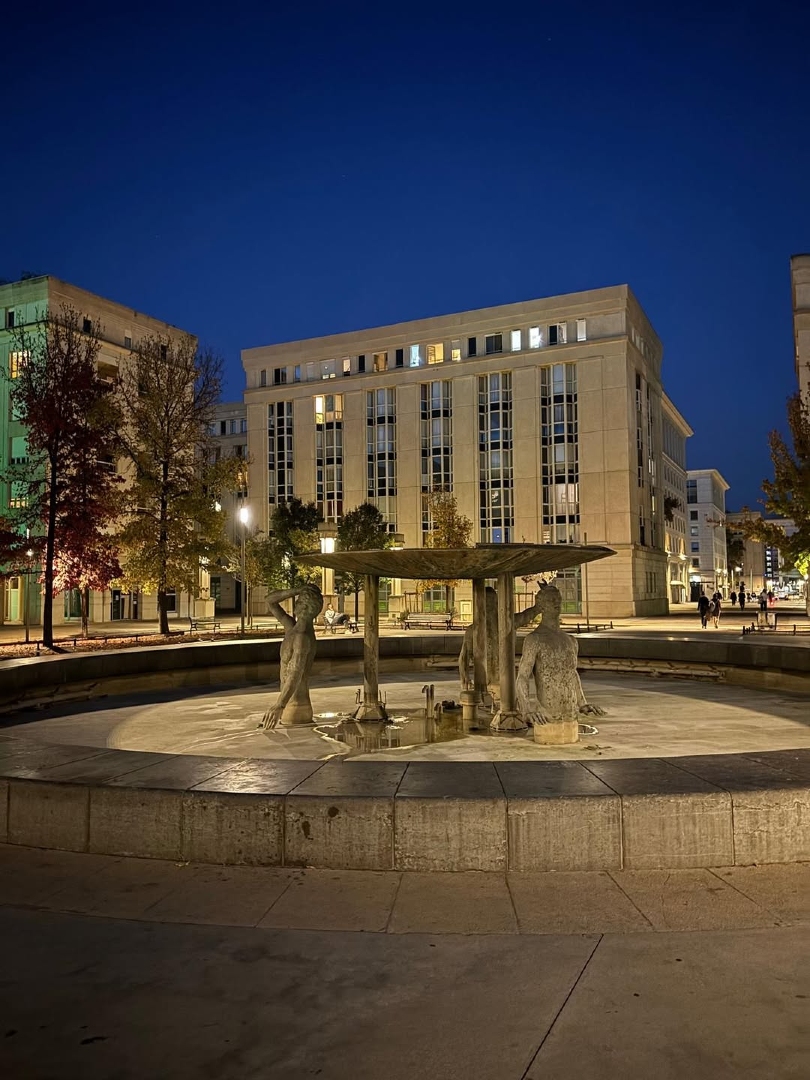
“Fontaine des Trois Grâces”

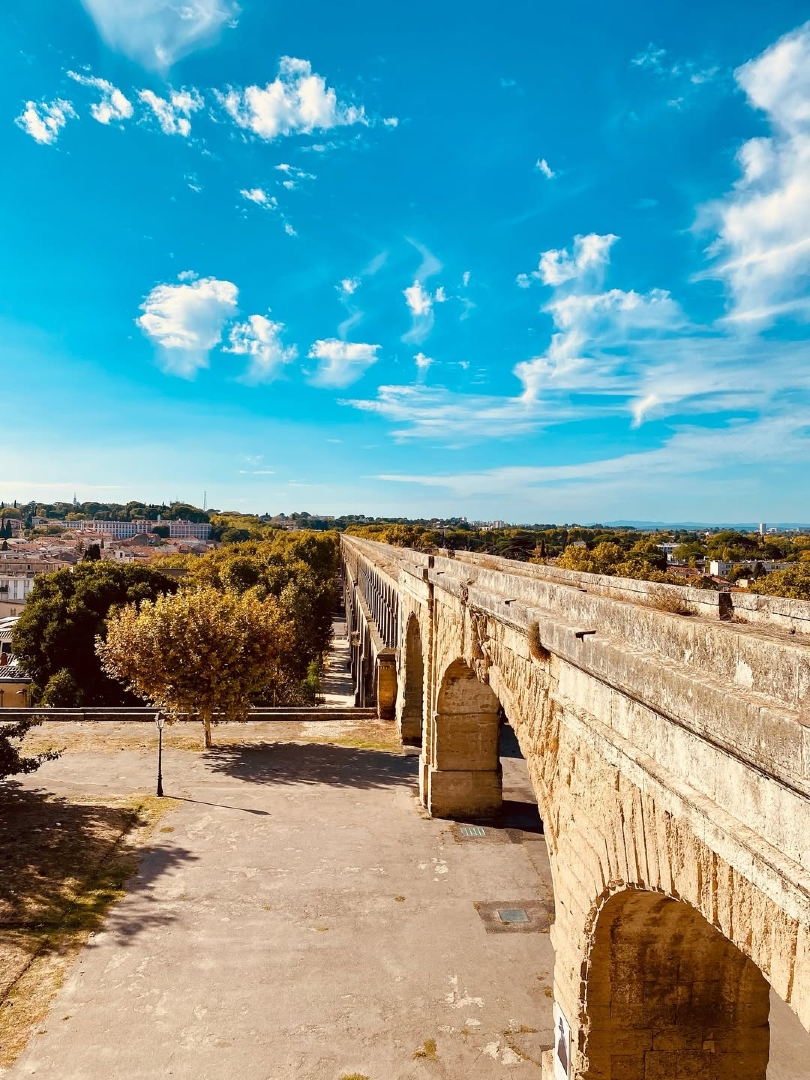
“Saint-Clément Aqueduct”

Typical Dishes and Local Products

You cannot say you have experienced Southern France without tasting the Brandade de Morue (salt cod/stockfish), one of the most iconic dishes of Occitan cuisine. This simple yet flavorful dish, based on desalinated salt cod reduced to a cream with garlic, olive oil, and a pinch of nutmeg, represents the essence of the region’s peasant cuisine.

Brandade de Morue Recipe

Ingredients (for 4 servings):
     
  • 500g of already desalinated salt cod (or dried/cured cod)
  •  
  • 250ml of whole milk
  •  
  • 150ml of quality olive oil
  •  
  • 3-4 cloves of garlic
  •  
  • Salt and black pepper
  •  
  • Grated nutmeg
  •  
  • Toasted bread or croutons for serving
Method of preparation:
     
  1. Preparing the Salt Cod: If it is not already desalinated, soak it in cold water for 24 hours, changing the water several times. Then cook it over low heat in water for 15-20 minutes until tender.
  2.  
  3. Removing the Bones: Drain the salt cod and carefully remove all bones. The flesh must be perfectly clean.
  4.  
  5. Preparing the Cream: In a saucepan, heat the milk with the crushed garlic cloves over low heat. Add the shredded salt cod and begin to stir.
  6.  
  7. Emulsification: Add the olive oil little by little, stirring continuously. The mixture should become creamy and smooth. You can use an immersion blender if you prefer a smoother texture.
  8.  
  9. Seasoning: Season with salt, pepper, and grated nutmeg. Taste and adjust seasonings to your liking.
  10.  
  11. Serving: Serve the brandade warm with toasted bread or croutons. You can garnish with a drizzle of olive oil and fresh parsley.
Historical and Cultural Note
The Brandade de Morue originated as a clever way to preserve and use salt cod, an essential food in the coastal regions of the Mediterranean before the era of refrigeration. Over the centuries, it has become a celebratory dish, served during festivities and banquets. Its simplicity, concealed by noble ingredients (olive oil, garlic, spices), makes it a perfect example of Occitan cuisine: practical, generous, and authentically rooted in the territory.

Useful Tips

When to go: Spring (April–May) and early Autumn (September–October) are the best periods for climate, light, and crowd levels. In summer, the city is very lively but hotter and more crowded.
Traffic Warning: Avoid driving your camper van into the historic center; it’s better to stop in a designated area or campsite and use the tram or bus.
Sea within easy reach: If you have more than one day, consider a combined city+sea stopover in the areas along the coast between Palavas-les-Flots and Carnon.
Shopping and supplies: Take advantage of the supermarkets and shopping centers outside the center to stock up before returning to the designated area/campsite.

👉 Montpellier is a perfect destination as an intermediate stop towards Spain and the Costa Brava, but it also deserves a few dedicated days.
0

post a comment