LiFePO4 Battery Maintenance: Practical Guide to Extending Battery Life
Introduction
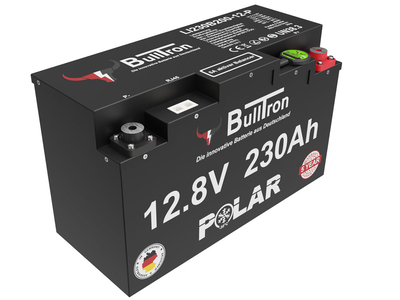
A LiFePO4 battery (Lithium Iron Phosphate) is one of the most reliable and long-lasting solutions for use on a motorhome, but like all components on board, it needs regular and conscious maintenance to keep performance high and avoid premature failures.
Unlike traditional lead-acid batteries, LiFePO4 offers:
- Greater number of charge/discharge cycles
- Higher usable capacity (you can normally use 80–90% of the nominal capacity)
- Lower weight for the same energy stored
- Better resistance to deep discharges
However, “install and forget” is never a good idea: an incorrect use or the absence of simple periodic checks can lead to accelerated ageing of the cells, stress on the BMS (Battery Management System) and, in the worst cases, to sudden failure.
In this guide you will find a practical and concrete maintenance plan, designed for motorhome users who use a LiFePO4 battery for the living area. We will focus on:
- Visual checks that you can do yourself
- Monitoring voltages and temperatures
- Correct charging and discharging behaviour
- Storage, especially in winter or in very hot climates
- Bad habits to avoid to protect the battery and the BMS
Important: this guide is generic and does not replace the instructions of the manufacturer of your specific LiFePO4 battery or BMS. Always check the technical manual supplied and follow the recommended limits (voltage, currents, temperatures). If your battery does not have an integrated BMS or uses a separate BMS, many precautions may differ or not apply.
1) Periodic Visual Checks
Inspecting the battery
- Check that the battery is firmly mounted in its compartment: it must not move or vibrate while driving
- Inspect the terminals: they must be clean, dry and free from oxidation or corrosion
- Check the cables: look for cuts, damaged insulation or signs of overheating and discoloration
- Look for leaks or drips: LiFePO4 batteries should never leak liquid (if it happens, it indicates serious internal damage)
- Check the BMS connector (if external): it must be firmly plugged in, with no loose or damaged pins
Checking housing and cooling
- Ventilation: the compartment must allow air circulation. If the battery is in a closed space, make sure it does not trap heat.
- Distance from heat sources: avoid placing the battery next to heaters, exhausts, inverters or other devices that produce heat.
- Protection from moisture: avoid locations exposed to condensation, infiltrations or standing water.
Recommended frequency: at least once a month, and in any case before long trips.
2) Cleaning and Care of Terminals and Connections
Cleaning terminals
- Disconnect the loads and charging systems before working on the terminals
- Use a dry cloth or a specific terminal brush to remove any oxidation
- Check that nuts and bolts are tight: avoid both loose contacts and excessive tightening that may damage the posts
- If necessary, apply a thin layer of protective grease suitable for electrical contacts
Checking cable routing
- Make sure the cables are arranged so that they do not rub against sharp edges or moving parts
- Use clamps or cable ties to keep the cables in place
- Avoid excessive tight bends: a cable that bends too sharply can overheat or break over time
Recommended frequency: every 3–6 months, or whenever you detect strange odours, heating or anomalies in the electrical system.
3) Monitoring Temperature and Operating Conditions
Ideal temperature range
- Normal operation: LiFePO4 batteries work best around 10–30 °C
- Charging: many manufacturers recommend staying between 0 °C and 45 °C for charging
- Storage: ideal between 5 °C and 25 °C
Outside these ranges the battery will not necessarily be damaged immediately, but performance and lifetime can be reduced, especially if the critical conditions are repeated or prolonged.
How to keep temperature under control
- Install the battery in a compartment protected from direct sun, engines and sources of strong heat
- If the compartment tends to heat up, consider adding ventilation openings or a small fan
- In winter, avoid charging the battery if the cells are below 0 °C (check with the BMS or an external sensor)
Recommended frequency: check temperatures more frequently in summer and during long, intense usage periods (many loads active at the same time, long charges, inverter in continuous use).
4) Checking Loads and Consumption
Understanding what is drawing current
- Identify the main loads connected to the battery: fridge, inverter, heating, lights, sockets, etc.
- Check if there are “hidden” loads that remain active even with the camper apparently off (alarms, trackers, control units, USB chargers, etc.).
- Whenever possible, measure the current drawn with a clamp meter or via the BMS/app.
Balancing loads
- Avoid using several high-power devices at the same time (for example inverter + heating + large fridge on compressor)
- If you frequently find yourself near low SOC (State of Charge), evaluate either reducing consumption or increasing capacity
- Pay particular attention to the inverter: it is often the component that puts the most stress on the battery
Recommended frequency: a check every month, and whenever you add new equipment on board.
5) Periodic Voltage Checks and Basic Diagnostics
Why monitor voltage
Voltage is a simple but very useful indicator of the state and health of your LiFePO4 battery. Combined with the information from the BMS (if available), it helps you:
- Recognise abnormal self-discharge
- Detect possible problems with the charger or alternator
- Notice imbalances between cells in time
Tools you can use
- Multimeter: measures voltage at the battery terminals. Use it at least once a week during use and annotate the readings.
- BMS control panel: if your battery or BMS has a dedicated display, check it regularly for any alarms and cell voltages.
- Monitoring app (optional): many LiFePO4 batteries offer Bluetooth monitoring. Install the manufacturer’s app to keep an eye on status and history.
- Smart charger: a good charger with display shows voltage and current in real time during charge.
Anomalies to recognise
| Abnormal reading | Meaning | Action |
|---|---|---|
| Voltage drops very slowly (few mV per day) | Natural self-discharge – normal | No action needed (LiFePO4 has very low self-discharge) |
| Voltage suddenly drops by 0.5 V or more | The BMS has activated protection (overload, internal short, low voltage cut-off) | Switch off all loads and contact a technician or the manufacturer |
| Voltage does not rise during charging | The charger is not working, or the BMS is blocking the charge | Check charger, cables and any BMS errors |
| Two cells show different voltages (> 0.1 V difference) | Cell imbalance – one or more cells are drifting away from the others | Perform a balancing cycle if the BMS allows it, or contact a specialist |
6) Storage and Long-Term Standstill
Winter storage (3+ months of standstill)
- Optimal charge: charge the battery to about 50–60% before long-term storage.
- Why 50–60%: it is a compromise level that minimises stress on the cells and BMS during inactivity.
- Monthly check: once a month, check the voltage. If it drops below the value recommended by the manufacturer, top it up again to around 60%.
- Positioning: if the motorhome remains parked for months, disconnect non-essential loads or the main switch to reduce parasitic self-discharge.
- Thermal protection: if the compartment is exposed to very low temperatures, insulate it but without sealing it completely – the battery must still be able to “breathe”.
Summer storage (3+ months in very hot areas)
- Charge: keep the battery around 70–80% (the BMS will have more room to manage thermal expansion and small imbalances).
- Cooling: ensure good air circulation in the compartment even when the vehicle is stopped. If necessary, install a small fan.
- Shade: protect the battery and the compartment from direct sun (ideally keep the temperature below 45 °C).
- Check frequency: weekly checks are recommended, as heat accelerates any self-discharge and stresses the components.
Battery not used (motorhome stopped for weeks)
- First month: check once a week.
- Following months: check every 2 weeks.
- If voltage drops too much: recharge immediately to a safe level (for example around 50–60%) instead of leaving the battery almost empty.
Recommended frequency
- Before storage: bring the battery to 50–60% for winter storage, 70–80% for hot summer storage.
- During storage: at least monthly checks; weekly in very hot climates.
- After reactivation: perform a slow, complete charge to 100% before returning the motorhome to normal use.
7) Behaviour to Avoid (to Protect the Battery and BMS)
Repeated deep discharges
Avoid: regularly discharging the battery below about 5% (for example every week).
Damage caused: the BMS is forced to intervene frequently in protection, the cells suffer strong chemical stress and the total number of useful cycles can be halved.
If it happens: recharge immediately to 100%. If it happens regularly, increase battery capacity or reduce consumption (especially the most energy-hungry loads such as inverters and electric heating).
Fast, repeated charge/discharge cycles
Avoid: switching heavy loads on and off continuously, or charging and discharging the battery completely within a few hours, several times in a row.
Damage caused: thermal stress on the BMS, accelerated degradation of the cells and internal corrosion.
If necessary: leave at least 30 minutes of rest between significant charge/discharge cycles, whenever possible.
Exposure to extreme humidity
Avoid: leaving the battery in environments with condensation, standing water or persistent moisture.
Damage caused: corrosion of the BMS, short circuits, risk of serious malfunction or, in extreme cases, fire.
If it happens: dry immediately with compressed air and a clean cloth. Do not switch the system back on until everything is completely dry.
Persistent overheating
Avoid: keeping the battery constantly above 50 °C for days.
Damage caused: chemical degradation of the cells and possible permanent damage to the BMS.
If it happens: create emergency ventilation, reduce loads, and wait for the battery to cool down before charging again or stressing it further.
8) Summary: Monthly LiFePO4 Maintenance Checklist
| Frequency | Check | How | Time |
|---|---|---|---|
| Weekly | Visual inspection of battery and cables | Quick check of housing, terminals and connections | 5–10 minutes |
| Weekly | Voltage check | Measurement with multimeter or BMS/app | 5 minutes |
| Monthly | Cleaning of terminals (if needed) | Disconnect loads, clean and retighten | 15–20 minutes |
| Monthly | Check of loads and consumptions | Identify heavy loads and hidden standby loads | 15–30 minutes |
| Seasonal | Storage preparation | Adjust charge level and disconnect non-essential loads | 30–60 minutes |
| Yearly | Deep discharge + recalibration (only if recommended by the manufacturer) | Discharge to a low but safe SOC, then slow charge to 100% | 12–14 hours (including charge) |
Conclusions and Final Recommendations
A well-maintained LiFePO4 battery can easily last many years of travel, stops in rest areas and free camping, guaranteeing stable energy for all the on-board services that make life in a motorhome comfortable.
By dedicating a few minutes a month to checks, cleaning and conscious behaviour during use, you greatly reduce the risk of unexpected failures and preserve the investment you have made in your electrical system.
PRO tip: create a small maintenance log (even a simple notebook or an Excel file) where you note dates, voltages, any alarms and interventions carried out. Over time it will help you recognise trends, anticipate problems and decide when it will really be time to think about a replacement.
A healthy battery = a peaceful journey!