Immersed in the Magic of the Oceanogràfic: Discovering Valencia’s Marine Heart
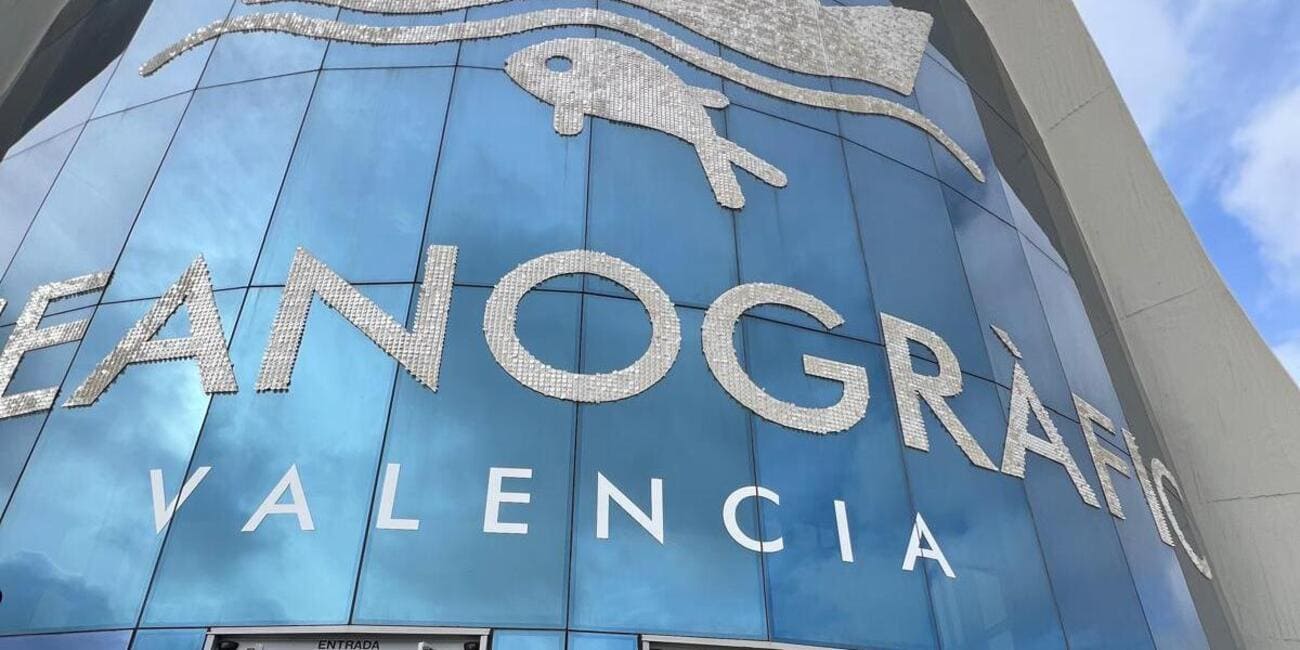
In the silence of a Valencian morning, when the chaos of the city has not yet reached you, there is a place where time seems to slow down and the world is reduced to waves of crystalline water and creatures that observe you with an amazement that mirrors your own. The Oceanogràfic in Valencia is not a simple aquarium: it is a fascinating tale of marine life, a window open to distant and marvelous ecosystems that few campers forget once they cross the threshold.
Here, beneath those lily-pad shaped roofs designed by the architect Felix Candela, you will find 45,000 specimens belonging to over 500 different species, housed in 9 thematic areas that represent the main oceans and marine environments of our planet.
It is an experience that speaks directly to the heart of those who, traveling by camper, have chosen to go beyond simple tourism: a celebration of marine biodiversity and beauty that deserves to be protected.
From
Camper
to Marine Magic
The departure from Nomadic Experience – Motorhome Park Valencia happens in a surprisingly simple, almost magical way. From any pitch in the camper park, walk towards the Albalat dels Sorells metro stop, which can be reached in about 10-15 minutes on foot (about 600 meters). The walk takes you through the quiet streets of this small town, where you will see cultivated fields and the tranquility of the Valencian suburbs. The metro stop is located in a well-marked area, easily identifiable even for those who have never been here.
Once you reach the stop, take line 3 of the Valencia metro. The journey towards the center takes about 20-25 minutes. During the trip, observe the landscape changing gradually from the window: from agricultural fields to the first buildings of the city, up to the more urban structures. It is a journey that tells the transition from the rural to the metropolitan world, perfect for starting to mentally prepare for the experience that awaits you.
Get off at the “Colón” or “Turia Park” station – both take you near the City of Arts and Sciences complex. If you prefer an even more direct experience, you can get on the new tram line 10 directly from the central station (Estación Central): this modern tram takes you directly to the entrance of the complex, practically dropping you off at the door of the Oceanogràfic. It is a journey of about 10-15 minutes that crosses the Turia Park, the large linear garden that cuts through the city, offering you glimpses of green and serenity before arriving at the large shell-shaped building.
The distance from the last stop to the entrance of the Oceanogràfic is minimal – just a few steps on pleasant sidewalks, surrounded by futuristic architecture that already prepares the eye for what you will see. No effort, no stress: only the anticipation of discovery.
Inside the Oceanogràfic
A Journey Through the Submerged Worlds
Stepping across the threshold of the Oceanogràfic means embarking on an immersive journey through the main marine ecosystems of the planet. The route is not random: it has been conceived to gradually lead you from the oceanic depths to the Arctic environments, telling a story of biodiversity and wonder.
The Oceans Tunnel: When the Boundary Disappears
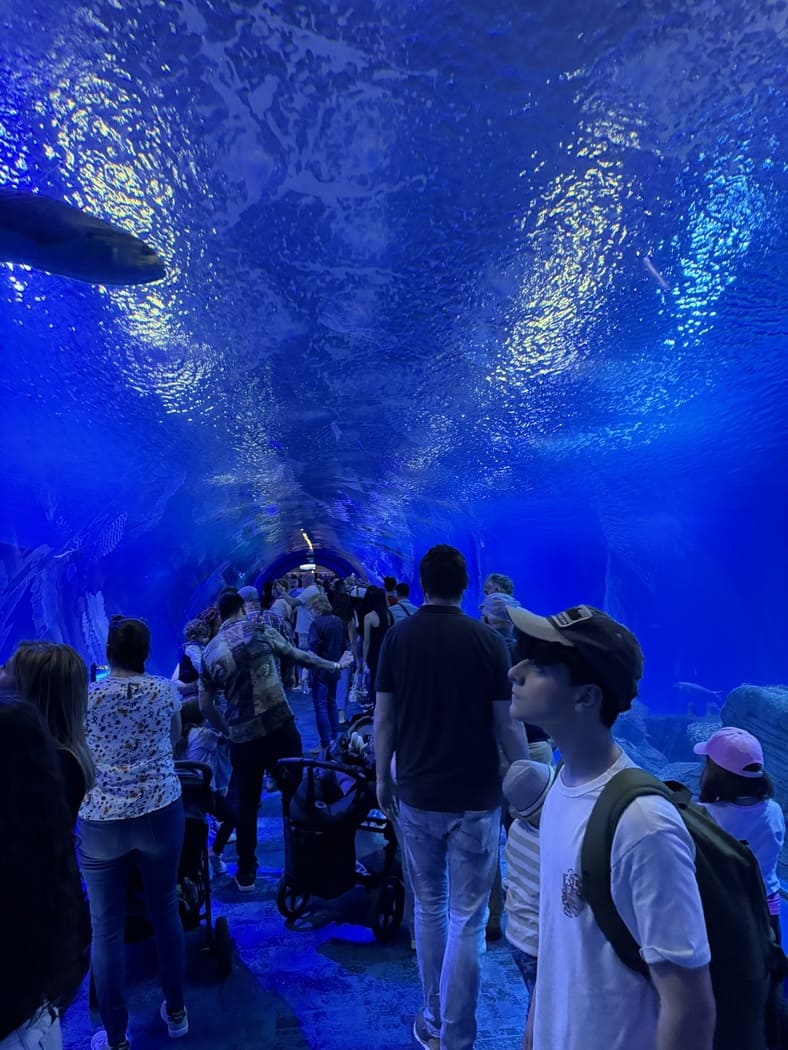
The first moment that will be imprinted in your memory is the famous 70-meter underwater tunnel – the longest in Europe. Walking inside, the boundary between you and the marine life disappears: above your head, next to you, and even beneath your feet, swim sand tiger sharks, bull sharks, rays, and the majestic ocean sunfish. It is not the chill of a glass barrier that separates you, but an almost tangible presence of creatures continuing their lives unaware of your observation. The sharks pass by indifferently – this is what fascinates the most: you are not the center of their world, but a silent guest in their domain. You will see how their long, slender bodies move efficiently, how their eyes follow the movements of smaller fish, how their shape, perfected by millions of years of evolution, is designed for survival. In this moment, you grasp the profound meaning of the word “ecosystem.”
“the oceans tunnel”
“lui non ha bisogno di presentazioni”
The Arctic and Antarctic: Worlds of Ice
Continuing along the route, you will reach the sections dedicated to the poles. The 12-meter-high igloo-shaped building physically represents the Arctic, with its two dimensions: the upper part reconstructs the rocky beaches of the Arctic regions, while the lower level immerses you in the frozen seas where beluga whales swim in a silent and fascinating dance. These white, intelligent creatures, almost mystical in their movement, seem to communicate through the glass. Watching them, you think about the fragility of these ecosystems, and the speed with which climate change is altering their habitats.
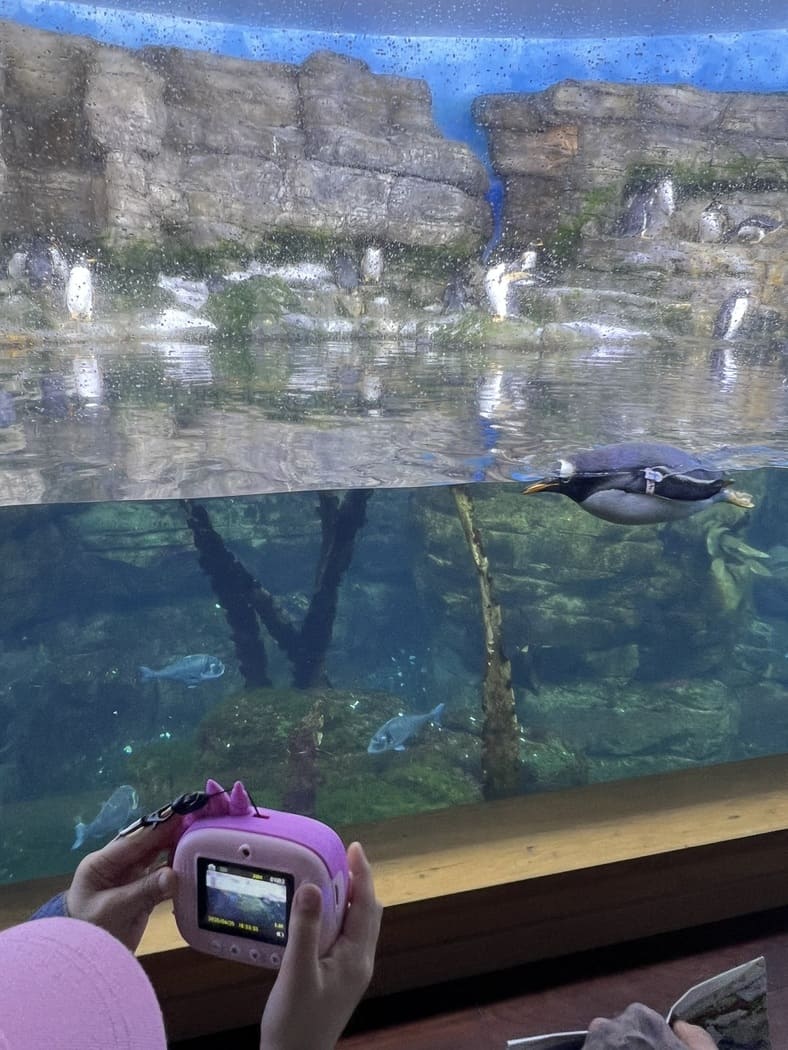
The Antarctic section, however, is dedicated to penguins. It is not just a spectacle of passive observation: you will hear their voices – those strange noises they emit – and see their natural behavior: the extremely fast underwater swimming, the elegant dive, the clumsy movement on land that makes them so fascinating. You can observe the areas dedicated to nesting and raising the young, understanding the reproductive cycles of these extraordinary birds.
“the penguin enclosures”
“life is hard!”
The Dolphinarium: A Conscious Spectacle
One of the moments that marks the journey is the entrance to the dolphinarium. The Oceanogràfic hosts the largest dolphinarium in Europe: a pool of 26 million liters, 10.5 meters deep, with five tanks and a large grandstand that can accommodate up to 1,500 spectators. Bioeducational shows take place here – and the word “bioeducational” is fundamental. It is not a circus of forced animals: it is a lesson on dolphin communication, their natural behaviors, and their emotional intelligence. You will see bottlenose dolphins (the “real dolphins” mentioned in the Flipper series) perform extraordinary acrobatics, not for human amusement, but to demonstrate natural abilities of coordination and intelligence. The trainers explain what is happening, why these animals behave this way. It is education, not pure entertainment. Many leave the dolphinarium with a new awareness: the dolphin is a sentient, complex being, deserving of respect.

The Mediterranean and the Wetlands
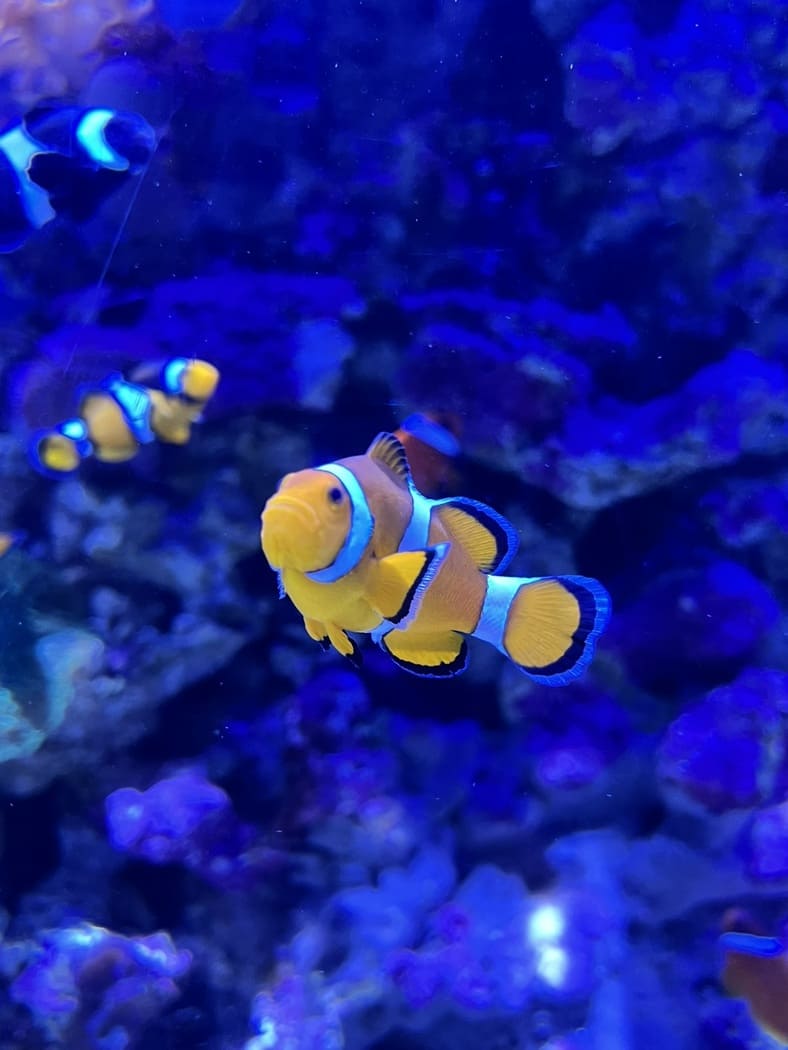
The section dedicated to the Mediterranean Sea brings the biodiversity of the sea that washes the coasts from which you are probably traveling with your camper, literally to your feet. Seven aquariums showcase the richness of the underwater Iberian peninsula: colorful fish, sea urchins, corals, a variety that we often take for granted.
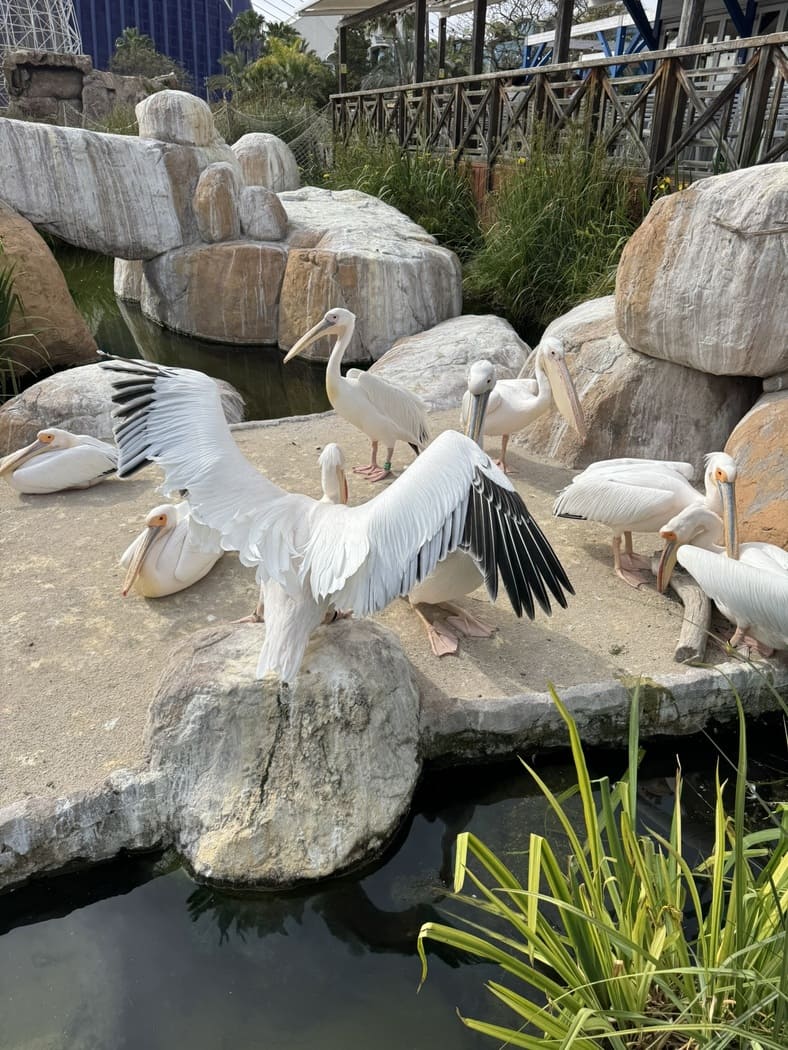
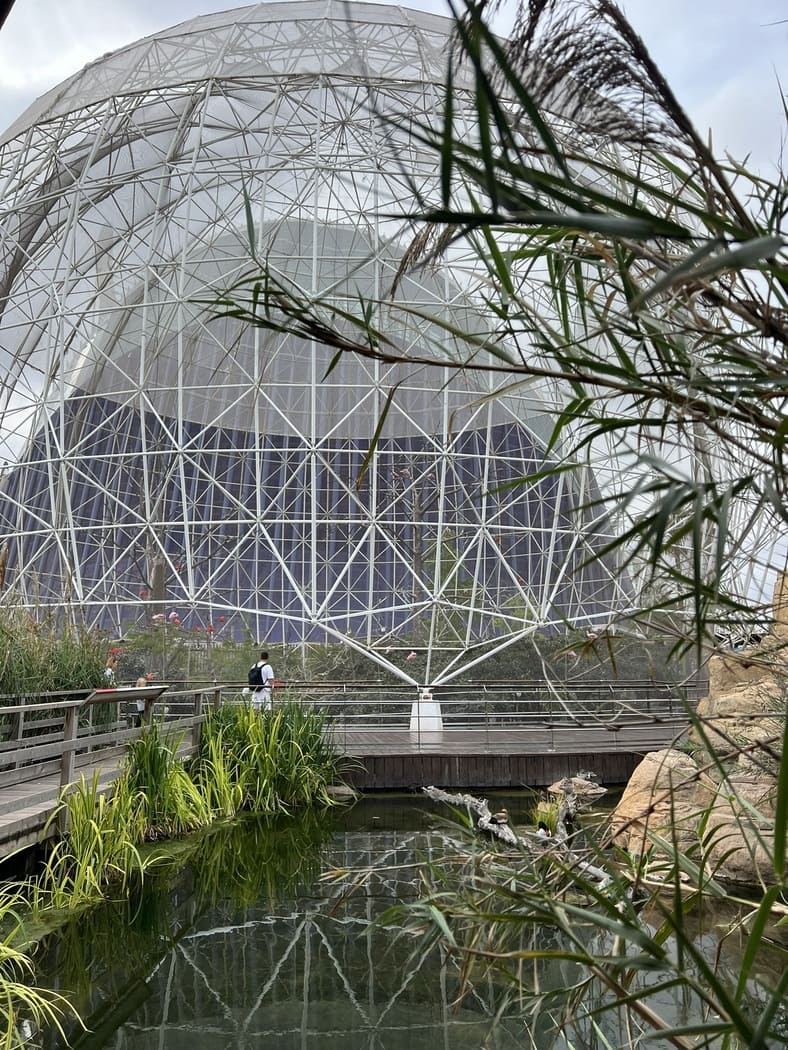
The wetlands, represented by the large sphere 26 meters in diameter, transport you to a tropical mangrove forest. Here the boundary between land and sea becomes blurred: you will see flamingos, pelicans, ducks, and swans coexisting in a space that faithfully recreates the mangrove environment. It is a moment of calm compared to the intensity of the previous sections, but no less fascinating.
The Islands: Sea Lions
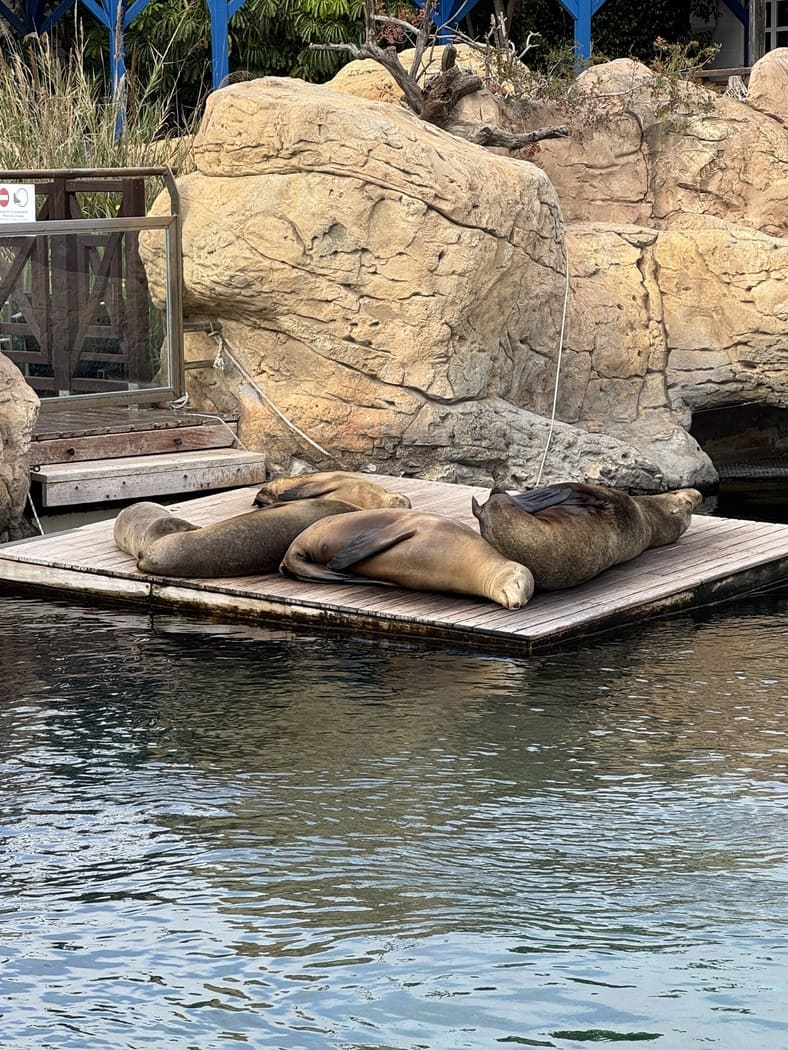
The section dedicated to the islands hosts South American sea lions. Different from the other marine animals observed so far, sea lions have a fascinating component of “personality.” They seem to recognize habitual visitors, they play, and they move with surprising agility. Watching them is like watching marine dancers performing their natural behavior with a kind of awareness of your observation.
“free to fly away”
“protected structures for avian fauna”
Practical Tips
for the Visit
Opening Hours (2025):
– Low season (January-June, October-December): 10:00-18:00 (Sunday-Friday); 10:00-20:00 (Saturday)
– Mid-season (September): 10:00-19:00 (Sunday-Friday); 10:00-20:00 (Saturday)
– High season (July-August): 10:00-24:00 (all days)
– Ticket offices close one hour before the aquarium closes
Entrance Prices (2025):
– Adults: approximately €32.00
– Children (4-12 years): approximately €24.00
– Children (0-3 years): free entry
– Over 65 / People with disabilities: reduced rates (must present documentation)
– Combined ticket (Oceanogràfic + Science Museum + Hemisfèric): €39.10
Recommended time: Dedicate at least 4-5 hours to the visit. If you want to fully experience it, even a whole day is not too much. The dolphin shows last about 20-25 minutes, so check the times at the ticket office upon arrival.
Best time to visit: Weekends and holidays are crowded. If possible, visit between Tuesday and Thursday, preferably early in the morning (from 10:00 AM to 12:00 PM) when it is not yet crowded.
– Accessibility: The Oceanogràfic is completely accessible for people with motor disabilities. Elevators and flat paths are available in all sections.
Parking and return to the camper:
– If you parked your camper at Nomadic Experience, take tram line 10 from the vicinity of the Oceanogràfic (“Pont de l’Assut de l’Or” stop), which takes you back towards the center, from where you can return by metro line 3 in about 25 minutes.
– Alternatively, use taxis or ride-sharing apps if you are tired.
What to bring with you:
– Comfortable clothing and comfortable shoes (you will walk a lot)
– Light jacket or sweatshirt – the indoor environments are air-conditioned and might be a little cold
– Camera or smartphone: the light inside is excellent for taking photos
– Sunglasses for the outside (the external path between the tanks is exposed)
– A reusable water bottle (drinking fountains are available to refill it)
Looking for other similar experiences?
These other destinations can offer you museum visits
0